
Nobody Answers the Door: Courier Steps, Notifications and Rescheduling
The most common call we get after a delivery window closes is not 'where is my order' — it is 'the recipient did not pick up and now I do not know what happened to the flowers.' It happens more than you would expect: the recipient stepped out for ten minutes, forgot to mention a gate code, or simply had the phone on silent. Flowers are perishable, and a bouquet of garden roses or ranunculus left in a warm stairwell for two hours is a different bouquet from the one that left our cooler. Knowing exactly what the courier does when nobody answers — and what you should do in the first fifteen minutes — saves the order every time.
The First Attempt: What the Courier Actually Does at the Door
When the courier arrives at the address, the first step is always a phone call to the recipient's number that was provided at checkout. This is not a single ring — the courier calls twice within a two-minute window, giving the person inside time to hear the phone, finish a sentence, or come from another room. If there is an intercom panel at the entrance, the courier also uses it simultaneously, because in many Saint Petersburg apartment buildings the mobile signal inside the flat is poor and residents rely on the intercom more than the phone. The courier waits at the door for five to seven minutes after the first ring, which is longer than most delivery services allow, specifically because flowers require a handoff and cannot simply be left on a mat the way a parcel can. During this window the courier also checks whether a building code or gate code was noted in the order — in Russia, many residential complexes built after 2000 have a second locked gate between the street and the entrance, and missing that code means the courier never reaches the intercom at all. If your order includes a note about the building layout, the courier follows it precisely. If it does not, and access is blocked, the clock on the waiting window starts from the moment the courier reaches the outer gate, not the front door. This distinction matters when you are calculating whether a reschedule is still possible within the same day.
Bouquets we can deliver

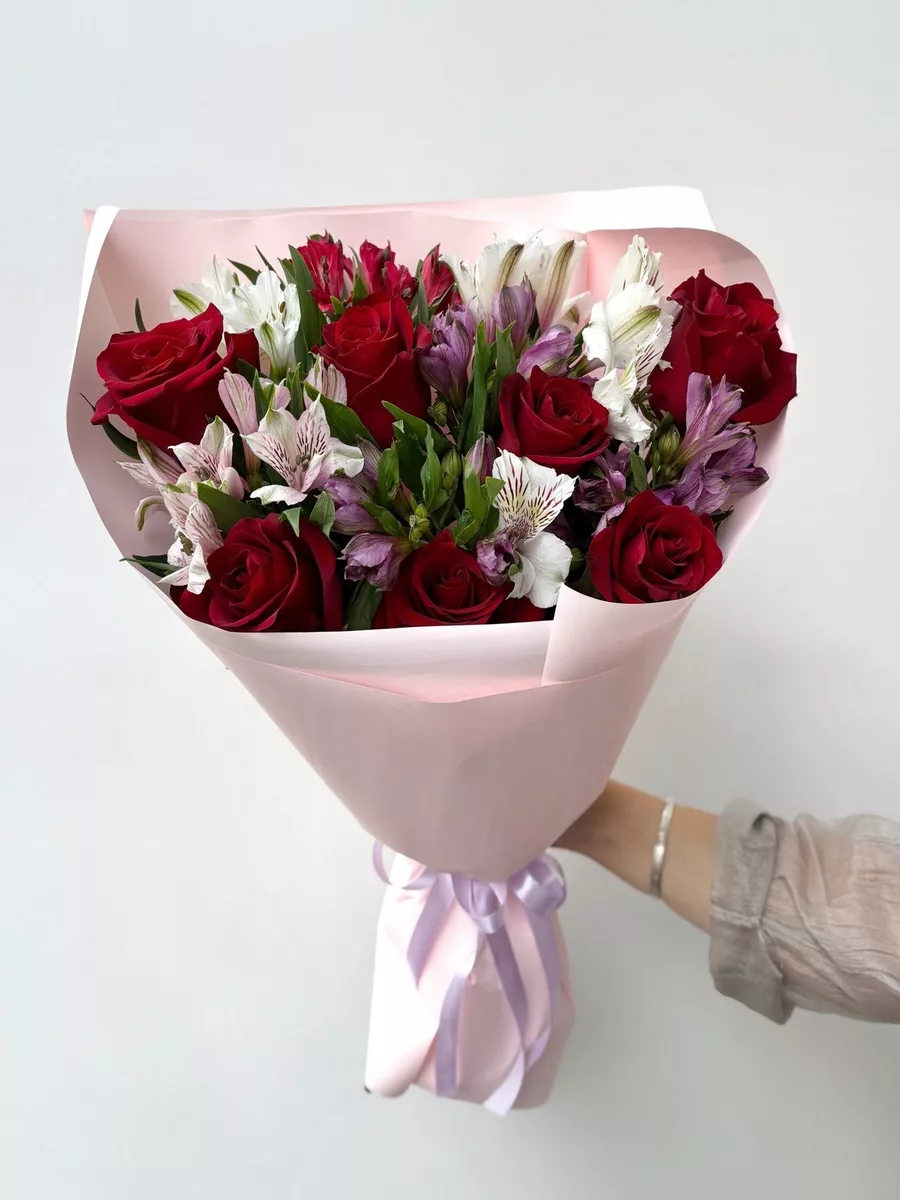


How You Are Notified When Nobody Responds
The moment the courier determines that the first attempt has failed — no answer on the phone, no intercom response, and the waiting window has closed — a notification goes to the sender, not just the recipient. This is deliberate. The person who placed the order is the one with context: they know whether the recipient is likely to be home, whether there is a neighbor who could accept the bouquet, or whether the address was entered incorrectly in the first place. The notification arrives by the same channel used during checkout, typically a text message or a message through the platform where the order was placed. It includes the time of the attempt, the address the courier reached, and a short window — usually thirty minutes — during which the sender can provide updated instructions before the courier moves to the next delivery on the route. This thirty-minute window is the most important piece of timing to understand. Russian couriers, especially in a city the size of Saint Petersburg, run routes with multiple stops. If the sender does not respond within that window, the courier cannot simply wait at the address indefinitely. The bouquet goes back into the temperature-controlled bag and the courier continues the route. What happens next depends on whether a second attempt is possible within the day, which is a separate question covered below. The key action on your side is to keep your own phone available during the delivery window — not just the recipient's — because you are the backup contact and the one who can actually change the outcome.
Second Attempts: Timing, Conditions and What Changes
A second delivery attempt is possible on the same day if the courier's route allows it and if the sender contacts us within the notification window described above. The phrase 'if the route allows it' is not vague: it means the courier has another stop in the same district later in the shift, or the gap between current stops is large enough to loop back. Saint Petersburg is a large city and some districts — Pushkin, Kolpino, Kronstadt — sit far enough from the center that a same-day return is genuinely not always feasible. For addresses in the central districts, Vasilievsky Island, Petrogradskaya, or Moskovsky district, a second attempt within two to three hours is usually realistic. For outer districts or destinations outside the city, the honest answer is that a same-day second attempt may not be available, and the sender should know this before choosing an outer-zone address for a time-sensitive delivery. When a second attempt is arranged, the courier calls the recipient again before leaving for the address — this is a courtesy call that also serves a practical purpose: if the recipient still does not answer, the courier does not waste a second trip. The condition of the flowers at the second attempt depends on what was ordered. Sturdy varieties like chrysanthemums, alstroemeria, and spray carnations handle two to three hours in a temperature bag without visible change. More delicate compositions — open garden roses, sweet peas, anemones in full bloom — may show slight softening at the outer petals, which is worth knowing if the bouquet was chosen for its appearance at the moment of handoff.
What Happens to the Flowers While the Courier Waits for Instructions
Flowers do not pause while logistics are being sorted. This is the single most practical thing to understand about a missed delivery, and it is the reason we are direct about timelines rather than vague. The bouquet stays in the courier's insulated bag, which keeps the internal temperature close to what the flowers experienced in our storage — roughly five to eight degrees Celsius for most cut flowers. That bag is not a refrigerator; it slows temperature rise rather than preventing it. On a warm Saint Petersburg summer day, the bag interior climbs faster than in winter. In January, the opposite problem applies: if the courier is waiting outside in freezing temperatures and the bag is opened repeatedly, cold damage to tropical varieties like orchid stems or anthurium leaves becomes a real risk within twenty minutes. Roses, tulips, and most European-grown stems handle brief cold exposure better than tropical material, but no cut flower improves from sitting in a bag for ninety minutes. This is why we tell senders plainly: the faster you respond to the missed-delivery notification, the better the bouquet looks at handoff. If the sender provides a neighbor's name or a building manager's contact within the first fifteen minutes, the courier can make that alternative handoff and the flowers arrive in the same condition they left the shop. If instructions arrive after an hour, the flowers are still deliverable but the sender should have realistic expectations, particularly for compositions built around open blooms or foliage-heavy arrangements where wilting shows quickly.
Leaving Flowers with a Neighbor or Building Staff: Russian Customs Explained
In Russia, leaving a delivery with a neighbor or the building's concierge is a widely accepted practice, but it requires explicit permission from the sender — the courier will not make this call independently. Many older apartment buildings in Saint Petersburg, particularly pre-revolutionary and Soviet-era blocks, have a concierge desk staffed during daytime hours. Newer residential complexes often have a management office near the entrance. Either of these is a viable handoff point if the sender authorizes it and provides the name of the staff member or neighbor at the time of the reschedule call. The important cultural note for those unfamiliar with Russian residential buildings: neighbors in Russia do not typically open their doors to strangers claiming to have a delivery for the flat next door, especially in larger urban buildings where residents do not know each other by name. If you want to use a neighbor as a backup recipient, it works best when you have already called that neighbor yourself and warned them, and when you pass their name and flat number to us during the reschedule window. Building staff are generally more willing to accept a package on behalf of a resident, but they will not sign for it or take responsibility for its condition — they are doing a favor, not performing a service. The flowers should be in water-filled packaging or a wrapped bouquet that can stand upright, not a flat box that will tip. If the composition includes a water-tube arrangement or a bouquet in a vase, mention this when authorizing the neighbor handoff so the courier handles transport accordingly.
Rescheduling Without Losing the Order: What to Do Step by Step
Rescheduling after a missed attempt is straightforward if you act within the notification window. The first step is to call or message us directly — not to wait for a second notification or assume the courier will try again automatically. When you reach us, have three things ready: the order number, a working phone number for the recipient that is different from the one that went unanswered, and a revised delivery window. The revised window should be at least ninety minutes from the time you call, because the courier needs to complete the current route before returning to your address. If you cannot reach the recipient to confirm they will be home, the safest option is to push the delivery to the following morning, when a fresh slot is available and the flowers have been returned to cold storage overnight. Returning flowers to the shop cooler after a failed first attempt is standard practice for same-day orders that cannot be completed before the end of the courier's shift. The cooler keeps cut flowers at five degrees Celsius with controlled humidity, which is the correct storage condition for roses, peonies, lisianthus, and most other common bouquet flowers. A bouquet stored overnight in these conditions is not a compromised bouquet — it is simply a bouquet that has not yet been delivered. The one exception is compositions that include fully open blooms, such as sunflowers at peak or open garden roses, where a second day means visible petal drop. In those cases, we will tell you honestly at the time of rescheduling whether the specific flowers in your order are good candidates for an overnight hold or whether a replacement is the better choice.
Mistakes Senders Make That Turn a Small Problem Into a Big One
The most common mistake is providing only the recipient's phone number and assuming that is enough. If the recipient does not answer — which is the entire scenario this article addresses — there is no fallback contact. Always add your own number as a secondary contact when placing the order, and make sure you are reachable during the delivery window. The second mistake is writing a vague address. In Saint Petersburg, many streets have buildings with multiple entrances labeled in ways that are not obvious to someone unfamiliar with the block. An address that says 'Nevsky Prospekt 100' without an entrance number, floor, and flat number will slow the courier at the intercom stage and eat into the waiting window before an attempt is even registered. The third mistake is ordering delicate, open-bloom varieties for a recipient whose schedule is unpredictable. If you are not certain the person will be home, choose a bouquet built around closed or semi-open buds — roses in bud stage, closed tulips, alstroemeria, or spray flowers — that will tolerate a second attempt or an overnight hold without visible decline. The fourth mistake is ignoring the missed-delivery notification because you assume the courier will simply try again. The courier will not try again without instruction from you. The notification is not informational — it is a prompt for action, and the thirty-minute response window is real. Finally, do not wait until the evening to call if the delivery was scheduled for the afternoon. By evening, the courier's shift has ended and the options narrow to a next-day reschedule. Calling within the first fifteen minutes of receiving the notification keeps every option open.
A missed door does not mean a lost bouquet — it means a thirty-minute window in which the sender has full control over what happens next. The courier follows a fixed procedure: two calls, an intercom attempt, a wait, then a notification to you. After that, the outcome depends on how quickly you respond and how clearly you provide updated instructions. Flowers are patient up to a point, and that point is different for a closed rose bud than for a fully open garden rose. Knowing your bouquet, knowing the recipient's building, and keeping your phone available during the delivery window are the three things that make rescheduling fast and the flowers worth receiving. We deliver bouquets across Russia in 1–2 hours.
Frequently asked questions
Will the courier try again automatically if there is no answer the first time?
No. A second attempt requires instruction from the sender. When the first attempt fails, we notify the sender immediately and wait up to thirty minutes for updated instructions — a new contact number, a neighbor's name, or a revised time slot. Without that response, the courier continues the route and the bouquet returns to cold storage at the end of the shift.
Can I ask the courier to leave the flowers at the door if nobody is home?
We do not leave bouquets unattended at apartment doors. Cut flowers left in a warm stairwell deteriorate quickly, and there is no way to confirm the recipient received them. The courier will always attempt a handoff to a person — either the recipient, a named neighbor, or building staff — provided the sender has authorized the alternative recipient in advance.
How long can the flowers stay in the courier's bag before they are damaged?
The insulated bag maintains a stable temperature for roughly sixty to ninety minutes depending on outside conditions. Sturdy varieties like chrysanthemums and alstroemeria tolerate this well. Open roses, sweet peas, and anemones begin to soften noticeably after ninety minutes. If rescheduling is delayed beyond that window, the bouquet returns to the shop cooler, which is the correct environment for an overnight hold.
What if the recipient's building has a locked gate and the courier cannot reach the entrance?
The waiting window starts from the outer gate, not the front door. If the courier cannot get past the gate, they call and use the intercom panel if one is present there. To avoid this situation entirely, include the gate or entry code in the order notes at checkout. If the code changes or you forgot to add it, call us as soon as you realize — we can relay it to the courier in transit.
If the bouquet is held overnight after a missed delivery, will the flowers still look fresh?
For most compositions — roses in bud, tulips, lisianthus, spray carnations — an overnight stay in our five-degree cooler causes no visible decline. Fully open blooms are the exception: sunflowers at peak, open garden roses, and open peonies will show petal loosening by the following morning. We will flag this honestly when you call to reschedule, so you can decide whether to proceed or adjust the order.
Ready to send a bouquet?
Pick a city, choose the flowers, and we will hand them over with a photo confirmation.
Choose a city →