
Ranunculus in Russia: Delicate Blooms With a Short Window
Customers come in asking for 'those layered flowers that look like peonies but smaller' and nine times out of ten they mean ranunculus. They are right to want them — a well-conditioned stem of Ranunculus asiaticus opens into forty or more petals and holds a structure that photographs better than almost anything else in the shop. The problem is timing. In Russia, ranunculus are a spring flower with hard edges on their season, and a vase life that punishes warm rooms and dirty water faster than most people expect. If you order them without knowing the window and the handling rules, you will be disappointed. This article covers the season, the varieties worth choosing, the temperatures that keep them alive, and the mistakes we see most often at the counter.
When Ranunculus Actually Arrive in Russian Shops
The honest answer is late February through May, with the peak running through March and April. Stems come primarily from Dutch auction houses via air freight, and a smaller volume arrives from Israeli and Turkish growers during the earlier weeks of the season. By mid-May the supply drops sharply because heat during transit causes the buds to open before they reach the shop, which makes them unsellable. Florists stop ordering not because the flower disappears from the world but because the quality arriving in Saint Petersburg becomes unreliable. Customers sometimes ask why they cannot get ranunculus in September or October the way they can get roses year-round. The answer is that ranunculus is a cool-season crop: it is grown at temperatures between 7 and 15 degrees Celsius, and commercial growers in the main supplying countries time their harvests to match northern European spring demand. There is no autumn ranunculus program that reaches Russia in consistent quality. If a shop tells you otherwise in October, ask to see the stems before you commit to a bouquet, because what arrives at that time of year is often bruised and half-open from a long, warm journey. The practical rule for ordering in Saint Petersburg is this: from the first week of March to the last week of April you can count on fresh, tight-budded stems delivered the same day. Outside that window, ask your florist honestly what the current stock looks like before placing an order for a gift that matters.
Bouquets we can deliver



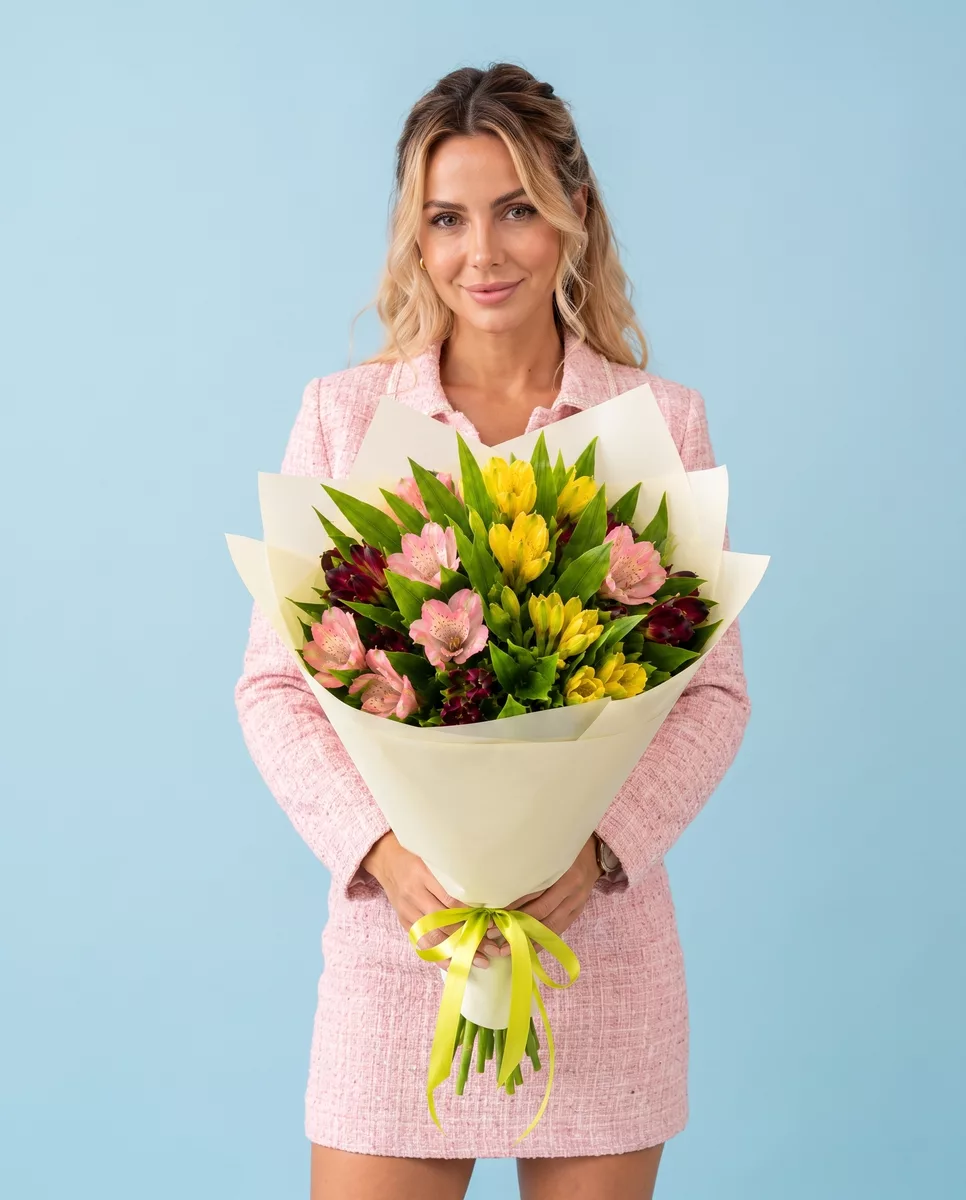
Varieties Worth Knowing Before You Order
Ranunculus asiaticus is the species behind all the cultivated forms sold in flower shops, but within that species the range of flower types is wide enough that two bouquets can look almost unrelated. The Elegance series produces large, densely petalled blooms on strong stems that hold upright well in a vase — these are the ones that get compared to peonies and are the most requested at our counter. The Mache series runs smaller and more cup-shaped, with a slightly longer vase life because the bloom does not open as wide and loses moisture more slowly. Cloni Supreme, developed by Lex+ in the Netherlands, has become popular in the last few years because of its exceptionally high petal count and the way it holds colour saturation even as it opens fully. Colour within these series matters practically, not just aesthetically: white and pale yellow ranunculus are the most delicate and show bruising from handling almost immediately, while deep orange, red and burgundy stems are more forgiving during transport. Bi-colour varieties with a contrasting eye, such as the picotee types, photograph well but tend to be grown in smaller volumes and arrive less consistently in Russia. When you are ordering a bouquet and have a colour preference, tell your florist which series or colour group you want rather than just saying 'ranunculus' — it changes what gets pulled from the cooler and how the arrangement is built around stem length and head size.
Vase Life: The Realistic Numbers and Why They Vary
A ranunculus stem cut properly and kept in the right conditions will last seven to ten days in a vase. That is the number you will see on grower spec sheets, and it is achievable, but it requires more attention than most customers give it. The first variable is water temperature: ranunculus prefer cool water, ideally between 10 and 15 degrees Celsius, which in a normal apartment means keeping the vase away from radiators, sunny windowsills and the top of the refrigerator where warm air vents. The second variable is stem hygiene. Ranunculus stems are hollow and soft, which means bacteria multiply in the water column faster than in a woody stem like a rose. Changing the water every two days and re-cutting the stem each time adds two to three days to vase life in practice. The third variable is the stage of opening when the flower arrives. Florists cut ranunculus in tight bud — the head should feel like a firm grape, not a soft one — because they continue opening after cutting. If you receive stems that are already half-open, the clock is shorter regardless of what you do with the water. Ethylene gas from fruit, from cigarette smoke and from other ripening flowers in the same vase accelerates petal drop noticeably. Keep ranunculus away from fruit bowls. Flower food sachets help but are not magic: the primary factor is temperature management, and a cool room consistently outperforms any additive when the two are compared directly.
How We Condition Ranunculus Before Delivery
When a box of ranunculus arrives at the shop from the auction, the stems come dry-packed, meaning they have been out of water since cutting at the farm. The first step is to cut two to three centimetres off each stem at a 45-degree angle using a sharp knife — not scissors, which crush the hollow stem and reduce water uptake — and place them immediately into clean, cool water with a small amount of flower food. We then hold them in the cooler at 4 to 6 degrees Celsius for a minimum of four hours before they go into any arrangement. This conditioning period allows the stems to rehydrate fully and the buds to firm up, which is what gives a delivered bouquet the tight, structured look that customers expect. Skipping this step is the most common mistake made when ranunculus are bought at a market stall or a supermarket and taken straight home: the stems have not rehydrated and the buds open unevenly or collapse within two days. When we pack ranunculus for delivery, we wrap the heads loosely so they are not compressed, and we keep the bouquet horizontal in the delivery bag rather than standing upright, because the stems are soft enough to bend under the weight of the head during transit. In cold months — and Saint Petersburg stays cold well into April — the packaging includes an insulating layer to prevent the heads from freezing, which kills the cells in the outer petals instantly and causes them to turn translucent and collapse within hours of arriving indoors.
Building a Ranunculus Bouquet: What Works With What
Ranunculus are not a filler flower — they are a focal flower, and the best bouquets treat them that way. The most common request we get is a mono bouquet of fifteen to twenty stems in a single colour or a close gradient, which works well because the variation in opening stage across the stems creates natural depth without needing other flowers. When customers want a mixed bouquet, the flowers that work best alongside ranunculus are those with a similar scale and a complementary texture: muscari adds vertical contrast and is in season at exactly the same time, anemones share the same delicate quality and the same spring window, and tulips in a coordinating colour create an arrangement that reads as cohesive rather than busy. Flowers to avoid pairing with ranunculus are those that produce high ethylene, which means avoid narcissus and daffodils in the same vase even if they are fashionable together in spring arrangements. Foliage choices matter too: eucalyptus is popular but its strong scent can stress ranunculus in an enclosed space; soft ruscus or Italian ruscus is a better backing choice because it is neutral in terms of both smell and ethylene output. Stem length in ranunculus varies by variety — Elegance series typically comes at 50 to 60 centimetres, Mache shorter — and a bouquet that mixes lengths without cutting them to a uniform level looks unfinished. Ask your florist to be specific about the stem lengths in what they are building.
What Russian Gifting Customs Mean for Ranunculus Orders
For readers who are not familiar with Russian flower-giving culture, a few things are worth knowing because they affect how and when to order. Flowers are given in odd numbers in Russia — one stem, three, five, seven and so on — and even numbers are associated with funeral arrangements. This is not a rigid rule that every Russian follows, but it is widespread enough that a bouquet of ten ranunculus stems will be noticed and may feel wrong to the recipient. Most florists here count stems automatically and adjust, but if you are ordering online or specifying a number, keep it odd. The volume of flower orders in Saint Petersburg spikes sharply on 8 March, which is International Women's Day and the single largest flower-buying day of the year in Russia — larger than Valentine's Day by a significant margin. Ranunculus are in season at exactly this point, which means demand peaks at the same moment as availability, and prices rise accordingly. Ordering two to three days in advance for 8 March delivery is not excessive; it is necessary if you want specific varieties and colours rather than whatever is left. Birthday bouquets are the most common year-round occasion, and ranunculus work well for them because the flower reads as considered and specific rather than generic. A customer who asks for ranunculus by name signals to the recipient that the order was not placed in thirty seconds on a default setting, which matters in a culture where the effort behind a gift is observed.
The Mistakes We See Most Often at the Counter
The most frequent mistake is ordering ranunculus without checking whether they are actually in stock that week. Unlike roses, which are available year-round from multiple growing regions, ranunculus have a supply that fluctuates week to week even within the season. A shop that does not update its inventory in real time may show ranunculus as available when the last box sold the previous afternoon. Call or message before ordering if the bouquet is for a specific occasion and the flower is non-negotiable. The second mistake is keeping the bouquet in a warm room. Most Saint Petersburg apartments run at 22 to 24 degrees Celsius in winter and spring because the central heating system is controlled by the city, not by the residents, and cannot be turned down. At that temperature, ranunculus will last four to five days at best. A cool hallway or a spot near a north-facing window makes a measurable difference. The third mistake is cutting the stems with scissors. The hollow stem collapses under scissor pressure and the water uptake drops dramatically. A sharp kitchen knife held at an angle is sufficient; a dedicated floral knife is better. The fourth mistake is placing ranunculus next to fruit. We tell customers this at the counter and they nod and then put the bouquet on the kitchen table next to the fruit bowl. Ethylene from ripening apples and bananas will cause the petals to drop within two days. The fifth mistake is buying ranunculus that are already fully open because they look beautiful in the market. Buy tight buds: you are paying for the days of opening, not for the single moment of full bloom you see in the stall.
Ranunculus reward the customer who understands their limits. The season is short, the vase life is conditional on temperature and water hygiene, and the varieties differ enough that it is worth being specific when you order. In Saint Petersburg the window runs from late February through April, the Elegance and Cloni Supreme series give the most reliable results, and a bouquet of tight buds kept in a cool spot will open over seven to ten days in a way that justifies the care. Order ahead for 8 March, keep the stems away from fruit and radiators, change the water every two days, and you will get everything the flower is capable of giving. We deliver bouquets across Russia in 1–2 hours.
Frequently asked questions
Can I order ranunculus in Saint Petersburg outside of spring?
Reliably, no. Supply from Dutch and Israeli growers reaches Russia in consistent quality only from late February through late April. After May, heat during transit causes buds to open before arrival, and quality drops sharply. If a shop lists them in autumn, ask to inspect the stems before committing to an order for a special occasion.
How many ranunculus stems make a full-looking bouquet?
Fifteen stems of a large-headed variety like Elegance or Cloni Supreme fill a vase well and create strong visual impact. For a more compact gift bouquet, nine or eleven stems work. Remember that Russian gifting custom calls for odd numbers, so plan your count around that — most florists here adjust automatically, but it is worth confirming.
Why did my ranunculus drop petals after just two days?
The most likely causes are room temperature above 22 degrees, proximity to fruit producing ethylene gas, or stems that were already open when delivered. Re-cut the stems, move the vase to the coolest spot in the room away from the fruit bowl, and change the water. Stems bought in tight bud and kept cool should last seven to ten days.
What flowers can I safely put in the same vase as ranunculus?
Muscari, anemones and soft ruscus foliage work well alongside ranunculus without shortening vase life. Avoid narcissus and daffodils in the same arrangement — they produce ethylene and will accelerate petal drop. Tulips are compatible if you want a fuller spring bouquet, provided you keep the water clean and change it every two days.
Is 8 March a good time to order ranunculus, or is the quality poor because of high demand?
Quality is actually good on 8 March because ranunculus are at their seasonal peak. The issue is availability: demand is the highest of the year and stock sells out fast. Order two to three days in advance, specify the variety and colour you want, and confirm that the shop has the stems in the cooler before you finalise the order.
Ready to send a bouquet?
Pick a city, choose the flowers, and we will hand them over with a photo confirmation.
Choose a city →