
Receiving a Bouquet in Russia: Wrapping, Etiquette and What to Do First
Most people who send flowers to Russia from abroad picture the moment of delivery as a quick handoff at the door. In practice there is a small but definite sequence of actions that Russian recipients follow, and if you understand it you will choose a better bouquet, pick the right packaging, and avoid the most common sender mistakes — like ordering roses in a sealed box that the recipient has no idea how to open, or skipping a water sachet on a July afternoon in Krasnodar.
What the Recipient Sees When the Courier Arrives
The courier arrives with the bouquet held upright, stems down, in whatever outer packaging the shop chose — kraft paper cone, a sleeve of transparent film, or a wrapped flat bundle for low-profile compositions like garden-style arrangements with lisianthus and alstroemeria. The recipient opens the door and the first thing they actually see is the top of the flowers, not the stems. This matters because Russian recipients judge the bouquet from above: they look at whether the heads are open, whether the foliage is fresh, and whether the colour reads as described in the order confirmation. A sender who ordered deep-burgundy spray roses should know that in artificial hallway light those can look almost black, so it is worth noting the variety name on the card so the recipient knows what they received. The courier typically waits about ninety seconds at the door — long enough for the recipient to check that the order matches, sign if required, and take the bouquet two-handed. Two-handed acceptance is standard; it signals that the recipient treats the gift seriously. Couriers from Five Flowers are instructed not to rush this moment. If the recipient is elderly or has small children at the door, the courier will hold the bouquet until there is a clear free hand to pass it to. The outer packaging stays on until the courier leaves — removing it in front of a stranger is not expected and is mildly unusual in Russian etiquette.
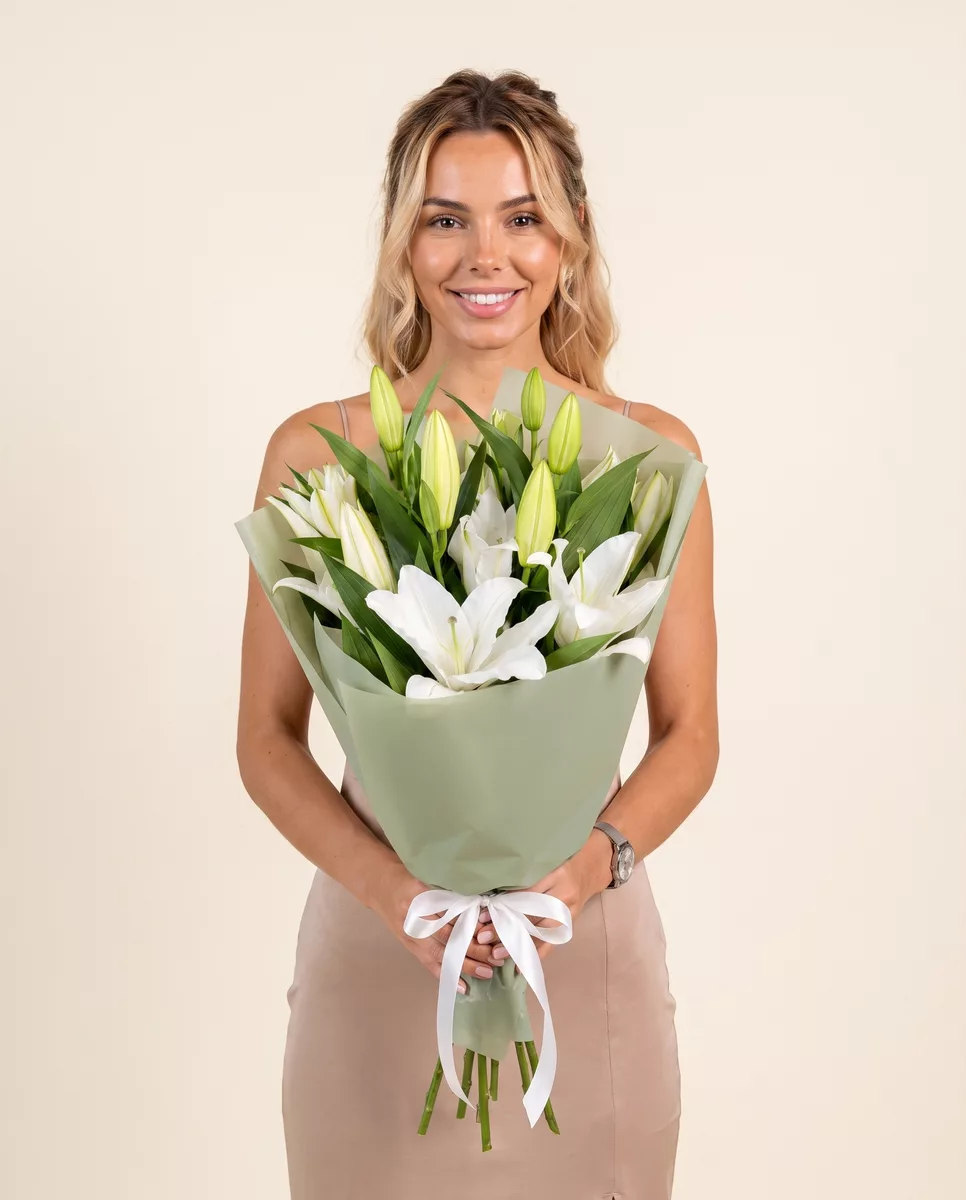
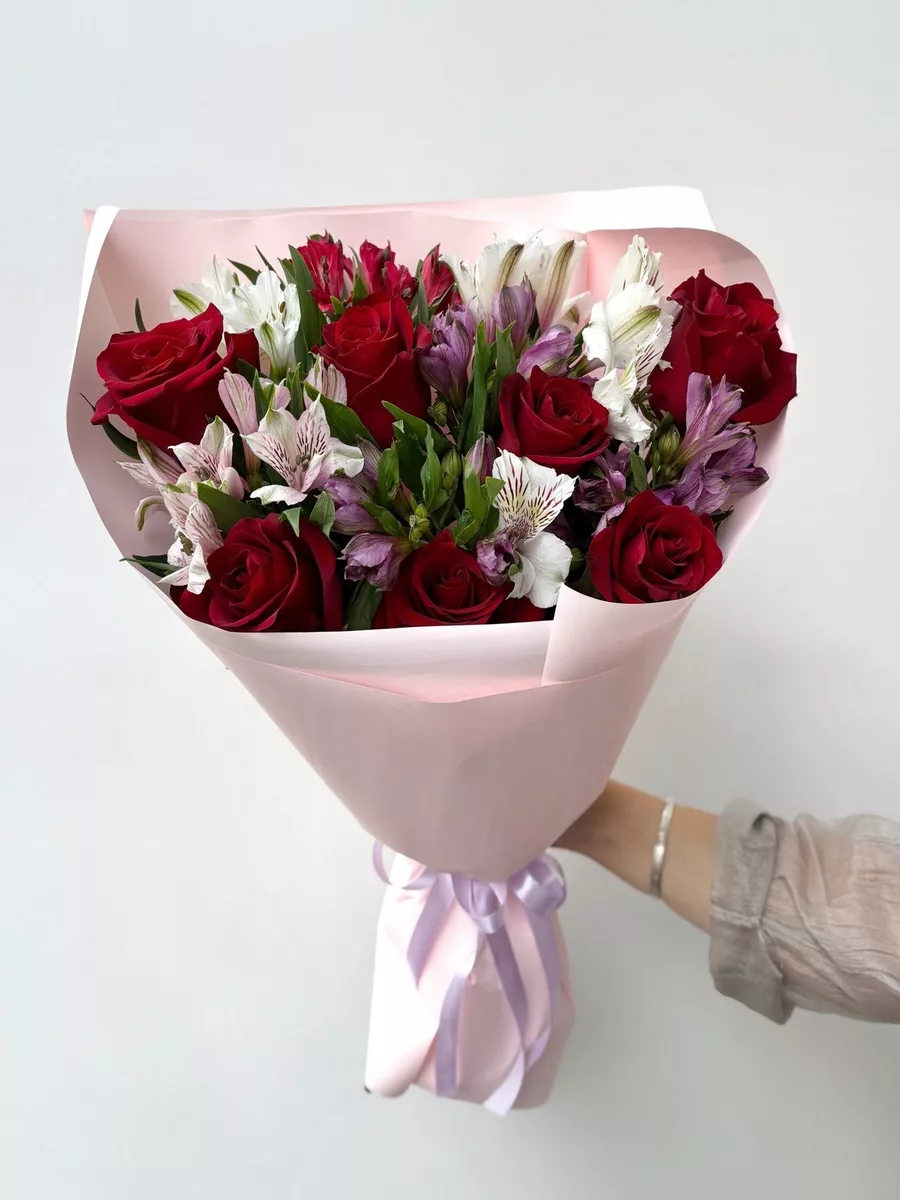
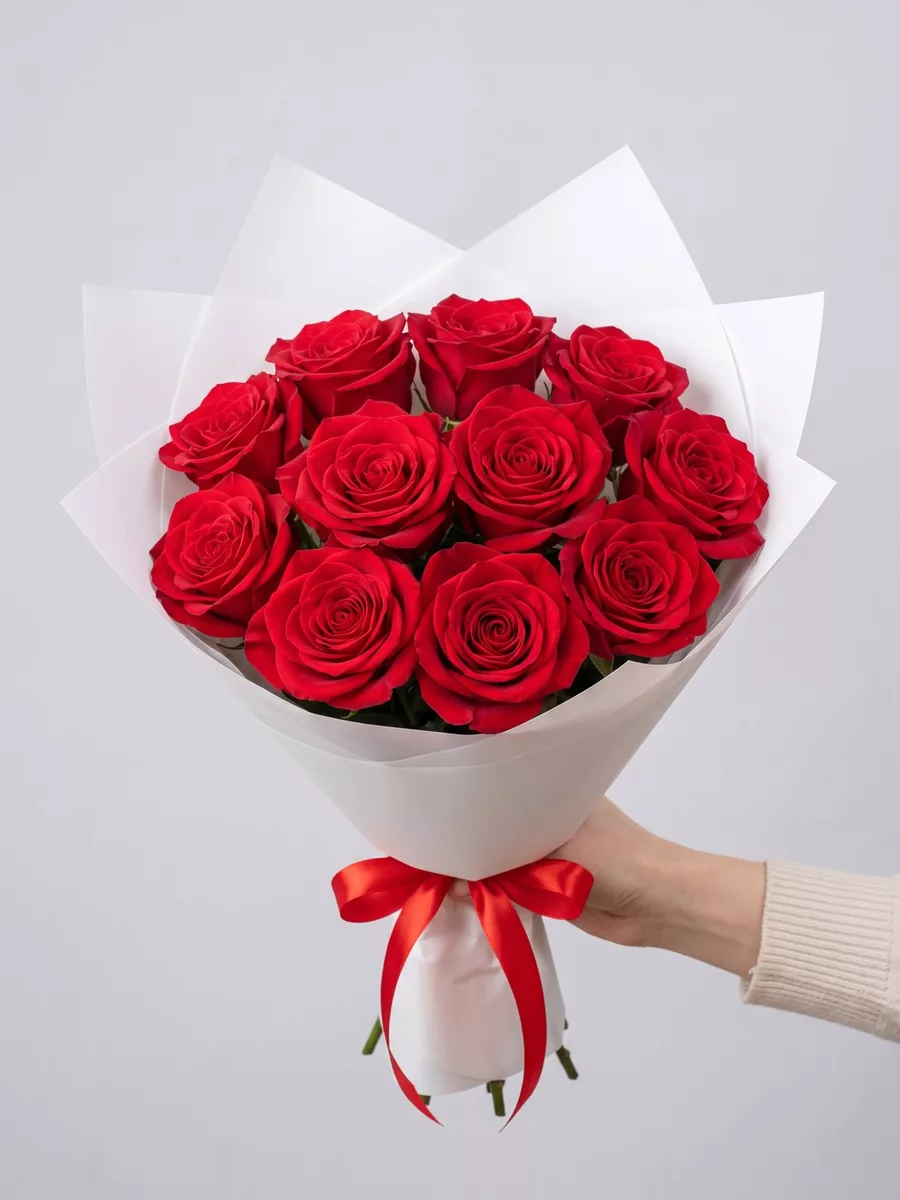
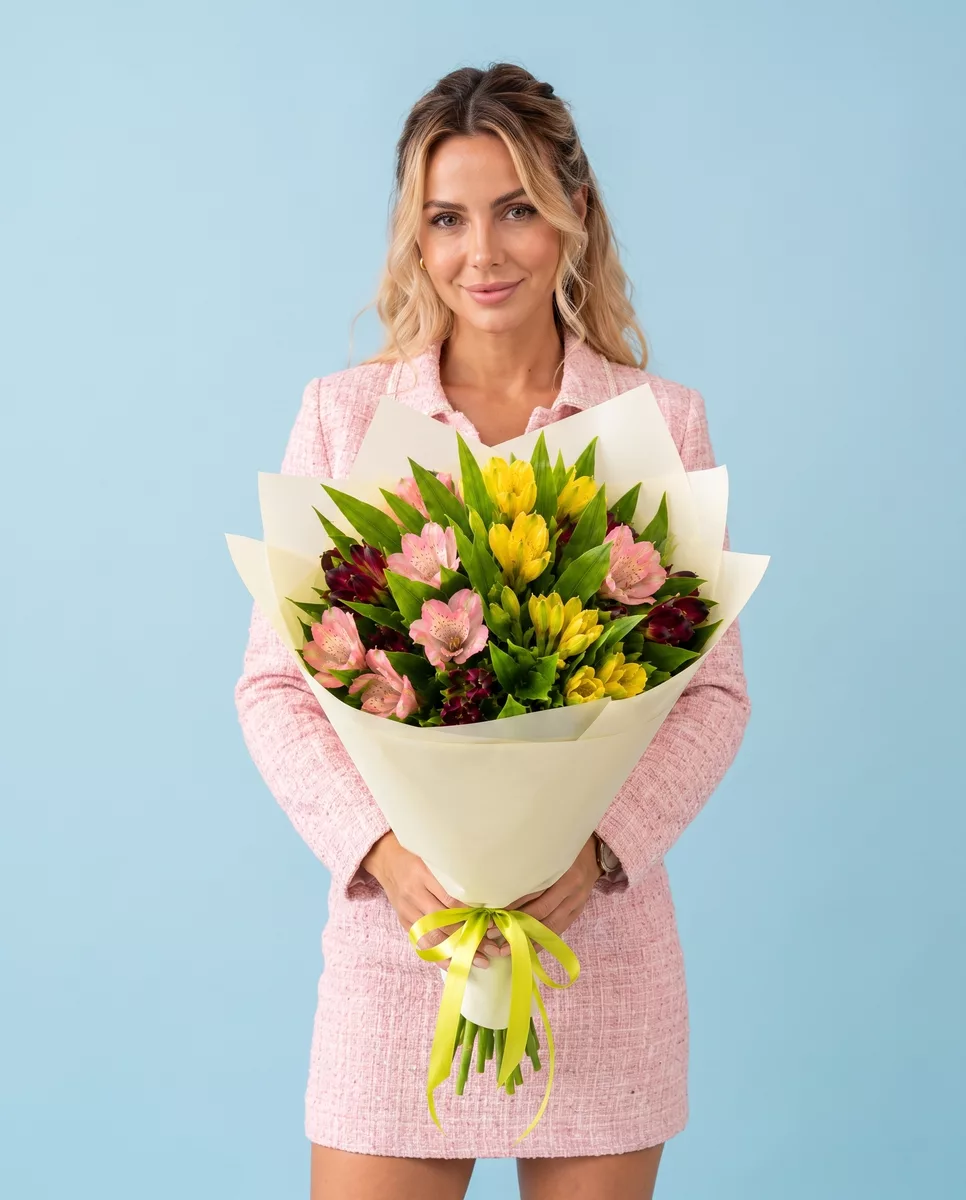
Bouquets we can deliver
The First Sixty Seconds After the Door Closes
Once the door is shut, the recipient moves to a table or kitchen counter — almost never a sofa or the floor — and sets the bouquet down horizontally to unwrap it. Horizontal placement protects the heads from snapping if the wrapping is tight around the stems. The outer kraft layer comes off first, usually by untying the ribbon or pulling the tape tab that the florist left accessible. Russian florists fold the kraft so there is always one loose edge; if the recipient cannot find it, they simply tear from the bottom, which is considered perfectly acceptable. Underneath the kraft there is typically a softer inner layer, often tissue paper or a thin foam sleeve, that protects the petals during transit. This inner layer is removed more carefully, especially with open-faced flowers like gerbera or garden roses where petals can catch on paper. A common mistake senders make is requesting very elaborate multi-layer wrapping — four or five layers look impressive in a photo but frustrate recipients who are standing alone in a hallway trying to find their scissors. Two layers, kraft outside and tissue inside, is the practical standard for deliveries across Saint Petersburg and other Russian cities. After unwrapping, the recipient holds the bouquet up to check the stems: if a water sachet was attached, they remove it and note whether the stems are still damp. Damp stems mean the flowers travelled well; dry stems on a warm day are a signal to get them into water within the next ten minutes.
Thanking the Courier: What Actually Happens
Russian recipients do not typically tip flower couriers the way they might tip a restaurant delivery driver, but verbal thanks are genuine and expected. The standard exchange is brief: the recipient says thank you, sometimes asks whether the flowers need any special care, and the courier answers with one or two sentences — cut the stems at an angle, change the water tomorrow morning, keep away from direct sun. Five Flowers couriers carry a small printed care card with the bouquet, so even if no words are exchanged the recipient has written instructions. Senders sometimes worry that the recipient will be cold or dismissive toward the courier; in practice the opposite is more common. Receiving an unexpected bouquet at the door is a notable event in Russian domestic life, and recipients are often visibly pleased, which makes the handoff warm rather than transactional. If the sender included a personal card, the courier hands it separately, not tucked inside the wrapping where it could be missed. The recipient reads the card privately, after the door closes. This is a firm cultural norm: reading a personal message in front of the delivery person is considered awkward on both sides. Senders who want to make the message feel more significant should write more than a single line — Russian recipients read cards carefully and a thoughtful three-sentence note lands better than a one-word greeting. The courier does not wait for the card to be read and does not ask about the sender; that information is the recipient's business.
Cutting Stems and Getting Flowers into Water
The first practical task after unwrapping is cutting the stems, and this is where the biggest care gap appears. Many recipients in Russia skip this step or do it incorrectly — they cut straight across with kitchen scissors rather than at a forty-five-degree angle with a sharp knife. A diagonal cut increases the surface area that draws water and prevents the stem end from sitting flat against the bottom of the vase, which would block uptake. For roses, the standard recommendation is to remove the bottom two centimetres of stem under running water or while the stem is submerged, because this prevents an air bubble forming at the cut end. For tulips, which are extremely common in Russian deliveries especially in spring, the stem is cut straight and short — tulips continue to grow after cutting and a long stem in a tall vase will bend and droop within a day. Chrysanthemums and alstroemeria are more forgiving; they tolerate a simple diagonal cut and do not need the underwater technique. The vase should be filled with cool water, not warm, and the care sachet that came with the bouquet — usually containing a small packet of flower food — should be dissolved in the water before the stems go in. Recipients who do not have a vase use a tall glass, a pitcher, or even a clean plastic bottle with the top cut off. All of these work. The flowers should not be placed near a heating radiator, which is a real risk in Russian apartments in autumn and winter when central heating runs at full capacity.
How Russian Recipients Display the Bouquet at Home
Once in water, the bouquet goes to a specific place in the apartment that Russian recipients have usually already decided on before the flowers arrived. The most common spots are the dining table, the windowsill of the main room, and the hallway console if the apartment has one. Windowsills in Russia are wide by design — Soviet-era construction left deep sill ledges — so flowers there are stable and visible from the street, which many recipients enjoy. The choice of spot depends heavily on the season. In summer, windowsills in south-facing rooms get too warm by midday, so recipients move the bouquet to a shaded corner. In winter, the windowsill between the inner and outer panes of a double-glazed window is actually the coolest spot in the apartment and extends vase life noticeably, though not all windows allow this. Senders sometimes ask whether Russian recipients rearrange the bouquet after delivery. The answer is yes, almost always. A delivered bouquet is shaped for transit — stems bundled tightly, heads close together. At home the recipient loosens the binding, removes any leaves that would sit below the waterline, and spreads the stems so each flower has space. This is not considered altering the gift; it is simply finishing it. Flowers like peonies, which are delivered in bud, open significantly over the first twenty-four hours and need room to expand. A sender who orders peonies should know the recipient will see the full bouquet only the next morning, not at the moment of delivery.
When the Recipient Calls or Messages the Sender
Russian etiquette strongly expects the recipient to contact the sender after receiving flowers, and this contact usually happens within one to three hours of delivery. The message or call is brief but specific: the recipient names the flowers if they know them, says something about the colours, and thanks the sender directly. A sender who ordered a mixed bouquet of white freesia, pale-pink spray roses, and eucalyptus branches should expect to hear those details mentioned — Russian recipients pay attention to what they received and report it back. If the recipient does not recognise a variety, they describe it by shape or colour. This feedback loop is important for senders to understand because it affects what they order. A bouquet of ten identical stems — say, ten red roses — is easy to describe and acknowledge. A complex arrangement with seven or eight varieties requires the recipient to work harder to articulate their thanks, which some people find slightly uncomfortable. Neither choice is wrong, but knowing this helps a sender match the bouquet to the relationship. If the flowers arrive as a surprise — the sender did not tell the recipient in advance — the thank-you contact often comes with a question: who sent these? The courier does not answer that question. The answer is on the card, and if the sender did not include a card, the recipient has to figure it out from context. Senders who want a moment of mystery should still include a card that reveals the sender at the end, rather than leaving the recipient genuinely uncertain.
What Senders Get Wrong About Russian Flower Delivery
The most frequent sender mistake is choosing the packaging over the flowers. A bouquet in a hat box with a ribbon looks impressive in a product photo but delivers less well than a hand-tied bouquet in kraft paper: the flowers are packed tighter, the stems cannot be checked easily, and the recipient has to transfer everything to a vase anyway. Hat boxes work for dried or preserved flowers, which do not need water, but for fresh roses or tulips they add cost without adding vase life. The second common mistake is ordering for a date rather than a time window. Russian recipients are not always home, and a missed delivery in July means the bouquet sits in a warm stairwell for an hour before the recipient returns. Five Flowers contacts the recipient before dispatch to confirm a thirty-minute arrival window, which solves most of this, but senders who do not provide a valid recipient phone number make this coordination impossible. The third mistake is choosing flowers based on colour in a product photo without checking the variety. Screen colours shift; what looks coral on a monitor may arrive as salmon or orange depending on the actual rose variety in stock that week. Specifying a variety — Mondial rose for cream-white, Explorer rose for deep red, Aqua rose for soft pink — gives the florist a precise target and the recipient a flower that matches expectations. Finally, senders sometimes omit the floor number or apartment code from the address. Russian apartment buildings almost always have a door code or intercom number, and a courier who cannot enter the building will call the recipient, which removes the element of surprise entirely.
Receiving a bouquet in Russia is a small ceremony with a clear sequence: two-handed acceptance at the door, unwrapping on a flat surface after the courier leaves, a diagonal stem cut, cool water, and a thank-you message within a few hours. None of these steps are complicated, but understanding them changes how a sender makes decisions — about packaging, about variety, about the card, about timing. A sender who knows the recipient will display the bouquet on a wide Soviet windowsill in winter might choose a fuller, more structural arrangement that holds its shape over several days. A sender who knows the recipient reads the card privately and carefully will write more than a single line. The flowers are the gift, but the details around them are what the recipient actually remembers. We deliver bouquets across Russia in 1–2 hours.
Frequently asked questions
Should the recipient unwrap the bouquet in front of the courier?
No. Russian etiquette treats unwrapping as a private moment. The recipient accepts the bouquet at the door, thanks the courier, and unwraps after the door closes. Removing the packaging in front of the courier is unusual and neither side expects it. The outer wrapping is designed to come off easily once the recipient is at a table.
What if the recipient is not home when the courier arrives?
Five Flowers calls the recipient before dispatch to confirm a thirty-minute arrival window. If the recipient cannot be reached, the courier waits briefly and calls again. Senders should always provide a working recipient phone number. Without it, coordinating a fresh delivery in warm weather becomes genuinely difficult and vase life suffers.
Do Russian recipients expect a card with the bouquet?
Yes, especially for surprise deliveries. Without a card the recipient may not know who sent the flowers, which creates an awkward situation. Even a short card naming the sender is enough. Recipients read cards privately, after the courier leaves, so the message does not need to be brief — a few thoughtful sentences are read and appreciated.
Which flowers last longest in a Russian apartment in winter?
Chrysanthemums, alstroemeria, and spray roses handle the dry heated air of Russian winter apartments better than most. Tulips are popular but last only five to seven days. Roses last well if stems are recut every two days. Placing the vase away from radiators is the single most effective step a recipient can take to extend vase life in winter.
Is it rude to rearrange a delivered bouquet?
Not at all. Delivered bouquets are bundled tightly for safe transit, not for display. Recipients routinely loosen the stems, remove submerged leaves, and spread the arrangement in the vase. This is considered normal finishing, not altering the gift. Florists actually expect it and cut stems slightly longer than necessary to give the recipient room to adjust.
Ready to send a bouquet?
Pick a city, choose the flowers, and we will hand them over with a photo confirmation.
Choose a city →