
Romashka Flower: What It Means and How to Choose a Bouquet
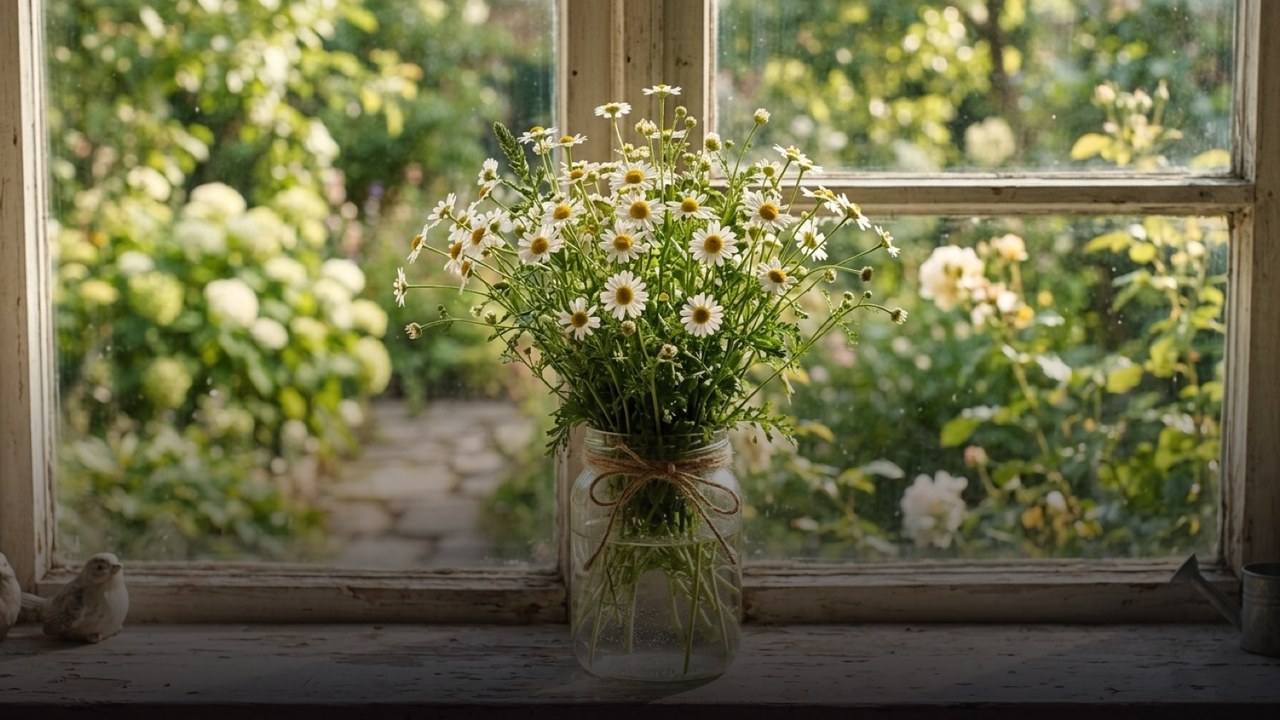
“Romashka” is the Russian word commonly used for chamomile and, in everyday flower shopping, for white daisy-like flowers with yellow centres. It is a common name rather than a precise botanical identification, so a request for a romashka flower may mean medicinal chamomile, a larger garden daisy or a similar-looking cut flower.
At Pyat Tsvetov (5 Flowers), a useful starting point for this kind of request is the appearance the customer wants: small, branching flowers with a meadow feel, or larger white heads that stand out in a bouquet. We have been working with flowers in Saint Petersburg since 2011, and clear descriptions help turn a familiar Russian name into a practical choice. If you are ordering from abroad, a reference photograph and a short explanation of the occasion are more useful than relying on the English word “daisy” alone.
Identify the flower behind the name
True chamomile and the larger flowers commonly called daisies can look similar in a photograph, but their stems and foliage often give better clues. German chamomile, Matricaria chamomilla, typically has small flower heads and finely divided, feathery leaves. Larger garden daisies in the genus Leucanthemum have more substantial heads and broader, toothed leaves. A yellow centre surrounded by white petals therefore describes a look, but does not establish which plant you are seeing.
Daisy-flowered chrysanthemums add another possible source of confusion, especially in cut-flower bouquets. They may have several flower heads on one branching stem, creating a different shape from a bouquet built around individual large daisies. When choosing, specify the size of the heads, whether you prefer clusters or distinct blooms, and how much greenery you want visible. Ask for the flower name if the exact species matters; a product photograph alone may not resolve the distinction.
Understand the meaning without treating it as a rule
In Russian everyday associations, romashka often suggests simplicity, affection and a summer meadow. It also appears in the familiar petal-plucking game usually translated as “loves me, loves me not,” which gives it a gentle romantic connection. These associations can make a daisy-style bouquet feel personal and unassuming. They are cultural associations, however, rather than a fixed message that every recipient will interpret in the same way.
For a friend, a relative or someone who enjoys informal flowers, that relaxed character can be more appropriate than a highly structured arrangement. For a romantic gift, explain the personal connection in the card instead of expecting the flower to communicate everything. A sentence such as “These reminded me of our summer walks” carries a clearer meaning than an unfamiliar flower-symbolism claim. If the recipient has a favourite colour or flower, let that preference guide the choice before any supposed symbolic rule.
Bouquets we can deliver




Choose a bouquet that suits the recipient and occasion
Begin with the effect you want the bouquet to have in the room. Smaller flower heads and visible branching stems create an airy outline, while larger daisies make each bloom more prominent. White and yellow can form a clear, restrained palette, with foliage providing contrast rather than competing colour. When browsing the bouquets catalogue, use the photographs to judge proportions and arrangement style, then clarify any flower identification that remains uncertain.
Russian flower-giving etiquette also matters when sending a gift from another country. An odd number of flowers is customary for celebratory gifts when the stems are counted individually; even numbers are traditionally associated with mourning. With branching stems, the number of visible flower heads does not equal the stem count, so avoid counting petals or blooms in a photograph to infer the total. For a birthday, thank-you or romantic gesture, state the occasion clearly and keep the accompanying message appropriate to your relationship.
Prepare the vase and care for cut stems
Start with a thoroughly washed vase, fresh water and clean cutting tools. Remove any leaves that would sit below the waterline, then trim the stem ends before arranging the flowers. Submerged foliage breaks down and makes the water dirty, so this small preparation step matters more than adding improvised household mixtures. If flower food comes with your flowers, follow its dilution instructions rather than making the solution stronger in the hope of extending vase life.
Check the water daily and replenish it as needed; replace it when it becomes cloudy or develops an unpleasant smell, washing the vase at the same time. Keep the bouquet away from radiators, strong direct sunlight and ripening fruit, and remove fading flower heads as they deteriorate. Different flowers sold under the romashka name can behave differently after cutting, so there is no reliable single vase-life promise for the whole group. If a stem wilts, inspect its water supply and recut the end with a clean tool, without assuming that every wilted flower will recover.
Do not use a decorative bouquet to make chamomile tea, even if the flowers resemble the plant used in herbal infusions. Appearance does not confirm the species, and cut flowers are not supplied as food. For tea or cooking, choose a product specifically sold for that purpose. If the recipient is sensitive to flower pollen, check their preferences beforehand rather than describing daisies or chamomile as allergy-free.
Plan a delivery to Russia from abroad
For a gift sent across borders, the recipient's local schedule is the first practical detail to settle. Prepare their name, telephone number and complete delivery address, including the flat or office details needed to find them. Use the delivery city's local time when planning the arrival, especially if you are ordering from a different time zone. Pyat Tsvetov delivers flowers across Russia; city delivery costs 500 RUB, while the operator confirms the price for remote districts and suburbs when confirming the order.
In large cities, express delivery is available in 1–2 hours after the order is confirmed. Other options are delivery at an exact time with a tolerance of plus or minus 30 minutes, or the windows 09–12, 12–15, 15–18 and 18–21. Orders can also be placed 1–30 days ahead, which helps when a birthday or family occasion falls on a busy day. In Saint Petersburg, delivery is available around the clock; consult delivery and payment when planning the details for your destination.
Complete checkout and make the handover straightforward
Choose the bouquet, enter the delivery details and check the options displayed at checkout before paying. Online checkout uses CloudPayments, and acceptance of every foreign-issued card cannot be guaranteed. If you need clarification about the order or the flower description, call 8 (812) 507-67-05. For a romashka request, distinguish between an exact flower requirement and a preference for the white-and-yellow daisy look, so the intended choice is clear before confirmation.
Delivery is anonymous by default: the courier does not name the sender, and a card with your text is free. Sign the card if you want the recipient to know who sent the flowers. The courier calls the recipient about 15 minutes before arrival, so choose a time when they are likely to be able to answer. If the recipient is absent, we agree a second delivery the same day or, with the sender's consent, hand the flowers to a neighbour or concierge; do not assume an unattended doorstep delivery.
Frequently asked questions
Does romashka mean daisy or chamomile?
Romashka commonly means chamomile in Russian, but people also use it for white daisy-like flowers with yellow centres. If you need a particular plant, confirm the botanical name rather than relying on the common name.
Is a romashka bouquet suitable for a romantic gift?
It can suit someone who likes informal flowers and a meadow-style appearance. Add a personal card message to make your intention clear, since flower meanings are not universal.
Can I make tea from flowers in a romashka bouquet?
Do not use decorative cut flowers for tea: the common name does not confirm either the species or suitability for consumption. Choose chamomile specifically sold as a food or herbal infusion product.
Can I arrange flower delivery in Russia while I am abroad?
Pyat Tsvetov delivers flowers across Russia, and online checkout uses CloudPayments. Check the payment options displayed at checkout, as acceptance of every foreign card is not guaranteed.
Will the courier tell the recipient who sent the bouquet?
The courier does not name the sender because delivery is anonymous by default. A card with your text is free, so include your name there if you want to identify yourself.
Ready to send a bouquet?
Pick a city, choose the flowers, and we will hand them over with a photo confirmation.
Choose a city →