
Roses in Russia: Prices, Varieties and What to Expect
If you have ever tried to order roses in Russia without knowing the local market, you have probably felt that mix of confusion and mild panic — too many options, wildly different price points, and no clear sense of what is actually worth buying. As a working florist in Saint Petersburg, I deal with these questions every single day. So let me walk you through everything honestly: where Russian roses come from, which varieties hold up best, what different budgets genuinely get you, and how to avoid the mistakes that leave people disappointed on important days.
Where Russian Roses Actually Come From
Most people assume that roses sold in Russia are grown locally, but the reality is more layered than that. Russia does have domestic greenhouse producers, particularly in the Krasnodar region and parts of the Moscow oblast, but the volume they produce is nowhere near enough to meet national demand. The overwhelming majority of roses on the Russian market are imported, with Ecuador and the Netherlands being the two dominant sources.
Ecuadorian roses are prized for their exceptionally long stems — often 70 to 100 centimetres — and their large, densely petalled heads. The high altitude of Ecuadorian growing regions, combined with intense equatorial sunlight, produces a bud that is firm, slow to open and genuinely long-lasting. When you see a rose that looks almost theatrical in its perfection, it is almost certainly Ecuadorian.
Dutch roses, by contrast, tend to have shorter stems and smaller heads, but the Netherlands is the global hub of flower logistics. Dutch auction flowers move with extraordinary speed from greenhouse to cold storage to aircraft to your door, which means freshness is often excellent even if the visual drama is a step below Ecuador.
Domestic Russian roses are improving steadily. They are sometimes cheaper and, because they travel shorter distances, can arrive with fewer days already spent in transit. However, variety selection from local growers remains limited compared to imported stock. At Five Flowers, we work with suppliers across all three origins depending on the season, the variety requested and the specific occasion, always prioritising stem quality and cold-chain integrity over price alone.
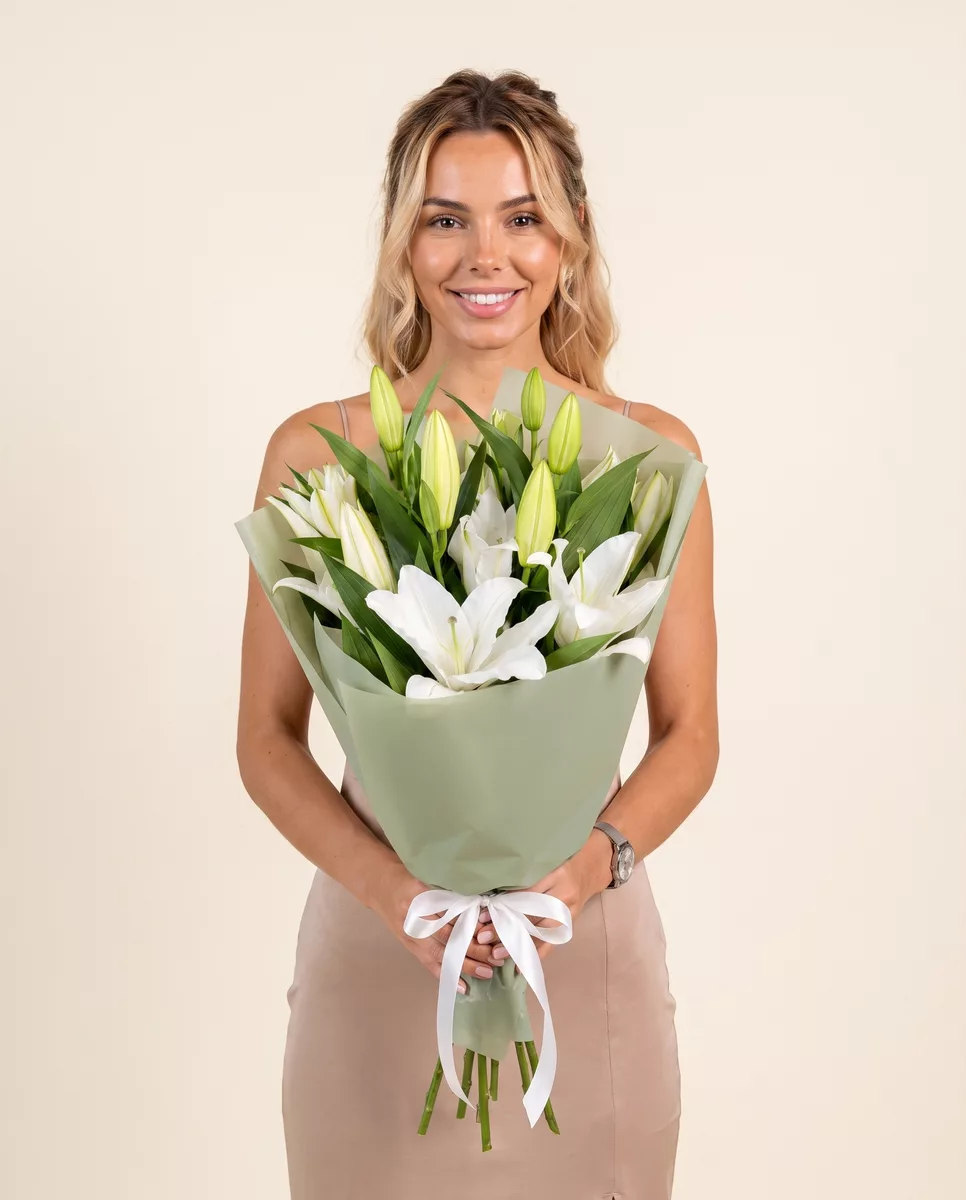
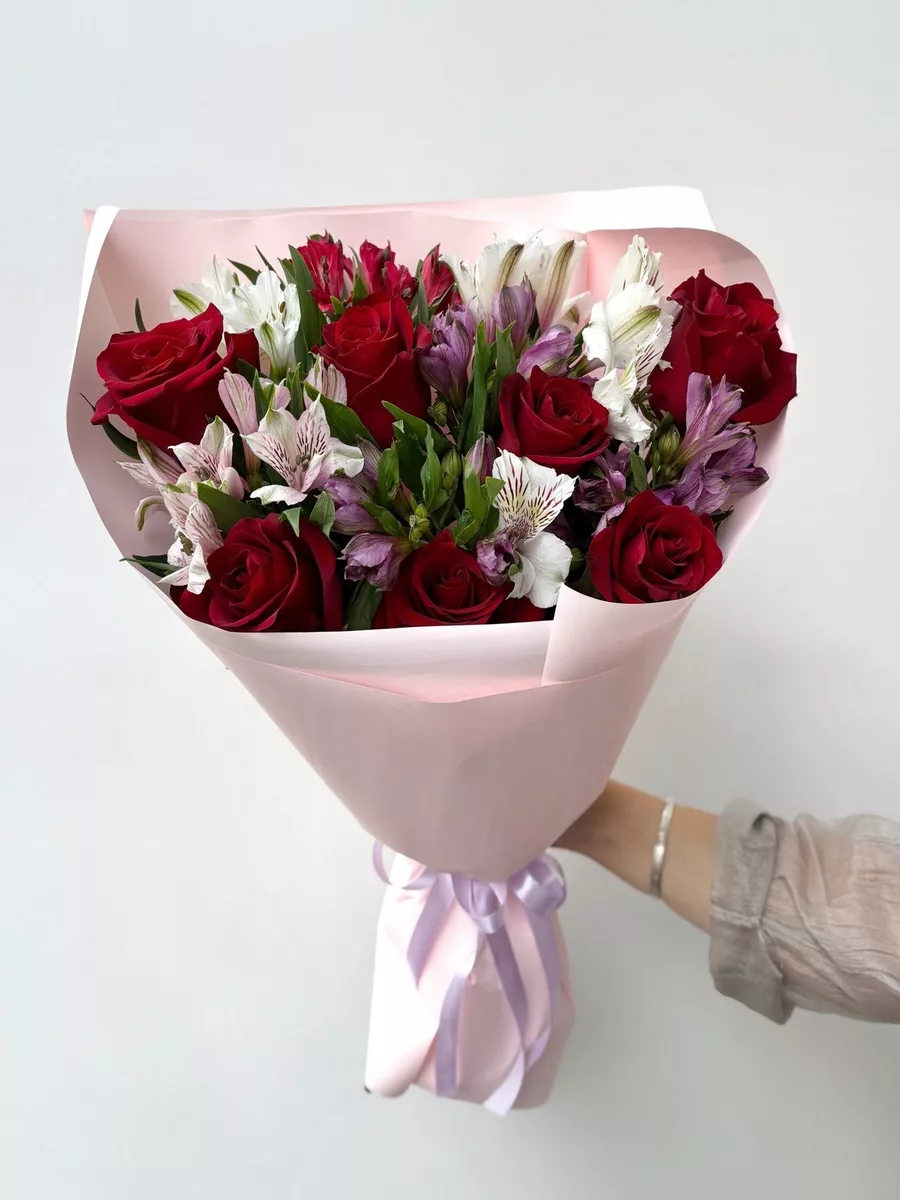
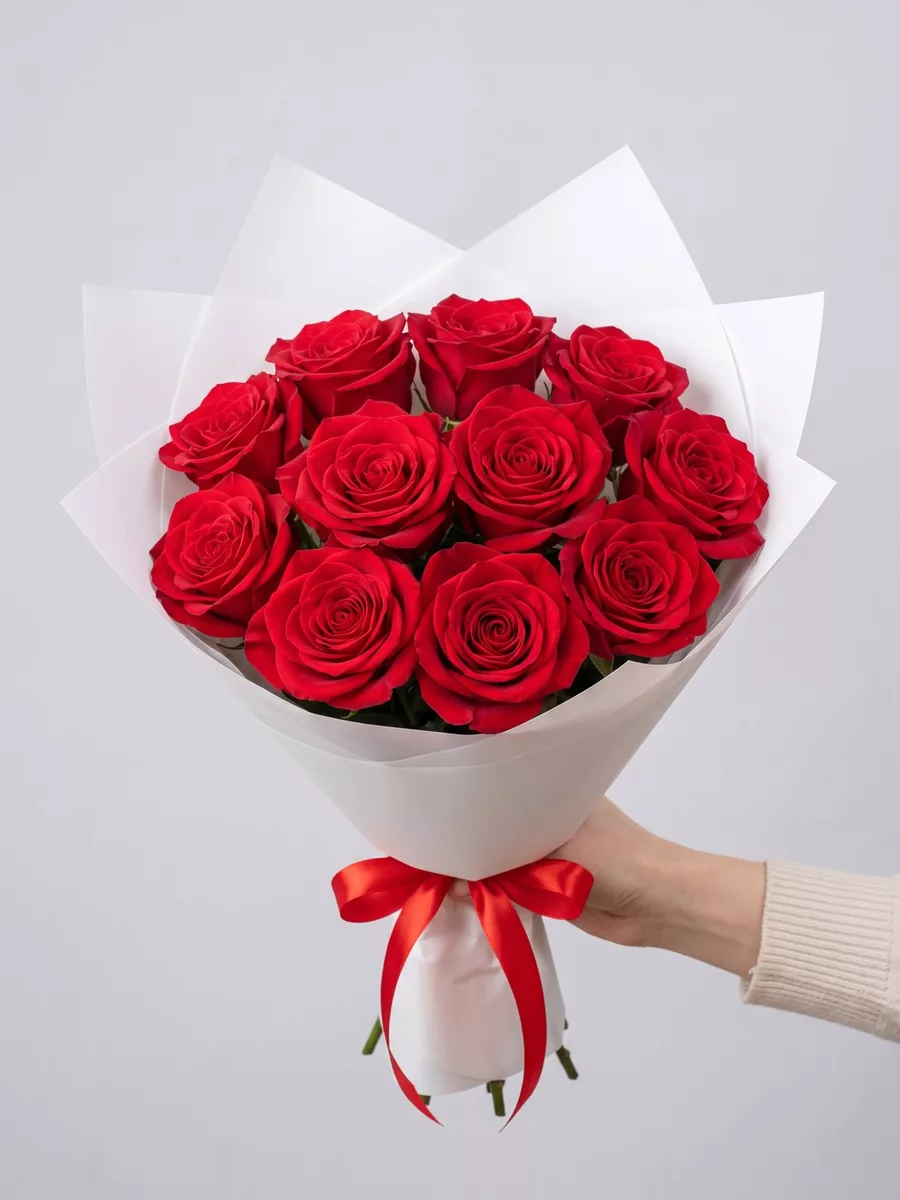
Bouquets we can deliver

The Most Popular Rose Varieties in Russia Right Now
Variety names matter more than most customers realise. Two red roses sitting side by side can behave completely differently in a vase, and knowing which variety you are getting is the difference between flowers that last four days and flowers that last twelve.
Among red roses, Explorer and Red Naomi are the consistent bestsellers. Red Naomi has a large, velvety head and a rich, true crimson colour that photographs beautifully. Explorer is slightly more compact but opens with exceptional evenness and holds its shape longer in warm interiors.
For pink roses, Lovely Rhodos and Sweet Unique are perennial favourites. Lovely Rhodos has a soft, dusty pink tone that reads as romantic without being saccharine. Sweet Unique leans warmer and more saturated, closer to coral-pink, and it is particularly popular for birthday arrangements.
White roses are dominated by Avalanche and its variants — Peach Avalanche, Pink Avalanche and the standard white. The Avalanche family is beloved by florists because the buds are consistent, the stems are straight and the vase life is reliable. If a florist tells you a bouquet contains Avalanche, that is generally a good sign.
For something less conventional, Garden roses — varieties like David Austin's Juliet or Keira — have grown enormously in popularity in Russian cities over the past several years. They have a cupped, old-fashioned shape quite different from the classic high-centred rose, and they carry a genuine fragrance that most modern hybrid teas have lost. They are more expensive and more delicate, but for a truly memorable gift, nothing else quite compares.
How Rose Pricing Works and What Drives It
Rose pricing in Russia can feel opaque, and that opacity is frustrating. Let me break down what actually moves the number.
Stem length is the single biggest factor in wholesale cost. A 40-centimetre stem and a 70-centimetre stem of the same variety from the same farm can differ in wholesale price by forty percent or more. This is not arbitrary — longer stems require more growing time, more greenhouse space and more careful handling during transport. When you see a very cheap bouquet, the first thing to check is stem length.
Variety matters enormously. Standard commercial varieties like Polo or First Red cost less to grow at scale than specialty varieties like Mondial or garden roses. A boutique variety bred for fragrance or unusual colour is simply more expensive to produce, and that cost flows through.
Seasonality affects imported roses less than it affects domestic production, but it still matters. Around major gifting dates — February 14th, March 8th, which is International Women's Day and by far the biggest flower holiday in Russia, and May 9th — wholesale prices spike significantly. A bouquet that costs a certain amount in October can cost thirty to fifty percent more in the first week of March simply due to demand pressure across the entire supply chain.
Finally, bud count and arrangement complexity add to the retail price. Fifteen roses in a simple kraft wrap is one thing. Fifteen roses arranged with eucalyptus, ranunculus and a satin ribbon in a hat box is another. Both are legitimate choices — it depends entirely on the occasion and the impression you want to make.
What Different Budgets Actually Get You
This is the section most guides avoid because it requires honesty. Let me be direct about what you can realistically expect at different spending levels when ordering roses in Saint Petersburg or elsewhere in Russia.
At the entry level, you are typically looking at a modest bunch of standard-variety roses on shorter stems, presented simply. These are perfectly respectable flowers. The roses will be fresh if the shop is reputable, they will open nicely over two or three days, and they will make someone smile. They are not the flowers you order when you need to make a statement, but they are genuinely good for a casual gesture.
In the mid range, the picture changes considerably. Stems get longer, varieties become more interesting, and the presentation quality rises. This is where you start seeing Avalanche whites, Red Naomi reds and the better pink varieties. A mid-range bouquet from a quality florist should look genuinely impressive and last a week or more with basic care.
At the upper end, you are entering the world of garden roses, specialty varieties, premium Ecuadorian long-stems and bespoke arrangement design. These bouquets are made to photograph, to be remembered and to communicate something significant. The vase life of quality garden roses, properly handled, can reach ten to fourteen days.
One important note for international customers: do not confuse low price with good value. A cheap bouquet from an unknown source may arrive with roses that were already several days old at the point of packing, with split stems or yellowing leaves hidden under the wrapping. Always order from a florist who can tell you the variety, the origin and the cut date.
Caring for Roses in Russian Homes and Climates
Russia's climate creates a specific set of challenges for cut flowers that are worth understanding, especially if you are sending roses to someone who may not be experienced with flower care.
In winter, which in Saint Petersburg runs from roughly November through March, the primary danger is cold shock during transit. Roses should never be left in an unheated car, a cold entrance hall or near a draughty window. When roses arrive after travelling through sub-zero temperatures, they need a few minutes to acclimatise before being unwrapped. Unwrapping immediately in a warm room can cause condensation damage and petal bruising. At Five Flowers, our delivery packaging accounts for this — roses travel insulated — but the first ten minutes after arrival still matter.
In summer, the challenge flips entirely. Russian apartments, particularly older Soviet-era buildings, can become very warm, and central heating systems are notoriously aggressive in spring and autumn when outdoor temperatures are mild but heating has not yet been switched off. Roses in a room above 22 degrees Celsius will open much faster and last fewer days than the same roses in a cooler space.
For vase care, the advice is consistent regardless of season: cut stems at a 45-degree angle under running water, use a clean vase, change the water every two days and keep roses away from fruit bowls. Ripening fruit releases ethylene gas, which accelerates rose aging noticeably. Remove any leaves that would sit below the waterline to prevent bacterial growth. These are small habits that genuinely extend vase life by three to five days.
Ordering Roses Online in Russia: What to Know Before You Buy
Online flower ordering in Russia has matured significantly, but there are still pitfalls that catch people out, particularly those ordering from abroad for someone in Russia.
The first thing to understand is delivery timing. In major cities like Saint Petersburg and Moscow, same-day delivery within one to two hours is genuinely achievable from a well-organised florist. Five Flowers offers this across Saint Petersburg. However, for smaller cities and regions, lead times may be longer, so planning ahead is always wise for significant occasions.
Photograph accuracy is a real issue across the industry. Some online florists use aspirational or stock photography that bears little resemblance to what actually gets made and delivered. Before ordering, look for shops that show real photographs of their work, ideally with visible variety names and stem lengths specified. If a listing says simply 'red roses' without further detail, treat that as a yellow flag.
For international Women's Day on March 8th, I cannot stress this strongly enough: order at least three to five days in advance. This date is to Russian flower culture what Valentine's Day is to Western markets, multiplied. Florists across the country are operating at absolute capacity for the entire first week of March. Last-minute orders risk delays, substituted varieties and — in the worst cases — non-delivery.
Finally, if you are ordering roses as a gift for someone unfamiliar with Russian customs, it is worth knowing that odd numbers of roses are traditional for gifts in Russia, while even numbers are associated with more solemn occasions. Bouquets from reputable florists are always assembled with this in mind, but it is useful context if you are specifying a custom quantity.
Roses in Russia are a serious business — culturally, commercially and emotionally. Understanding where they come from, which varieties are worth seeking out, and how pricing actually works takes away the guesswork and lets you order with confidence. Whether you are spending modestly on a simple gesture or investing in something truly memorable, the quality of the flowers and the reliability of the florist matter far more than the number of roses in the bunch. A well-chosen, expertly assembled bouquet of fifteen roses will always outperform a carelessly packed bunch of fifty. At Five Flowers, we have been making that case one delivery at a time across Saint Petersburg, and we believe that honest, knowledgeable floristry is always worth choosing. We deliver bouquets across Russia in 1–2 hours.
Frequently asked questions
What is the best rose variety to order if I want long vase life?
The Avalanche family — white, peach and pink variants — consistently delivers the longest vase life among widely available varieties in Russia. Red Naomi is the best performer in the red category. Both are Ecuadorian-origin varieties bred specifically for post-harvest durability. With proper care, including clean water and cool room temperatures, expect ten days or more from a fresh stem.
Why do roses cost more around March 8th in Russia?
March 8th is International Women's Day, the largest flower-gifting occasion in the Russian calendar by a significant margin. Demand across the entire supply chain — from Ecuadorian farms to Dutch auction houses to domestic wholesalers — spikes simultaneously. Wholesale prices rise sharply, and those costs are passed through to retail. Ordering several days in advance is the most effective way to manage both cost and availability.
Is it true that even numbers of flowers are inappropriate as gifts in Russia?
Yes, this is a genuine and widely observed cultural convention. Even numbers of flowers are traditionally associated with solemn occasions rather than celebrations. Reputable Russian florists always assemble gift bouquets in odd numbers by default. If you are ordering a custom quantity, choose an odd number — one, three, five, seven, eleven, fifteen, twenty-five and so on — to be consistent with local custom.
How should roses be handled when they arrive in cold winter weather?
Allow the bouquet to sit in its packaging for five to ten minutes in a warm room before unwrapping. This lets the flowers acclimatise gradually and prevents condensation damage to the petals. Once unwrapped, cut the stems at a 45-degree angle under water and place immediately in a clean vase. Never leave roses in a cold hallway, unheated car or near a draughty window after delivery.
Can I order roses from abroad for delivery in Saint Petersburg?
Absolutely. Five Flowers handles deliveries ordered from outside Russia regularly. The process is straightforward through the website. For time-sensitive occasions, factor in any time-zone difference when placing your order. For major dates like March 8th or February 14th, ordering at least four to five days ahead is strongly recommended to guarantee variety availability and your preferred delivery window.
Ready to send a bouquet?
Pick a city, choose the flowers, and we will hand them over with a photo confirmation.
Choose a city →