
Roses in Vase Drooping: What to Do Before Giving Up
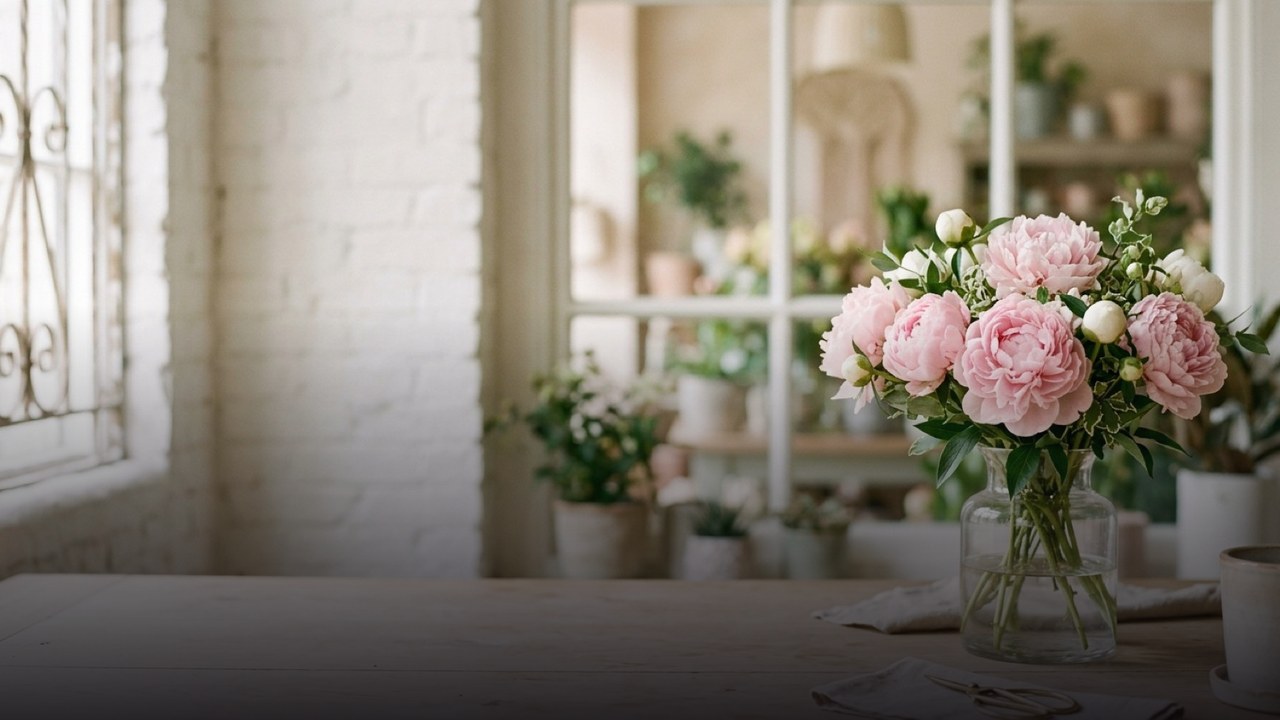
Roses drooping in a vase often cannot take up enough water to support their flower heads, although ageing or a damaged stem can produce a similar appearance. Wash the vase, refill it with fresh water, remove submerged leaves and recut the stems with a clean, sharp tool. Move the roses away from heat and direct sun, then allow several hours to see whether they regain firmness.
Customers at Pyat Tsvetov (5 Flowers) often describe a rose that looked upright on arrival but later bowed just beneath its bloom. The useful distinction is between a flower that has lost firmness and one with a crushed or deteriorating neck. Our Saint Petersburg shops have been open since 2011, and our practical advice starts with checking the stem, water and petals together. A drooping head alone does not tell you whether the rose will recover.
Check the neck, petals and water before treating the bouquet
Look at the short section of stem directly below each flower head. A smooth bend with a firm, intact surface may accompany poor hydration; a sharp crease, split or flattened patch suggests physical damage. Compare the affected rose with the upright stems beside it, and check whether its petals feel firm or limp. If only one rose is affected, inspect that stem individually before changing the whole arrangement.
Next, check the water level and the part of each stem sitting below it. Cloudiness, an unpleasant smell or a slippery coating are reasons to clean the vase immediately, even if some flowers still look good. Dry, papery outer petals can be older protective petals and do not, by themselves, explain a collapsed neck. Widespread browning, soft decay and shedding petals suggest deterioration that fresh water cannot reverse.
Refresh the vase and recut the stems carefully
Lift the roses out and set them briefly on a clean surface while you wash the vase with washing-up liquid. Rinse it thoroughly, then add fresh drinking-quality water deep enough to cover the lower stems while keeping foliage above the waterline. Remove any leaves that would otherwise sit underwater, using care around thorns. Our guide to removing leaves from roses for a vase explains what to strip and what to keep.
With a clean, sharp blade or suitable sharp secateurs, remove roughly 1–2 cm from each stem end, cutting above any visibly deteriorated tissue. An angled cut is practical, but a clean cut matters more than achieving a particular angle. Avoid blunt household scissors that squash the stem, and return each rose to water promptly. Do not hammer, split or scrape the stem ends: these treatments damage tissue and make the water harder to keep clean.
Use cut-flower food according to its packet instructions if you have it, measuring both the product and the water. If none is available, use clean water and pay close attention to hygiene instead of improvising a mixture. Sugar alone is not a complete flower-food substitute, and household bleach, aspirin or coins are unnecessary experiments. Give the refreshed roses several hours in a cool room before deciding whether the treatment has helped.
Bouquets we can deliver




Choose a position that reduces water loss
A sunny windowsill can warm both the blooms and the vase, increasing water loss while the cut stems are struggling to replace it. Move the arrangement to a cool position with indirect light, away from radiators, heaters and warm appliances. Avoid a strong draught from a fan or air-conditioning outlet. Normal room conditions are more useful than repeated moves between very warm and very cold places.
Choose a vase that supports the stems without squeezing them into a tight bundle. Heavy flower heads on long stems may lean because the arrangement lacks support, even when the petals remain firm. A taller vase or a modest trim can improve the balance, provided the stems still reach well into the water. Check whether decorative wrapping or a tight tie prevents the stems from sitting naturally, and loosen it where necessary.
Keep the water clean and skip harsh revival tricks
Check the water level every day, especially after first arranging the bouquet, because it can fall while the water still looks clear. Replace the water daily while dealing with drooping roses, washing and rinsing the vase each time. If you use flower food, make a fresh solution at the stated concentration rather than repeatedly adding more powder to old water. Remove fallen petals and leaves before they soften in the vase.
Boiling-water treatments can injure stems and create a burn risk, so they are not a sensible first response at home. Submerging the entire flower head is also unnecessary and can leave moisture trapped between petals, particularly in a tightly packed bloom. Start with clean water, a fresh cut and a suitable position instead. Wrapping a head upright may conceal the bend temporarily, but it does not establish that the stem has recovered its ability to take up water.
Recognise improvement and know when to remove a rose
A recovering rose should become firmer and may lift its head, although it may not return to a perfectly straight position. Judge the change over several hours rather than recutting the same stem repeatedly at short intervals. A stem with a crushed neck or extensive soft decay is unlikely to regain reliable support. Remove a deteriorating flower so its fallen material does not remain among otherwise healthy stems.
Ageing roses can continue to open, soften and lean even when their care is good, and different roses do not all last equally long. The flower's condition before it entered your vase and the room conditions both influence what happens next. There is no honest revival method that guarantees another fixed number of days. For broader expectations, read our guide to the lifespan of roses in a vase, and assess each bloom by its condition.
Sending roses to Russia: plan for the recipient's day
When sending roses from abroad, choose a delivery time that fits the recipient's availability so the bouquet can be placed in water promptly. Pyat Tsvetov delivers flowers across Russia, with city delivery costing 500 RUB; an operator confirms the price for remote districts and suburbs when confirming the order. In large cities, express delivery is available 1–2 hours after order confirmation. You can also choose an exact time with a tolerance of ±30 minutes, one of the 09–12, 12–15, 15–18 or 18–21 windows, or preorder 1–30 days ahead.
Delivery in Saint Petersburg is available around the clock, and the courier calls the recipient about 15 minutes before arrival. If the recipient is absent, we agree a second delivery that day or handing the flowers to a neighbour or concierge with the sender's consent. Delivery is anonymous by default: the courier does not name the sender, so include your name in the free card text if you want the recipient to know who sent the flowers. A short care note on the card can also remind them to find a clean vase promptly.
Choose flowers in the bouquets catalogue and consult delivery and payment information when planning the order. Online checkout uses CloudPayments; check the payment options displayed there rather than assuming that every foreign-issued card will be accepted. If you need to clarify delivery arrangements, call 8 (812) 507-67-05. For someone receiving roses at work or during a busy day, arranging a convenient arrival time is a practical part of caring for the gift.
Frequently asked questions
Why are my roses drooping even though the vase is full?
Water in the vase does not necessarily mean the stems can take it up effectively. Check for dirty water, deteriorated stem ends or a damaged neck, then clean the vase and recut intact stems.
How long should I wait after refreshing drooping roses?
Allow several hours in fresh water in a cool position away from direct sun. Look for firmer petals and better head support; recovery is uncertain if the neck is crushed or the flower is already deteriorating.
Should I put drooping roses in hot water?
Start with fresh drinking-quality water and a clean stem cut rather than a hot-water treatment. Very hot or boiling water can damage tissue and poses a burn risk.
Can I cut a drooping rose shorter?
Shortening an intact stem can help a heavy bloom sit more securely in a suitable vase. It cannot repair a crushed neck immediately below the flower head, so inspect that area first.
Does one drooping rose mean the whole bouquet is finished?
No; individual stems can differ in hydration, damage and stage of ageing. Inspect the affected rose, remove it if it is decaying, and continue caring for the remaining flowers.
Ready to send a bouquet?
Pick a city, choose the flowers, and we will hand them over with a photo confirmation.
Choose a city →