
How to Format a Russian Address in English for Flower Delivery
Every week we get orders where the address field says something like 'apartment Moskovskiy' or the building number ends up in the street name box. The bouquet is cut, the courier is ready, and then we spend twenty minutes on the phone untangling what the customer actually meant. Writing a Russian address in English is not complicated, but it follows a specific order that is the reverse of what most English speakers expect, and it has several fields — corpus, stroenie, entrance number — that simply do not exist in Western postal systems. This article walks through every field, in the right sequence, with the exact transliteration conventions Russian couriers and postal workers recognise.
Why Russian Addresses Are Structured Differently
In the United Kingdom or the United States, an address moves from the smallest unit to the largest: name, house number, street, city, postcode. Russian addresses traditionally run in the opposite direction, from the largest unit down to the smallest: country, region, city, street, house, building, apartment. When you fill in an English-language order form, the fields are usually arranged in the Western sequence, which means you need to consciously reverse your instinct and place the right piece of information in each box rather than writing the full address as one block. Russian delivery couriers read the address from the apartment level up — they confirm the building first, then the entrance, then the floor, then the flat number. If any of those intermediate steps is missing or placed in the wrong field, the courier has to call and verify, which adds time to a delivery that is already scheduled down to the hour. For flower orders this matters especially in warm weather: a bouquet of garden roses or ranunculus left in a warm lobby for even thirty minutes will show visible petal stress. Getting the address right the first time keeps the flowers moving without interruption. Russian cities also have a layer of administrative districts called raions that occasionally appear on official documents but are almost never needed for courier delivery — you can safely leave that field blank if it appears on the form.
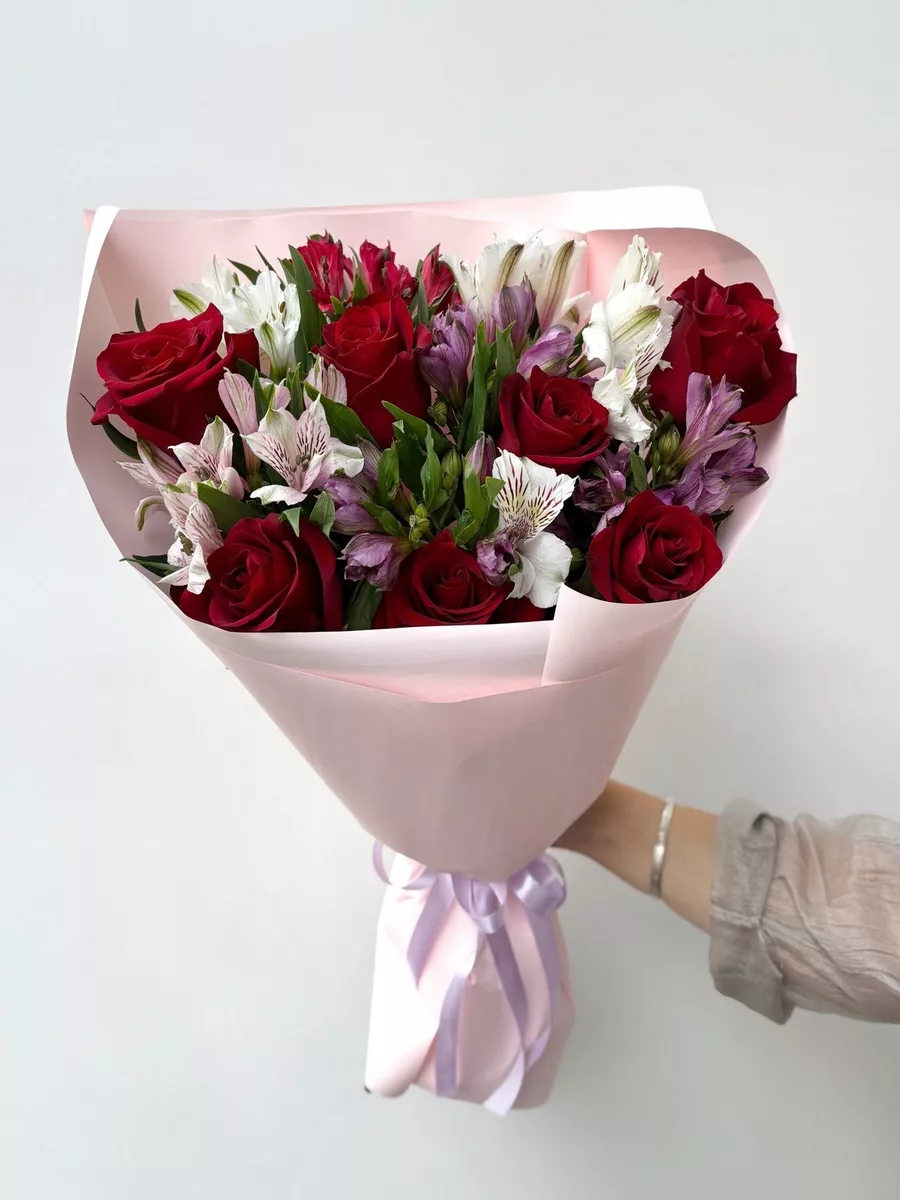
Bouquets we can deliver



The Correct Order of Fields for a Russian Address
When filling in a structured form with separate boxes, use this sequence. First, the recipient's full name — written in Latin characters exactly as it appears on their phone or intercom label, because the courier will buzz that name. Second, the city name in standard transliteration: Sankt-Peterburg or Saint Petersburg are both understood, but avoid inventing your own spelling. Third, the street name and its type. Russian street types include ulitsa (street, abbreviated ul.), prospekt (avenue, pr.), pereulok (lane, per.), naberezhnaya (embankment, nab.) and shosse (highway). Write the type after the name in Russian convention — Nevskiy prospekt, not prospekt Nevskiy — unless the form asks for them separately. Fourth, the house number (dom, abbreviated d.). Fifth, the building or section number if one exists — this is explained in the next section. Sixth, the apartment number (kvartira, abbreviated kv.). Seventh, the entrance number (podyezd) and floor (etazh) if the form provides those fields. Eighth, the postcode, which in Russia is a six-digit number placed at the end. If you are writing the full address as a single line rather than into separate boxes, follow this order and separate each element with a comma. A complete single-line example looks like this: ul. Rubinshteyna 15, kv. 7, Saint Petersburg, 191002.
Corpus, Stroenie and Vladenie: What Those Extra Fields Mean
This is the section that confuses most non-Russian customers, and it is the source of roughly half the failed deliveries we have to chase by phone. Many Russian buildings have a secondary identifier in addition to the main house number. There are three types. Corpus (abbreviated k. or korpus) refers to a numbered block within a residential complex that shares a single plot address. A large Soviet-era housing development might have dom 5 korpus 1, dom 5 korpus 2 and dom 5 korpus 3 — three physically separate buildings that all share the number 5. Stroenie (abbreviated str.) is similar but indicates a secondary structure on the same plot, often used in Moscow more than in Saint Petersburg. Vladenie (abbreviated vl.) indicates a land plot rather than a specific building and is mostly seen in addresses near industrial or commercial zones. When you receive an address from the recipient, look carefully for any of these abbreviations after the main house number. If the address says d. 12 k. 2, the corpus field on the order form must say 2 — do not fold it into the house number field and write 12/2, because the form will not parse that correctly and the courier's navigation system may point to the wrong entrance. When in doubt, paste the full address string into the comments field as well, so our team can cross-reference it manually before dispatch.
Transliterating Street Names: Which System to Use
Russia has no single mandatory transliteration standard for everyday use, which is why you will see Tchaikovsky, Chaykovskiy and Chaykovsky all referring to the same street. For delivery purposes, the goal is not academic accuracy but recognisability by a Russian-speaking courier who will be reading the address on a screen or a printed slip. The most practical approach is to use the BGN/PCGN system, which is the one adopted by most mapping services including Google Maps and Yandex Maps. In that system, the soft sign (ь) is omitted in street names, the letters е and ё both become e at the start of a word and ye in the middle, and щ becomes shch. For most common Saint Petersburg streets the transliterations are well established: Nevskiy prospekt, Ligovsky prospekt, Sadovaya ulitsa, Vasilyevskiy ostrov. If you are unsure how to spell a street name, open Yandex Maps, search for the address in Russian, then switch the interface to English — the map will display the transliterated version it uses for navigation, and that is the version our couriers' devices will also recognise. Avoid translating street names into English meaning: Tsvetochnaya ulitsa should not become Flower Street on the form. Write what the street is called, not what it means. The only exception is when the form explicitly asks for an English translation, which is rare on Russian-market delivery platforms.
Apartment Buildings, Private Houses and Office Addresses
The fields you need differ depending on the type of property, and using the wrong fields creates delays. For a standard apartment building, you need: house number, corpus if applicable, apartment number, entrance number and floor. The entrance number (podyezd) matters because large Soviet blocks can have eight or ten entrances strung along a single facade, each with its own intercom and stairwell. A courier carrying a large arrangement of long-stemmed chrysanthemums or a box of peonies cannot easily walk the full length of the building looking for the right door. For a private house (chastny dom or kottedzh), there is no apartment number, and the entrance field can be left blank — but note any gate code or intercom code in the comments. For an office building, replace the apartment number with the office number (ofis) and add the company name in the recipient name field so reception staff know who to call. Business centres in Saint Petersburg often have a separate entrance for couriers that is different from the main lobby entrance; if the recipient has told you this, put it in the comments. For hotel deliveries, write the hotel name in the building name field, the room number in the apartment field and the guest's name exactly as it appears on their booking, because that is what reception will use to locate them.
Postcodes, Districts and What to Leave Blank
Russian postcodes are six digits and are assigned at the level of individual streets or even individual buildings in dense urban areas. They are not optional decoration — the postal system and many courier routing systems use the postcode to assign the delivery to the correct zone before a human dispatcher even looks at the street name. If you do not have the postcode, you can find it in two reliable ways: ask the recipient directly, since most Russians know their postcode, or look up the address on the Russian Post website (pochta.ru) using the address search tool, which returns the correct index for any registered address. Do not guess or copy a postcode from a nearby address you happen to know — in Saint Petersburg, buildings on opposite sides of the same street sometimes fall into different postcode zones because of how district boundaries were drawn. The administrative district (raion) field, if it appears on the form, can be left blank for courier delivery in most cases. Raions are relevant for official correspondence and registration documents but are not part of the operational address a courier uses. Similarly, the oblast or region field should say Leningradskaya oblast for addresses in the Saint Petersburg metropolitan area outside city limits, but for addresses within the city itself, simply write Saint Petersburg or Sankt-Peterburg in the city field and leave the region field blank — the city is a federal subject of Russia and does not sit inside Leningradskaya oblast administratively.
What to Check Before You Confirm the Order
Before you click the final confirm button, read through the address fields one more time in this specific sequence. Check that the apartment number is in the apartment field, not appended to the house number with a slash. Check that the corpus number, if there is one, is in its own field. Check that the entrance number is filled in for any building with more than two entrances — if you do not know it, call the recipient and ask, because this is one of the most common causes of a delayed handover. Check that the phone number for the recipient is current and that the person will actually answer an unknown Saint Petersburg number — some recipients have call-filtering apps that block unfamiliar numbers, and if the courier cannot reach them, the delivery window closes. If the bouquet contains temperature-sensitive varieties such as garden roses, sweet peas or anemones, note the timing sensitivity in the comments and ask the recipient to be available at the door rather than waiting in a lobby without climate control. Finally, check the postcode one more time against the address. A single transposed digit can route the order to a completely different district. Once the order is confirmed and the flowers are cut and conditioned, changes to the address require a call to the shop directly — the online form cannot be edited after dispatch is triggered, and the courier will already be moving.
A Russian address written correctly in English takes about two minutes to verify and saves everyone involved — you, the recipient and the courier — a much longer conversation later. The key habits are: use the right field for each element, never fold the corpus or entrance number into another field, find the postcode before you start rather than after, and transliterate street names the way mapping services do rather than inventing your own spelling. When the address is clean and complete, the bouquet leaves our workroom on time, travels in the right temperature conditions and arrives looking exactly as it did when it was assembled. We deliver bouquets across Russia in 1–2 hours.
Frequently asked questions
Can I write the full Russian address in one text field instead of separate boxes?
Yes, if the form has a single address line, write the elements in this order separated by commas: street name and type, house number, corpus if applicable, apartment number, entrance number, city, postcode. Always add the recipient's phone number in the designated phone field — the address line alone is not enough for the courier to reach the door.
What if I do not know the entrance number for the building?
Call or message the recipient before placing the order and ask. Most Russians know their entrance number immediately. If you genuinely cannot reach them, write the apartment number in the comments and note that the entrance is unknown — our dispatcher will call the recipient to confirm before the courier departs, which adds a short delay but prevents a failed delivery.
Is the postcode mandatory for flower delivery within Saint Petersburg?
It is not strictly mandatory for central Saint Petersburg districts where our couriers know the streets well, but it is required for addresses in outer districts and essential for any delivery outside the city. Providing it always speeds up routing. If you cannot find it, the Russian Post address search tool at pochta.ru will return the correct six-digit index for any registered address.
How do I write the address for a recipient staying at a hotel?
Put the hotel name in the building or company name field, the room number in the apartment field and the guest's name exactly as registered at reception. Add a note in the comments asking the courier to hand the flowers to reception if the guest does not answer the room call, and include the guest's personal mobile number so the hotel can notify them directly.
Does it matter whether I write Saint Petersburg or Sankt-Peterburg on the form?
Both are understood by our system and by couriers. Saint Petersburg is the standard English name and is fine for any English-language form. Sankt-Peterburg is the transliterated Russian name used on official documents. Avoid abbreviations like SPb in the city field, as some automated routing systems do not recognise them and may flag the order for manual review, adding a few minutes to processing.
Ready to send a bouquet?
Pick a city, choose the flowers, and we will hand them over with a photo confirmation.
Choose a city →