
Russian Florist: What We Do Differently and How to Order From Abroad
A Russian florist is a flower shop working by Russian gifting customs: bouquets with an odd number of stems for celebrations, generous wrapping, long-stem roses and seasonal flowers for set dates such as 8 March and 1 September. Pyat Tsvetov (5 Flowers) is one of them - we have run our own flower shops in Saint Petersburg since 2011 and deliver bouquets across Russia, including orders placed from abroad.
Most of the people who write to us in English fall into two groups: Russians living abroad who want to congratulate their parents, and foreigners with a partner, friend or colleague in Russia. Both ask similar things in the shop and on the phone, so this article answers those questions in the order we usually hear them.
What customers ask a Russian florist first
The first question is almost always "how many flowers should it be". In Russia an even number of flowers is reserved for funerals and remembrance, so a gift bouquet has 5, 7, 11, 15 or 25 stems. Once a bouquet passes about fifteen stems the rule relaxes in practice, but most people still prefer an odd count, and our florists keep to it for gift bouquets. We explain the background in more detail in the odd number of flowers rule.
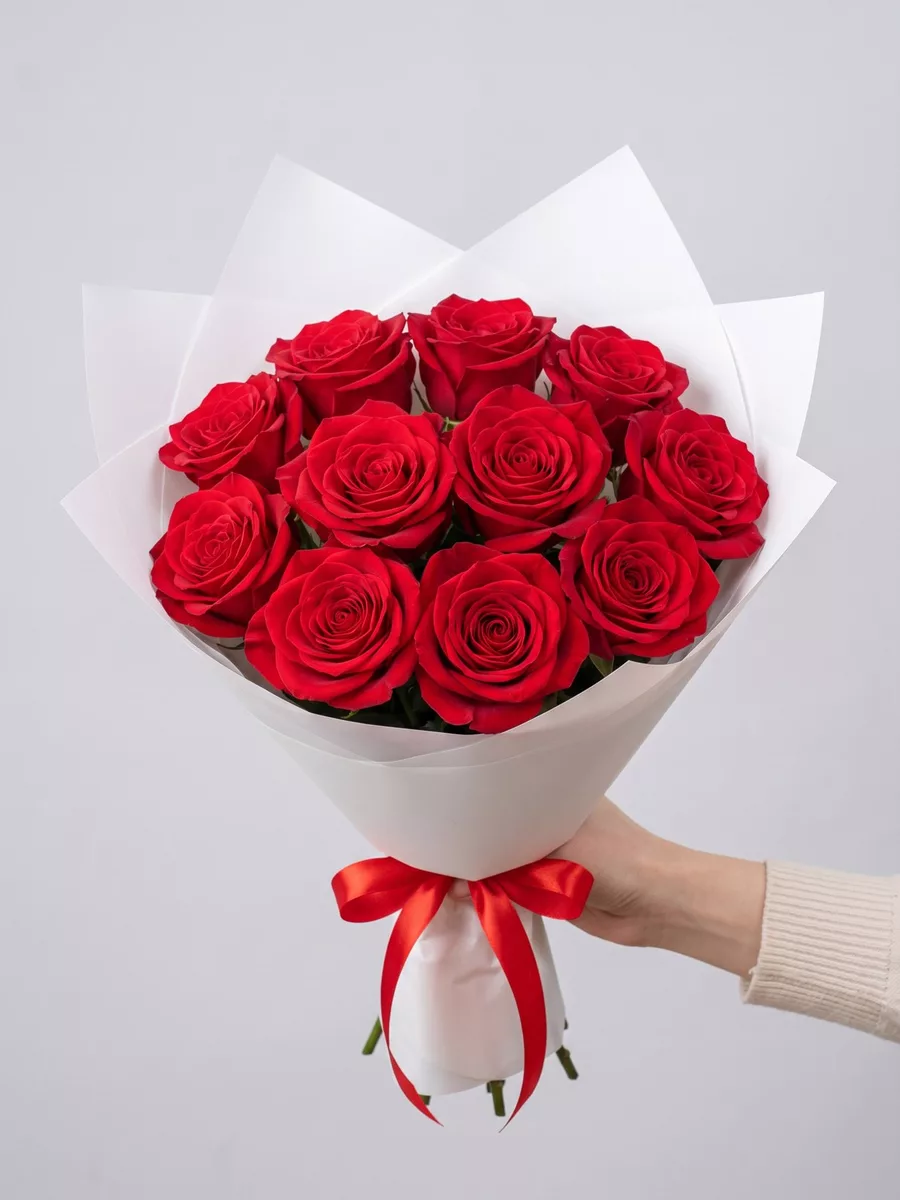
The second question is about colour and meaning. Yellow flowers once carried a reputation for separation, and some older recipients still remember it, so for a grandmother or a mother-in-law we usually steer towards white, cream, pink or burgundy. Red roses remain the safe romantic choice, while mixed seasonal bouquets suit colleagues, teachers and friends.
The third question is whether the flowers will look like the photo. A Russian florist assembles every bouquet by hand on the day, so the composition follows the photo in style, size and palette, while individual heads and greenery vary slightly. That is normal for cut flowers and is the reason we prefer to work from a specific bouquet in the catalogue rather than a verbal description.
How a Russian bouquet differs from a European one
Customers who have lived in Germany, the UK or Scandinavia often notice that Russian bouquets are taller and fuller. Long stems are valued, especially for roses, and a bouquet handed over at a birthday or a concert is expected to be held in both hands. Wrapping is part of the gift: paper, film or felt in layers, finished with a ribbon, rather than the plain kraft sleeve common in Western shops.
Hatboxes and baskets are popular because the recipient does not need a vase straight away. For an older person or a busy office they are often the more practical choice, since the flowers sit in wet floral foam and can be put on a table immediately. For a romantic gift most people still choose a classic hand-tied bouquet.
Some flowers carry different associations in Russia. Chrysanthemums are an everyday autumn gift rather than a grave flower, which surprises visitors from France or Italy; we wrote about this in mums in Russian. Carnations, on the other hand, are associated with Victory Day and official ceremonies, so we rarely suggest them for a romantic occasion.
Bouquets we can deliver



Dates when Russians expect flowers
The busiest day of the year for any Russian florist is 8 March, International Women's Day, when women of all ages receive flowers from partners, sons, colleagues and friends. The second wave is 1 September, the start of the school year, when children bring bouquets to their teachers. Birthdays, name days, graduations, theatre premieres and visits to someone's home round out the calendar.
If you live abroad and want flowers to arrive on 8 March or on a birthday morning, order in advance. We accept pre-orders 1 to 30 days ahead, and around holidays this is the calmest way to secure a specific time. You can also choose a delivery window - 09-12, 12-15, 15-18 or 18-21 - or an exact time with a margin of plus or minus 30 minutes.
Name days and anniversaries are quieter but still matter to many families, especially older relatives. Wedding anniversaries in particular have their own traditions, which we describe in do Russians celebrate wedding anniversaries.
Ordering from abroad: payment, card text and anonymity
Foreign customers usually worry about payment first. You can pay online on the site by bank card, SBP or Yandex Pay, and foreign bank cards are accepted through Robokassa.
A greeting card with your text is free. Write the message exactly as it should be printed, including the signature, and tell us if it should be in Russian and you need help with spelling. Many diaspora customers write a few words in Russian for parents and sign in English for the rest of the family.
Delivery is anonymous by default: the courier does not name the sender. If you want the recipient to know who the flowers are from, put your name on the card. If you prefer a secret admirer approach, simply leave the card unsigned.
Care advice we give with every bouquet
Recipients in Russia often phone the shop a day later to ask how to keep the flowers fresh, so it is worth passing on the basics. Trim the stems by 1-2 cm at a sharp angle with a clean knife, remove any leaves that would sit below the waterline and use a clean vase with cool water. Change the water every day or two and trim again each time.
Keep the bouquet away from radiators, which in Russian flats are often very hot from October to April, and away from a fruit bowl, because ripening fruit shortens vase life. Roses and chrysanthemums handle a warm room better than tulips or hydrangeas, which is one reason we suggest them for winter deliveries.
A hatbox or basket with floral foam needs a little water poured into the foam every day or two rather than a vase. Do not take the flowers out of it: the foam is what keeps them drinking.
How delivery works in Saint Petersburg and other cities
In Saint Petersburg delivery is around the clock, and our three shops - on Ilyushina Street, Obvodny Canal Embankment and Srednerogatskaya Street - cover the city from the north-west to the south. In other large Russian cities express delivery takes 1-2 hours after the order is confirmed. City delivery costs 500 RUB; for remote districts and suburbs the operator confirms the price when confirming the order.
About 15 minutes before arrival the courier calls the recipient, so the phone number in the order must be correct and reachable. If the recipient is not at home, we agree a second delivery on the same day or hand the flowers to a neighbour or concierge, but only with your consent. For a surprise, add a second contact who knows about the plan.
Russian addresses include details that people abroad sometimes leave out: the entrance number (podyezd), floor and intercom code. Without them a courier can spend a long time outside a large apartment block. Full terms are on the delivery and payment page, and for any question you can call 8 (812) 507-67-05.
Frequently asked questions
Can I pay a Russian florist with a foreign card?
Yes. Pyat Tsvetov accepts foreign bank cards through Robokassa, as well as Russian cards, SBP and Yandex Pay. Payment is made online on the site.
Do you deliver only in Saint Petersburg?
No, we deliver across Russia. In Saint Petersburg delivery runs around the clock; in other large cities express delivery takes 1-2 hours after confirmation.
How many flowers should a Russian bouquet have?
For any happy occasion choose an odd number of stems. Even numbers are traditionally brought to funerals and memorials.
Will the recipient know the flowers are from me?
Only if you sign the card. The courier does not name the sender, so delivery is anonymous unless you choose otherwise.
How can I ask a question before ordering?
Call us on 8 (812) 507-67-05. We can help you choose a bouquet, agree a time and check the address.
Ready to send a bouquet?
Pick a city, choose the flowers, and we will hand them over with a photo confirmation.
Choose a city →