
Russian Graduation Season: Dates, Customs and Flower Delivery Timing
Every spring we take calls from people in Berlin, Toronto and Tel Aviv who have missed the moment entirely — they ordered flowers for late June because that is when graduation happens at home, only to learn that their daughter already collected her diploma two weeks earlier. Russia runs its academic calendar differently from most Western countries, and the gap between assumption and reality costs people the chance to mark one of the biggest days of the year. This article lays out the actual dates, explains what Russians typically do to celebrate, and tells you exactly what to order and when to have it arrive.
The Russian Academic Year and Why Graduation Falls When It Does
The Russian school year begins on 1 September, a date so fixed in national life that it has its own name: Den Znaniy, the Day of Knowledge. The year runs through to late May, with state examinations for ninth and eleventh graders filling most of May and the first days of June. Universities follow a similar rhythm: the spring semester ends in late June, with state examinations and thesis defences spread across May and June depending on the faculty. This means the main graduation window in Russia is roughly mid-May to late June, with the single busiest week falling around 25 June when most universities hold their diploma ceremonies. School leavers finish a little earlier: the formal last-bell ceremony, called Posledniy Zvonok, happens in late May, and the graduation ball, Vypusknoy, is held in the third week of June after exam results are confirmed. If you are sending flowers from outside Russia and you picture graduation as a July or August event, you are already too late. The practical implication for ordering is that you need to plan at least five to seven days ahead if you are coordinating across time zones, because you will need to confirm the exact ceremony date with the graduate, convert that to Moscow time, and place the order with a delivery window that accounts for any last-minute schedule shifts. Russian universities do not always announce the precise ceremony time until a week before, so build that uncertainty into your planning.
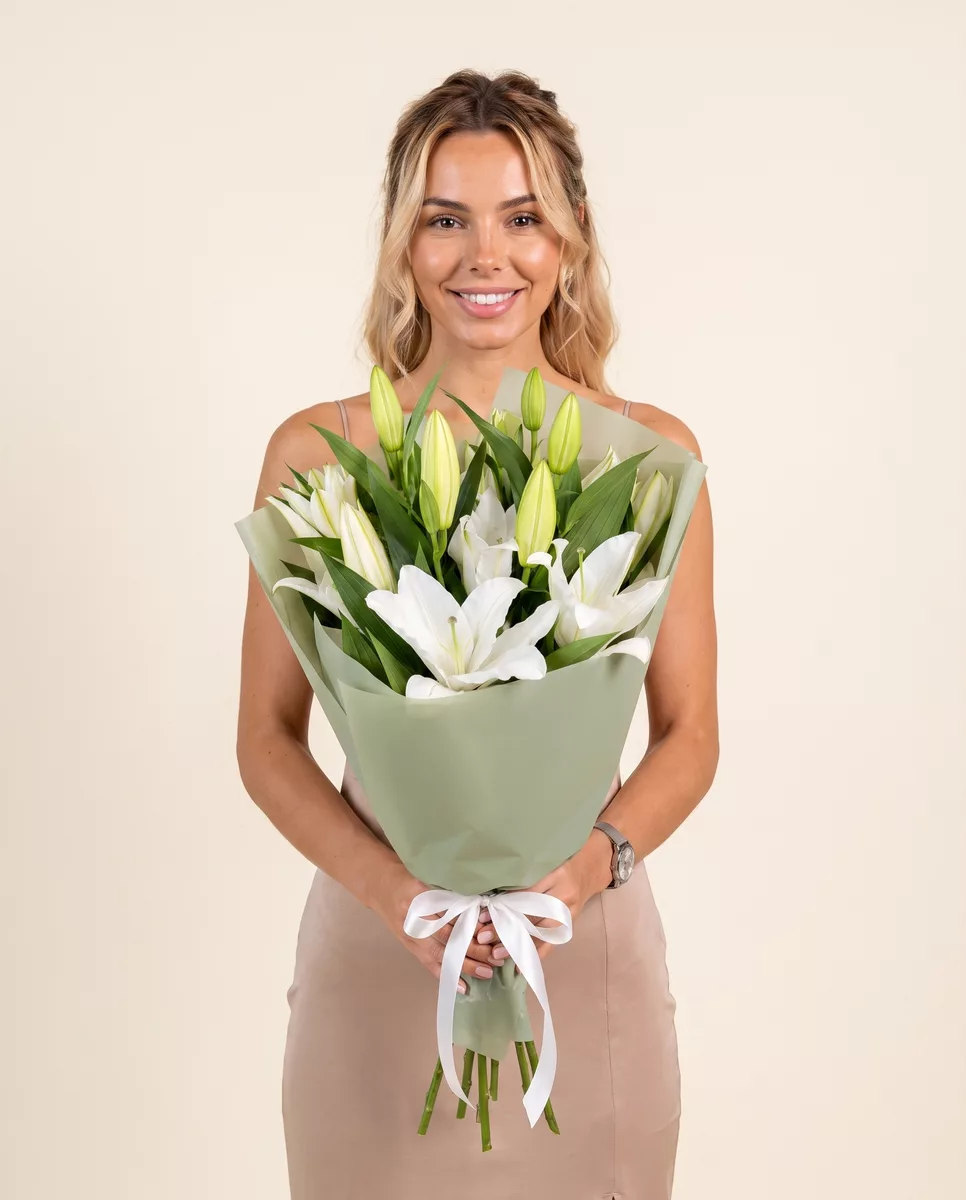
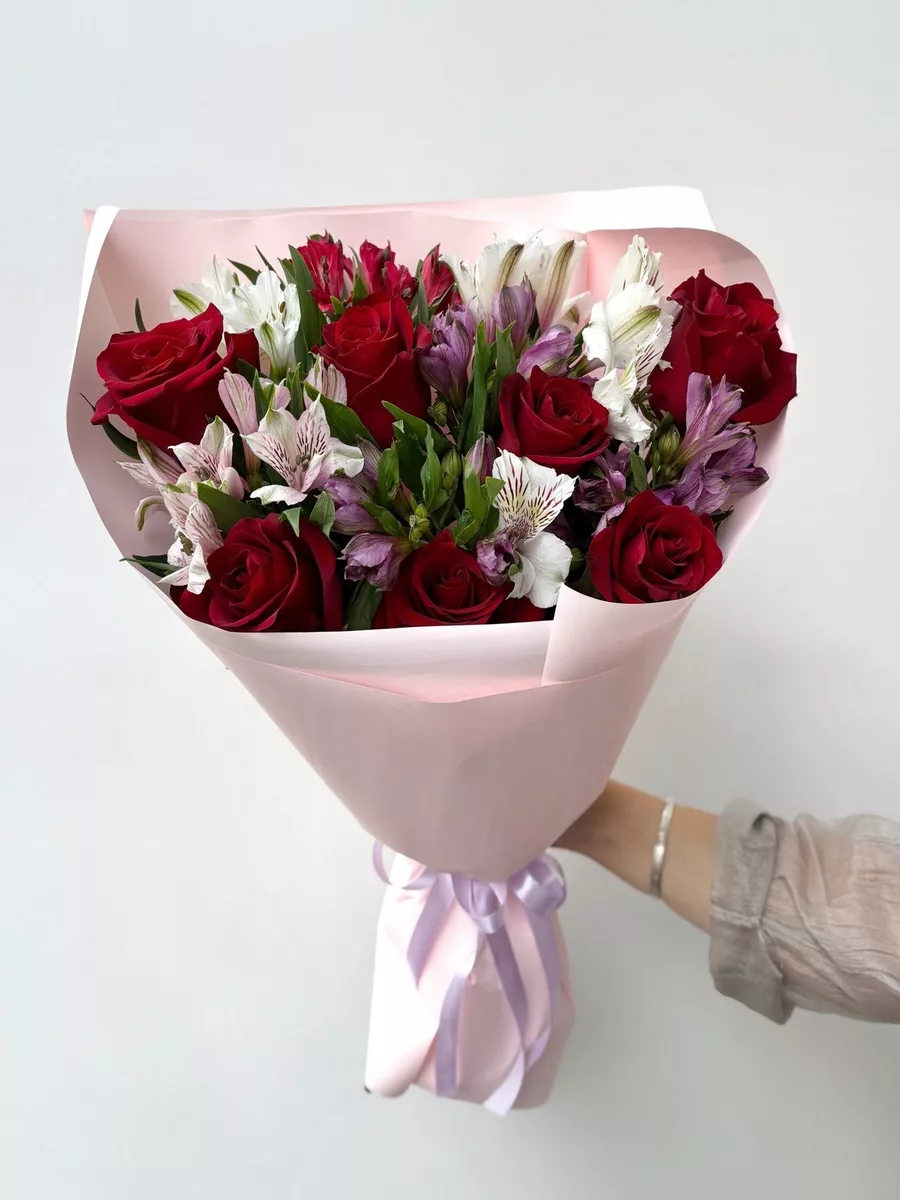
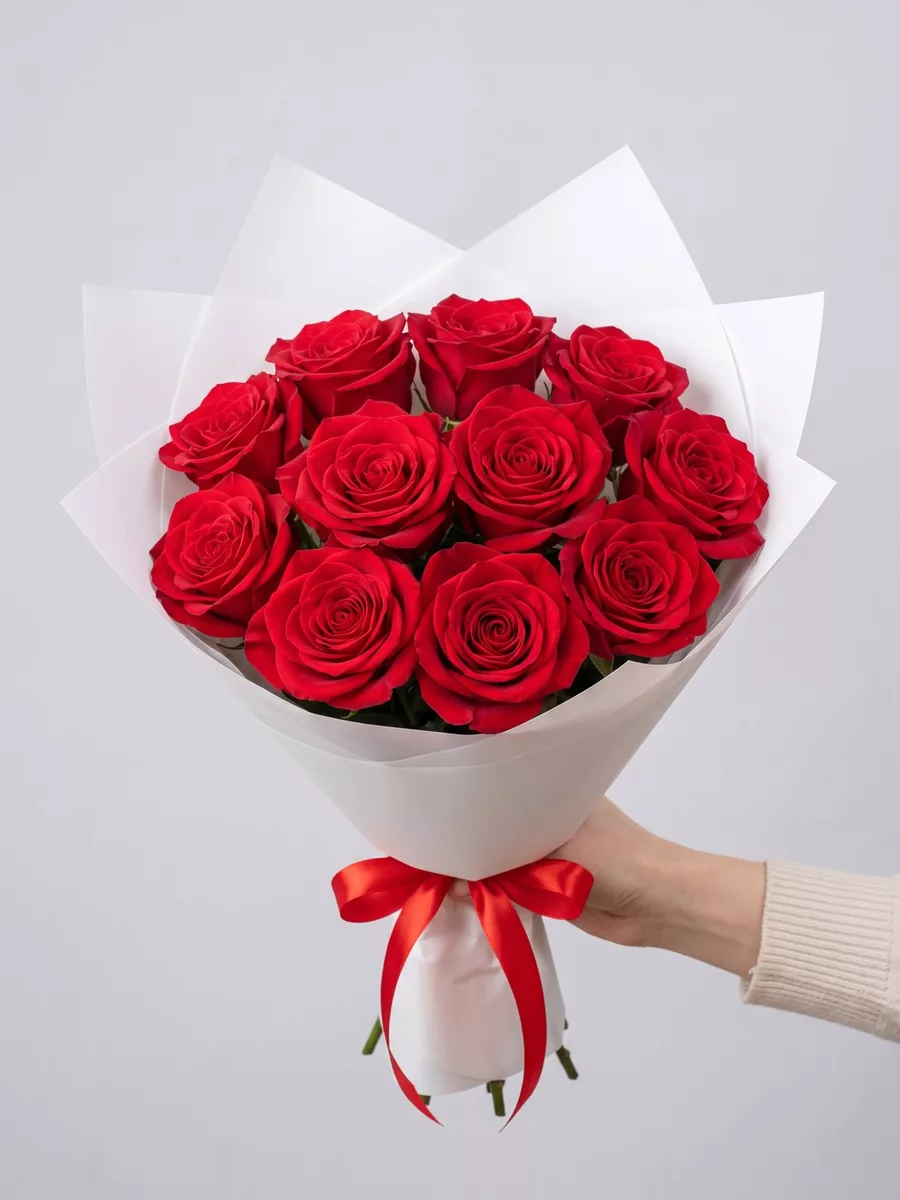
Bouquets we can deliver

Posledniy Zvonok: The Last Bell Ceremony in Late May
Posledniy Zvonok is the formal farewell to school for eleventh graders, held on the last Friday of May, which in most years falls between 24 and 31 May. It is a morning assembly in the schoolyard: students line up in formal dress, a first-grader rings a hand bell, speeches are made, and the eleventh graders walk a ceremonial lap. It is not a diploma ceremony — exams have not yet happened — but it is treated as a significant send-off and flowers are absolutely expected. Teachers receive bouquets from parents and students alike. The most common choices are spray roses, alstroemeria and seasonal peonies, which are at peak availability in late May across Russia. Peonies in particular are strongly associated with this moment: they come into full supply around 20 May and the prices are reasonable through the end of the month before demand spikes for Vypusknoy. A teacher's bouquet at this ceremony typically runs to seven to eleven stems in soft pinks, whites or corals. If you are sending flowers to a teacher from abroad, the delivery address is the school itself, and you should target a morning arrival between 9 and 11 because the ceremony rarely runs past noon. One common mistake is ordering red roses for a teacher at this event — red roses in Russia carry a romantic connotation and will read as awkward. Stick to mixed pastel arrangements or a single-variety peony bouquet and you will not go wrong.
Vypusknoy: The Graduation Ball and Its Flower Traditions
Vypusknoy is the Russian graduation ball, held after the final state exam results are published, typically on the third or fourth Friday of June. In Saint Petersburg the celebration takes on a particular scale: the city organises a citywide event on Palace Square called Alye Parusa, Scarlet Sails, named after the Alexander Grin novel, where graduates from across the city gather for a concert and a river spectacle involving a tall ship with red sails. The event draws tens of thousands of people and has been running since 1968 in various forms. For flower purposes, Vypusknoy is an evening event, which means delivery should target the afternoon, ideally between 14:00 and 17:00 local time, so the graduate has the bouquet in hand before leaving for the venue. Girls typically receive large, statement bouquets: garden roses, lisianthus and ranunculus are popular because they photograph well and hold their shape through a long evening. Avoid flowers that wilt quickly in warm June temperatures — tulips and anemones are off-season by this point and will not last the night. Single-variety bouquets of 25 or 51 stems of spray roses in white or blush are a reliable choice. Boys at Vypusknoy are less commonly given flowers, but a small boutonniere or a gift basket with a few stems is not unusual. The number of stems matters in Russian custom: even numbers are associated with mourning, so always order odd numbers — 11, 15, 25, 51.
University Diploma Ceremonies: June Dates and Practical Details
University diploma ceremonies in Russia are called Vruchenie Diplomov, literally the handing over of diplomas, and they are faculty-by-faculty affairs rather than whole-university events. A large university like Saint Petersburg State University will hold separate ceremonies for each faculty across a two-to-three-week window in late June, with medical and law faculties sometimes running into early July. This fragmentation is the single biggest source of missed deliveries from overseas senders: they assume one date applies to everyone, but a friend in the economics faculty may graduate on 20 June while a friend in the philology faculty graduates on 28 June. Always ask for the specific faculty ceremony date, not just the university name. Ceremonies are usually held in the morning, starting between 10:00 and 12:00, and last two to three hours. Flowers should arrive at the home address the evening before or early on the morning of the ceremony, because graduates travel directly from home to the venue in formal dress and will not make detours. The classic university graduation bouquet in Russia is larger and more structured than a school bouquet: think 15 to 21 stems combining garden roses with greenery such as eucalyptus or ruscus, or a mono-bouquet of 25 white roses. Chrysanthemums are sometimes used as filler but are considered a secondary flower; if you want to make an impression, lead with roses or peonies if the date falls before mid-June when peony season is still running.
Flowers That Work for Russian Graduation and Flowers That Do Not
Russian graduation falls in late spring and early summer, which means the flower market is well supplied with seasonal material. Peonies are the headline flower of late May and early June: they are abundant, affordable in this window, and carry no negative associations. By late June they are finished and you will pay a premium for the last of the season. Garden roses — the large-headed, densely-petalled variety rather than standard long-stem roses — are available year-round but are at their best quality in June when imports from Ecuador and Kenya arrive in peak condition. Lisianthus, which resembles a ruffled peony but lasts far longer in a vase, is an excellent choice for an evening event like Vypusknoy because it does not wilt under venue lighting. Ranunculus are popular in May but become harder to source reliably by late June. Hydrangeas work well in mixed arrangements and are in good supply through June; a single large hydrangea head paired with roses makes a compact, elegant bouquet that is easy to carry through a crowd. Flowers to avoid: yellow flowers in Russia are associated with separation and bad luck in relationships — this is a deeply held superstition and even younger generations tend to observe it. Never send a graduation bouquet that is entirely yellow. Carnations are considered old-fashioned and are associated with Soviet-era formality; they will not offend, but they will not impress. Lilies are fragrant and beautiful but their pollen stains formal wear, which is a real practical problem on a day when everyone is in white shirts and dresses.
Ordering from Abroad: Time Zones, Lead Times and What to Confirm
Saint Petersburg runs on Moscow Time, which is UTC plus three hours with no daylight saving adjustment — Russia abolished seasonal clock changes in 2014. If you are ordering from New York, you are six hours behind in winter and nine hours behind in summer, which means that when you sit down at 9 pm to place an order, it is already early morning the next day in Saint Petersburg. This matters because same-day delivery cutoffs for morning ceremonies can close as early as 22:00 the previous evening local time. The safest approach is to place your order at least two days before the ceremony date, specifying the delivery window in local Saint Petersburg time. When you place the order, confirm three things: the exact delivery address including the apartment number and entry code if the building has one, the recipient's mobile number so the courier can call on arrival, and the preferred delivery window. Russian apartment buildings frequently have coded entry panels, and a courier who cannot reach the recipient and cannot enter the building will return the order. For overseas senders who cannot easily call a Russian mobile, include a message in the order notes asking the shop to text the recipient before arriving. Graduation days are high-traffic days for flower shops, so placing your order in the morning Saint Petersburg time on the day itself is a gamble — the specific varieties you want may already be allocated to earlier orders. Book the arrangement two to three days ahead and specify substitution preferences in case a variety is unavailable.
What to Write on the Card and Other Russian Graduation Customs
Graduation cards in Russia are short and direct. The most common phrase is Pozdravlyaem s Okonchaniyem and then the name of the school or university — congratulations on finishing. Wishing someone udachi, good luck, for what comes next is universal and always appropriate. If you want to write in Russian but are not a native speaker, keep it to one sentence: a grammatical mistake in a card is noticed and remembered. Writing in English is perfectly acceptable if the graduate speaks it, and many younger Russians do. Avoid the phrase uspekha v buduschey kariere, success in your future career, if the graduate has not yet decided what they are doing — it can land as pressure rather than warmth. Beyond flowers, it is common for close family to give practical gifts: a quality pen, a watch, or an envelope with money. Flowers from friends and more distant relatives are the norm; a bouquet is a complete and appropriate gift on its own and does not need to be supplemented with anything else. In Saint Petersburg specifically, graduates often spend the night of Vypusknoy outdoors watching the Alye Parusa spectacle and then the White Nights — the period around the summer solstice when it never fully gets dark. Bouquets carried through that night need to be robust: ask for flowers that have been properly hydrated before dispatch and, if possible, choose varieties with firm petals rather than delicate open blooms that will suffer in the outdoor humidity.
Russian graduation is a concentrated season running from the last week of May through the last week of June, with two distinct peaks: the Last Bell in late May and the diploma ceremonies and Vypusknoy in June. If you are sending flowers from outside Russia, the single most important step is getting the exact ceremony date from the graduate before you do anything else, because the window is short and the dates vary by school, faculty and city district. Once you have the date, order two to three days ahead, specify a delivery window in Saint Petersburg local time, and choose flowers suited to the season — peonies through early June, garden roses and lisianthus for the later ceremonies. Stick to odd numbers of stems, avoid yellow, and include a clear delivery note with the recipient's mobile number. Done right, a bouquet arriving on the morning of a diploma ceremony is one of the most well-received things you can send to someone in Russia, regardless of how far away you are. We deliver bouquets across Russia in 1–2 hours.
Frequently asked questions
When exactly is Russian graduation — is it the same date every year?
There is no single fixed date. The Last Bell ceremony for school leavers falls on the last Friday of May, usually between 24 and 31 May. Vypusknoy balls are held in the third or fourth week of June. University diploma ceremonies are spread across late June, varying by faculty. Always confirm the specific date with the graduate before ordering.
Can I order flowers for a Russian graduation from outside Russia?
Yes. Place your order through the shop's website in advance, specifying the delivery address in full, the recipient's Russian mobile number, and the delivery window in Moscow or Saint Petersburg local time. Ordering two to three days ahead is strongly recommended to guarantee variety availability and avoid same-day cutoff issues caused by time zone differences.
What flower colors should I avoid for a Russian graduation bouquet?
Avoid arrangements that are entirely yellow. In Russian tradition, yellow flowers signal separation or the end of a relationship, and this superstition is widely observed even among younger people. Also ensure the bouquet contains an odd number of stems — even numbers are associated with mourning and will be noticed immediately by the recipient and their family.
Are peonies a good choice for a June graduation ceremony?
Peonies are ideal through early June when they are in peak domestic and imported supply. By late June the season is closing and quality becomes variable while prices rise. For ceremonies after 20 June, garden roses or lisianthus are more reliable choices. If the ceremony falls before 15 June, peonies are excellent and will be fresher and better priced than at any other time of year.
How many stems should a Russian graduation bouquet contain?
Always choose an odd number: 11, 15, 21, 25 or 51 stems are all standard sizes for graduation bouquets. For a teacher at the Last Bell ceremony, 7 to 11 stems is appropriate. For a university graduate, 21 to 25 stems makes a strong impression without being unwieldy to carry through a ceremony and then a long celebratory evening.
Ready to send a bouquet?
Pick a city, choose the flowers, and we will hand them over with a photo confirmation.
Choose a city →