
Russian Wedding Flowers: Bouquets for the Bride and Guests
Every week from May through September we take calls from people who have never been to a Russian wedding and have no idea what to order, and from Russian grooms who assume the bride's bouquet and the guest flowers sort themselves out. They do not. The bride's bouquet is chosen weeks in advance and built around specific varieties and a fixed colour palette; guest flowers follow a different logic entirely and need to arrive at the venue — not the apartment — within a tight window on the morning of the ceremony. Getting either of these wrong is the most common flower mistake at Russian weddings, and it is entirely avoidable.
What the Bride Actually Carries: Varieties and Construction
The bridal bouquet in Russia is a structured piece, not a loose garden bunch. The most requested base flowers are garden roses in cream, blush or white — varieties such as Avalanche, Mondial and White O'Hara come up constantly because they hold their shape for six to eight hours without water, which matters when the ceremony runs long. Peonies are extremely popular from late April through June; outside that window they are either unavailable or arrive in poor condition, so do not plan a peony bouquet for an October wedding. Ranunculus, lisianthus and spray roses fill the mid-range of the bouquet and add texture without adding weight. Calla lilies remain a classic choice for civil registry ceremonies, where the bouquet tends to be smaller and more graphic. Greenery choices matter more than most clients expect: eucalyptus adds scent and holds well, while delicate ferns wilt within two to three hours in warm indoor air. The bouquet is typically round and compact — 25 to 35 centimetres in diameter — because Russian brides carry it low at hip level during the walk and hold it for photographs for several hours. A cascade style is possible but requires a stronger stem structure. The florist should wrap the stems in waterproof tape and add a water capsule if the ceremony runs more than four hours. Order the bridal bouquet at least five to seven days ahead so the shop can source the exact varieties and condition the flowers properly before assembly.
Bouquets we can deliver


Buttonholes, Wrist Corsages and What the Groom's Side Wears
The groom's buttonhole is not optional in Russian wedding culture — it is expected, and it should match the bridal bouquet in at least one element, usually a single bloom or a sprig of the same greenery. A single garden rose bud, a ranunculus or a small spray rose head is the standard choice. The buttonhole is pinned to the left lapel and needs to last the entire day, so florists coat the cut end in wax or use a small water vial hidden behind the lapel. Witnesses — called свидетель and свидетельница — traditionally also wear flowers: the male witness wears a buttonhole, the female witness wears a wrist corsage or a small pinned corsage. These are usually ordered as a set with the bridal bouquet so the colours stay consistent. Mothers of the bride and groom often receive corsages or small pinned arrangements as well; this is not universal but it is common enough that you should ask the couple before assuming it is unnecessary. The entire set — bouquet, buttonhole, two witness pieces, two mother corsages — should be delivered together in one refrigerated box, labelled clearly, because at the venue on the morning of the wedding nobody has time to sort through unmarked packaging. Wrist corsages are particularly sensitive to heat; if the ceremony hall is above 22 degrees Celsius, choose sturdier flowers like spray roses or small orchid heads rather than ranunculus or sweet peas, which will close or drop petals within two hours in warm air.
Guest Flowers: What People Actually Bring to a Russian Wedding
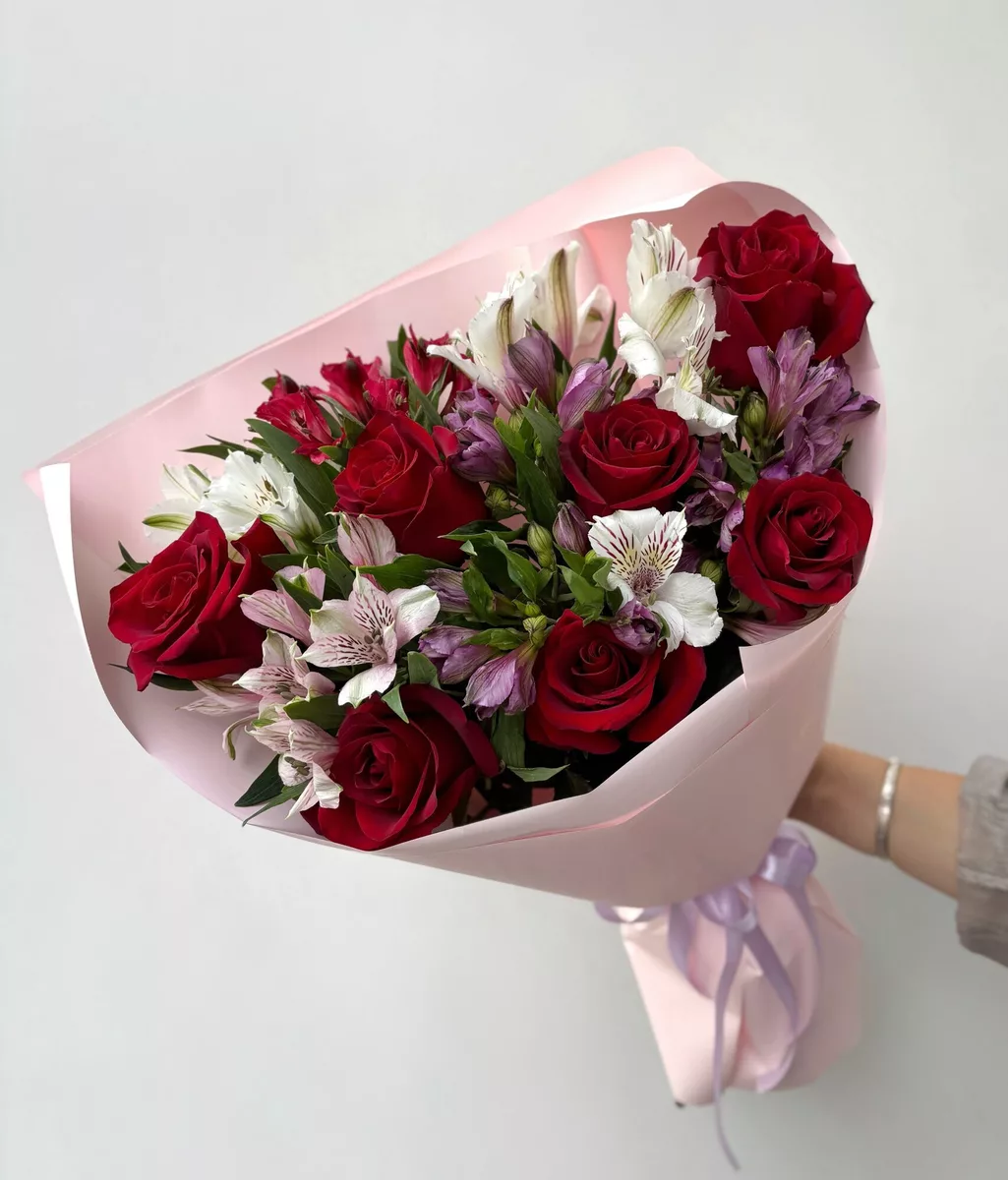
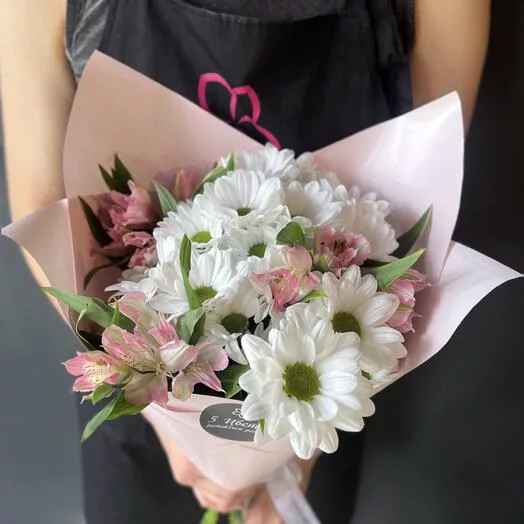
In Russia, guests bring flowers to the couple — this is a firm tradition, not a suggestion. Unlike Western weddings where flowers are sent in advance or skipped entirely, Russian guests arrive at the venue holding bouquets, which are then collected and displayed on a table near the entrance or handed directly to the bride. The practical consequence is that a wedding with 60 guests will produce 40 to 50 bouquets over the course of two hours, and the venue needs containers or vases ready for them. Guests typically bring mid-sized bouquets of 15 to 25 stems — roses, chrysanthemums, alstroemeria and mixed seasonal arrangements are all standard. What guests should not bring, and what florists quietly advise against, is anything white if it is not coordinated with the bridal palette, because a sea of white bouquets from guests can visually compete with the bride's own flowers. Red roses are the most traditional guest gift; they read as celebratory and unambiguous. If you are ordering on behalf of a group of guests, a larger bouquet of 40 to 50 stems in a clear colour — deep red, coral, burgundy — makes a stronger impression than several small ones. Guests ordering delivery directly to the venue need to specify the venue address and the time window precisely: most Russian wedding ceremonies at a registry office last 20 to 30 minutes, after which the couple moves to the banquet hall, so a bouquet delivered to the registry office two hours late will miss the couple entirely.
Coordinating Delivery to a Wedding Venue: Timing and Logistics
Delivering flowers to a wedding is logistically different from delivering to a home address, and most problems we see come from people who do not account for this. A wedding venue is busy, often locked until a specific hour, and the contact person — usually the wedding coordinator or a family member — changes location throughout the day. When placing an order for venue delivery, always provide the name and mobile number of the person who will physically receive the flowers on site, not the bride's number, because the bride will not be answering her phone two hours before the ceremony. Specify the delivery window in hours, not just a time: a one-hour window between 9:00 and 10:00 is actionable; 'morning' is not. For bridal flowers, delivery should arrive 90 minutes to two hours before the ceremony begins, giving the bride time to check the bouquet, make any adjustments and photograph the details before getting dressed. For guest bouquets ordered for delivery directly to the venue, the window is the 30 minutes before guests start arriving — typically 30 to 60 minutes before the ceremony. Saint Petersburg summer temperatures above 25 degrees Celsius mean that flowers left in a car or on a doorstep for more than 20 minutes will show heat stress; our couriers carry insulated bags and the flowers travel in water, but the receiving end needs to have a cool, shaded spot ready. Confirm the venue address includes the building entrance number — large event spaces in Saint Petersburg often have multiple entrances and a courier sent to the wrong one loses 20 minutes.
Seasonal Availability and What to Substitute When Varieties Are Gone
Russian weddings peak in June, July and August, which is also when peonies finish, sunflowers are at their best and garden roses are most reliable. If your wedding is in late August and the design was planned around peonies, you need a substitute, and the closest in shape and volume is a fully open garden rose or a large-headed ranunculus — but ranunculus is also winding down by August, so the honest answer is a full-bloom garden rose in a blush or cream variety. September weddings can still use dahlias, which are excellent in late summer and early autumn and hold well in bouquets. October through March is chrysanthemum and rose season; spray roses, standard roses and alstroemeria are reliably available year-round and are the backbone of winter wedding flowers. Tulips are available from January through April and make striking bridal bouquets, but they continue to grow after cutting — a tulip bouquet assembled in the morning will look noticeably different by evening, with stems elongating and blooms opening fully, which some brides love and others find alarming. Lilies are occasionally requested but are genuinely difficult in bridal bouquets: the pollen stains fabric permanently, the scent is very strong in enclosed spaces, and the blooms are large enough to overwhelm a compact round bouquet. If a bride asks for lilies, we usually suggest a single stem as a complement rather than the primary flower, or we recommend the pollen-free varieties that have been treated before cutting.
Common Mistakes and What to Check Before You Confirm the Order
The single most common mistake is ordering the bridal bouquet the day before the wedding. Flowers need time to condition after arrival from the grower — roses in particular need 12 to 24 hours in water at 4 to 6 degrees Celsius before they are ready to be arranged, and a bouquet assembled from flowers that arrived the same morning will look tight and closed in photographs and may not open properly during the day. Order five to seven days ahead and the shop can source, condition and assemble properly. The second mistake is not coordinating the guest flowers with the bridal palette. If the bride is carrying cream and blush roses and 50 guests arrive with bright red bouquets, the colour story of the day is gone. This does not mean guests must match exactly, but sharing the general palette — warm tones, cool tones, white — makes the visual result coherent. Third mistake: no one tells the florist about the venue temperature. Outdoor summer ceremonies in Russia can reach 30 degrees; indoor banquet halls in winter can be very dry. Both extremes affect which flowers will hold. Tell the florist the setting and they will adjust the variety selection. Fourth: ordering by stem count alone without specifying variety. Forty stems of alstroemeria and forty stems of garden roses are completely different objects in terms of volume, weight and appearance. Always confirm the variety, the colour and the approximate diameter of the finished bouquet, not just the stem count.
A Russian wedding involves more flower decisions than most people outside the country expect — the bridal bouquet, the groom's buttonhole, witness and mother pieces, and the wave of guest bouquets that arrives at the venue door. Each of these has its own timing, its own variety logic and its own delivery requirement. The florist's job is to make sure none of these pieces arrives late, wilted or in the wrong colour. Our job is also to tell you plainly when a variety will not be available on your date and what will work instead. The earlier you call, the more options stay open. Доставим букет по России за 1–2 часа.
Frequently asked questions
Can guests have flowers delivered directly to the wedding venue instead of bringing them?
Yes, and it is increasingly common. You need to provide the exact venue address with the entrance number, the name and mobile number of the on-site contact, and a delivery window that ends at least 30 minutes before guests start arriving. Do not use the bride's number as the contact — she will not be reachable in the final hour before the ceremony.
What flowers should be avoided in a Russian bridal bouquet?
Lilies are problematic because the pollen stains fabric and the scent is intense in enclosed spaces. Delicate ferns and sweet peas wilt quickly in warm indoor air. Tulips continue to grow and change shape after cutting, which surprises some brides. None of these are impossible, but each requires a specific conversation with the florist about the conditions on the day.
How far in advance should the bridal bouquet be ordered?
Five to seven days minimum. This allows the shop to source the exact varieties, receive them from the grower and condition them properly — roses need 12 to 24 hours in cold water before they are ready to arrange. Orders placed the day before are possible but limit variety selection significantly and risk flowers that have not opened or conditioned fully.
Is it true that guests always bring flowers to Russian weddings?
Yes, it is a firm tradition. Guests arrive at the venue holding bouquets, which are collected near the entrance or given directly to the couple. A wedding with 50 to 60 guests will receive 35 to 45 bouquets. The venue should have containers ready. If you are a foreign guest attending a Russian wedding, bringing flowers is expected and appreciated.
What happens to flowers if the wedding is outdoors in summer heat?
Heat above 25 degrees Celsius accelerates wilting significantly. For outdoor summer weddings, choose sturdy varieties: standard roses, spray roses, chrysanthemums and alstroemeria hold better than ranunculus, sweet peas or open peonies. Tell the florist the setting when ordering — they will adjust the selection and may recommend a water-retaining stem treatment for the bridal bouquet.
Ready to send a bouquet?
Pick a city, choose the flowers, and we will hand them over with a photo confirmation.
Choose a city →