
Same-Day Delivery Cut-Off Times: Russian Cities by Time Zone
The single most common mistake people make when ordering flowers from Europe, North America or Asia to a Russian address is simple arithmetic: they forget that Moscow is already three hours ahead of Central European Time, and cities east of the Urals are further still. Someone in Berlin sits down at 6 p.m. to arrange a birthday bouquet for a friend in Novosibirsk, feels entirely reasonable about the timing, and discovers the cut-off passed four hours ago. This article lists the actual latest order times for same-day delivery across the major Russian time zones we cover, explains what happens to specific varieties when delivery is pushed to the edge of the window, and tells you what to double-check before you confirm the order.
Why Time Zones Matter More Than You Expect for Flower Orders
Russia spans eleven time zones, and even the western part of the country runs UTC+3, which is already ahead of most of Europe and six to nine hours ahead of North American cities. When you are placing an order from London at noon on a Tuesday, it is already 3 p.m. in Saint Petersburg and Moscow. That sounds manageable until you factor in that same-day delivery requires the shop to source, arrange and dispatch the bouquet within the remaining business hours, and that couriers in most Russian cities stop taking new assignments by early evening. The practical cut-off for same-day delivery in Moscow and Saint Petersburg is 18:00 local time, meaning the London sender has until 15:00 UK time in winter and 14:00 in summer when British clocks go forward. Miss that by thirty minutes and the earliest the flowers can arrive is the following morning. This is not a policy quirk — it reflects real logistics. A bouquet of garden roses or ranunculus needs to be cut, hydrated, arranged and packed, and the courier needs a realistic route. Trying to compress all of that into a ninety-minute window at the end of the day usually means the recipient gets flowers that were rushed through conditioning, which shortens their vase life noticeably. Spray carnations and chrysanthemums tolerate a hurried process better than peonies or sweet peas, which bruise easily if they are moved before the stems have fully drawn water. Understanding the time zone gap is the first practical step to getting the order right.
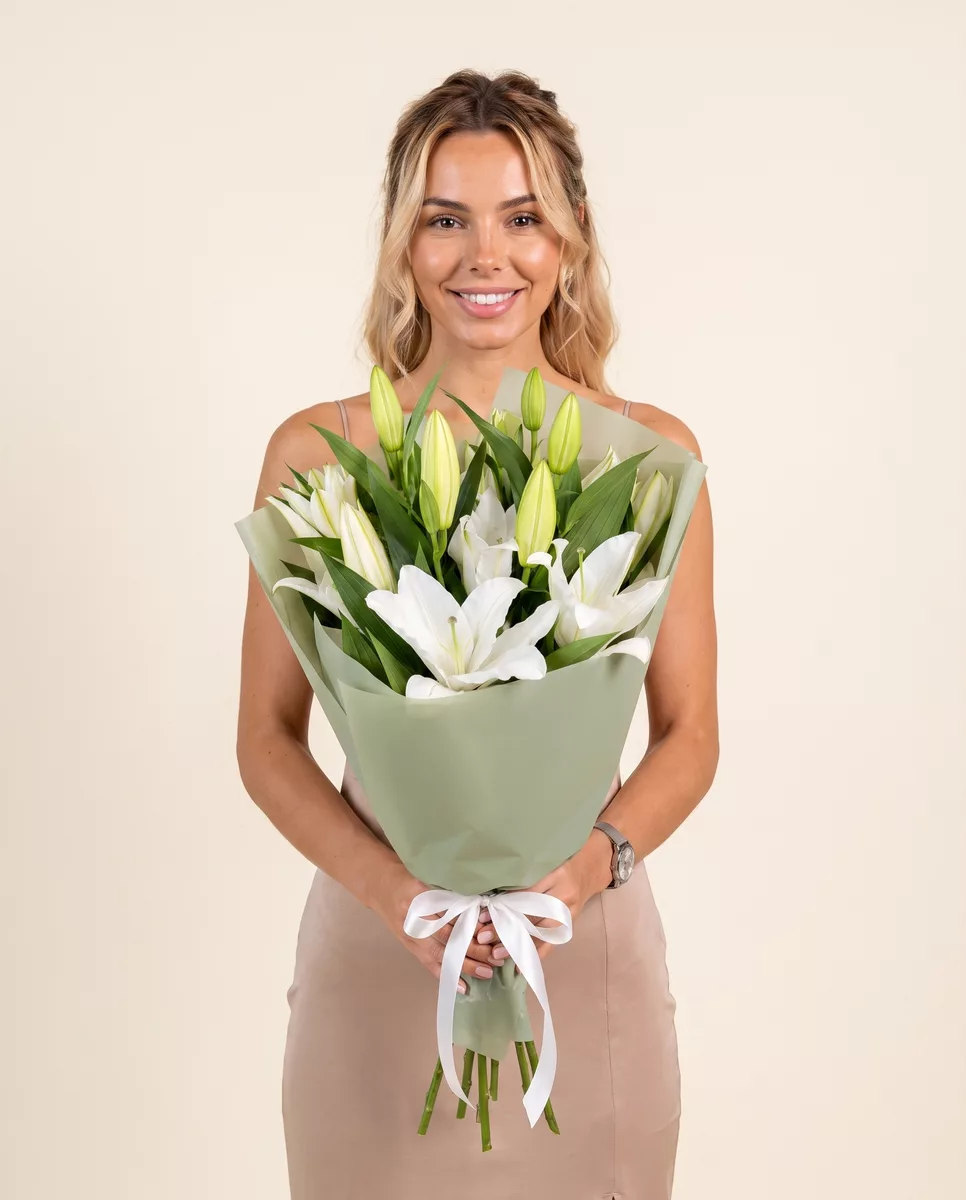
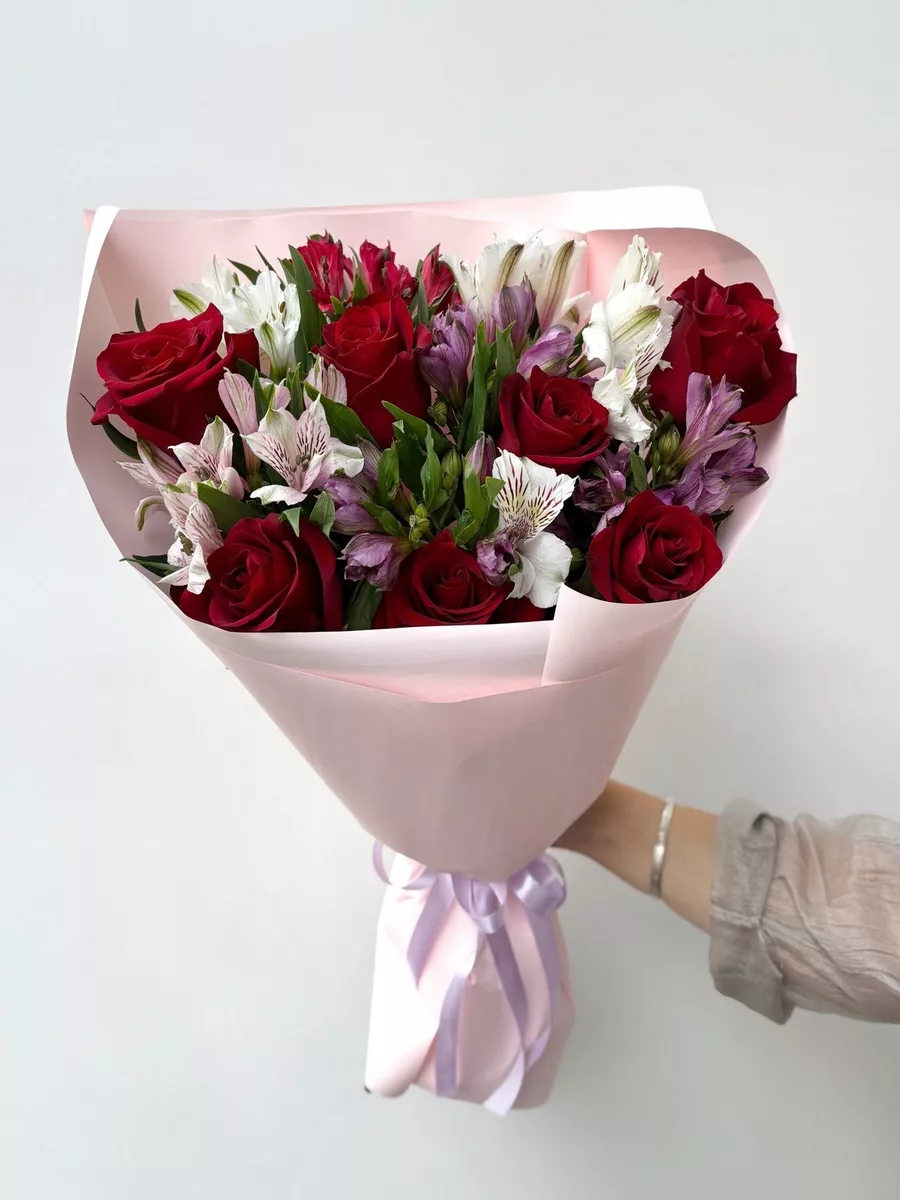
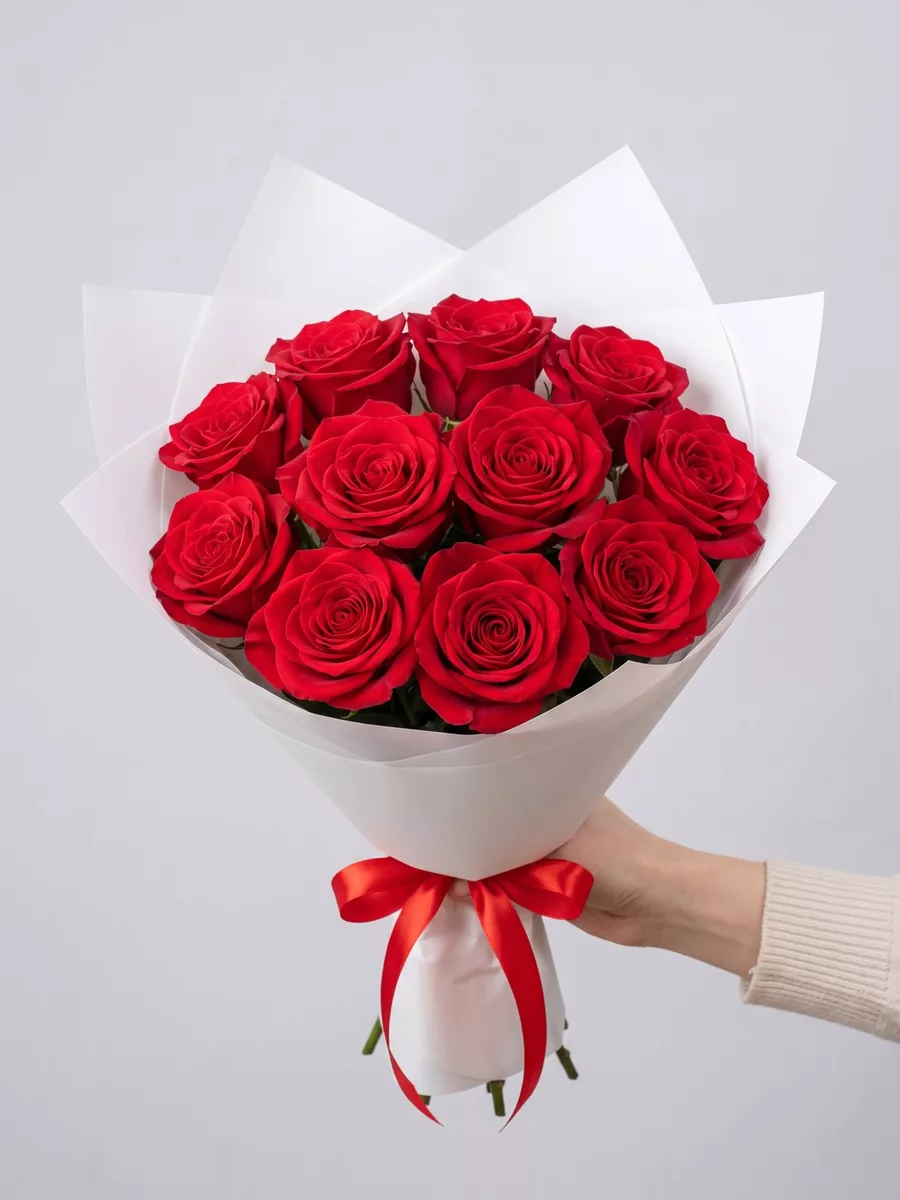
Bouquets we can deliver

Moscow and Saint Petersburg: UTC+3 Cut-Off Details
Moscow and Saint Petersburg share the same time zone, UTC+3, and both cities have a same-day delivery cut-off of 18:00 local time. That translates to 15:00 in London during winter months, 14:00 when the UK observes summer time, 10:00 Eastern Standard Time in New York, and 07:00 on the US West Coast. Senders in Central Europe working on CET have until 16:00 local time in winter and 15:00 in summer. These are the latest moments to place and pay for the order — not the moment the courier leaves the shop. Orders placed right at the cut-off should specify a delivery window of at least two hours rather than a precise time, because the florist still needs twenty to forty minutes to complete the arrangement after the order is confirmed. In terms of varieties, morning orders in these cities allow for the full range: garden roses, tulips in season, peonies from late April through June, lisianthus, and branches of seasonal flowering shrubs. Orders placed after 15:00 local time should stay with robust varieties — standard roses, alstroemeria, solidago, or chrysanthemum disbuds — because those hold their form during a faster preparation cycle. Tulips ordered late in the day are a particular risk in summer: they open very quickly at room temperature and can look overblown by the time they arrive if the arrangement was rushed. If you are ordering tulips for a Saint Petersburg address in June, place the order before noon local time to give the stems time to condition properly in a cool space before dispatch.
Kazan, Samara and the Volga Region: UTC+3 With Different Logistics
Kazan and Samara sit in the same UTC+3 time zone as Moscow, so the clock arithmetic is identical. The cut-off for same-day delivery is 18:00 local time, and the conversion to your local time follows the same table: 15:00 London winter, 10:00 New York EST. What differs is the practical reality of flower supply in these cities compared to the capitals. Kazan is a large city with strong demand for flowers, particularly around Tatar national holidays and university events, and the assortment available for late-day orders is somewhat narrower than in Saint Petersburg. If you are ordering for Kazan and you want something specific — say, white spray roses combined with eucalyptus and waxflower — placing the order before 14:00 local time gives the best chance of having all components in stock and properly conditioned. Orders placed between 16:00 and 18:00 local time in these cities should be treated as last-window orders, and the safest choices are single-variety bouquets: a clean arrangement of standard roses in one color, or a bunch of alstroemeria, which is reliably available and travels well. Samara in summer presents an additional consideration: the city can be genuinely hot in July and August, with temperatures regularly above 30°C. Heat accelerates the opening of roses and causes tulips to collapse quickly. For summer orders in Samara, always specify that the bouquet should be kept cool until the last moment before delivery, and avoid varieties like ranunculus or anemone, which are particularly sensitive to high ambient temperatures during transit.
Yekaterinburg: UTC+5 and the Two-Hour Jump East of the Urals
Cross the Ural Mountains and the time zone shifts to UTC+5, which is two hours ahead of Moscow and five hours ahead of London in winter. Yekaterinburg is the largest city in this zone and the practical gateway to Siberia. The same-day cut-off here is 18:00 local time, which means 13:00 London time in winter, 12:00 in summer, and 08:00 Eastern Standard Time in New York. A sender on the US East Coast who wakes up and decides to order flowers for a colleague in Yekaterinburg has a very narrow window: the order needs to be placed before 8 a.m. EST on the same calendar day. This catches people out regularly, especially when the occasion is a birthday and the sender only remembers in the afternoon their own time. Yekaterinburg has a continental climate with cold winters and warm summers. In January and February, the city regularly sees temperatures of minus 15 to minus 20°C, which affects delivery logistics: bouquets must be wrapped in insulating paper and the courier transit time is factored into the schedule. Cold-sensitive varieties like tropical anthuriums or orchid stems should be ordered with care in deep winter, as even a short exposure to severe cold during the transfer between vehicle and building can cause blackening on the petals. Roses, standard carnations, and chrysanthemums handle Yekaterinburg winters reliably. In summer the city is pleasant and the full range of seasonal varieties is available, including peonies in May and June and sunflowers from July onward. For summer orders, the noon local time deadline is your practical target.
Novosibirsk and Omsk: UTC+6 and UTC+7, the Siberian Window
Novosibirsk operates on UTC+7 and Omsk on UTC+6, placing them four and five hours ahead of Moscow respectively. For a sender in London, the same-day cut-off for Novosibirsk translates to approximately 11:00 local time in winter and 10:00 in summer. For Omsk the window is one hour later. These are genuinely tight deadlines for anyone in Western Europe or the Americas, and they require planning the evening before rather than on the morning of the occasion. A sender in New York targeting Novosibirsk for a same-day delivery needs to place the order by roughly 03:00 EST — effectively the previous night — which is why next-day delivery is almost always the practical choice for transatlantic senders sending to Siberian cities. Novosibirsk is Russia's third-largest city and has reliable availability of standard commercial varieties year-round: roses, chrysanthemums, alstroemeria, carnations, and in season, tulips and gerbera. The city has a severe continental climate, and winter temperatures can drop to minus 25°C or below. Bouquets delivered in January or February in Novosibirsk must be heavily wrapped, and the recipient should be advised to bring the flowers indoors immediately rather than leaving them in a cold hallway. Varieties with delicate petals — garden roses with many-petalled heads, for instance — are more vulnerable to cold shock than tighter-budded flowers like spray roses or carnations. If you are ordering for a Novosibirsk address in winter and you have any flexibility on variety, ask for roses in bud rather than in open bloom, as the closed bud survives temperature transitions significantly better than a fully open flower.
Vladivostok and the Far East: UTC+10 and the Hardest Time Zone to Catch
Vladivostok runs on UTC+10, which is seven hours ahead of Moscow and ten hours ahead of London. The same-day cut-off of 18:00 local time converts to 08:00 London time in winter and 07:00 in summer. For New York that is 03:00 EST, and for Los Angeles it is midnight the previous night. In practical terms, same-day delivery to Vladivostok is achievable only for senders already in Russia or in East Asian time zones — Japan, South Korea, and eastern China are well-positioned, since Tokyo and Seoul are only one hour behind Vladivostok. A sender in Seoul placing an order at 16:00 local time has until 17:00 Vladivostok time, which is workable. For everyone else, next-day delivery is the realistic option. Vladivostok has a humid continental climate with cold, dry winters and warm, humid summers. The city is a major port and has a distinct character compared to Siberian cities — the humidity in summer means flowers wilt faster than in drier inland locations, so varieties with good heat and humidity tolerance are preferable for summer orders. Chrysanthemums, alstroemeria, and standard carnations perform well. Roses are popular year-round but should be ordered in bud for summer delivery to account for the humid conditions. The city celebrates a number of maritime and naval occasions that drive flower demand, so ordering well ahead of any known date is sensible. For winter orders, the same cold-wrapping requirements that apply in Novosibirsk are even more critical here, and the recipient should be told explicitly to unwrap the bouquet indoors and place the stems in water within the first fifteen minutes of receiving the delivery.
What to Check Before You Confirm a Cross-Time-Zone Order
Before you click the payment button on a same-day order for any Russian city, run through four concrete checks. First, confirm the current local time in the destination city using a world clock — not a mental calculation, because daylight saving discrepancies between your country and Russia trip people up constantly. Russia does not observe daylight saving time, so the gap between Moscow and London changes by one hour twice a year, and the gap between Moscow and New York changes by up to two hours depending on when each country switches. Second, check that the delivery address includes the apartment number, building entrance number, and floor. Russian apartment buildings often have multiple entrances, and a courier arriving at the wrong entrance in a large residential block loses fifteen to twenty minutes finding the right door, which can push a tight same-day delivery into the next slot. Third, make sure the recipient's phone number is a current Russian mobile number — the courier will call ahead, and an unreachable number means the delivery is held at the door or rescheduled. Fourth, if you are ordering roses or peonies for a city with extreme summer heat, specify in the order notes that you prefer buds rather than open blooms. This is a standard request that florists understand immediately, and it makes a real difference to how the flowers look when they arrive. These four checks take under five minutes and eliminate the most common reasons a same-day order fails to reach the recipient in good condition on the intended day.
Ordering flowers across Russian time zones from abroad is entirely manageable once you treat the cut-off time as a hard deadline rather than a rough guideline. The cities from Saint Petersburg to Vladivostok span seven hours of difference, and the window for same-day delivery closes at 18:00 local time in every case — which can mean placing your order the previous evening if you are in North America and sending to Siberia or the Far East. Matching the variety to the season and the local climate is just as important as hitting the deadline: a peony ordered for a June address in Moscow at 11:00 local time will arrive in far better condition than a ranunculus ordered for a Novosibirsk address in February at 17:45. Use the time zone conversions in this article as your reference, plan the order the evening before for any city east of the Urals, and specify bud stage and cold wrapping whenever the season calls for it. We deliver bouquets across Russia in 1–2 hours.
Frequently asked questions
What is the latest time I can order same-day flowers to Moscow from London?
The cut-off in Moscow is 18:00 local time, which is UTC+3. From London that means 15:00 in winter when the UK is on GMT, and 14:00 in summer when the UK moves to BST. Russia does not change its clocks, so the gap shifts depending on the British calendar, not the Russian one. Always verify against a live world clock before placing the order.
Can I order same-day flowers to Vladivostok from New York?
Almost never on the same calendar day. Vladivostok is UTC+10, making the same-day cut-off equivalent to roughly 03:00 Eastern Standard Time in New York. The practical solution for transatlantic senders is to place a next-day order the evening before the occasion, which gives the full morning in Vladivostok for arrangement and delivery.
Do Russian cities observe daylight saving time?
No. Russia abolished daylight saving time in 2014 and all cities now stay on fixed offsets year-round. This means the gap between Russian cities and countries that do observe summer time — including the UK, most of Europe, and North America — shifts by one hour twice a year. Always check the current offset rather than relying on a remembered calculation.
Which flower varieties are safest to order for a Siberian city in January?
Standard roses in bud, spray carnations, and chrysanthemum disbuds handle severe cold transit best. These varieties tolerate brief temperature drops during the transfer between courier vehicle and building without visible petal damage. Avoid fully open garden roses, ranunculus, anemones, and tropical varieties like anthurium, which blacken quickly when exposed to sub-zero temperatures even briefly.
What information does the recipient need to give the courier on delivery day?
A working Russian mobile number is essential — the courier calls ahead before arriving. The address should include the apartment number, the entrance number of the building, and the floor. In large Soviet-era residential blocks a single building can have eight or more separate entrances, and a missing entrance number is one of the most common causes of delayed or failed deliveries across Russian cities.
Ready to send a bouquet?
Pick a city, choose the flowers, and we will hand them over with a photo confirmation.
Choose a city →