
Same-Day Flower Delivery in Russia: Timing, Cut-Offs and What Actually Happens
The most common call we get at Five Flowers goes something like this: it is two in the afternoon, someone needs roses on a doorstep by six, and they want to know whether that is possible. The honest answer depends on which city, which bouquet, and what time the order lands in our system. Same-day delivery in Russia is genuinely fast when the conditions are right, and genuinely impossible when they are not — and the difference usually comes down to a handful of hours and a few practical details that most customers have never thought about.
What Same-Day Delivery Actually Means in the Russian Context
In Russia, same-day flower delivery is understood as an order placed and received within the same calendar day, typically with a window of one to two hours from dispatch. That is not a marketing phrase — it reflects how flower logistics work when a shop controls its own courier network and keeps stock in a refrigerated holding space at around four to six degrees Celsius. Most customers assume the bouquet travels from a warehouse somewhere across town; in practice, the flowers are already cut, conditioned, and staged at the shop, waiting for the order to trigger wrapping and dispatch. The distinction matters because it sets a realistic ceiling on how fast things move. A bouquet of Dutch spray roses or Colombian standard roses can be wrapped and handed to a courier in fifteen to twenty minutes if the stems were prepped that morning. Exotic varieties like protea or anthuriums take slightly longer because their stems need re-cutting and a short conditioning soak before they travel safely. Russian cities also vary enormously in geography: Saint Petersburg's central districts can be reached in forty minutes, while outer residential zones add another thirty to fifty minutes depending on traffic on the ring roads. Customers ordering from abroad or from a different time zone sometimes forget that Moscow time and local city time are not the same thing, which shifts the cut-off calculation entirely. Always confirm the recipient's local time zone before you enter a delivery slot.
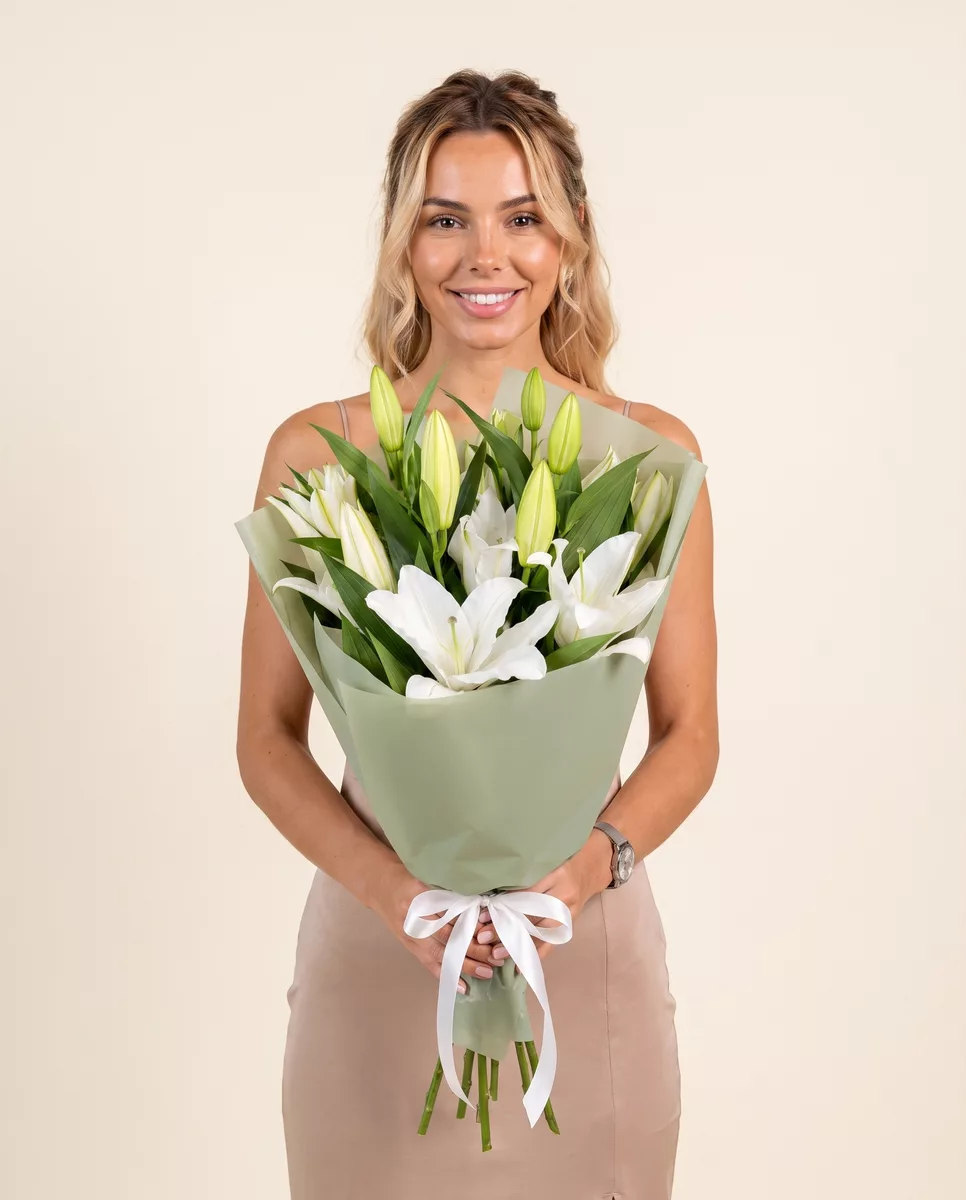
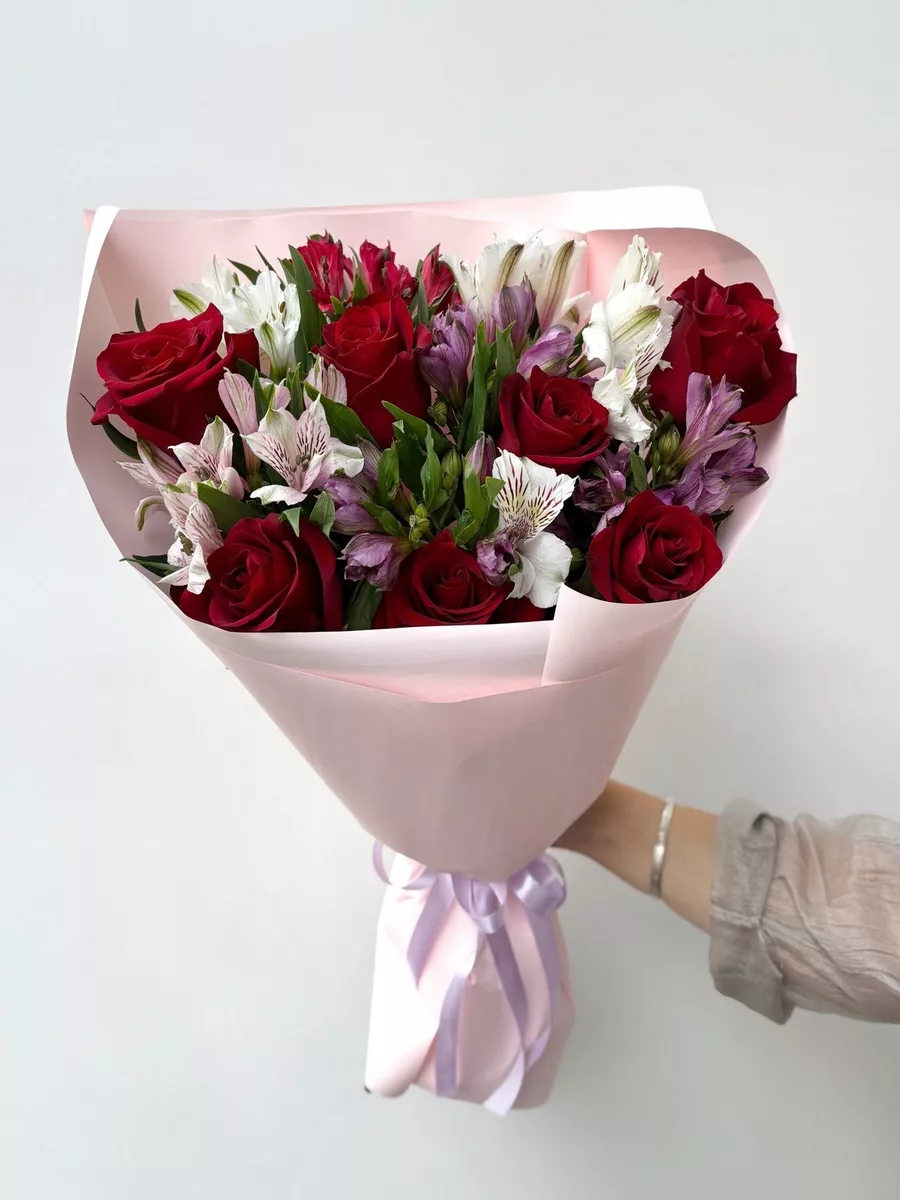
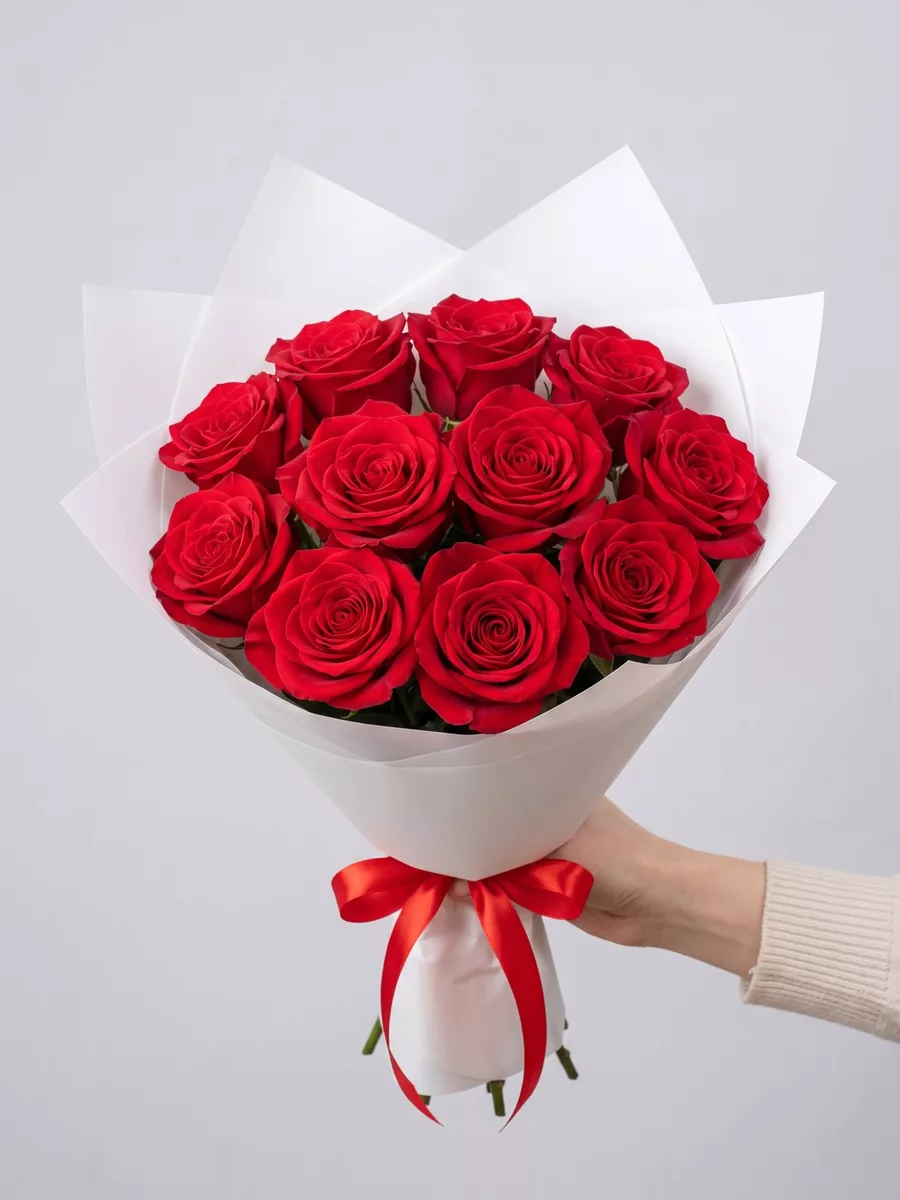
Bouquets we can deliver

Order Cut-Off Times and Why They Exist
A cut-off time is the last moment at which an order can enter the system and still be assembled, checked, and dispatched within the same day. At Five Flowers the standard cut-off for same-day delivery is six in the evening, local Saint Petersburg time. Orders placed after that point move to the next morning's first slot, which opens at eight. The reason for the cut-off is not bureaucratic — it is physical. Florists need roughly thirty to forty minutes to assemble a bouquet correctly: selecting stems from the cooler, checking for bruised petals or bent necks, re-cutting at an angle under water, and wrapping in a way that protects the heads during transit. A courier then needs a realistic travel window before the recipient's building closes or before the person leaves for the evening. In Russian apartment buildings, intercoms often go unanswered after ten at night, and couriers cannot simply leave flowers at a door the way parcels are sometimes left in other countries — the bouquet would wilt within an hour in a warm stairwell. For orders involving large arrangements, say a hundred-stem peony bouquet or a box composition with garden roses and eucalyptus, the cut-off moves earlier, to four-thirty, because assembly takes longer and the items need more careful packing. Customers who call at five-fifty asking for a hundred peonies the same evening are not being unreasonable — they just do not know what goes into it, and part of our job is explaining that clearly rather than simply refusing.
How the Order Moves from Screen to Door
Once an order is confirmed and paid, it enters a queue that a florist reviews in real time. The first step is a stock check: the system shows what is in the cooler, but a florist physically verifies that the stems are in good condition before committing to the order. Dutch roses, for example, arrive in boxes of twenty-five stems and are graded by bud size; a stem that looked fine at seven in the morning may have opened too far by noon to hold its shape during a two-hour delivery run. If a substitution is needed — say, moving from a garden rose like David Austin's Juliet to a standard spray rose — the customer is called or messaged before assembly begins, not after. Assembly itself follows a consistent sequence: stems are re-cut, grouped by variety, arranged by height and density, then wrapped in kraft or a material chosen to match the order. A quality check follows: the florist photographs the finished bouquet and logs it against the order. The courier collects the bouquet in a temperature-stable bag or box, particularly important in summer when Saint Petersburg temperatures can reach twenty-eight to thirty degrees Celsius and in winter when they drop to minus fifteen or below, both of which damage exposed flowers within minutes. The recipient receives a message when the courier is twenty minutes away, which reduces failed deliveries significantly — in a country where many people work from home or have unpredictable schedules, that heads-up is genuinely useful.
Delivery Windows Across Russian Cities
Russia spans eleven time zones, and same-day delivery does not function identically across all of them. Saint Petersburg and Moscow operate on Moscow Standard Time, which simplifies ordering for customers in the European part of Russia. Cities like Yekaterinburg are two hours ahead, Novosibirsk is four hours ahead, and Vladivostok is seven hours ahead — which means a customer in London ordering flowers for a recipient in Novosibirsk needs to factor in a time difference of seven hours when calculating whether the cut-off has passed. Within any given city, delivery windows also depend on district. Central areas with dense street grids and predictable traffic are served faster than new residential developments on the city's edge, where road infrastructure is still catching up with construction. In Saint Petersburg specifically, districts like Vasilievsky Island or Petrogradsky can present bridge-related delays: the city's drawbridges lift between roughly one and five in the morning, which affects very late-night deliveries but not standard daytime slots. For cities beyond Saint Petersburg and Moscow, realistic same-day windows run slightly longer — two to three hours from dispatch rather than one to two — because distances between florist and recipient are often greater. Customers ordering to Kazan, Krasnodar, or Rostov-on-Don should confirm the local cut-off time directly, since it shifts with the time zone and with the volume of orders the shop is managing that day. The principle is the same everywhere: earlier is safer.
Varieties That Travel Well and Varieties That Do Not
Not every flower is a good candidate for same-day delivery, and knowing the difference saves disappointment. Roses — whether standard Colombian stems, Dutch spray varieties, or the garden-style varieties with softer petals — travel reliably when the bud is at the right stage of opening, typically one-quarter to one-third open. Fully open roses bruise during transit and arrive looking spent. Chrysanthemums, both the button and the large-headed varieties, are among the most durable flowers for delivery: their stems hold water well and their petals do not bruise easily. Alstroemeria is similarly robust and handles temperature variation better than most. Tulips are more complicated: they continue to grow after cutting and will bend toward light in transit, which means a perfectly straight bouquet at the shop can arrive with curved stems. That is normal behaviour, not damage, but customers sometimes do not know this and assume something went wrong. Flowers that require careful handling include peonies, which open very quickly in warm temperatures and need to be dispatched at the tight bud stage in summer; ranunculus, which are fragile and do not like being jostled; and orchid stems, which can snap at the joint if packed without support. Hydrangeas wilt fast if their stems are not in water, so they are always delivered in water tubes or in sealed wet-pack boxes. When you order a mixed bouquet for same-day delivery, a good florist will build it around the most durable varieties and use the delicate ones as accent rather than structure.
What Customers Get Wrong When Ordering Same-Day
The single most common mistake is ordering too late and expecting the shop to absorb the time pressure without any trade-off in quality. A bouquet assembled in ten minutes because the courier is already at the door will not look the same as one assembled in thirty-five. Florists are skilled, but physics does not bend — stems need time in water, arrangements need time to settle, and quality checks take the time they take. The second mistake is being vague about the delivery address. Russian apartment addresses require a building number, entrance number, floor, and apartment number. Missing any of these means the courier stands in a courtyard calling the recipient, which adds fifteen to twenty minutes and creates stress on both sides. In new residential complexes, the entrance numbering sometimes differs from what mapping applications show, so confirming the exact entrance number with the recipient before placing the order is worth the thirty seconds it takes. The third mistake is ordering a variety that is not in season and then being surprised by a substitution. In February, peonies are not available from Russian domestic growers and imported peonies are expensive and limited in quantity. In June, tulips from Dutch growers are largely out of season. A florist will always suggest a seasonal alternative, but customers who have their heart set on a specific variety should order a day ahead to allow time to source it. Same-day ordering works best with what is already in the cooler.
How to Check Your Order Status and What to Do If Something Goes Wrong
After placing an order, customers receive a confirmation with an order number and an estimated delivery window. Tracking in the Russian flower delivery context is more direct than parcel tracking: the courier is a person, reachable by phone, and the shop's operators monitor active deliveries throughout the day. If the window passes without delivery, the correct first step is to call the shop directly rather than waiting — delays are usually minor and fixable, but they need to be flagged to be resolved. Common causes of delay are traffic on major arteries like Nevsky Prospekt in Saint Petersburg, a recipient who did not answer the intercom, or an address detail that needed clarification. In the rare case that a bouquet arrives damaged — petals broken in transit, stems bent from improper packing — document it with a photograph immediately and contact the shop the same day. A reputable shop will assess the situation and arrange a replacement or a credit; waiting until the next day makes it harder to establish what happened. Temperature-related damage is worth understanding separately: flowers left in a car in summer heat for more than fifteen minutes will show stress, and flowers exposed to minus-ten temperatures without insulated packaging will suffer frost damage to the outer petals. Both are preventable with proper packing, and both are legitimate grounds for a complaint if the shop did not take precautions. Most issues, though, resolve with a quick call and clear communication on both sides.
Same-day flower delivery in Russia works when the order comes in early enough, the address is complete, and the variety matches what is in stock that day. The one- to two-hour window from dispatch is real and achievable, but it depends on a chain of steps that each take the time they take — from stock checks to assembly to transit in a city with real traffic and real weather. The customers who get the best results are the ones who order before noon, confirm the recipient's address down to the entrance number, and trust the florist's seasonal suggestions when a specific variety is not available. Everything else follows from those three habits. We deliver bouquets across Russia in 1–2 hours.
Frequently asked questions
What is the latest I can order for same-day flower delivery?
The standard cut-off is six in the evening local time. For large arrangements — compositions over fifty stems or box designs with multiple varieties — the cut-off moves to four-thirty because assembly and packing take longer. Orders placed after the cut-off are scheduled for the first morning slot the following day, which opens at eight.
Can I order same-day delivery to a city other than Saint Petersburg?
Yes, but the cut-off time shifts with the local time zone. Russia spans eleven time zones, so a recipient in Novosibirsk is four hours ahead of Moscow time. Always confirm the local cut-off before ordering. Delivery windows in cities outside Saint Petersburg run two to three hours from dispatch rather than the standard one to two hours.
What happens if the recipient is not home when the courier arrives?
The courier calls the recipient directly. If there is no answer, the shop operator contacts the person who placed the order to arrange a new time or an alternative address. Flowers are not left unattended in a stairwell — heat and cold damage them quickly. A small redelivery fee may apply depending on how far the courier has already travelled.
Are there flowers that cannot be delivered same-day?
Flowers that are not currently in the cooler cannot be guaranteed for same-day delivery. Seasonal varieties like peonies in winter or tulips in summer may require a day's notice to source. Fragile varieties like ranunculus or open garden roses are included in same-day bouquets but only when stock condition is confirmed by the florist before assembly begins.
How is the bouquet protected during delivery in extreme temperatures?
In summer, bouquets travel in insulated bags that buffer against heat for up to ninety minutes. In winter, outer petals are wrapped in tissue and the bouquet is placed in a sealed box to prevent frost contact. Couriers are instructed not to leave flowers in an unheated vehicle. Temperature-related damage on arrival is grounds for a same-day complaint and replacement.
Ready to send a bouquet?
Pick a city, choose the flowers, and we will hand them over with a photo confirmation.
Choose a city →