
Flower Delivery to Karpinsk from Abroad: Zones, Timing and Varieties
Karpinsk sits in the northern Sverdlovsk region, roughly 400 kilometres from Yekaterinburg, and most people calling from Germany, Israel or Canada have never looked it up on a map before they needed to send flowers there. The questions are always the same: can you actually reach that city, how long will it take, and will the roses still look fresh when they arrive? The answers are yes, one to two days depending on your order window, and yes if you choose the right varieties and place the order correctly. This article gives you the practical layer that most flower sites skip.
Where Karpinsk Is and Why Distance Shapes Your Order
Karpinsk is a small industrial city of around 27,000 people in the Ural mountains, close to the border with the Khanty-Mansiysk Autonomous Okrug. It is not a regional capital, which means logistics work differently than they do in Moscow or Yekaterinburg. Flowers travel from our Saint Petersburg hub by refrigerated courier to the Ural region, and the distance from the nearest major sorting point adds time that you need to account for when choosing varieties. The city sits at elevation and experiences a sharply continental climate, with winters that push well below minus 20 Celsius and summers that are short but genuinely warm. That temperature range matters for flower survival in transit. A tulip or an anemone that ships beautifully in March to Sochi will arrive bruised in January to Karpinsk if it is not packed with insulating wrap and a heat pack. When you order from abroad, you are adding at least one time-zone complication on top of the geography: you may be placing the order at 11 pm your time, which is already the following morning in the Urals. Building that offset into your delivery date is the single most common mistake we see from international senders. Knowing the geography upfront means you pick a realistic date, choose varieties suited to the season, and do not end up calling us to explain why roses look wilted when the temperature outside was minus 15 at the moment of handover.
Bouquets we can deliver



Time Zones and the Order Window You Actually Have
Russia uses eleven time zones, and Karpinsk runs on Yekaterinburg Time, which is UTC plus five. If you are in New York, that is an eight-hour gap; from Berlin it is three hours; from Tel Aviv it is two. The practical consequence is that your afternoon in New York is already late evening in Karpinsk, and any order placed after roughly 3 pm Karpinsk time will not move until the next business day. We process orders around the clock, but courier dispatch follows local business hours. For same-day delivery within Russia we need the order confirmed before noon recipient-city time, and for Karpinsk specifically, because of the additional transit leg from the nearest distribution point, we recommend ordering at least 24 hours ahead for weekdays and 36 hours ahead if the delivery falls on a Saturday or Sunday. Russian public holidays are another layer: there are more of them than most international senders expect, and they cluster heavily in January around the Orthodox Christmas period and in early May. On those days delivery is possible but the window tightens significantly. The cleanest approach from abroad is to place your order two days before the intended delivery date, choose a morning delivery slot for the recipient, and confirm the recipient's phone number is a current Russian mobile number starting with 7. Our courier calls ahead, and if there is no answer the bouquet does not go to a neighbour — it holds at the nearest safe point until we reach the recipient, which can delay things by several hours.
Which Varieties Travel Well to the Ural Region
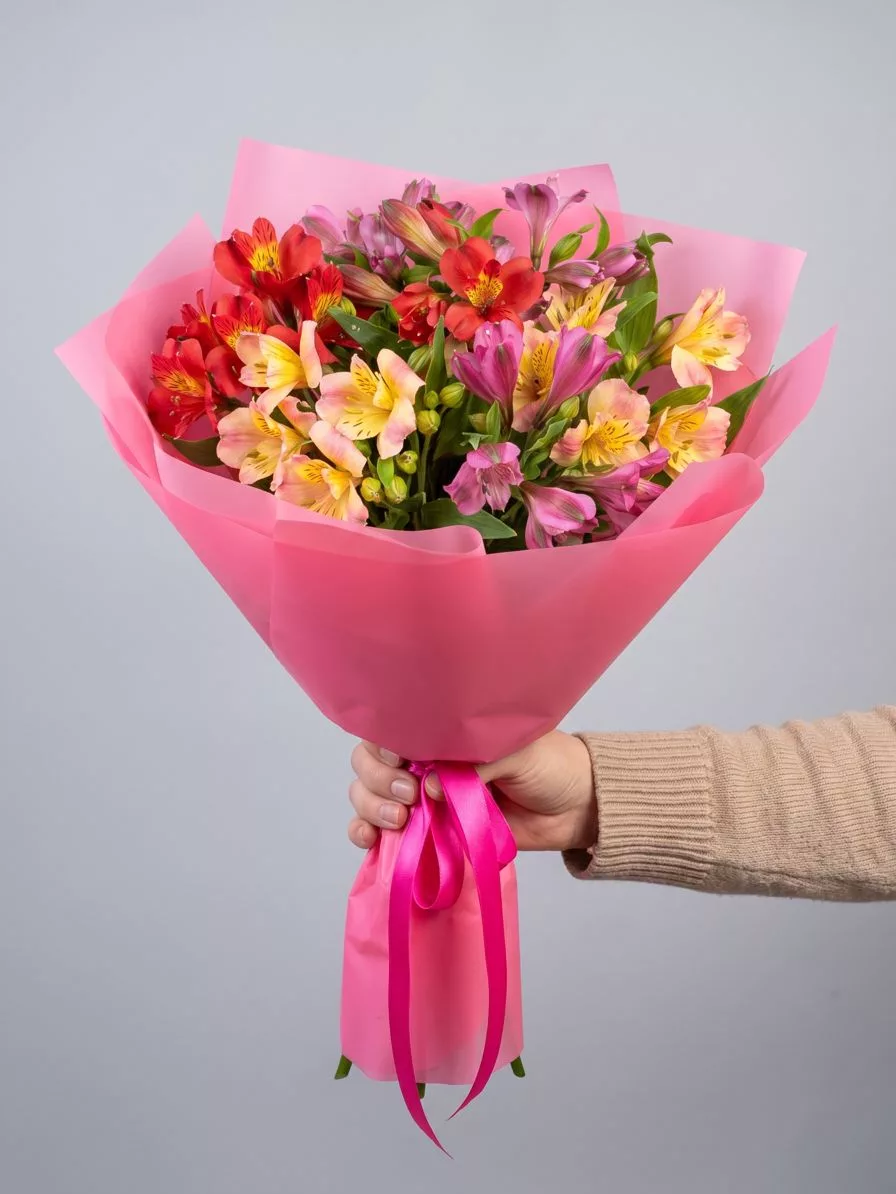
Not every flower handles a long refrigerated journey equally well, and this is where international senders often defer too much to sentiment rather than botany. Roses are the most requested flower for Karpinsk deliveries, and they are a sound choice if you select the right variety and bud stage. Spray roses, particularly those with smaller compact heads, travel better than large-headed hybrid tea varieties because they are less prone to bruising in transit. Among single-stem roses, varieties bred for cut-flower longevity such as Explorer, Mondial and Avalanche have thicker petals that resist mechanical damage. Chrysanthemums are excellent for this route: they are robust, hold water well, and their vase life after a long journey is typically seven to ten days. Alstroemeria is another reliable choice — the buds continue opening after delivery, which means the recipient gets a bouquet that looks fresh for a longer window. Carnations are underrated for long-distance deliveries; they are almost indestructible in transit and available in a wide colour range. Flowers to avoid for winter deliveries to Karpinsk include open gerberas, which bruise easily in cold, and tropical varieties like strelitzia or anthurium, which suffer cold damage at temperatures below ten degrees Celsius and can turn black at the petal edges if the packaging is not perfect. In summer, from late June through August, the range opens up considerably: lisianthus, freesia and even some orchid varieties make the journey without issue. When in doubt, ask us to suggest a seasonal mix based on the delivery date rather than specifying a variety you saw on a website.
Packaging for a Northern Ural Winter
Packaging for Karpinsk in the colder months is not the same as packaging for a delivery in central Russia. From October through April, nighttime temperatures in the Karpinsk area regularly fall to minus 15 or colder, and even a ten-minute exposure during the final handover step can damage thin petals. Our standard cold-weather packaging for this zone includes an insulating sleeve made from foil-lined kraft paper, a water-retaining gel sachet at the stem end, and where temperatures are forecast below minus 10 on the delivery day, a small activated heat pack placed between the outer wrap and the insulating layer. The heat pack keeps the interior of the package above five degrees Celsius for approximately four hours, which covers the final transit and handover window. If you are ordering in January or February, do not request that the bouquet be unwrapped for a photograph before delivery: the cold exposure during an outdoor photo opportunity can damage open petals within two or three minutes. For spring and summer orders the packaging shifts to breathable paper wrapping with ventilation folds that prevent condensation, which is the enemy of rose petals in warm, humid conditions. When you fill in your order form from abroad, there is a delivery notes field: use it to indicate whether the recipient will be at a home address or a workplace, because a workplace delivery in winter usually means a heated lobby handover, which changes the packaging calculation slightly. We adjust packaging based on the forecast for the delivery day, not a fixed template.
What Russian Flower Customs Look Like to an Outside Sender
If you grew up outside Russia you may not know a few conventions that affect how your order is received. The most important is the odd-number rule: bouquets in Russia are traditionally given in odd numbers of stems, and even numbers are associated specifically with funeral contexts. This is not a rigid law but it is a strong enough cultural norm that receiving twelve roses instead of eleven can genuinely puzzle or discomfort a Russian recipient. We always compose bouquets in odd numbers by default, and if you request a specific stem count that is even, we will flag it with you before confirming the order. The second convention is about flower colour for romantic occasions: yellow flowers, particularly yellow roses, carry a connotation of separation or farewell in Russian popular culture. This is softening among younger generations in larger cities, but in a smaller city like Karpinsk the association is still live enough that we advise against yellow-dominant bouquets for romantic deliveries unless the recipient has specifically requested them. White flowers are appropriate for a wide range of occasions including celebrations, so there is no concern there. Red roses remain the dominant choice for romantic gestures and are received exactly as you would expect. For birthdays and professional milestones, mixed bouquets with seasonal flowers, greenery and perhaps a few spray roses in pink or coral are standard and well received. If you are sending to mark a Russian holiday you are not familiar with, tell us the date and the relationship and we will suggest what is appropriate without you needing to research it yourself.
Filling in the Order Form When You Are Outside Russia
The order form looks straightforward but there are several fields that trip up international senders consistently. The recipient address field expects a Russian-format address: street name, building number, apartment number, and city. If you only have a partial address, for example you know the street but not the apartment number, do not guess. Leave a note in the comments field and we will call the recipient to confirm the details before dispatch. This is standard practice and does not spoil a surprise, because our courier call is framed as a delivery confirmation rather than a flower announcement. The recipient phone number must be a Russian mobile number in international format: plus seven, then the ten-digit number. A WhatsApp number from another country will not work for our courier dispatch system. If your recipient does not have a Russian number, which is unusual but possible for someone who has recently moved, contact us directly and we will work out an alternative confirmation method. Payment from abroad is processed via international card through our secure checkout; we accept Visa and Mastercard issued outside Russia. Some cards issued in countries under current financial restrictions may decline on the first attempt, in which case try a different card or contact us for an alternative payment route. The message card field supports both Latin and Cyrillic characters, so you can write your message in English, German, Hebrew or any other language and it will be printed exactly as you typed it. Keep the message under 200 characters to ensure it fits cleanly on the card without truncation.
What to Check After You Place the Order
Once your order is confirmed you will receive an email with an order number and an estimated delivery window. That window is given in Karpinsk local time, not your local time, so convert it before you start expecting updates. If you placed the order 36 or more hours before the intended delivery, you will receive a second confirmation email approximately 12 hours before dispatch that includes the specific courier assignment and a tracking link. The tracking link updates in real time and shows the bouquet moving from our preparation stage through dispatch to out-for-delivery status. If you do not receive the second confirmation email, check your spam folder first, then contact us with your order number. The most common reason for a delay at this stage is an address issue flagged by our logistics system, and catching it early means we can resolve it without pushing the delivery to the next day. After delivery, our system sends an automatic delivery confirmation to the email address you provided at checkout. If you want photographic confirmation, request it in the order notes field and our courier will photograph the handover and send the image to your email within an hour of delivery. This is particularly useful for international senders who cannot easily call the recipient themselves to check. If for any reason delivery is unsuccessful on the first attempt, we hold the bouquet in refrigerated storage for up to 24 hours and reattempt the following day, contacting you by email to coordinate the new window.
Sending flowers to Karpinsk from abroad is entirely workable once you have the time zone offset in your head, a realistic delivery date chosen, and the right varieties selected for the season. The city is smaller and colder than most Russian destinations, and those two facts drive every practical decision in the order: the cold-weather packaging, the preference for robust varieties like chrysanthemums and spray roses, the 24-to-36-hour lead time. The cultural notes around odd stem counts and colour associations are not obstacles — they are just information, and knowing them means your bouquet lands well rather than causing a moment of confusion. Place the order with a current Russian mobile number for the recipient, use the notes field generously, and the rest follows. We deliver bouquets across Russia in 1–2 hours.
Frequently asked questions
Can I order flowers for Karpinsk if I am paying from a non-Russian bank card?
Yes. We accept Visa and Mastercard issued abroad. Cards from some countries may encounter a processing decline on the first attempt due to current banking restrictions between Russia and certain financial systems. If that happens, try a second card or write to us directly and we will provide an alternative payment method that works for your country.
How far in advance do I need to order for a specific delivery date in Karpinsk?
We recommend at least 24 hours for weekday deliveries and 36 hours for weekends or Russian public holidays. Karpinsk requires an additional transit leg compared to major cities, so the earlier you order the more flexibility we have to handle any address or contact issue before it affects your delivery date.
What happens if the recipient is not home when the courier arrives?
Our courier calls the recipient before arrival using the Russian mobile number you provided. If there is no answer, the bouquet is held in refrigerated storage for up to 24 hours and we contact you by email to arrange a new delivery window. We do not leave flowers with neighbours or building staff without your explicit instruction in the order notes.
Are there flowers I should avoid requesting for a winter delivery to Karpinsk?
Yes. Open gerberas bruise easily in cold transit. Tropical varieties including anthurium and strelitzia suffer cold damage below ten degrees Celsius and can blacken at the petal edges. In winter we recommend roses, chrysanthemums, carnations or alstroemeria — all handle refrigerated long-distance transport well and survive the final cold-weather handover without visible damage.
Can I write the message card in English or another non-Russian language?
Absolutely. The message card field on our order form accepts any language and any script, including Latin, Cyrillic, Hebrew and Arabic characters. The card is printed exactly as you type it. Keep your message under 200 characters so the full text fits on the card without being cut off.
Ready to send a bouquet?
Pick a city, choose the flowers, and we will hand them over with a photo confirmation.
Choose a city →