
Flower Delivery to Kusa from Abroad: Zones, Timing and What to Prepare
Kusa is a small industrial town in Chelyabinsk Oblast, sitting in the southern Urals at roughly 900 kilometres east of Moscow. Every week we receive orders from senders in Germany, Israel, the United States and the UAE who want to send flowers there for a birthday, anniversary or just because. The questions are almost always the same: can you actually deliver there, how far in advance do I need to order, and what flowers survive the Ural winter. This article answers all of that plainly, so you can place your order with confidence and your recipient gets something worth receiving.
Where Kusa Sits and Why That Matters for Delivery
Kusa is located in Chelyabinsk Oblast, roughly 130 kilometres northwest of Chelyabinsk city. The town sits at an elevation that gives it genuinely cold winters, with temperatures regularly dropping to minus 20 Celsius and occasionally lower between November and March. That geographic position is not a footnote — it directly shapes which flowers we can deliver in good condition and how we pack them for the final leg of transit. Deliveries to Kusa are routed from our Saint Petersburg hub through Chelyabinsk, so the logistics chain is longer than for a Moscow address, and senders abroad need to account for that when choosing a delivery date. The town itself has a population of around 27,000, which means addresses are relatively straightforward to locate, but it also means there is no option for a recipient to walk to a pickup point — door delivery is the only practical format. When you place an order from abroad, the recipient's full street address including apartment or house number is essential. A phone number for the recipient is equally non-negotiable: our courier will call ahead, and without a working Russian mobile number the delivery cannot be completed. If your contact in Kusa uses a messaging app rather than standard calls, note that in the order comments and we will do our best to coordinate.
Bouquets we can deliver



Time Zones and the Arithmetic of Ordering from Abroad
Kusa operates on Yekaterinburg Time, which is UTC plus 5 with no daylight saving adjustment — Russia abolished seasonal clock changes in 2014. If you are placing an order from London, that is a seven-hour gap in winter and six hours in summer. From New York the gap is ten hours in winter, nine in summer. From Tel Aviv it is three hours. What this means practically is that a sender in California who wants flowers delivered in the morning in Kusa needs to place the order the previous evening their time, not the morning of the delivery date. We process international orders as they arrive, and our cutoff for same-day Kusa delivery is earlier than for Saint Petersburg itself because of the routing time involved. The safest approach is to order at least 24 hours before the desired delivery window, and for weekend or public holiday deliveries, 48 hours is the realistic minimum. Russian public holidays include New Year through January 8, International Women's Day on March 8, Victory Day on May 9, and several others — these are peak periods when delivery slots fill quickly and we recommend ordering three to four days ahead. When you fill in the order form, set the delivery date according to Russian calendar, not your local date. A sender in Sydney on the evening of the 14th is already the 15th in Kusa, and getting that date wrong is the single most common mistake we see from international customers.
Which Flowers Actually Arrive in Good Condition
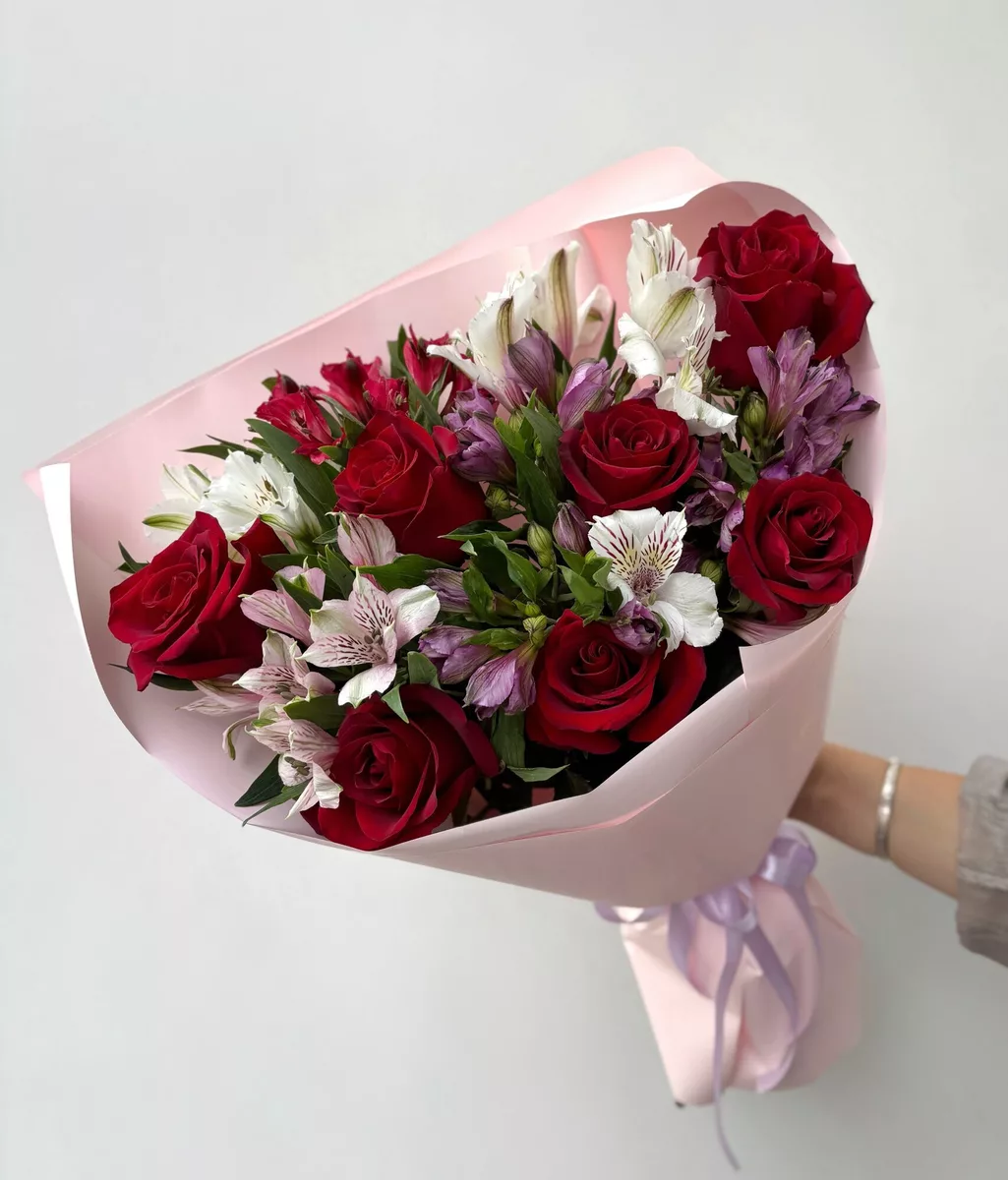
The Ural climate creates real constraints on what we can send to Kusa in winter months. Between November and March, outdoor temperatures in transit can be severe, and certain flower varieties simply do not tolerate that cold well. Tropical stems like anthurium, bird-of-paradise and heliconia are not suitable for Kusa deliveries in winter — they show cold damage within minutes of exposure to sub-zero air, presenting as blackened edges and collapsed petals. Roses are the backbone of what we send year-round, specifically high-petal-count varieties from Ecuador such as Explorer, Mondial and Red Naomi, which have dense heads that hold heat better during brief cold exposure. Spray roses are more fragile and we advise against them for winter Kusa orders. Chrysanthemums are genuinely cold-tolerant and arrive well in all seasons — single-stem santini and standard disbud varieties both work reliably. Alstroemeria is another solid choice: the stems are sturdy, the flowers hold their buds through transit, and the variety range allows for both bright and pastel compositions. Tulips in winter require careful handling because they continue to grow after cutting and will lean dramatically if the bouquet is not stored upright — we pack them vertically, but recipients should know to keep them in a tall vase. In summer, the range opens up considerably: lisianthus, eustoma, peonies from late May through June, and ranunculus in spring all travel well to Kusa when temperatures are mild. Hydrangea is possible in summer but requires the recipient to recut stems and submerge the head briefly in cool water on arrival.
Bouquet Formats That Make Sense for a Kusa Delivery
When ordering from abroad, the temptation is to choose the largest, most elaborate arrangement. For a Kusa delivery, practical considerations should guide that choice. Mono-bouquets — a single variety in one colour — travel better than mixed compositions because all stems have the same water requirements and the same sensitivity to cold. A 51-stem rose bouquet in a single variety arrives in better condition than a 25-stem mixed bouquet with roses, alstroemeria, eucalyptus and waxflower, simply because each element in a mixed bouquet has different needs. That said, we do send mixed compositions to Kusa successfully; the key is keeping the greenery to a minimum in winter, since foliage like ruscus and salal bruises in cold and turns the outer layer of the bouquet brown. Eucalyptus is more cold-stable than most foliage and is our default green for Kusa winter orders. Box arrangements are not recommended for Kusa delivery — the cardboard box that looks elegant in a studio photograph traps moisture during transit, and by the time it reaches the recipient the inner flowers can show mould on the petals. A wrapped bouquet in kraft paper with a water-retaining base is the format that arrives best. For significant occasions like a major anniversary or a round birthday, a larger stem count in a single variety — roses or chrysanthemums — makes more visual impact and travels more reliably than an elaborate mixed design. If the recipient has a preference for a particular colour, note it in the order comments and we will match it from what is available that week.
What International Senders Get Wrong About Russian Flower Customs
Russia has specific traditions around flowers that differ from Western European or North American norms, and getting them wrong can create an awkward moment for the recipient. The most important rule: always send an odd number of stems. Even numbers of flowers are associated exclusively with funerals in Russian culture, and a bouquet of 10 or 20 roses will immediately register as wrong to any Russian recipient. Our standard counts — 11, 15, 21, 25, 51, 101 — are all odd for exactly this reason. If you are customising a stem count, keep it odd. The second common misunderstanding is around yellow flowers. Yellow roses and yellow chrysanthemums carry a strong cultural association with separation and infidelity in Russia; many recipients will be upset rather than pleased by a yellow bouquet. We do not refuse to send yellow flowers, but we advise international senders to choose other colours unless they know the recipient specifically loves yellow. White flowers are perfectly appropriate for celebrations — unlike in some East Asian cultures, white roses and white chrysanthemums are used freely for birthdays and anniversaries in Russia. Red roses remain the dominant choice for romantic occasions, but recipients of all ages and genders receive them, not only romantic partners. Finally, the card message: if you write it in English, that is fine — many recipients in Kusa will read basic English — but if you want us to translate your message into Russian, note that request in the order comments and keep the message to two or three sentences.
Payment from Abroad and What the Order Form Needs
Paying for a flower delivery to Russia from outside the country has become more complicated since 2022, and it is worth knowing what works before you start filling in the order form. We accept international Visa and Mastercard payments through our secure checkout, though cards issued by certain European banks may require an additional verification step — if your payment is declined, try a different card or contact us directly. PayPal is not available for Russian deliveries. The order form requires the following information without exception: the recipient's full name, their complete street address in Kusa including street, house number and apartment number if applicable, a Russian mobile phone number for the recipient, your preferred delivery date, and the delivery time window. The time window options are morning, afternoon or evening in Kusa local time — remember to convert from your own time zone. In the sender details, include your own email address and phone number so we can reach you if there is a question about the order. The message card field accepts both Latin and Cyrillic characters; if you are writing in English, standard Latin letters are fine. If the recipient lives in a gated residential compound or a building with a coded entrance, include the entry code in the address comments — couriers in Russian cities frequently encounter coded doors and without the code the delivery is delayed. Orders placed in a foreign language through our site are processed in Russian internally, so there is no need to write the address in Cyrillic yourself; we will handle the transliteration.
Tracking, Confirmation and What Happens After You Order
Once your order is confirmed and payment processed, you will receive an email confirmation with an order number. Use that number for any follow-up questions. We send a second notification when the bouquet is assembled and handed to the courier, and a final confirmation when delivery is completed. All notifications go to the email address you provided at checkout, so make sure it is one you check regularly — if your order is for a morning delivery in Kusa, the completion notification may arrive at an unusual hour in your local time zone. If delivery cannot be completed — the recipient is not home, the address is unreachable, or the phone number provided does not connect — we will contact you at your sender number or email to arrange a second attempt. A second attempt is included at no extra cost if the delivery failure was caused by an address issue on our side; if the recipient was simply not available, a second delivery is arranged and the cost is discussed with you directly. Photograph confirmation is available on request — note it in the order comments and the courier will photograph the bouquet at the recipient's door. This is especially useful for senders abroad who want proof of delivery for a surprise gift. The photo is sent to your email, not to the recipient's phone, so the surprise is preserved. If you need to change the delivery date or address after placing the order, contact us as early as possible — changes made more than 12 hours before the scheduled delivery are almost always accommodatable, while last-minute changes within a few hours of the delivery window are significantly harder to action for a remote destination like Kusa.
Sending flowers to Kusa from abroad is entirely manageable when you plan for the time zone gap, choose varieties suited to the season, and get the recipient's address and phone number exactly right before placing the order. The Ural climate and the routing distance mean that lead time and variety choice matter more than they would for a Moscow delivery, but the result — a properly packed, fresh bouquet arriving at a door in a small Ural town — is worth the extra preparation. If you are unsure about anything before ordering, use the contact form on our site and we will answer with the same directness you have read here. We deliver bouquets across Russia in 1–2 hours.
Frequently asked questions
Can you deliver to Kusa on the same day I order?
Same-day delivery to Kusa is possible only if your order reaches us early enough in the day to complete the routing from our hub. Because Kusa is in Chelyabinsk Oblast and not a major city, we need more lead time than for central Russian cities. For reliable same-day delivery, place your order before 10:00 Moscow time. For senders abroad, 24 hours ahead is the safe standard.
What is the minimum bouquet size worth sending to Kusa?
We recommend a minimum of 11 stems for a delivery to Kusa. Smaller bouquets can look sparse after transit, especially if any outer stems need to be trimmed on arrival. A 15 or 21 stem mono-bouquet of roses or chrysanthemums is the most reliable choice for a first order, giving a full visual impression without overcomplicating the transit conditions.
Do I need to write the address in Russian letters?
No. You can write the address in Latin characters and we will handle the transliteration internally. What matters is accuracy: the correct street name, house number, apartment number and postal index if you have it. If you are unsure of the exact address format, write what you know in the order comments and we will clarify before processing.
Is it possible to keep the delivery a surprise from the recipient?
Yes, but the courier must still be able to reach the recipient by phone to confirm they are home. We call ahead with a neutral message that a delivery is coming, without naming the sender. If the recipient asks directly who sent the flowers, the courier will say the card message will explain — so write your card message in a way that works as the reveal.
Which flowers should I avoid sending to Kusa in January?
Avoid tropical varieties such as anthurium, bird-of-paradise and ginger flower — they show cold damage quickly in Ural winter temperatures. Also avoid spray roses and delicate open-faced flowers like anemones. Stick to standard roses with dense heads, chrysanthemums, alstroemeria or carnations. These varieties tolerate brief cold exposure during the final delivery stage without visible damage to petals.
Ready to send a bouquet?
Pick a city, choose the flowers, and we will hand them over with a photo confirmation.
Choose a city →