
Flower Delivery to Pokhvistnevo from Abroad: Zones, Timing and What to Prepare
Most calls we get from senders outside Russia start the same way: someone in Berlin or Toronto wants roses on a kitchen table in Pokhvistnevo by Saturday afternoon and has no idea whether that is even possible. It is possible, but the gap between a clean order and a failed delivery usually comes down to three things the sender did not know before clicking confirm — the address format, the recipient's phone number, and the time-zone arithmetic between wherever you are sitting and Samara Oblast.
Where Pokhvistnevo Sits and Why It Matters for Delivery
Pokhvistnevo is a city in Samara Oblast in the Volga region of Russia, roughly 170 kilometres northeast of Samara itself. It operates on Moscow time plus one hour, which puts it in UTC+4. That single hour difference from Moscow is easy to forget when you are placing an order from a Western European or North American time zone, and it is the most common reason a bouquet arrives two hours after a birthday dinner rather than before it. The city has a population of around 25,000 people, which means it is served but not as densely covered as a regional capital. Delivery windows here are longer than in Saint Petersburg or Moscow — expect a two-to-four-hour window rather than a pinpoint slot. When you specify a delivery time, convert it carefully: if the recipient needs flowers at 18:00 local Pokhvistnevo time, that is 17:00 Moscow time, and you should place the order with that Moscow-time target in mind. The city centre and residential districts close to it are straightforward to reach. Outlying streets and private house addresses take longer, so if the recipient lives in a private house rather than an apartment building, mention that when ordering — it affects routing. Seasonal road conditions in winter, roughly November through March, can add time because of snow and ice on secondary streets. Ordering with a buffer of at least one extra hour in winter is not overcaution, it is standard practice for this region.
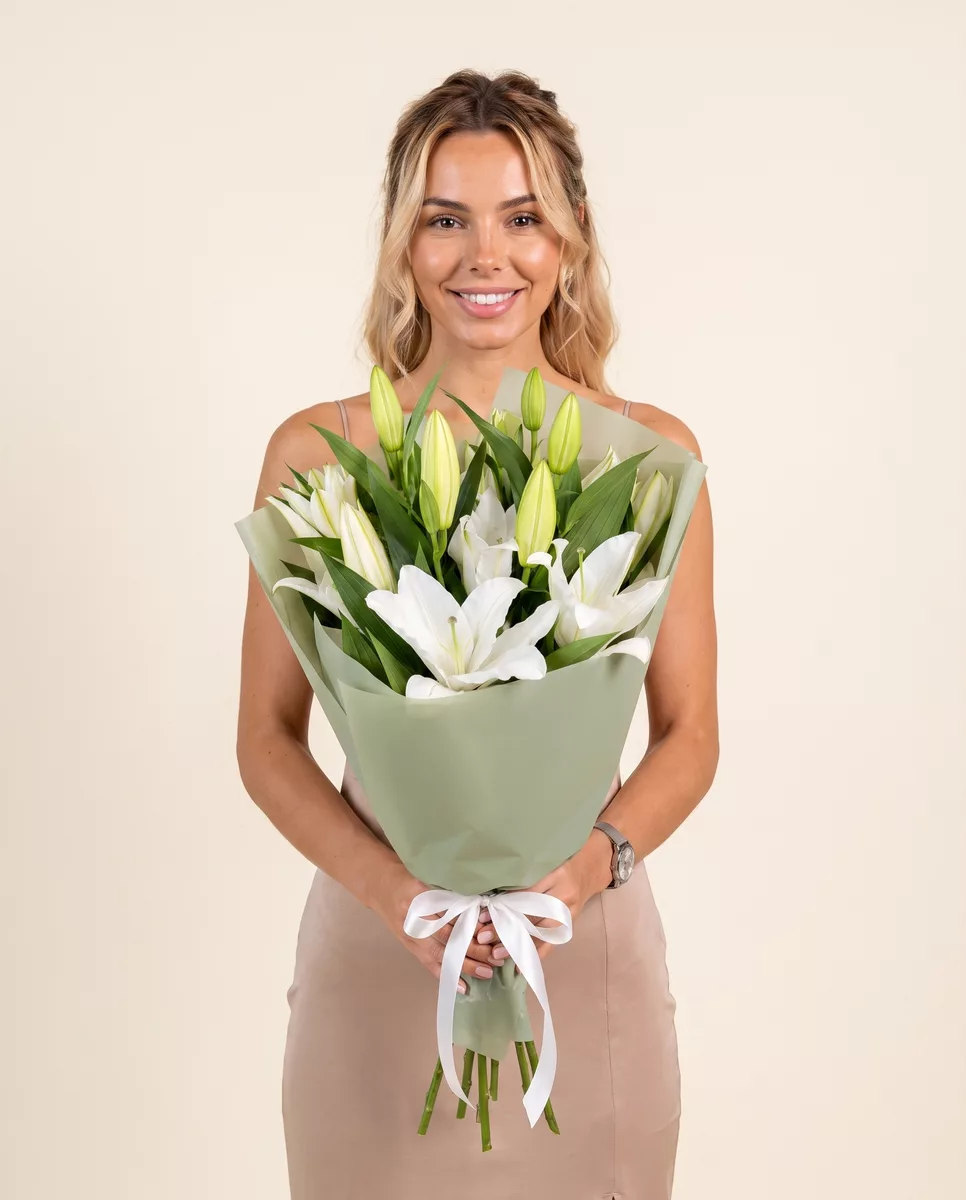
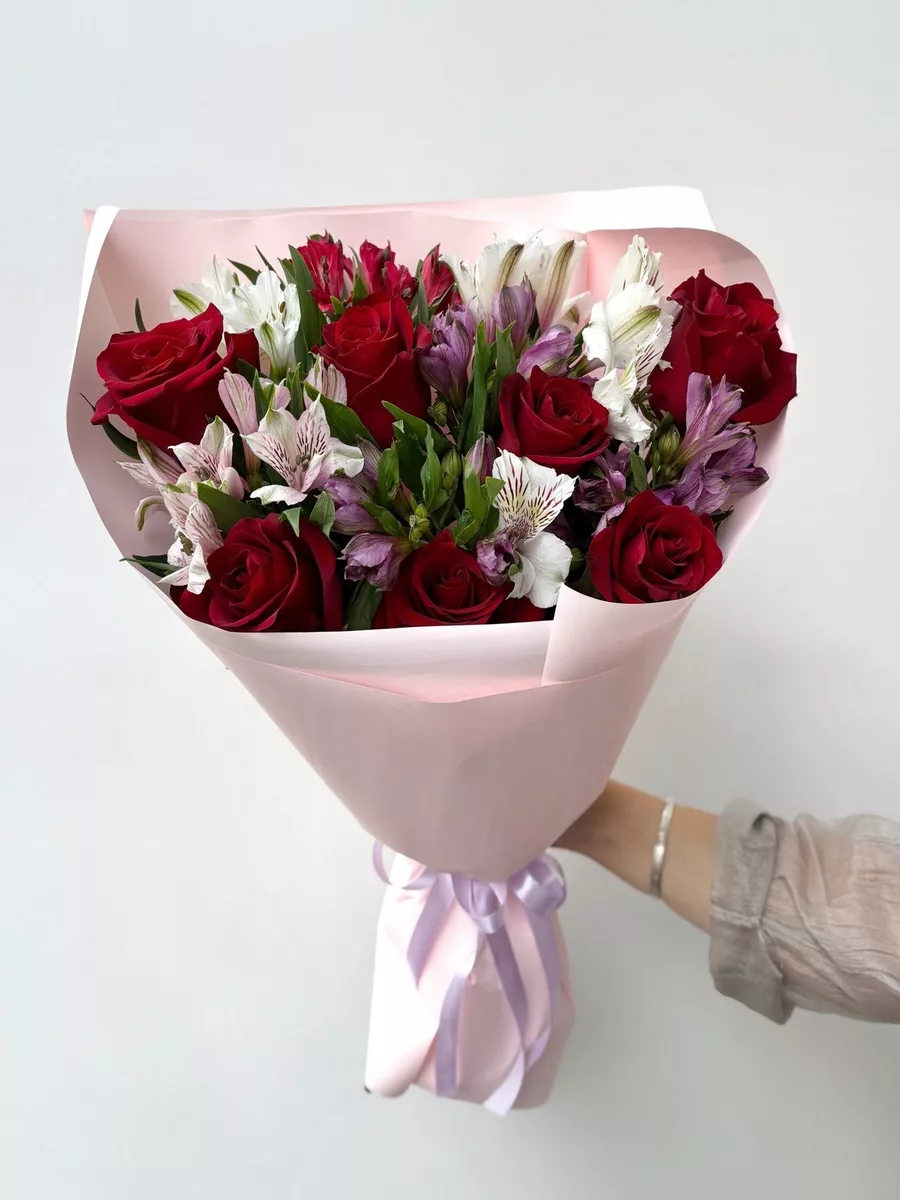
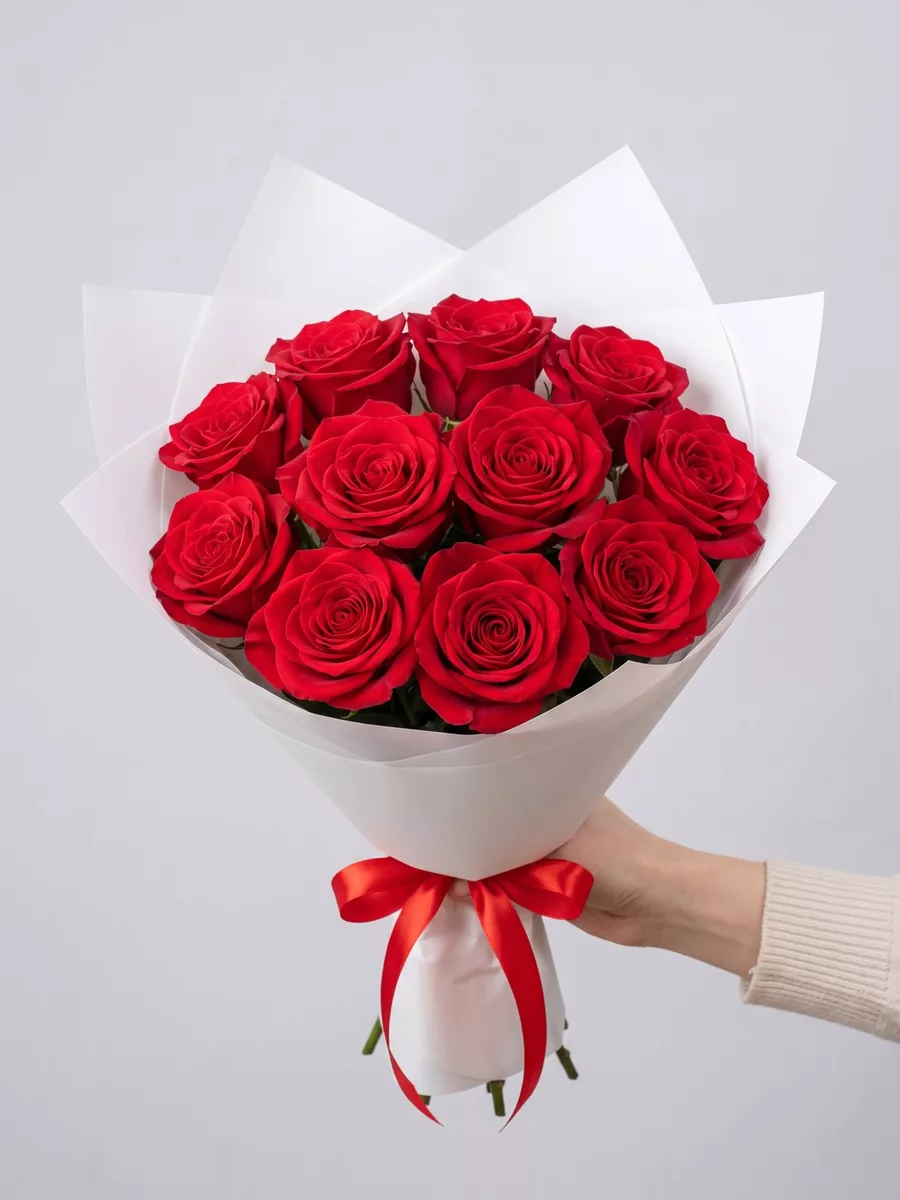
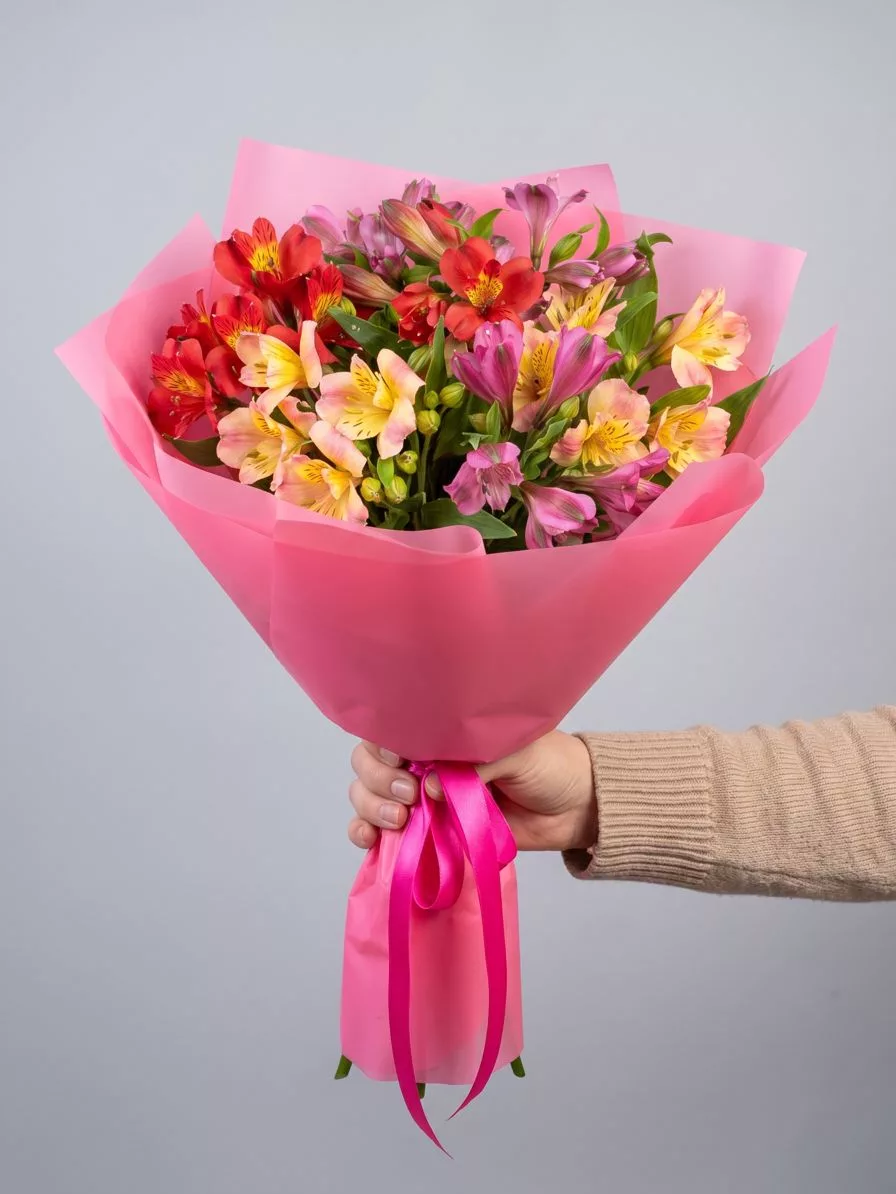
Bouquets we can deliver
Which Flowers Survive the Journey in Good Condition
The practical question for any long-distance order is not what looks beautiful in a photograph but what arrives in the same condition it left the shop. For Pokhvistnevo, the reliable workhorses are spray roses, standard roses, chrysanthemums, alstroemeria, and lisianthus. Spray roses — the multi-headed stems rather than single large blooms — travel exceptionally well because each individual flower is small and protected by the others on the same stem. Standard roses in red, white, coral and deep burgundy are the most requested variety for milestone occasions, and they hold up well as long as the stems are cut and conditioned before packing. Chrysanthemums, both the large disbud type and the smaller spray varieties, are genuinely tough: they tolerate temperature fluctuation better than most flowers and stay presentable for seven to ten days after delivery. Alstroemeria is worth recommending to anyone who wants a full, colourful bouquet at a sensible price point — it is long-lasting and comes in yellow, pink, orange, white and bicolour options. Lisianthus adds a soft, layered texture that reads as luxurious without the fragility of garden roses or peonies. What to avoid in summer, specifically July and August when temperatures in Samara Oblast regularly exceed 30 degrees Celsius: open-faced gerbera daisies, which bruise in heat, and hydrangea, which wilts within hours without refrigeration. In winter, tropical varieties like anthuriums need careful insulated packaging, so confirm with the shop that cold-weather packing is applied before you finalise the order.
Seasonal Timing: When to Order and When to Add a Buffer
The calendar in Pokhvistnevo follows the same Russian public holidays that drive flower demand everywhere in the country, and if you are ordering from abroad you need to know these dates because they affect both availability and lead time. The two biggest spikes are the 8th of March, International Women's Day, and the 14th of February, Valentine's Day. On and around the 8th of March, demand across Russia is so high that same-day orders for premium varieties — long-stemmed roses, peonies if they are in season, tulips — can sell out by mid-morning Moscow time. If you are ordering for the 8th of March from a time zone that is five or more hours behind Moscow, you may be placing your order when the morning rush is already over and stock is depleted. The practical fix is to order 48 hours in advance for any major holiday, not 24. Tulips, which are enormously popular for the 8th of March, are at their best from late February through April; outside that window they are available but imported and sometimes less crisp. Peonies have a narrow natural season from late May through June — outside that period they are greenhouse-grown and noticeably more expensive. Summer orders, June through August, should account for heat: request that the bouquet be packed with a water tube on each stem for longer transit. Winter orders from November through February should note that flowers coming from a warm van into a cold hallway need a few minutes to acclimatise before unwrapping, and the recipient should be told this so they do not pull the wrapping off immediately in a cold entrance.
The Address Format Russian Florists Actually Need
This is where international orders break down most often. Russia uses a specific address hierarchy that is different from Western formats, and if you write the address the way you would for a parcel going to London or Chicago, the delivery driver will have trouble finding the right entrance of the right building. The correct order for a Russian apartment address runs: city, street name, building number, then apartment number. In Russian postal convention, the building number sometimes includes a corpus number — a secondary block designation written as korpus or abbreviated k. — when a large residential complex has multiple identical-looking towers sharing one street number. If the recipient lives at, for example, ulitsa Lenina 14, korpus 2, apartment 37, all four pieces of information are necessary. Leaving out the korpus sends the driver to the wrong tower. For private houses, the address typically has a street name and a house number but no apartment number — instead there may be a gate code or a note that the house has a green fence or a particular landmark, and those details genuinely help. Always include the recipient's mobile phone number in the Russian format: the country code is +7, followed by ten digits. Drivers call ahead when they are five to ten minutes away, and if the phone number is wrong or the recipient does not pick up, the order sits in the van. The recipient's name should be written in a way the driver can read aloud to confirm — transliteration into Latin letters is fine, but include the full first name, not just an initial. Building entrance codes, if there is a door lock on the entrance, should be included in the order comments.
Payment from Outside Russia: What Actually Works
Since 2022, the payment landscape for cross-border transactions involving Russian businesses has changed significantly, and senders from Europe, North America and Australia need to know what to expect before they start the checkout process. Standard Visa and Mastercard cards issued outside Russia do not process payments to Russian merchants through the usual international channels. This is not a shop policy — it is a banking infrastructure issue affecting the entire country. The options that do work vary by shop and should be confirmed at the time of ordering, but the most common routes for international senders are payment through intermediary services that accept foreign cards and convert the transaction, cryptocurrency payment where the shop offers it, or bank transfer in a currency the shop accepts. Some shops accept payment via a Russian-issued card held by a friend or family member inside Russia, with the international sender reimbursing them separately. The key action is to ask about payment method before you build the order, not after, because some methods require additional verification steps that take time. When paying, keep the confirmation receipt or transaction reference — if there is any query about whether payment was received, that reference resolves it immediately. Prices for flowers in Russia are denominated in roubles, so the amount you pay in your currency will fluctuate with the exchange rate. The total you see at checkout reflects the rate at the moment of payment, not when you first browsed. For large or premium orders, asking for a written confirmation of the total in roubles before paying avoids any confusion about what you agreed to.
What to Write on the Card and How Russian Gift Cards Work
A card attached to a bouquet is a small thing that matters a great deal to the recipient, and there are a few conventions worth knowing if you have not sent flowers inside Russia before. Russian gift cards are typically small — about the size of a business card or slightly larger — and the message is handwritten by the florist from the text you provide in your order. You can write the message in English if the recipient reads English, or you can ask the shop to write it in Russian if you provide a transliteration or a Russian-language text. Keep the message under 150 characters if you want it to fit comfortably on a standard card without the handwriting becoming cramped. Avoid abbreviations that only make sense in your own language — a sender from the United States writing Happy 8th, Mom is clear to an American reader but potentially confusing to a Russian florist transcribing it by hand. If you want a specific phrase in Russian and are not sure of the translation, write the meaning in English and ask the shop to phrase it naturally in Russian — most florists are used to doing this for international senders. The sender's name on the card is optional but recommended: recipients who are not expecting a delivery are sometimes confused about who sent the flowers, especially if the occasion is not an obvious one. One thing to be aware of: in Russia, an even number of flowers in a bouquet is traditionally associated with mourning, so shops assembling bouquets for celebration and everyday gifting always use an odd number of stems. You do not need to count or specify this — any professional shop applies it automatically — but it is useful background if the recipient mentions it.
Checking Your Order Before You Confirm: A Practical List
The last step before confirming an international order is a check that takes two minutes and prevents the problems that generate complaints. First, read the delivery address back in full: city spelled out as Pokhvistnevo, street name, building number, korpus if applicable, apartment number, and entrance code if there is one. Second, verify the recipient's phone number digit by digit — not by reading it as a single number but by checking each digit individually against what the recipient gave you. A transposed digit in a Russian mobile number is the single most common cause of a failed delivery. Third, confirm the delivery date in local Pokhvistnevo time, not your local time. Write it out explicitly: Thursday the 12th, delivery by 17:00 Pokhvistnevo time. Fourth, check that the flower varieties you ordered are in season or confirmed as available — if you ordered peonies in October without asking about availability, you may receive a substitution. Ask the shop to confirm availability before charging you, and ask what the substitution policy is if a specific variety sells out between your order and the delivery. Fifth, save your order confirmation with the order number, the total paid, and the shop's contact details. If you need to make a change — a different delivery time, a corrected apartment number — you will need that order number to do it quickly. Changes are possible up to a certain cut-off time before delivery, and that cut-off is usually two to three hours before the scheduled slot, so act on any corrections as soon as you notice them rather than waiting.
Sending flowers to Pokhvistnevo from outside Russia is a straightforward process once you have the address format right, the time zones converted, and a payment method confirmed. The flowers that arrive in the best condition are the ones chosen for durability as well as appearance — spray roses, chrysanthemums and alstroemeria are not compromise choices, they are professional ones. The recipient in Pokhvistnevo will not know or care that the order came from another country; what they notice is whether the stems are fresh, the card message reads naturally, and the delivery arrived when it was supposed to. We deliver bouquets across Russia in 1–2 hours.
Frequently asked questions
Can I order flowers for Pokhvistnevo the same day from abroad?
Yes, same-day delivery to Pokhvistnevo is possible if you place the order before noon Moscow time and the recipient's address is in the city centre or a standard residential district. Private house addresses on the outskirts may need next-day scheduling. Always confirm the cut-off time when you contact the shop, and account for the time difference between your country and Moscow.
What happens if the recipient is not home when the flowers arrive?
The driver calls the recipient's mobile number before arriving. If there is no answer after two attempts, the shop contacts the sender using the number provided at checkout. You can then arrange a second delivery attempt or authorise leaving the bouquet with a neighbour. Providing an accurate mobile number for the recipient is the single most important step to prevent this situation.
Is it possible to include a gift alongside the flowers, such as chocolates or a soft toy?
Many orders to Pokhvistnevo include a small add-on such as a box of chocolates, macarons or a plush toy. These are available to add during checkout. The item travels with the bouquet in the same delivery. Check that the add-on you want is listed as available for delivery to Pokhvistnevo specifically, since some items are limited to Saint Petersburg or larger cities.
Do I need to write the address in Russian letters or is Latin script acceptable?
Latin script is acceptable when placing the order online or by message — the shop team will convert it to Cyrillic for the driver. However, if you know the Russian spelling of the street name, include it alongside the Latin version to avoid any ambiguity. Street names in smaller Russian cities sometimes have multiple plausible transliterations, and the Russian spelling removes any guesswork.
How far in advance should I order for a major holiday like 8 March or 14 February?
For the 8th of March and the 14th of February, place your order at least 48 hours before the intended delivery time. These are the two highest-demand dates in the Russian flower calendar, and specific varieties — particularly long-stemmed roses and tulips — sell out early. Ordering 48 hours ahead also gives you time to resolve any payment or address questions without pressure.
Ready to send a bouquet?
Pick a city, choose the flowers, and we will hand them over with a photo confirmation.
Choose a city →