
Can You Send Flowers to a Russian Address Without a Street Number?
You have the name of the street, you know the city, and you even remember that your friend lives somewhere on the fourth floor — but the exact building number? Gone. If you have ever tried to send flowers to someone in Russia from abroad, you already know that Russian addresses follow their own logic, and a missing detail can turn a beautiful gesture into a logistical puzzle. The good news is that with a little preparation and the right florist on the ground, an incomplete address is a problem you can almost always solve before the roses even leave the shop.
How Russian Addresses Actually Work
Before you can fix an address problem, it helps to understand how Russian addresses are structured, because they differ from Western conventions in ways that catch most international senders off guard. In Russia, the address is typically written in the following order: country, city, street name, building number, apartment number. Simple enough — except that the building number is rarely just a number. You will often see a korpus, which means a secondary building or block within the same plot, written as k.2 or korpus 2. There is also a stroenie, which refers to a structure on the same land parcel, abbreviated as str. or s. A single address might therefore read: ulitsa Lenina, dom 14, korpus 3, stroenie 1, kvartira 57. Each of those elements matters. Korpus and stroenie numbers are not decorative — they identify physically separate buildings that share the same street number. If you leave one out, a delivery driver can arrive at the correct street and the correct plot but stand in front of the wrong building entirely. In large Soviet-era residential districts, called mikrorayony, several identical-looking tower blocks can share the same base address. For a florist delivering a bouquet of garden roses or seasonal tulips within a one-to-two-hour window, even a ten-minute detour hunting for the right entrance can push the delivery outside the promised timeframe. Knowing what each element of the address means is the first step toward getting it right.
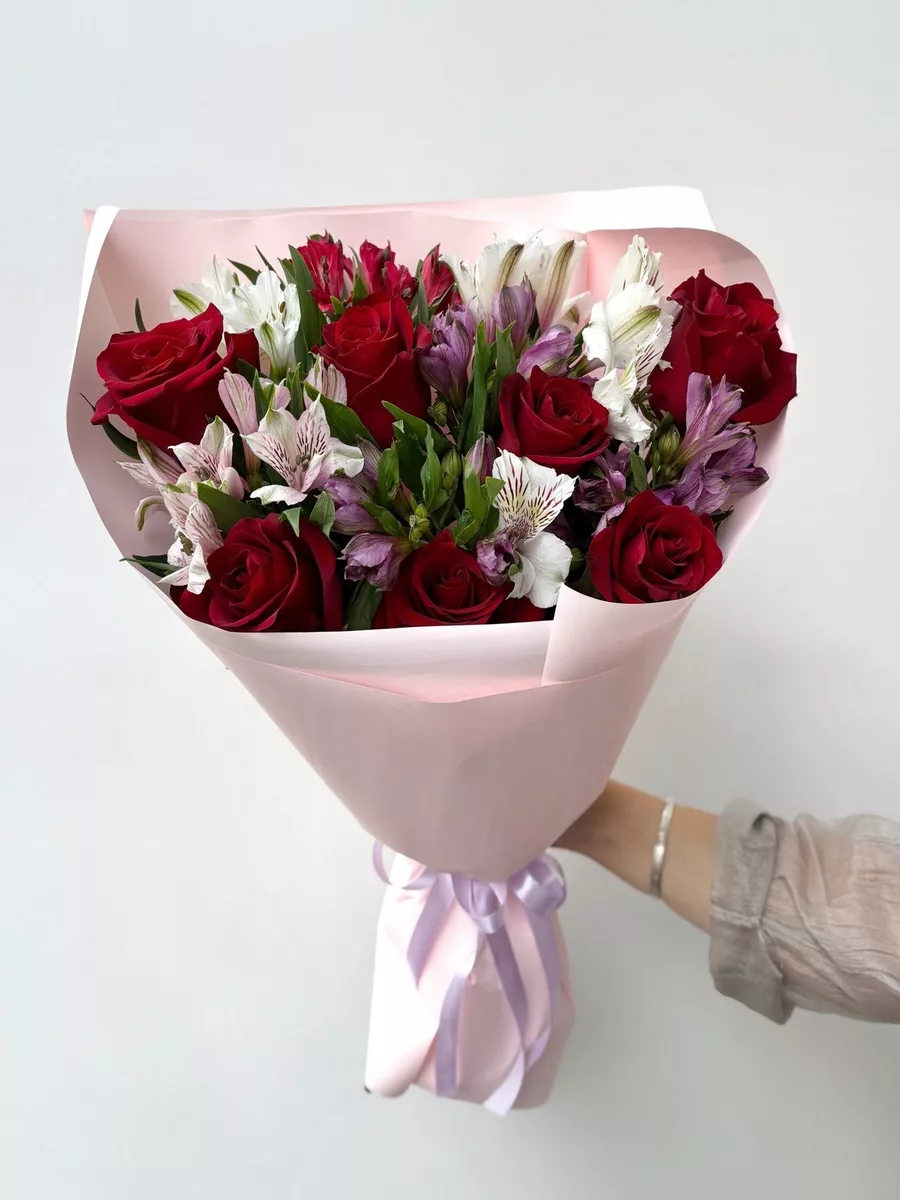
Bouquets we can deliver



What to Do When You Are Missing the Building Number
The building number, written in Russian as dom (abbreviated d.), is the single most important element of any delivery address. Without it, a driver has a street but no destination. If you are ordering from abroad and realize you do not have it, the most reliable solution is also the most obvious one: call or message the recipient directly. A quick text asking for their full address rarely spoils a surprise as much as people fear, and most recipients are genuinely touched that someone went to the trouble of sending flowers internationally. If you want to keep the surprise intact, consider asking a mutual friend or family member who might have the address saved. Another practical approach is to search for the recipient's address using online map services. Russian mapping platforms such as Yandex Maps are extremely detailed and include building-level data, including korpus and stroenie subdivisions. If you know the street and the approximate area of the city, you can often identify the correct building by cross-referencing it with what you know — a landmark nearby, the name of the metro station they always mention, or the district they live in. When you place your order with us, you can also leave a note in the comments field explaining what information you have. Our team in Saint Petersburg can sometimes help verify an address before dispatch, especially when the delivery is to the city itself. For bouquets traveling to other Russian cities, having at least the street name, approximate building number, and a working phone number for the recipient gives us the best chance of completing the delivery smoothly and on time.
Intercoms, Door Codes, and Entrance Numbers
Even when you have a complete address, there are two details that international senders almost never think to ask about: the entrance number and the intercom code. In Russian residential buildings, especially the large panel apartment blocks built from the 1960s onward, a single building can have anywhere from two to a dozen separate entrances, each called a podyezd. Each podyezd has its own door, its own stairwell, and its own set of apartments. If a driver arrives at the right building but the wrong entrance, they may have to walk the entire length of the building — sometimes in January, when Saint Petersburg temperatures can sit well below minus ten degrees Celsius — searching for the correct door. For a delivery of cold-sensitive flowers like anemones or ranunculus, even a brief exposure to that kind of cold matters. The intercom, called a domofon in Russian, is a keypad or buzzer system at the entrance door. Many buildings have digital codes that must be entered before the door will open. Others require the driver to ring the specific apartment number and wait for the resident to buzz them in. If the recipient is not home and there is no code, the driver cannot enter. When ordering, always try to include the entrance number (podyezd nomer), the floor, and either the intercom code or confirmation that the recipient will be available to answer the buzzer. If the recipient works from home or has a flexible schedule, ask them to keep their phone nearby around the expected delivery time. A thirty-second phone call from the driver to the recipient solves almost every intercom problem instantly.
Giving the Recipient's Phone Number — Why It Is Non-Negotiable
If there is one piece of advice that experienced florists give every international customer, it is this: always provide a working Russian mobile number for the recipient. Not an email address, not a WhatsApp linked to a foreign SIM, not a landline from five years ago — a current Russian mobile number that the person actually answers. Here is why this matters so much in practice. Russian addresses, as you now know, can be complex. Drivers navigate real cities with real traffic, construction detours, and buildings that do not always match what the map shows. When something is unclear — a missing apartment number, an entrance that does not match the order, a recipient who has moved within the same building — the fastest resolution is always a phone call. In our experience delivering across Saint Petersburg, the vast majority of address complications are resolved in under two minutes when the driver can reach the recipient directly. A good phone number also protects the flowers themselves. A bouquet of peonies or hydrangeas left in an unheated entrance hall in winter, or sitting in direct afternoon sun outside a summer dacha, will deteriorate quickly. Russian summers can push temperatures above thirty degrees Celsius in July and August, which is hard on almost any cut flower. Getting the bouquet into the recipient's hands promptly is the best way to ensure they enjoy it at its peak. When you fill in your order, put the recipient's phone number in the designated field and double-check it digit by digit. It is the simplest thing you can do, and it makes every other part of the delivery easier for everyone involved.
Special Cases: Offices, Gated Communities, and New Developments
Residential apartments are the most common delivery destination, but flowers go to offices, gated residential complexes, and newly built neighborhoods too — and each of these brings its own set of challenges for international senders who are not familiar with how they work in Russia. Office deliveries in Russia generally require a name and a company name at minimum. Many office buildings in Saint Petersburg have a reception desk or a security post at the entrance, and drivers will need to either be on an approved visitor list or have the recipient come down to collect the bouquet. If you are sending flowers to a colleague or a business contact, include the full company name, the floor, and ideally ask the recipient in advance to let reception know a delivery is coming. Gated residential complexes, called zhilye kompleksy or ZhK, have become extremely common in Russian cities over the past fifteen years. These developments often have a barrier at the entrance, a security booth, and sometimes a separate delivery entrance. The driver will need either an access code for the barrier or a phone call to the recipient who can authorize entry. Without this information, delivery to the gate is the best that can be done, which means the recipient must come outside to collect. New residential districts on the outskirts of cities sometimes present a different problem: the address exists in official records but has not yet been fully indexed by navigation systems. In these cases, a nearby landmark — the name of the complex itself, a large shop, or a metro station — combined with a phone number for the recipient is genuinely helpful and should be included in the order comments.
How to Write the Perfect Order Note When Your Address Is Incomplete
When you cannot gather every piece of information before placing your order, the comments or special instructions field is your best tool. Think of it as a short briefing for the florist and the driver — the more useful context you give, the better the chances of a smooth delivery. Start with what you know for certain: the street name, the approximate building number or range, the city district if you know it. Then add any contextual clues. Does your recipient live near a specific metro station? Is their building next to a park, a school, or a large supermarket? Even approximate landmarks help a driver orient themselves in an unfamiliar part of the city. Next, note anything you know about access. Is it a high-rise with multiple entrances? Is there a gate or a security desk? Will the recipient be home, or should the driver call ahead to arrange a handoff? If the recipient is expecting the delivery, say so — it means they will be watching for the call. Finally, be honest about what you do not know. A note that says 'I believe the building number is 12 or 14, please call the recipient to confirm' is far more useful than a confident but incorrect address. Our team works with incomplete information more often than you might think, and clear communication about uncertainty is always easier to work with than a wrong address stated with total confidence. The flowers we send — whether a wrapped bouquet of spray roses and eucalyptus or a box arrangement of garden peonies — deserve to arrive at the right door, and a well-written order note is often what makes that happen.
Sending flowers to a Russian address from abroad is genuinely achievable, even when your information is incomplete. The key is to treat the address as a puzzle you can solve with a few phone calls, a careful look at an online map, and a well-written note at checkout. Russian addresses have more components than most Western ones, intercoms and entrance numbers are real considerations, and a working mobile number for the recipient is worth more than any other single piece of information you can provide. At Five Flowers, we deliver across Russia within one to two hours, and we have navigated every kind of address complication you can imagine. The more detail you share with us — even imperfect, uncertain detail — the better equipped we are to get your bouquet where it belongs, fresh and on time. We deliver bouquets across Russia in 1–2 hours.
Frequently asked questions
Can you deliver flowers if I only have the street name and city?
A street name alone is not enough to guarantee delivery, but it is a starting point. If you also provide a working phone number for the recipient, our driver can call ahead to confirm the exact building. Include any landmarks or district names you know in the order comments, and we will do our best to piece the address together before dispatch.
What happens if the recipient does not answer the intercom or their phone?
If our driver cannot reach the recipient after multiple attempts, they will contact you as the sender. Depending on the situation, we can wait a short time, attempt a second delivery, or leave the bouquet with a neighbor or building reception if the recipient has authorized this in advance. Providing an accurate, active phone number for the recipient is the best way to avoid this scenario entirely.
Do I need to write the address in Russian, or is English acceptable?
You can write the address in English when placing your order. Our team will interpret it and format it correctly for the driver. However, if you have the address in Russian — copied from a message or a document — paste it exactly as written, including any abbreviations like k., str., or kv., since those details tell us which specific building and apartment to target.
How does cold weather in Russia affect the flowers during delivery?
In winter, cut flowers like ranunculus, anemones, and roses are sensitive to temperatures below zero. Our drivers use insulated packaging to protect bouquets during transit. However, if a driver cannot access the building and must wait outside, exposure time increases. Ensuring the recipient can answer their door promptly — especially in January and February — genuinely helps the flowers arrive in the best possible condition.
Is it possible to send flowers to a Russian address as a surprise without asking the recipient for their address?
Yes, and many customers do exactly this. The most reliable approach is to contact a friend or family member of the recipient who has the full address saved. Alternatively, if you know where the recipient works, an office delivery is often easier to arrange than a residential one. Just include the company name, floor, and recipient's full name, and ask them to expect a visitor at reception.
Ready to send a bouquet?
Pick a city, choose the flowers, and we will hand them over with a photo confirmation.
Choose a city →