
Flower Delivery to Vorsma from Abroad: Zones, Timing and Varieties
Every week someone calls or messages from Germany, the UAE or the United States wanting to send flowers to a mother, wife or colleague in Vorsma, a small industrial town in the Nizhny Novgorod region. The questions are always the same: can you actually reach it, how fresh will the flowers be when they arrive, and what do you need from me to make it happen. This article answers all of that with the kind of detail that saves you from a failed delivery and a disappointed recipient.
Where Vorsma Is and Why It Matters for Delivery
Vorsma sits in the Pavlovsky District of the Nizhny Novgorod region, roughly 60 kilometres south of Nizhny Novgorod city. That distance is the first thing to understand when you are ordering from abroad, because the flowers do not teleport from our Saint Petersburg warehouse directly to the recipient's door. The route runs from our storage facility through the Nizhny Novgorod hub and then out to Vorsma itself, which adds time to the standard 1–2 hour window we offer inside major cities. Callers sometimes assume Vorsma is a suburb of Nizhny Novgorod and expect the same same-day speed. It is a separate town with its own address structure, and the courier leg from the regional centre to Vorsma typically adds one to two hours on top of the city delivery time. That is not a problem if you plan for it. The important practical step is to place your order before noon Moscow time if you want same-day delivery; orders placed after 14:00 Moscow time are safer to schedule for the following morning slot. Vorsma has standard Russian postal addressing: street name, building number, apartment or office number, and the postal code 606120 for the central part of town. Giving us the full address including the entrance number for apartment buildings eliminates the single most common cause of delay we see on regional deliveries.
Bouquets we can deliver


What Flowers Actually Survive the Trip to Vorsma in Good Condition
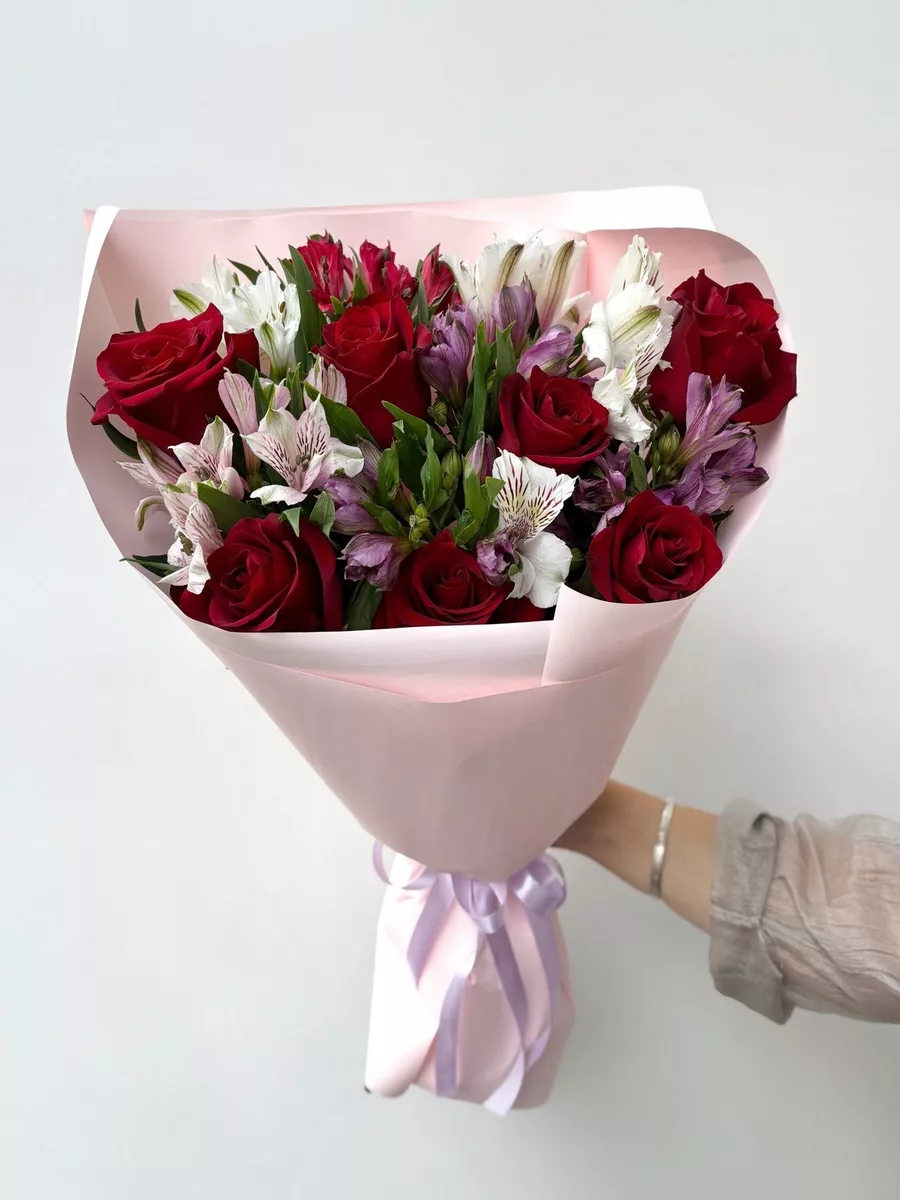
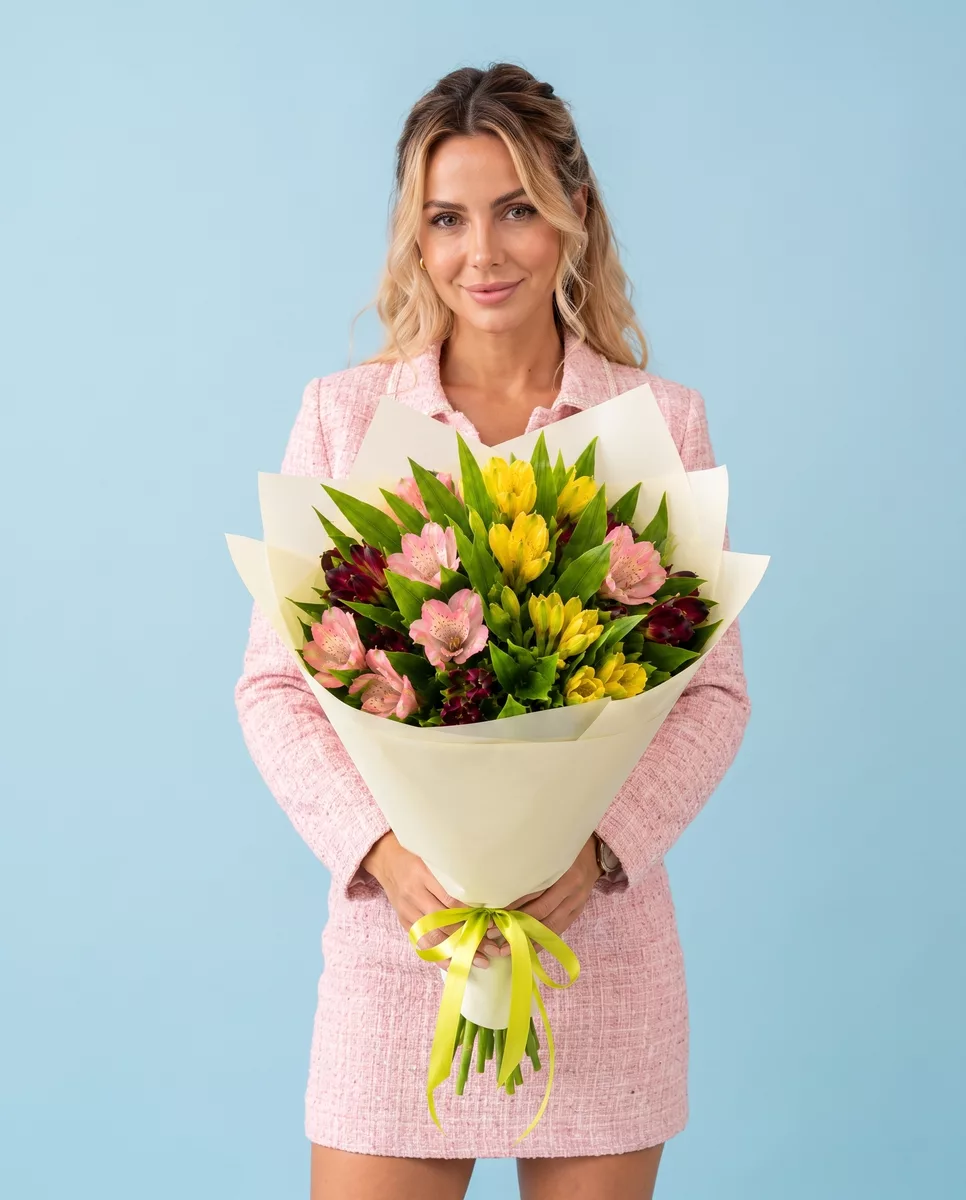
The journey from our cold storage to a door in Vorsma is longer than a city run, so variety selection is not cosmetic — it is practical. Roses with a stem length of 50–60 cm and a tight bud hold well in transit; we use Kenyan and Ecuadorian varieties such as Explorer, Red Naomi and Mondial because their petals are dense and they do not bruise easily in packaging. Dutch spray roses are a good compact option for mixed bouquets where the recipient does not have a large vase. Chrysanthemums, both single-headed and spray types, are among the most transit-tolerant flowers we carry; they arrive looking fresh even after a four-hour delivery window. Alstroemeria is another reliable choice — it buds tightly, travels without petal loss and opens over several days, which means the recipient gets a longer display. What we steer people away from for long regional runs: open garden roses, which bruise in the box, and fully open peonies in summer, which shed petals under movement. Tulips in season, roughly November through April, are excellent for Vorsma deliveries because they ship closed and open in the warmth of the recipient's home. Orchid stems — specifically Cymbidium and Dendrobium — are sturdy enough for regional transit and make a strong impression when someone wants something less conventional. The key principle is tight bud, thick petal, short water-gap tolerance.
Seasonal Timing: When to Order and What Is Actually Available
Russia has four distinct seasons and flower availability shifts with them, which matters when you are ordering from a country with a different climate calendar. From November through March, the range is primarily import-driven: Ecuadorian roses, Dutch tulips, Israeli ranunculus and Colombian carnations dominate. These are all well-suited to Vorsma deliveries in cold weather because low temperatures during transport actually help preservation. The risk in winter is not freshness but road conditions; heavy snowfall in the Nizhny Novgorod region can extend the courier leg, so adding a 30-minute buffer to your expected delivery time is sensible from December through February. April and May bring Russian-grown tulips and the first hyacinths, both of which are fragrant and popular for birthdays and anniversaries. Peonies arrive in late May and run through June; they are the most requested flower for this period but require the tightest timing — order them for morning delivery and avoid afternoon slots in warm weather. Summer, June through August, is the peak for mixed seasonal bouquets using lisianthus, eustoma, statice and local garden flowers. These hold well in moderate temperatures but struggle above 28°C in an unventilated car, so we use insulated packaging on hot days. September and October are excellent months for dahlias, which travel well and are not yet widely associated with autumn in the way chrysanthemums are, making them feel fresh and unexpected to a Russian recipient.
How to Place the Order from Outside Russia Without Complications
The practical barrier for an international sender is usually payment and communication, not logistics. Our website accepts international bank cards including Visa and Mastercard issued outside Russia, and the checkout process is available in Russian; if you need assistance in English, our messaging line handles orders in English without issue. When you fill in the delivery form, the recipient's phone number must be a working Russian mobile number — this is not optional, because the courier calls ahead before arriving, and a number that does not receive calls in Russia will cause a failed delivery. If your recipient does not have a Russian mobile, provide a number of a neighbour, building concierge or family member who can accept the bouquet. The sender's contact details should include your own phone number or email so we can reach you if there is a question about the address. Time zones matter here: if you are in Los Angeles placing an order at 10:00 pm your time, it is already 08:00 the next morning in Moscow, which is a good window for same-day delivery to Vorsma. If you are in Tokyo placing an order at 09:00 am, it is 03:00 Moscow time and the order will be processed when the team starts at 08:00 Moscow. Building that time-zone arithmetic into your planning takes two minutes and prevents the most common disappointment we hear from international senders.
Card Messages and Russian Customs: What to Write and What to Avoid
A handwritten card accompanies every bouquet we send, and the message you choose to include matters more than most international senders realise. In Russia, flower gifting follows a few conventions that differ from Western practice. An even number of flowers is traditionally associated with mourning, so bouquets are always assembled in odd numbers — 3, 5, 7, 11, 15, 25 — and we follow this automatically. You do not need to specify it, but it is worth knowing so you are not surprised when a bouquet of roses arrives as 11 stems rather than 10. For the card message, you can write in English and we will include it as written; many recipients in Vorsma will appreciate the gesture even if their English is limited, and a short message in Russian transliterated from English is also effective. Avoid overly formal phrases that translate awkwardly — simple and direct works best. Common occasions we see from international senders include birthdays, anniversaries, new babies and professional achievements. For a birthday, naming the recipient directly and keeping the message to two or three sentences is the norm. For anniversaries, Russian couples appreciate specificity — mentioning the number of years is considered warm and attentive. If you are sending to a colleague or business contact, a brief congratulatory note without personal language is appropriate; Russians distinguish clearly between professional and personal registers even in informal gestures like flowers.
What to Confirm Before You Complete the Order
A checklist approach saves more deliveries than any amount of goodwill. Before you confirm payment, verify the recipient's full address including the apartment number, floor, entrance number and intercom code if the building has one. Apartment buildings in Russian towns like Vorsma commonly have multiple entrances numbered separately, and the courier needs the correct one. Confirm the recipient's Russian mobile number is active and that the person will be reachable during the delivery window — if they are at work, consider sending to their workplace address instead. Check the delivery date against Moscow time, not your local time, and add a buffer if you are ordering close to the cutoff. If you are ordering a bouquet with a specific flower such as peonies or tulips, confirm with us that the variety is in stock for your chosen date; seasonal flowers can sell out by midday during peak periods like March 8th, Valentine's Day or the first week of September when students return and families celebrate. Check that your payment card is enabled for international transactions if it was issued outside Russia — some cards issued in the EU require you to notify your bank before making a cross-border online purchase. Finally, save the order confirmation number; if you need to follow up on delivery status, this number lets us locate your order immediately without searching by name or address, which is slower and more prone to error.
After the Delivery: What the Recipient Should Do with the Bouquet
Flowers arrive in water-soaked floral foam or with wet cotton wrapping around the stems depending on the bouquet type, and the first 30 minutes after receipt determine how long the arrangement lasts. The recipient should cut stems at a 45-degree angle under running water immediately after unwrapping — this removes any air lock that formed during transit and allows the stems to draw water freely. A clean vase with cool, not cold, water is ideal; water temperature between 15°C and 20°C suits most cut flowers. Roses benefit from having their lower leaves removed so no foliage sits below the waterline, where it would rot and contaminate the water. Tulips should be kept away from fruit bowls because ethylene gas from ripening fruit accelerates petal drop. Chrysanthemums and alstroemeria are the least demanding; they simply need clean water changed every two days. In Vorsma's continental climate, indoor heating in winter creates very dry air, which shortens vase life significantly — placing the bouquet away from radiators and direct sunlight adds two to three days of display time. If you want to include care instructions with your order, you can request a printed care card in Russian and we will add it to the packaging at no extra charge. This is a small detail that recipients genuinely appreciate, particularly older recipients who may not know modern flower care practices and would otherwise not think to ask.
Vorsma is reachable, the flowers arrive fresh when the order is placed correctly, and the process from an international sender's side is straightforward once you account for Moscow time, full address details and the right variety for the season. The mistakes that cause failed or disappointing deliveries are almost always the same: a missing apartment entrance number, a recipient phone that does not work in Russia, or an order placed too late in the day. Get those three things right and the rest of the delivery handles itself.
Frequently asked questions
Can I pay for a Vorsma delivery using a card issued outside Russia?
Yes, we accept Visa and Mastercard issued internationally. Some European cards require you to enable cross-border online payments with your bank before the transaction will go through. If your card is declined, contact your bank first — the issue is almost always a security block on the card side rather than a problem with our payment system.
How long does delivery to Vorsma actually take compared to Nizhny Novgorod city?
Vorsma is roughly 60 kilometres from Nizhny Novgorod, so the courier leg adds one to two hours beyond the city delivery window. For same-day delivery, place your order before noon Moscow time. Orders placed in the afternoon are better scheduled for the following morning to avoid late-evening arrivals, which recipients in smaller towns often find inconvenient.
What happens if the recipient is not home when the courier arrives?
The courier calls the recipient's Russian mobile number before arriving. If there is no answer, they attempt contact once more and then return the bouquet. To avoid this, either confirm the recipient will be home during the delivery window or provide a workplace address. You can also name a neighbour or building concierge as an alternative contact when placing the order.
Is it true that flowers in Russia must come in odd numbers?
Yes, this is a firmly held convention across Russia. Even numbers of flowers are associated with mourning and are not given as gifts for living recipients. We assemble all bouquets in odd numbers automatically, so you do not need to specify this. If you count the stems and reach an odd number, the bouquet is correct.
Which flowers are best to avoid for a delivery to Vorsma in summer?
Fully open peonies and garden roses with loose petals bruise during the longer regional transit and may arrive with petal loss on hot days above 25°C. We use insulated packaging in summer, but tight-budded varieties such as Ecuadorian roses, alstroemeria, lisianthus and spray chrysanthemums are more reliable choices for warm-weather deliveries to regional towns like Vorsma.
Ready to send a bouquet?
Pick a city, choose the flowers, and we will hand them over with a photo confirmation.
Choose a city →