
September 1 in Russia: Flowers for Teachers and Students on Knowledge Day
Every September 1, Russian schools open to a sea of flowers. Children arrive carrying bouquets for their teachers, parents photograph the moment at the school gate, and florists across the country work through the night to keep up. If you are outside Russia and want to send flowers to a child starting school or to a teacher who matters to your family, the tradition is real, the logistics are specific, and the window for ordering is narrow. Here is what you need to know before you place an order.
What Knowledge Day Actually Is and Why Flowers Are Central to It
September 1 is called Den Znaniy — Knowledge Day — and it is a public holiday in Russia. Every school holds a formal assembly called a Lineyka, where students stand in rows by class, speeches are made, and first-graders are officially welcomed. The assembly usually starts between 9 and 11 in the morning and lasts thirty to fifty minutes. Children bring bouquets to hand to their class teacher at the end of the ceremony or immediately after. This is not a symbolic gesture — it is a firm expectation, and a child arriving without flowers is genuinely the exception. The tradition dates to the Soviet period, when chrysanthemums and gladioli were the standard choice because they were the only flowers available in late August. Today the range is far wider, but gladioli remain closely associated with the day, and many teachers still receive them. The bouquet is always given by the child directly, which means the flowers need to arrive at the home address before the family leaves for school, typically before 8 in the morning. For families sending flowers from abroad, this timing detail is the one that causes the most problems. Ordering the evening before and assuming same-morning delivery will work is the single most common mistake we see every year in the days leading up to September 1.
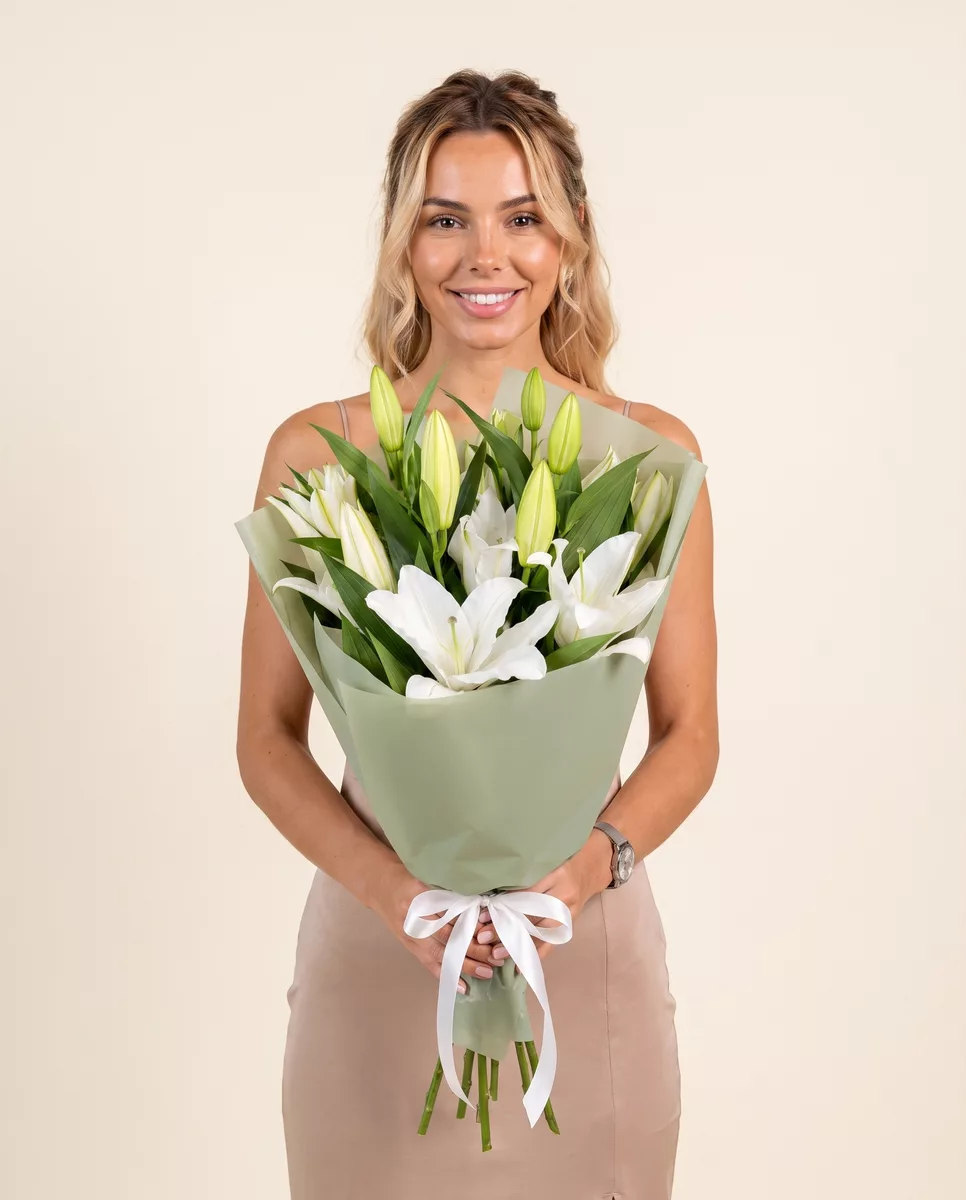
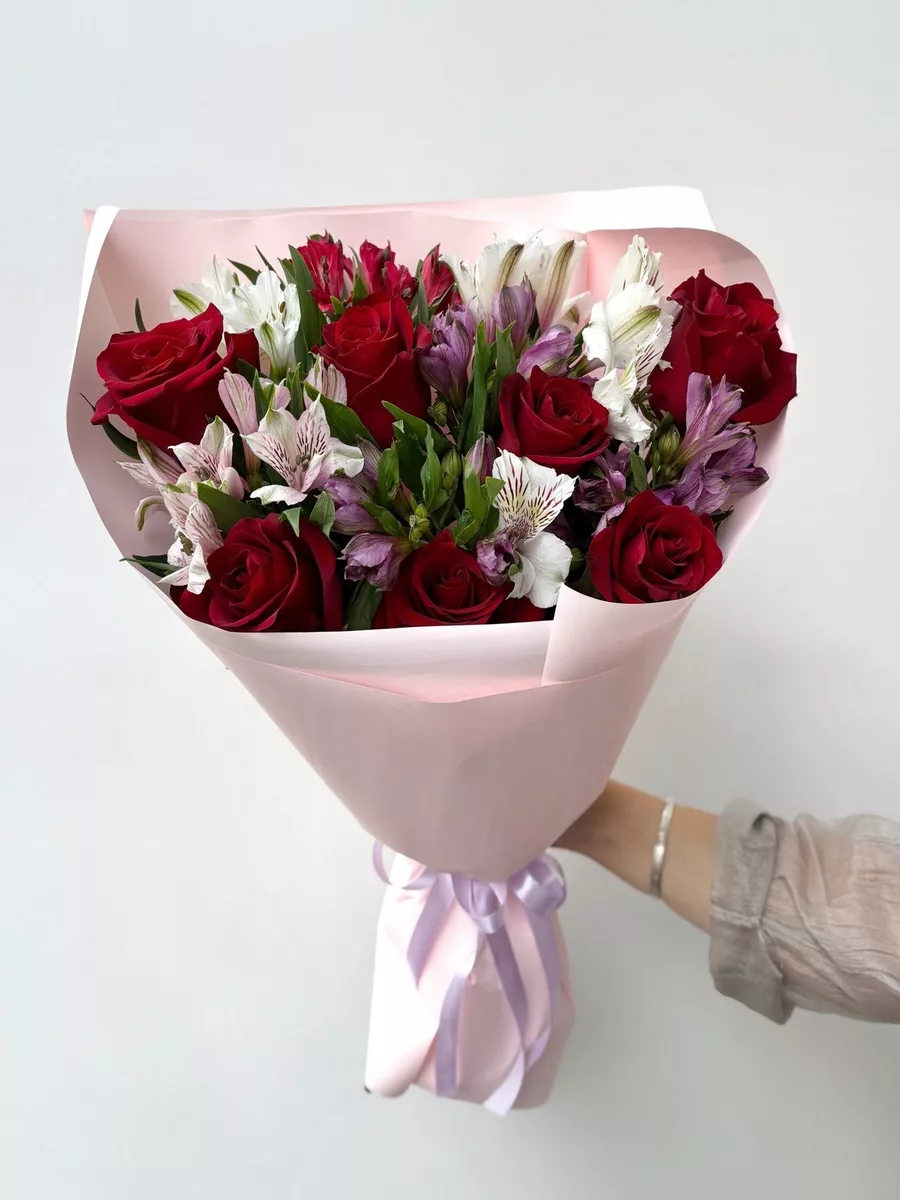
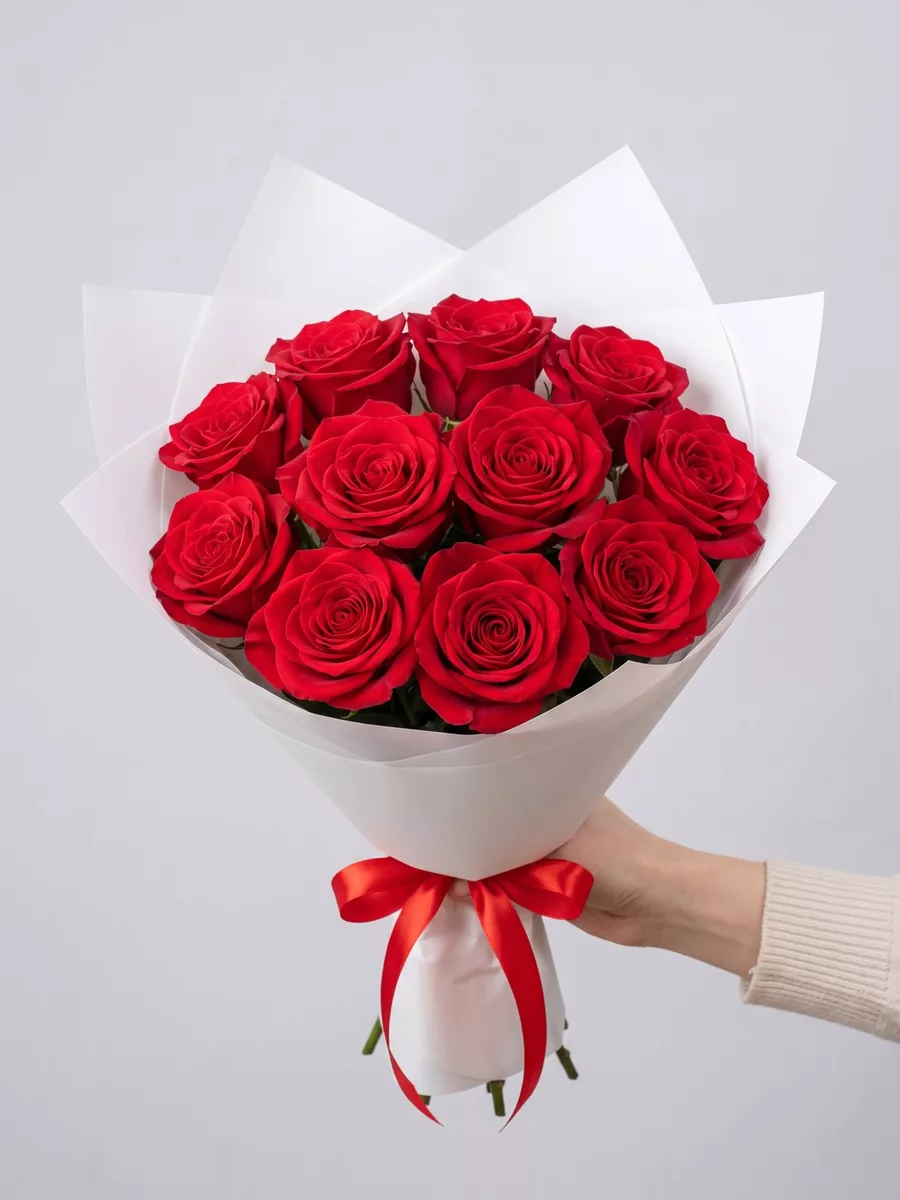
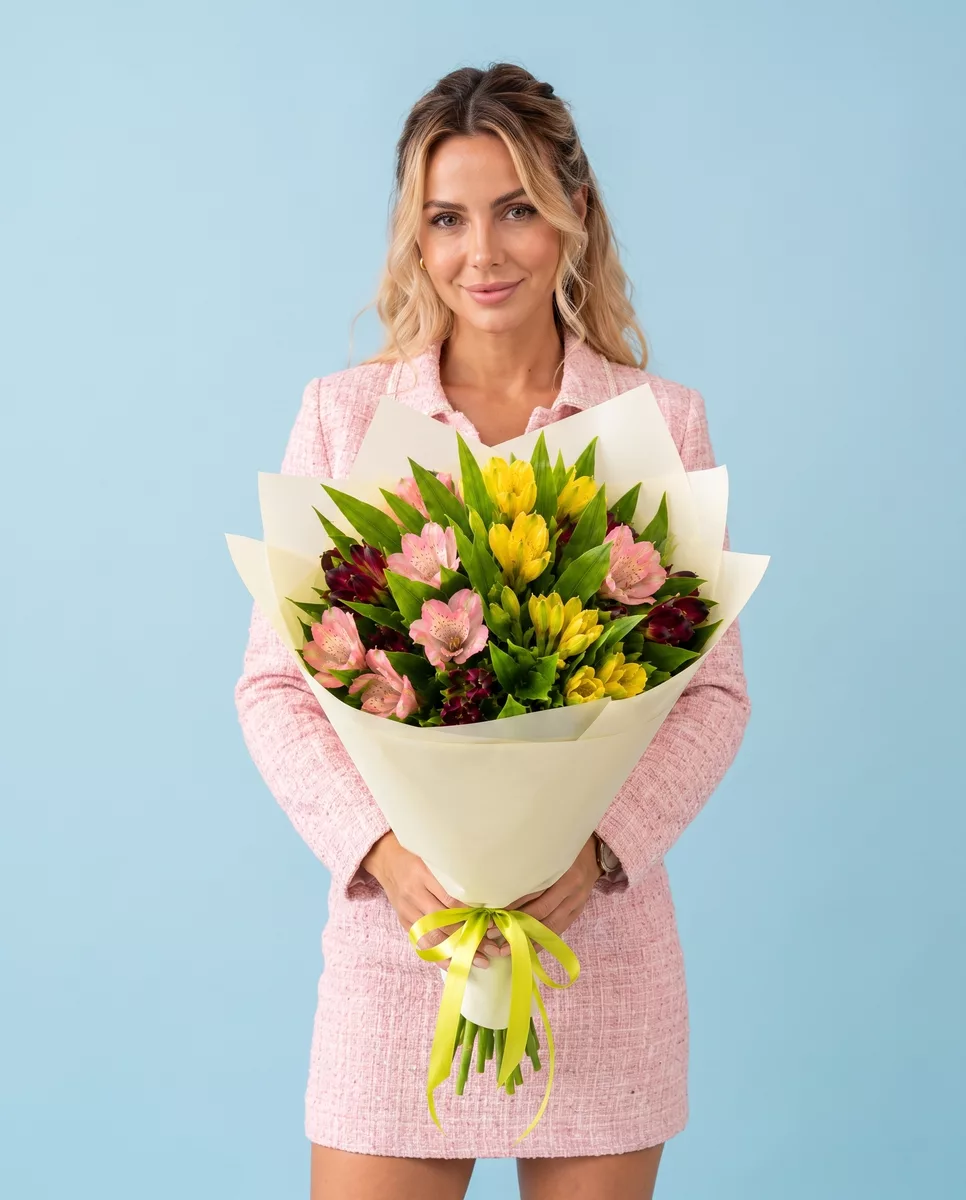
Bouquets we can deliver
Which Flowers Russian Teachers Actually Receive on September 1
Gladioli are the historical standard and still account for a large share of teacher bouquets, particularly in primary schools. A single stem of gladiolus is tall enough to be impressive on its own, and a bundle of five or seven stems wrapped in kraft paper is considered a complete and appropriate gift. Chrysanthemums — both the large single-headed spray type and the smaller button variety — are the second most common choice. They hold well at room temperature for several hours, which matters when a bouquet is carried on public transport and then sits through a forty-minute assembly. Roses are popular at secondary and university level, where the relationship between student and teacher is more formal. September is a good month for roses in Russia because temperatures are lower than in July and August, and the flowers travel better. Asters are a specifically seasonal choice: they bloom naturally in late August and early September, they are inexpensive, and their purple and white varieties photograph well against school uniforms. Dahlias appear in September bouquets increasingly often, particularly the decorative ball-shaped varieties like Boom Boom White or the café-au-lait tones of Café au Lait itself. Sunflowers are used in more relaxed, informal bouquets, often mixed with asters or rudbeckia. What teachers almost never receive, despite being popular at other times of year, are lilies with open blooms — the pollen stains uniforms — and tropical flowers like anthuriums or birds of paradise, which read as too decorative for the occasion.
Bouquets for First-Graders: Sending Flowers to a Child Starting School
Sending flowers to the child rather than the teacher is a newer but well-established practice. Grandparents living in another city, relatives abroad, and divorced parents who cannot be present on the day all use flower delivery to mark the occasion for a seven-year-old starting school. The bouquet in this case is smaller and lighter — a child carries it themselves during the assembly, and a heavy bunch of gladioli is genuinely difficult for a small person to hold for forty minutes. A compact arrangement of five stems — spray roses, small chrysanthemums, or mixed asters — is the practical choice. Round bouquets in a bubble wrap water pouch are useful here because the child does not need to worry about the stems drying out during the ceremony. The delivery address for a child's bouquet is always the home, and the timing is the same as for teacher bouquets: before the family leaves, which in most Russian cities means before 8 AM. If the recipient is in Saint Petersburg, our morning delivery window starts at 7 AM, which covers most school departure times. When placing an order from abroad, the time zone difference is the main calculation error. Moscow time is UTC plus 3, Saint Petersburg is the same. A customer in New York placing an order at 10 PM their time on August 31 is placing it at 5 AM Moscow time on September 1, which is inside the delivery window but leaves almost no buffer. Place the order the day before.
Timing the Delivery: The Narrow Window Around September 1
The Knowledge Day assembly happens once, in the morning, and it does not wait. This makes September 1 flower delivery more time-sensitive than Valentine's Day or International Women's Day, where the day itself is long and a lunchtime delivery still works. For school bouquets, the effective delivery window is 7 AM to 8:30 AM. After that, most families are already at the school, and a bouquet arriving at 9 AM to an empty apartment is a failed delivery. We handle this by taking September 1 pre-orders from August 25 onward, with the option to specify an exact morning slot. If you are ordering from a country with a significant time difference — the United States, Canada, Australia — do the time zone conversion before you confirm the order, not after. The other timing issue is August 31 itself. Many families decide on the evening before that they forgot to order flowers, and demand spikes sharply after 6 PM. Delivery slots fill up. Ordering on August 30 or earlier is not excessive caution; it is normal planning for this particular holiday. September 1 also falls on different days of the week depending on the year. When it falls on a Monday, demand is compressed because the weekend before is the last chance to prepare, and Sunday evening orders are extremely common. When it falls mid-week, orders are more spread across the preceding days. Either way, the morning delivery window does not change, and the flowers must arrive before the family leaves.
How to Send Flowers to a Russian School from Abroad
The process is simpler than most people expect, but it requires accurate information at the order stage. You need the full delivery address including the apartment number, the recipient's name, and a working Russian mobile phone number for the recipient or a parent. Russian addresses follow a specific format — city, street, building number, apartment number — and missing the apartment number is the most common input error on international orders. If you are sending to a home address, the apartment number is essential; if you are sending to a school directly, you need the school's full postal address and the name of the teacher or administrator who will receive the delivery. Sending directly to a school building is possible but requires coordination: schools on September 1 are busy, the entrance may be managed by security, and the teacher you are sending to may be outside at the assembly rather than in the building. Home delivery to the teacher's address, if you have it, is more reliable. Payment from abroad works through standard international card processing. The order is placed in Russian rubles, and your bank converts at the current rate. There are no hidden import fees or customs considerations — these are fresh flowers delivered within Russia by our own team, not shipped across a border. The one document sometimes requested for corporate orders is a confirmation email, which we send automatically. For personal orders from abroad, the process is the same as for any Russian customer: address, recipient phone, delivery time, bouquet choice.
What the Bouquet Should Look Like: Size, Wrapping and Practical Details
Teacher bouquets on September 1 are medium to large — not a single stem, not a massive architectural arrangement. Five to nine stems is the typical range. The wrapping is almost always kraft paper or a simple paper cone, not cellophane or a box. Cellophane traps heat and humidity, which shortens vase life significantly when the bouquet sits in a warm classroom for the rest of the school day. Kraft paper allows the stems to breathe and looks appropriately natural for the occasion. Ribbon is common; a bow is acceptable; a large decorative bow is considered excessive for a school setting. Color choices are practical: white, yellow, pink, and purple read well in photographs and do not clash with the dark blue or black school uniforms that most Russian students wear on September 1. Red is used but is considered more formal. Avoid very dark burgundy or black-toned flowers like Black Baccara roses or dark dahlias — they are elegant in other contexts but feel mismatched with the bright, celebratory mood of the day. The stem length matters for gladioli specifically. A full-length gladiolus stem can reach 80 to 100 centimeters, which is taller than a first-grader. For young children carrying their own bouquet, ask for shorter stems or a different variety. For a teacher receiving the bouquet at the end of the ceremony, full-length stems are standard and expected.
Typical Mistakes When Ordering September 1 Flowers from Outside Russia
The most expensive mistake is ordering on the morning of September 1 in your local time zone and discovering that September 1 in Saint Petersburg is already half over. We receive these messages every year: a customer in London or Toronto who placed an order at 7 AM their time, which was 10 AM or 2 PM Saint Petersburg time, and the school assembly finished hours earlier. The flowers are delivered, but the moment they were meant to mark has passed. Order the day before. The second common mistake is providing an incomplete address. Russian apartments are in multi-entrance buildings, and without the entrance number and apartment number, a driver cannot locate the recipient. The building may have four separate entrances, each serving a different set of floors. A note in the comments field saying the building is the one with the blue door is not useful at 7:30 AM on a busy delivery morning. The third mistake is not including a Russian phone number. If the recipient does not answer an international number, the driver will not be able to complete delivery. Provide a local Russian number — the recipient's own, or a relative who will be at the address. The fourth mistake is choosing a bouquet based on photographs without reading the stem count. A bouquet described as lush in the photograph may contain three stems of a large-headed flower. For September 1, stem count matters more than arrangement style. Five real stems in good condition outperform three stems in an elaborate wrap every time.
September 1 is one of the most logistically specific flower holidays in the Russian calendar. The window is short, the occasion is fixed, and the flowers need to be in the right hands before 8:30 in the morning. If you are sending from abroad, the time zone calculation and the complete address are the two things that determine whether the delivery succeeds. Everything else — variety, color, stem count — is easier to get right once those two details are confirmed. We have been handling Knowledge Day orders for years, and the orders that go smoothly are always the ones placed a day early with a full address and a working local phone number. We deliver bouquets across Russia in 1–2 hours.
Frequently asked questions
Can I order Knowledge Day flowers from outside Russia?
Yes. You place the order on our website, pay by international card, and we deliver within Saint Petersburg and across Russia. You need the recipient's full Russian address including apartment number, and a Russian mobile phone number for the person receiving the bouquet. The order itself takes five minutes; the address details are what require care.
What time does the delivery need to arrive for September 1?
Before 8:30 AM at the latest, and ideally before 8 AM. Most families leave for school between 8 and 9, and the assembly starts between 9 and 11. A bouquet arriving after the family has left is effectively a missed delivery for this occasion. We offer morning slots from 7 AM onward for pre-orders placed before August 30.
Is it appropriate to send flowers directly to the school building?
It is possible but less reliable than home delivery. On September 1, schools are crowded, entrances may be staffed by security, and teachers are often outside for the assembly rather than inside. If you have the teacher's home address, use it. If not, call the school in advance to confirm someone will be available to receive a delivery at the entrance.
Which flowers are considered most traditional for Knowledge Day?
Gladioli are the historical standard and still the most recognized choice for teacher bouquets, particularly in primary schools. Chrysanthemums and asters are also strongly associated with September 1. Roses are more common at secondary and university level. All of these hold well for several hours at room temperature, which matters during an outdoor assembly.
How many stems should a Knowledge Day bouquet contain?
Five to nine stems is the standard range for a teacher bouquet. Fewer than five reads as minimal; more than nine becomes difficult to carry and unwieldy in a classroom. For a child's bouquet, five compact stems in a water pouch is practical — light enough to hold through a forty-minute assembly without tiring a seven-year-old.
Ready to send a bouquet?
Pick a city, choose the flowers, and we will hand them over with a photo confirmation.
Choose a city →