
What Does “Stale Flowers” Mean?
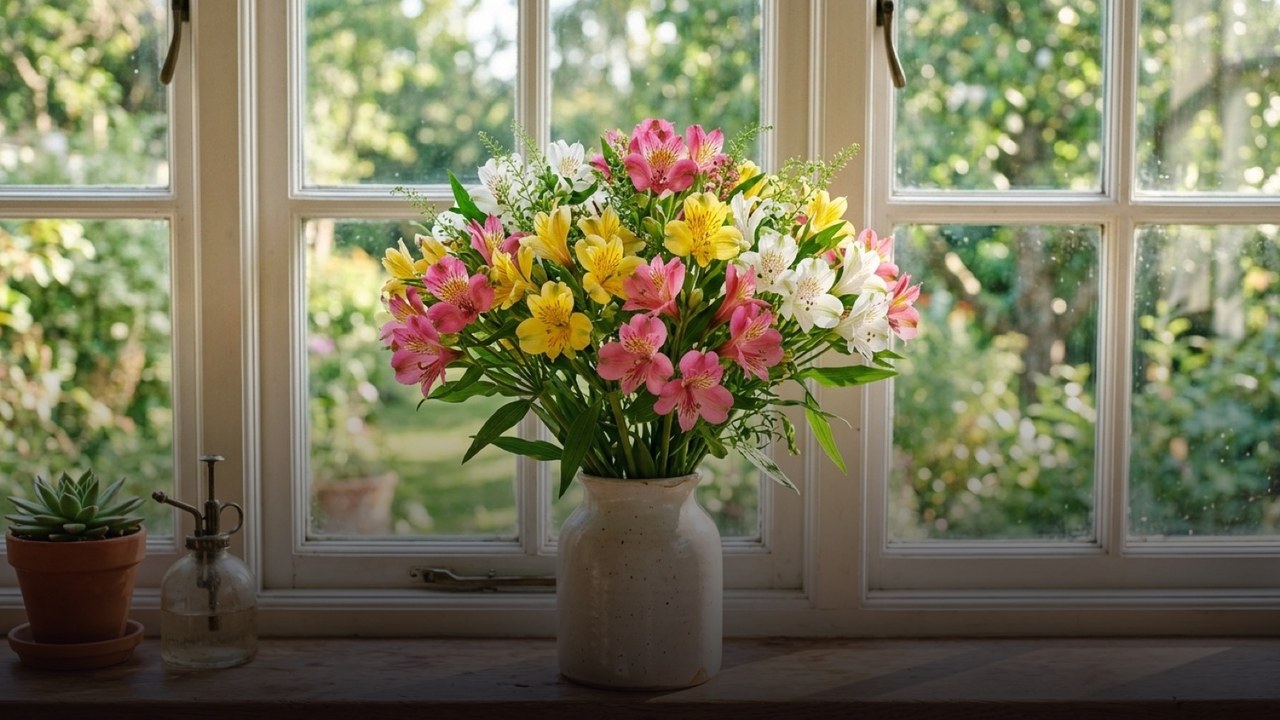
“Stale flowers” means cut flowers that have lost their freshness and may look faded, limp, dry or discoloured. It is an everyday description rather than a technical grade: the phrase usually describes their condition, although in a poem or personal message it can suggest neglect, disappointment or something past its best.
At Pyat Tsvetov (5 Flowers), a useful starting point for this concern is the difference between a flower that needs water and one whose tissue is deteriorating. A drooping stem alone does not establish how old a bouquet is, and a fully open bloom is not automatically stale. Our Saint Petersburg flower shops have been operating since 2011; the practical approach is to look at the petals, leaves, stems and vase water together before deciding what to do.
How people use the expression “stale flowers”
In ordinary English, “stale” is more commonly applied to bread or air, but people also use it for flowers that no longer seem fresh. “Wilted” is more precise when leaves or flower heads have become limp, while “faded” describes a loss of colour or a tired appearance. “Withered” usually suggests more advanced drying and shrivelling. These words overlap, so the surrounding sentence matters more than a rigid definition.
The expression does not identify a particular flower, colour or recognised message in the language of flowers. A reference to stale flowers beside an abandoned letter may imply a neglected relationship, but that meaning comes from the scene. If someone uses the phrase about an actual delivery, treat it first as a comment about condition. Ask which visible changes they mean before interpreting it as a statement about the sender's feelings.
Signs that flowers are losing freshness
Look for several signs together: petals turning translucent or brown, collapsing flower heads, yellowing leaves and soft or slimy stem ends. An unpleasant smell or cloudy vase water calls for prompt cleaning, although dirty water alone cannot tell you when the flowers were cut. Inspect the centre of the bouquet as well as its outer edge. Damp, crowded areas can conceal damaged petals that are less obvious from the front.
Allow for the natural appearance of the variety before judging the whole arrangement. Some flowers have papery petals, and outer rose petals may look rougher than the protected petals beneath them. Open flowers can still be attractive and suitable for display; tight buds alone do not prove superior freshness. Compare firmness, colour and signs of decay across several stems instead of using one imperfect petal as the test.
A photograph records appearance but cannot establish the cause of a problem by itself. If you need to describe a bouquet's condition, photograph the whole arrangement and take closer views of the affected flowers and stem ends. Note when it arrived, when it went into water and what changed afterwards. That gives a clearer account than simply calling the flowers stale, without assuming whether age, handling or the room conditions caused the change.
Bouquets we can deliver
When drooping flowers may respond to care
Begin with a clean vase and fresh water if the stems are firm and there is no obvious decay. Remove any leaves that would sit below the waterline, then recut the stem ends with a clean, sharp tool before returning them to water. Keep the cuts neat rather than crushing the stems. If flower food came with the bouquet, follow its packet instructions rather than guessing the concentration.
Place the vase away from direct sunlight, radiators and other sources of heat, and give the flowers space rather than pressing them against a window. Check the water level daily and refresh the water regularly, cleaning the vase when needed. Remove fallen petals and leaves before they sit in the water. These steps support the remaining healthy stems, but they cannot restore petals that have become brown, mushy or brittle.
Reassess the bouquet after it has had time to take up water rather than repeatedly cutting and rearranging it. Some limp flowers may regain firmness; others will continue to decline because the damage is already advanced. Remove clearly deteriorating stems and keep the sound ones in a smaller vase if that makes the arrangement easier to maintain. Avoid household mixtures or extreme hot-water treatments unless you have reliable instructions for the particular flower.
Stale, dried and preserved flowers are different
A deliberately dried arrangement is not a fresh bouquet that has simply been left unattended. Flowers chosen for drying are allowed to lose moisture so their remaining shape and texture can be used decoratively. They may feel crisp or papery, which is expected in that context. Preserved flowers have undergone a treatment and should be cared for according to the instructions supplied with them, rather than automatically being put in water.
If you want to save part of a fresh bouquet, choose suitable stems while they still look presentable. Drying will not reverse browning, repair torn petals or remove mould, and some varieties lose their shape more readily than others. Statice is one flower commonly used for its papery texture; our statice care and drying guide explains the distinction in more detail. Discard mouldy or rotting material instead of trying to turn it into a keepsake.
What ageing flowers mean as a gift
A bouquet losing freshness does not carry a universal message of disrespect, fading love or bad luck. Its condition may affect how the gift feels, but it does not reliably reveal what the sender intended. If you received flowers that look tired, describe what you can see without attaching a motive to it. A simple message such as “Thank you for thinking of me; a few stems arrived drooping” acknowledges the gesture and states the concern clearly.
For a gift you are preparing yourself, judge whether the flowers still look presentable at the moment of giving. Remove damaged material, provide clean water while you wait and avoid leaving the bouquet in a hot car or beside a heater. If many stems are visibly deteriorating, choose a different gift rather than relying on wrapping to conceal them. For an event, consider when the recipient will be available to put the flowers in water as well as when you plan to hand them over.
A card is the clearest way to communicate affection, thanks or an apology, because flower condition and colour leave room for interpretation. Write a short message that names the occasion or the feeling you want to express. If colour symbolism matters to the recipient, our guide to yellow flowers and their meanings offers context. Treat those associations as guidance, not a fixed code that every recipient will understand in the same way.
Arranging flower delivery to someone in Russia
When ordering from abroad, plan around the recipient's availability and the date in the destination city. We deliver flowers across Russia, and you can start with our bouquets catalogue. In large cities, express delivery is available in 1–2 hours after the order is confirmed. You can also choose an exact time with a tolerance of plus or minus 30 minutes, a window of 09–12, 12–15, 15–18 or 18–21, or pre-order 1–30 days ahead.
City delivery costs 500 RUB; for remote districts and suburbs, the operator confirms the price when confirming the order. In Saint Petersburg, delivery is available around the clock. The courier calls the recipient about 15 minutes before arrival, so choose a time when they can answer and receive the bouquet. If they are absent, we agree a second delivery the same day or, with the sender's consent, hand the flowers to a neighbour or concierge.
Delivery is anonymous by default: the courier does not name the sender, and a card with your text is free. Include your name in the card if you want the recipient to know who sent the flowers. Online checkout uses CloudPayments; check the payment options displayed there, as acceptance of every foreign card cannot be assumed. Read our delivery and payment information, or call 8 (812) 507-67-05 with questions about your order.
Frequently asked questions
Does “stale flowers” mean the same thing as dead flowers?
Not necessarily: it usually means flowers that have lost freshness, which can range from slight fading to advanced deterioration. Some wilted stems may respond to care, while decayed petals will not recover.
Can fresh flowers droop?
Yes, flowers can droop when they lose water, so drooping alone does not prove that a bouquet is old. Check the stems and petals for other signs, then provide clean water and appropriate care.
Do stale flowers have a romantic meaning?
There is no universal romantic meaning attached to stale flowers. In literature they may suggest neglect or fading affection, but an actual bouquet's condition does not establish the sender's intentions.
Should I add sugar to revive a tired bouquet?
Avoid guessing at homemade mixtures; sugar alone is not a substitute for a formulated flower food. Start with a clean vase, fresh water and neatly recut stems, and follow any supplied care instructions.
Can I send flowers to Russia with a message from abroad?
We deliver flowers across Russia and include a card with your text for free. The courier does not name the sender by default, so sign the card if you want to identify yourself.
Ready to send a bouquet?
Pick a city, choose the flowers, and we will hand them over with a photo confirmation.
Choose a city →