
Gifting Flowers to a Russian Host After a Dinner Party
You had a wonderful evening at a Russian friend's home — the table was generous, the conversation ran late, and now you want to say thank you properly. In Russia, sending flowers the morning after a dinner party is a well-understood gesture, warmer in some ways than arriving with a bouquet at the door, because it tells the host you were still thinking about them the next day. The question we hear most often at Five Flowers is not whether to send flowers but what to send, how many stems, and what to avoid so the gift lands exactly as intended.
Why the Next-Day Bouquet Reads Differently Than an Arrival Gift
When a guest arrives at a Russian home carrying flowers, the host must immediately find a vase, fill it with water, and arrange the stems — all while greeting other guests and watching the stove. It is appreciated but it creates a small logistical interruption. A bouquet delivered the following morning is received in a quieter moment, and in Russian domestic culture that quiet moment carries its own weight: the host is alone with the gesture, which makes it feel more personal rather than performative. It also sidesteps one of the most common mistakes foreign guests make, which is arriving with an even number of stems. In Russia, even numbers of flowers are associated with funerals and mourning, so a shop-bought six-stem bunch from an airport kiosk can land awkwardly even when the intention is entirely warm. Ordering through a florist removes that risk entirely because any professional will automatically build arrangements to odd counts. There is also a practical advantage: you can order at any hour after the dinner — midnight, early morning — and schedule delivery for a specific window, so the bouquet arrives when the host is actually home rather than sitting on a cold doorstep. At Five Flowers we take orders around the clock and deliver within one to two hours across Saint Petersburg, which means a late-night decision becomes a fresh arrangement at the host's door by nine the following morning.
Bouquets we can deliver



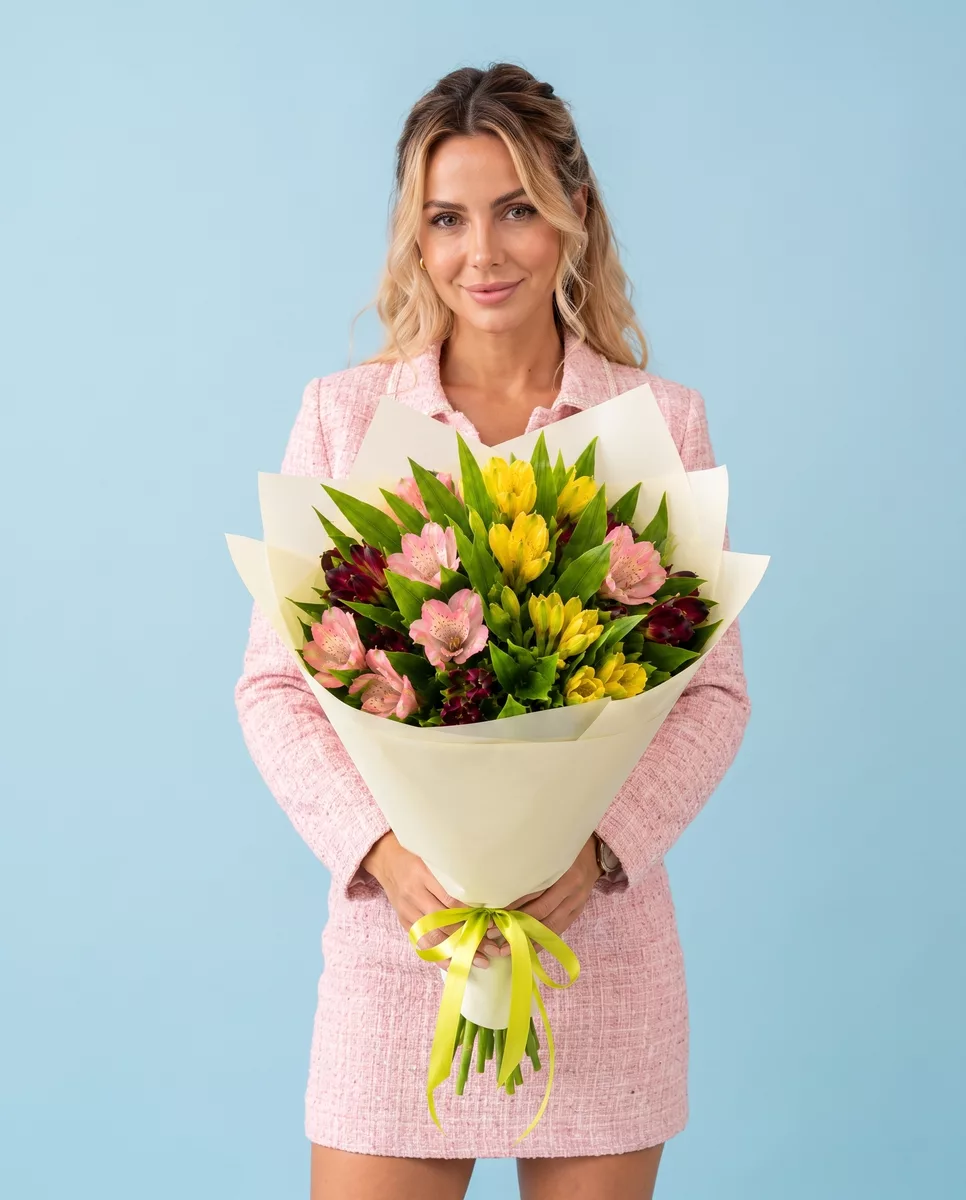
Odd Numbers, Stem Counts and What Russian Hosts Actually Notice
The odd-number rule is the single most important technical detail for anyone ordering flowers in Russia from outside the culture. Three, five, seven, nine, eleven — these are the counts that read as celebratory and alive. Even numbers — two, four, six, ten — are reserved for grave sites and memorial occasions, and while younger urban Russians may be more relaxed about this, a host of the generation that likely cooked you a full dinner will notice immediately. A five-stem bouquet of garden roses is perfectly elegant; a six-stem version of the same roses sends a completely different signal. Beyond the count, size matters in a way that is partly cultural and partly practical. Russian hosts tend to interpret a very small bouquet — three stems of something modest — as a token rather than a thank-you, especially after an elaborate meal. Seven to eleven stems is the range that reads as genuinely grateful without becoming difficult to arrange at home. Fifteen or more stems signals a significant occasion, which a dinner party thank-you is not quite, so restraint serves you better here. The wrapping also communicates: plain craft paper or a simple linen wrap is appropriate for a home delivery, while elaborate cellophane towers are associated with stage performances and public events. At Five Flowers our standard home-delivery wrapping is kraft paper with a cotton ribbon, which fits the domestic register of a thank-you gift without looking like a ceremony.
Which Varieties Work Best for a Thank-You Bouquet in Russia
Garden roses are the most universally safe choice for a Russian thank-you bouquet, and the reason is straightforward: they are recognisable, they last well in a home environment, and they carry no symbolic baggage beyond affection and esteem. Varieties with a visible center and a slightly open bloom — David Austin-style roses, for instance — look generous without being showy. Spray roses work well when you want more visual density without increasing the stem count dramatically. Peonies are deeply loved in Russia but are seasonal from late May through June, so outside that window they will be expensive imports with shorter vase life. Eustoma, sometimes called lisianthus, is an excellent year-round alternative: the ruffled blooms read as luxurious, the stems are long, and they hold for ten to fourteen days in water, which means the host enjoys the bouquet well past the initial thank-you moment. Freesia adds fragrance without overpowering a home, and a single variety of freesia mixed with garden roses gives the arrangement a natural rather than constructed feeling. What to avoid: chrysanthemums in Russia carry a strong association with cemetery visits and public mourning — even large decorative varieties — so they are not appropriate for a personal thank-you. White lilies in large quantities have a similar association in some regions, though a single white lily stem mixed into a mixed bouquet is generally fine. Stick to roses, eustoma, freesia, ranunculus in season, or tulips in winter and early spring, and you will not go wrong.
Colour Choices That Land Well in a Russian Home
Colour in Russian flower-giving is less rigidly coded than stem count, but there are patterns worth knowing. Warm tones — blush, peach, coral, soft yellow, cream — read as friendly and domestic, which is exactly the register a dinner-party thank-you needs. Red roses are romantic rather than friendly in the Russian context, so a full red bouquet sent to a married female host can read as flirtatious rather than grateful, particularly if you are male and the host's spouse was also at the table. If you want to include red, mixing it with white or peach dilutes the romantic reading and keeps the arrangement in the territory of warm appreciation. White alone is clean and elegant and works well for hosts of any age, though it is a safer choice for older recipients who may associate pure white with formality rather than warmth. Purple and violet tones — lavender roses, violet eustoma, lilac when in season — are popular in Saint Petersburg specifically and are associated with creativity and individuality rather than any negative symbolism. Mixed seasonal palettes in the blush-to-coral-to-white range are the easiest choice when you are uncertain, because they read as considered without requiring you to decode the household's aesthetic preferences. At Five Flowers we often recommend a blush and ivory combination for exactly this reason: it suits a traditional Russian interior as well as a contemporary apartment, and it photographs well if the host shares it on social media, which many do.
Scheduling Delivery: Timing, Temperature and What to Tell the Florist
Next-day morning delivery is the ideal timing for a dinner-party thank-you, and the window that works best for most Saint Petersburg households is between nine and twelve in the morning. By nine most adults are awake; before twelve the gesture still reads as a morning-after thought rather than an afterthought. If the dinner ran late and you are ordering after midnight, schedule for a ten or eleven o'clock arrival to be safe — earlier deliveries can feel intrusive if the hosts had a long night themselves. Temperature matters more than most customers realise. In Saint Petersburg, winter temperatures regularly drop to minus fifteen or lower, and flowers left in an unheated entrance hall or lobby for more than twenty minutes will show cold damage: petals become translucent and collapse within hours of warming up. When you order, specify whether the building has a staffed reception or a code-entry lobby, and whether the host should be called before the courier enters. Our couriers carry the flowers in insulated bags in cold months, but the final handoff should be direct to the recipient or to a doorman who will bring the flowers inside immediately. In summer, heat is the opposite problem: roses and eustoma above twenty-five degrees will open and exhaust themselves within two days instead of seven. For summer deliveries, request a morning slot before the heat of the day peaks, and ask the host to trim the stems and place the bouquet in cool water as soon as it arrives. Providing these instructions in a short note with the delivery is a service we offer at Five Flowers and it meaningfully extends the life of the arrangement.
Writing the Card: What to Say and What to Skip
A card is not optional for a thank-you bouquet — arriving without a note makes the delivery feel anonymous and slightly confusing for the recipient. In Russia, handwritten cards are preferred over printed slips, and at Five Flowers our couriers carry blank cards that the florist fills in based on what the customer dictates when ordering. Keep the message short and specific: mention the dinner, mention one thing you actually enjoyed — the food, the company, the conversation — and close with a simple expression of gratitude. Avoid generic phrases that could apply to any occasion; Russian hosts notice the difference between a personal message and a template. If you are writing in English for a host who reads English, that is entirely fine and often appreciated as a personal touch from a foreign guest. If you want the message in Russian and you do not speak the language, we can translate a short text for you — just provide the English version when you place your order. What to avoid on the card: do not include the price of the bouquet, do not reference what you spent, and do not make the card primarily about the next occasion you hope to be invited to. The message should close the loop on the evening that happened, not open a negotiation about the next one. A four-to-six line card is the right length — enough to feel personal, short enough to be read in one glance at the door.
Checking Your Order Before You Confirm: A Practical List
Before you confirm a flower order for a Russian host, run through five points that our customer service team checks on every call. First, stem count: confirm it is an odd number, and if you have chosen a mixed bouquet ask the florist to state the total count out loud before you pay. Second, variety check: ask specifically whether the arrangement includes chrysanthemums or any large white lilies, and request substitutions if it does. Third, delivery address precision: Russian apartment buildings require the building number, entrance number, floor, and apartment number — a street address alone is insufficient and will delay the courier. Fourth, recipient availability: confirm with the host, or with someone in the household, that they will be home during the delivery window, or arrange for the bouquet to be left with a named neighbour or doorman. Fifth, the card: read back the message to the florist before the call ends, because a name spelled incorrectly or a phrase misheard can change the tone entirely. At Five Flowers you can also order online and type the card message directly, which eliminates the transcription step. If you are ordering from outside Russia — from abroad, or from another city — our website accepts international cards and the checkout process asks for all the address fields separately so nothing is missed. A confirmed order with a specific delivery window and a correct address is the only version of this gesture that actually works; everything else is intention without result.
Sending flowers the morning after a Russian dinner party is one of those gestures that travels well across cultural lines because the warmth behind it is universal even when the details are specific. Get the stem count odd, choose roses or eustoma over chrysanthemums, pick warm or neutral colours rather than a full red bouquet, schedule delivery before noon, and write a card that names the actual evening. Those five decisions cover the vast majority of what can go right or wrong with this kind of gift. Five Flowers delivers fresh arrangements across Saint Petersburg within one to two hours, takes orders at any time of day or night, and can schedule morning delivery for the following day — which means you can make this decision at midnight after a long and happy dinner and still have a beautiful bouquet at your host's door before the breakfast dishes are cleared. We deliver bouquets across Russia in 1–2 hours.
Frequently asked questions
Is it appropriate to send flowers to a male Russian host after a dinner party?
Yes, though the convention is less automatic than for female hosts. A compact arrangement of seven stems in neutral or cool tones — white roses, cream eustoma — works well. Avoid anything that reads as romantic. If the dinner was hosted by a couple, address the bouquet to both names on the card and the gesture is unambiguous.
Can I order a thank-you bouquet from outside Russia and have it delivered in Saint Petersburg?
Yes. Five Flowers accepts orders placed from abroad through the website. You will need the full Russian delivery address including entrance number and apartment number. Payment by international card is supported. Specify the delivery window in Moscow time and confirm the host will be home, or arrange for a neighbour or doorman to receive the flowers.
What is the minimum lead time for a next-morning delivery in Saint Petersburg?
Five Flowers delivers within one to two hours of order confirmation around the clock, so an order placed at midnight can reach the recipient by two in the morning if needed. For a scheduled nine or ten o'clock morning delivery, placing the order the previous evening gives the florist time to build the freshest possible arrangement rather than pulling from overnight stock.
Are there flowers I should specifically avoid sending to a Russian home?
Chrysanthemums are strongly associated with cemetery visits across Russia and should be avoided entirely for personal gifts. Large quantities of white lilies carry a similar association in some regions. Even numbers of stems — six, eight, ten — are reserved for mourning contexts. Outside these three points, most common florist varieties are appropriate for a thank-you bouquet.
Should the bouquet be wrapped differently for a home delivery versus a hand-carried gift?
For home delivery, plain kraft paper or a linen wrap is appropriate — it suits a domestic setting and is easy for the recipient to unwrap and place in a vase immediately. Avoid elaborate cellophane arrangements, which are associated with public events and stage performances in Russia. A simple cotton ribbon over kraft paper is the standard we use at Five Flowers for residential deliveries.
Ready to send a bouquet?
Pick a city, choose the flowers, and we will hand them over with a photo confirmation.
Choose a city →