
Vase Life: How Long Cut Flowers Last and How to Make Them Last Longer
Vase life is the number of days a cut flower stays fresh and decorative in water, from the moment it is put in a vase until petals drop, heads droop or the colour fades. It depends on the type of flower, how mature it was when cut, how it was stored and, above all, how it is cared for at home: the same rose can last four days or twelve.
"How long will it stand?" is the question we hear most often in our Saint Petersburg shops, ahead of price and colour. Below is what we tell customers: typical vase life for popular flowers, the reasons a bouquet fades early, and the simple routine that adds days. At the end you will find how to order a long-lasting bouquet with delivery if you are buying for someone far away.
Typical vase life of popular flowers
Chrysanthemums, alstroemeria and carnations are the champions: with fresh water every two days they easily stand two weeks, and spray chrysanthemums often last close to three. Orchid stems such as cymbidium and dendrobium also last ten to fourteen days, which is why they are popular for older relatives who will not fuss over a vase.
Roses usually give seven to ten days, depending on variety; large-headed varieties with many petals tend to last longer than thin, quick-opening ones. More detail is in our guide to roses in Russia, their varieties and vase life. Lilies last around ten days as a stem, because new buds keep opening while the first flowers fade, and eustoma gives a similar result.
The short-lived group includes tulips (four to seven days), peonies (five to seven), hydrangea (five to seven, and very sensitive to drying), gerbera (around a week) and mimosa, which is lovely for two to four days before the fluffy balls dry. None of these are bad choices; just choose them knowing the bouquet is for the moment rather than for two weeks.
Why flowers fade early
The main enemy is bacteria. Within a day or two, leaves left under water and the cut ends of stems start to decompose, the water turns cloudy and microbes block the vessels that carry water up the stem. The flower then wilts while standing in a full vase, which surprises many customers.
The second enemy is heat and dry air. A flower loses water through petals and leaves much faster in a warm room, and in winter Saint Petersburg flats are heated strongly. A bouquet standing next to a radiator or on a sunny windowsill can lose a third of its vase life. Our article do flower bouquets need sunlight explains why cut flowers prefer bright, cool spots out of direct sun.
The third is ethylene, a gas released by ripening fruit, cigarette smoke and decaying plant material. Carnations, alstroemeria and many summer flowers react to it by dropping petals early, so keep the vase away from the fruit bowl. Finally, air bubbles: if a stem stood dry for a while, air enters the vessels and the head droops even though the vase is full.
Some vase life is decided before the flowers reach you. A flower cut too early may never open fully, one cut too late fades quickly, and any break in cool storage on the way costs days. That is why florists check stems and buds when bouquets are made, and why a firm, slightly closed head is a better sign than a fully open one.
Bouquets we can deliver


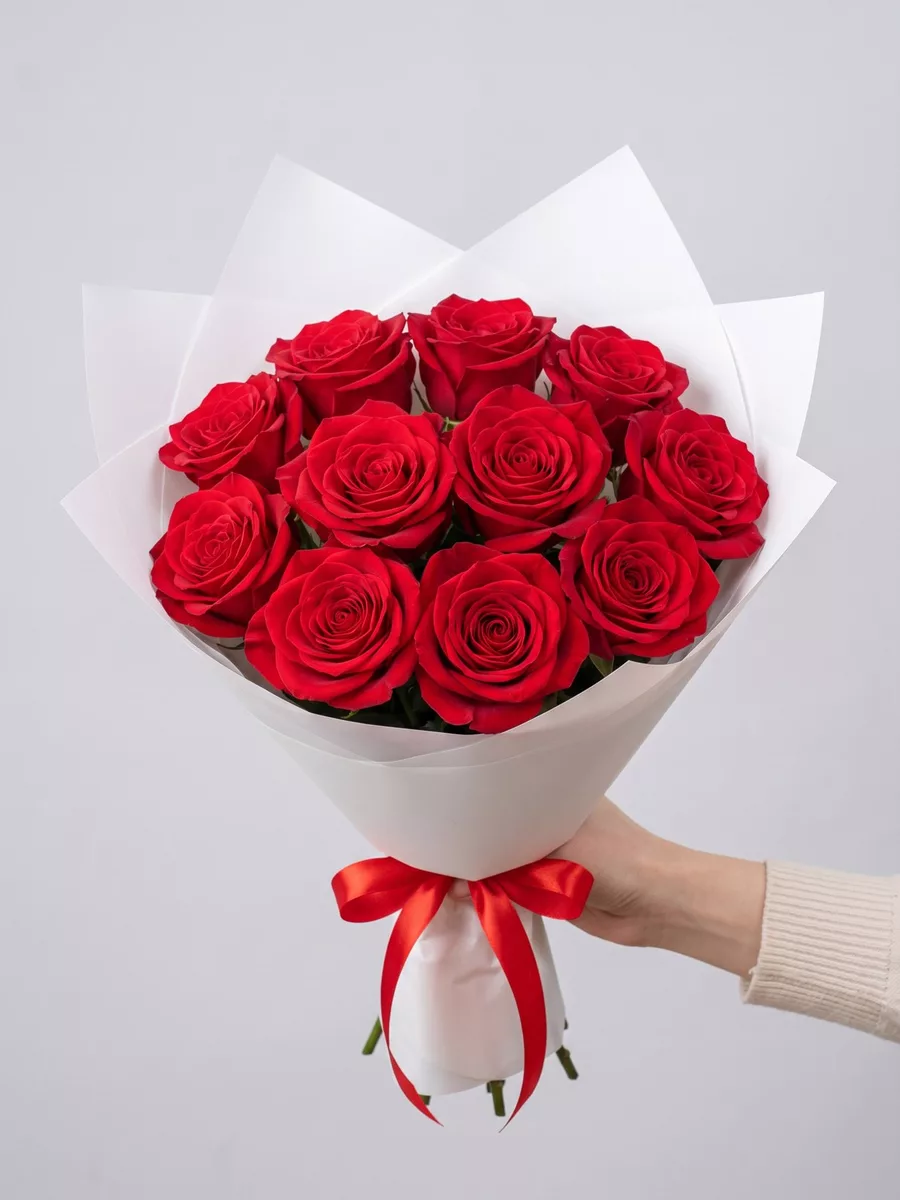

The daily routine that adds days
On the first day remove the transport packaging, strip every leaf that would sit below the water line and cut 2-3 cm off each stem at a sharp angle with a clean knife. Scissors crush the stem, so a knife or sharp secateurs are better. Put the bouquet straight into a clean vase with cool water and the flower food from the sachet, dissolved fully.
Then repeat a simple cycle every two days: pour out the old water, rinse the vase, refill with fresh water and trim another centimetre from the stems. This takes five minutes and is the single biggest difference between a bouquet that lasts five days and one that lasts ten. Remove any flower that has faded, because it releases ethylene and bacteria into the shared water.
At night, if the room is warm, move the vase to the coolest spot in the flat, such as a hallway or a cool windowsill with no radiator below it. Florists keep flowers in cold rooms at a few degrees above zero, and even a few hours of cool air every night slows ageing noticeably.
The vase itself matters more than people expect. It should be washed with hot water and a drop of detergent before use, since a film left from the previous bouquet is full of bacteria. Choose a vase tall enough to support about a third to half of the stem height, and wide enough that the stems are not crushed together: tightly packed stems drink worse and rot faster.
Special cases: lilies, tulips, hydrangea and roses
Lilies need their stamens removed as soon as the flowers open, both to keep the pollen off petals and clothes and to slightly extend the life of each bloom; pull them off with a tissue. Cut off each faded flower to let the next buds open. Our page on lilies in Russia and their vase life covers scent levels too, useful if the recipient is sensitive to strong fragrance.
Tulips keep growing in the vase and bend towards light. Use a tall vase, little water (a few centimetres is enough) and trim them every couple of days. Hydrangea drinks through its heads as well as its stem; if it wilts, submerge the whole head in cool water for half an hour, and it usually recovers.
Roses with closed buds are normal: they open over one to three days in a warm room. If a rose head droops, recut the stem under water and stand it in deep water for a few hours. Do not put roses in with daffodils fresh from the cut; daffodils release sap that shortens the life of other flowers unless they have stood separately for several hours first.
Choosing a long-lasting bouquet and ordering delivery
If the bouquet must last, for example for a relative who lives alone or for a gift that arrives before a long holiday, ask for chrysanthemums, alstroemeria, carnations, roses or orchids, and for flowers in a fairly closed stage. In our bouquets catalogue mixed bouquets built on these flowers are the ones that stand longest. Box arrangements in floral foam need only a little water poured onto the foam every day or two.
You can order online by bank card, SBP or Yandex Pay; foreign bank cards are accepted through Robokassa. City delivery costs 500 RUB, and for suburbs and remote districts the operator confirms the price with the order. In Saint Petersburg we deliver around the clock. In large cities express delivery takes 1-2 hours after confirmation, or you can choose an exact time within plus or minus 30 minutes, a window of 09-12, 12-15, 15-18 or 18-21, or pre-order 1 to 30 days ahead.
The courier calls the recipient about 15 minutes before arrival, and delivery is anonymous unless you sign the free card. A short line in the card such as "change the water every two days" helps the recipient enjoy the flowers longer. For questions, call 8 (812) 507-67-05. We deliver bouquets across Russia in 1–2 hours.
Frequently asked questions
What does vase life mean?
It is the number of days a cut flower stays fresh and decorative in water. Florists use it to compare varieties and to tell customers what to expect from a bouquet.
Which cut flowers have the longest vase life?
Chrysanthemums, alstroemeria, carnations and orchid stems usually last two weeks or more. Roses and lilies typically last seven to ten days with good care.
How can I make flowers last longer in a vase?
Remove leaves below the water, recut the stems and change the water every two days. Keep the vase away from radiators, direct sun and fruit.
Does flower food really help?
Yes. The sachet contains sugar to feed the flower and an agent that slows bacteria, which is why it noticeably extends vase life when dissolved properly.
Why do my flowers wilt in a full vase?
Usually bacteria or an air bubble block the stem, so water cannot reach the head. Recut the stems under water, wash the vase and refill it with fresh water.
Ready to send a bouquet?
Pick a city, choose the flowers, and we will hand them over with a photo confirmation.
Choose a city →