
Wedding Anniversary Flowers in Russia: Year-by-Year Milestones
Customers call us the morning of an anniversary asking for 'something traditional' without knowing what that means in Russian gift culture — and the answer changes completely depending on which year it is. In Russia, anniversary milestones follow a named system: the first year is called the Cotton Wedding, the fifth is the Wooden Wedding, the silver and gold anniversaries are as recognised here as anywhere in Europe, but the flower choices tied to each name are specific and often surprising to anyone ordering for the first time. This guide goes through the key milestones, names the actual varieties we recommend, and explains what to check before you place an order so the bouquet arrives in good condition.
Year 1 — Cotton Wedding: Delicate Whites and Creams
The first anniversary is called the Cotton Wedding in Russia, and the textile metaphor points toward softness and new beginnings rather than anything fragile. Florists working with this theme reach for white and cream varieties that carry a gentle texture: spray roses such as Snowflake or White Majolika, white lisianthus, and soft-stemmed matthiola are the most requested. Matthiola is worth a specific note — it wilts within six to eight hours in a warm room, so it should only go into a bouquet that will be delivered and placed in water on the same day, ideally in the morning. White lisianthus holds much better, lasting seven to ten days with a clean cut and cool water. A common mistake at year one is ordering an all-white arrangement and then choosing cheap white carnations as filler; carnations are strongly associated with Soviet-era formality and read as impersonal to most recipients under fifty. Stick to spray roses, lisianthus and perhaps a few stems of white freesia for scent. Freesia opens fastest at room temperature, so if the apartment is warm the buds will be fully open within a day — that is usually a feature rather than a problem. Keep the bouquet away from fruit bowls, because ethylene from ripening fruit shortens the vase life of every variety listed here by two to three days.
Bouquets we can deliver

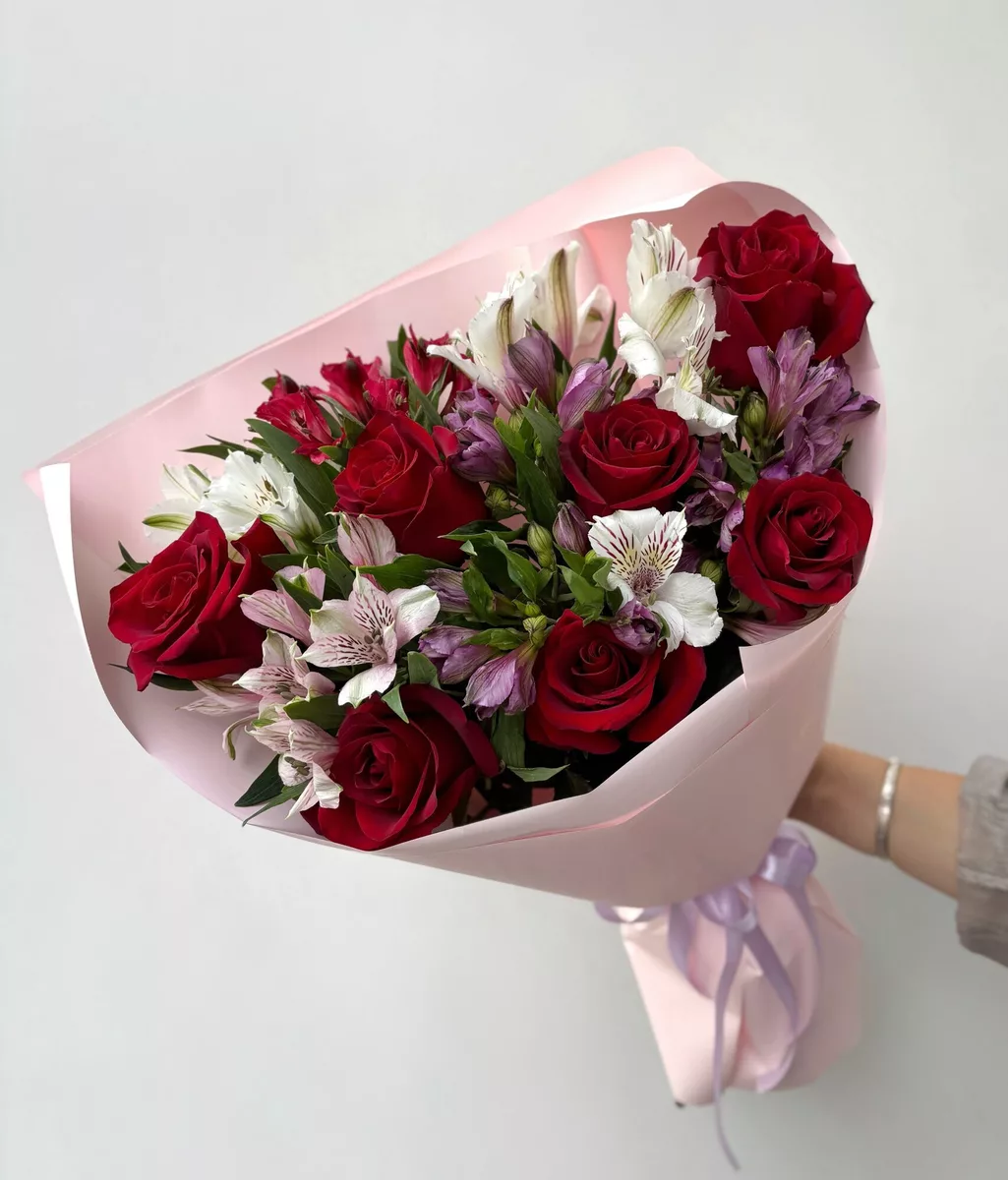

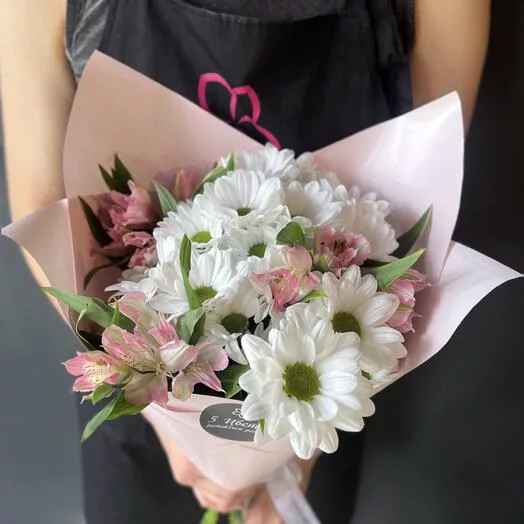
Year 5 — Wooden Wedding: Sturdy Stems and Deep Colours
Five years in Russia is the Wooden Wedding, and the symbolism has shifted from softness to durability. The flower choices follow that shift: customers and florists both lean toward varieties with strong, structured stems and richer colours. Garden roses in deep peach or coral — varieties like Shimmer or Juliet from the David Austin range — work well here, as do alstroemeria in terracotta tones and single-stem gerberas in rust or amber. Alstroemeria is one of the most practical flowers in a delivery context: it tolerates temperature swings between five and twenty degrees Celsius better than almost any other cut flower, which matters when orders travel across Russia in autumn or winter. A five-year bouquet is often larger than the first-anniversary arrangement because the couple's social circle has grown and the occasion is more publicly celebrated. Customers frequently underestimate stem count here — a bouquet of eleven or fifteen stems photographs and presents better than seven, and the price difference is smaller than most people expect. One thing to avoid: sunflowers are sometimes suggested for a Wooden Wedding because of their sturdy appearance, but they are strongly associated with summer and with informal gifts rather than anniversary occasions in Russian culture. If the client specifically requests them, use them, but do not lead with sunflowers when advising on a fifth-anniversary order.
Year 10 — Tin Wedding: Mixed Seasonal Bouquets
The tenth anniversary is called the Tin Wedding, a name that sounds unpromising but in practice gives florists the most creative latitude of any early milestone. Tin is associated with practicality and resilience, and the flower tradition that has developed around it is a generous mixed bouquet rather than a single-variety arrangement. Peonies are the most popular anchor flower for tenth-anniversary orders when they are in season, roughly from late April through June in the Russian market. Outside peony season, large-headed garden roses in blush or dusty rose fill the same role. The supporting cast typically includes eucalyptus, waxflower and astrantia — all of which hold well in transit and add volume without overwhelming the main flower. Waxflower in particular is underused: it lasts ten to fourteen days in a vase, it tolerates cold storage without browning, and it adds a fine texture that contrasts well with large-headed roses or peonies. A common mistake at year ten is ordering a bouquet that looks impressive in a photograph but arrives with the large blooms already fully open. Peonies and garden roses should be ordered in bud or half-open stage for delivery — they will open to full size within twenty-four to forty-eight hours at room temperature. Ask specifically about the opening stage when you order, because a fully open peony in a warm delivery van in July will be dropping petals before it reaches the door.
Year 25 — Silver Wedding: Classic Roses and Formal Arrangements
Twenty-five years is the Silver Wedding, and it is the first milestone in Russia where the occasion is treated as a major public celebration rather than a private one. The flower expectations rise accordingly. Red roses remain the default gift in Russian culture for romantic occasions, and the Silver Wedding is where many customers default to a large red rose bouquet — twenty-five stems, one for each year, is the most common request we receive for this date. The variety matters more than most customers realise: Explorer and Red Naomi are the two red rose varieties that hold their shape and colour longest in a vase, both lasting eight to twelve days with daily water changes. Cheaper red roses, often sold under no specific variety name, may open and drop within three to four days. For customers who want something less conventional, a silver-toned arrangement using white roses, silver brunia berries and dusty miller leaves reads as directly tied to the anniversary name and photographs very well. Brunia berries are small, silver-grey spheres on thin stems — they are available year-round from Dutch auctions and add an unusual texture. One timing note: if the Silver Wedding falls on a weekday and the couple is hosting guests in the evening, order delivery for the afternoon rather than the morning so the roses are fresh when visitors arrive. Roses that sit in a warm room for eight hours before a party will look noticeably tired by the time guests see them.
Year 50 — Golden Wedding: Yellow and Gold Varieties
The fiftieth anniversary, the Golden Wedding, is the milestone Russian families plan months in advance, and the flower order is usually placed by adult children rather than by one of the couple. This changes the brief: the buyer often wants something visually striking that will appear in photographs and be remembered by everyone present. Yellow and gold flowers are the obvious reference to the anniversary name, and the varieties that work best in this colour range are yellow roses such as Ilios or Limelight, yellow tulips in season from October through May, and golden-yellow chrysanthemums for autumn orders. Chrysanthemums carry a complicated reputation in Russia — in some regions they are associated with cemetery visits — but large-headed spray chrysanthemums in bright yellow or gold are widely used for celebratory occasions and are not considered inappropriate for a Golden Wedding. The distinction is in colour and form: white or purple single-stem chrysanthemums carry the stronger association with mourning, while yellow spray varieties do not. Mimosa is another option for Golden Wedding orders placed in late February or early March, when it arrives fresh from Italy and the south of France. Mimosa has a very short vase life of three to five days, so it should only be ordered if delivery is on the same day the flowers arrive in stock. For a fifty-stem bouquet — fifty for fifty years — yellow roses are the most practical choice because they hold well and scale easily to large arrangements.
Ordering Across Russia: Timing, Temperature and What to Tell Us
The most common problem with anniversary flower orders placed for delivery across Russia is a mismatch between the requested delivery time and the condition the flowers arrive in. Flowers travel in refrigerated conditions at four to six degrees Celsius, but once a bouquet is handed over it begins warming immediately. In summer, a bouquet left in a hallway or on a doorstep for more than thirty minutes in temperatures above twenty-five degrees will show visible stress — petals at the outer edge of roses begin to curl, and any open lisianthus or freesia will droop. The practical solution is to specify a delivery window when someone will definitely be home, or to ask for the bouquet to be left with a neighbour or building concierge rather than on a doorstep. When ordering for a specific anniversary year, give us the year number directly rather than the Russian name for the milestone — not everyone uses the same list, and some regional traditions differ slightly from the Saint Petersburg standard. Tell us the approximate room temperature of where the flowers will be displayed, especially in winter when Russian apartments are often kept at twenty-two to twenty-four degrees, which accelerates opening significantly. Finally, include a note about the recipient's colour preferences if you know them — traditional anniversary colours are a starting point, not a rule, and a florist who knows the recipient dislikes yellow will build a better bouquet than one following tradition blindly.
Russian anniversary flower traditions are specific enough to matter but flexible enough that a knowledgeable florist can work within them while still making a bouquet that suits the actual person receiving it. The key variables are the milestone year, the season, and the delivery conditions — get those three things right and the traditional element takes care of itself. Whether the order is for a first anniversary with white spray roses or a fiftieth with fifty stems of yellow Ilios roses, the underlying principle is the same: the right variety, delivered at the right stage of opening, in the right conditions, will last long enough to mark the occasion properly. Доставим букет по России за 1–2 часа.
Frequently asked questions
Do Russian anniversary flower traditions follow a fixed official list?
There is no single official list, but a widely recognised set of milestone names — Cotton, Wooden, Tin, Silver, Golden and so on — is understood across Russia. Flower choices tied to each name have developed through florist and gift-giving practice over decades rather than through any formal decree. Regional variations exist, but the major milestones are consistent.
How many roses should I order for a numbered anniversary in Russia?
Matching the stem count to the anniversary year is a strong tradition — twenty-five roses for a Silver Wedding, fifty for a Golden Wedding. For earlier milestones the number is less fixed, but odd numbers are preferred for living flowers in Russian gift culture. Eleven, fifteen or twenty-five stems are common choices for years one through ten.
Are there flowers to avoid for wedding anniversaries in Russia?
White or purple single-stem chrysanthemums and plain white carnations are best avoided because they carry associations with formal or mournful occasions in Russian culture. Even numbers of stems are traditionally given at funerals, so stick to odd counts. Yellow flowers are positive for Golden Wedding but can read as unfriendly in some other gift contexts.
What is the best time of day to schedule anniversary flower delivery?
Mid-morning delivery, between ten and noon, works well for home celebrations — the flowers arrive fresh, have time to open slightly by the evening, and someone is usually home. For office deliveries, avoid the lunch hour when recipients may be away from their desk. Evening deliveries in summer carry a higher risk of heat stress during the final handover.
How long will anniversary flowers last after delivery across Russia?
Most varieties we use for anniversary orders last seven to twelve days with basic care: a clean diagonal cut on arrival, fresh cool water changed every two days, and placement away from direct sun, heating radiators and fruit bowls. Matthiola and mimosa are exceptions and last three to five days. We advise on expected vase life for each order at the time of purchase.
Ready to send a bouquet?
Pick a city, choose the flowers, and we will hand them over with a photo confirmation.
Choose a city →