
What Happens to Flowers in Winter, Outdoors and in a Vase
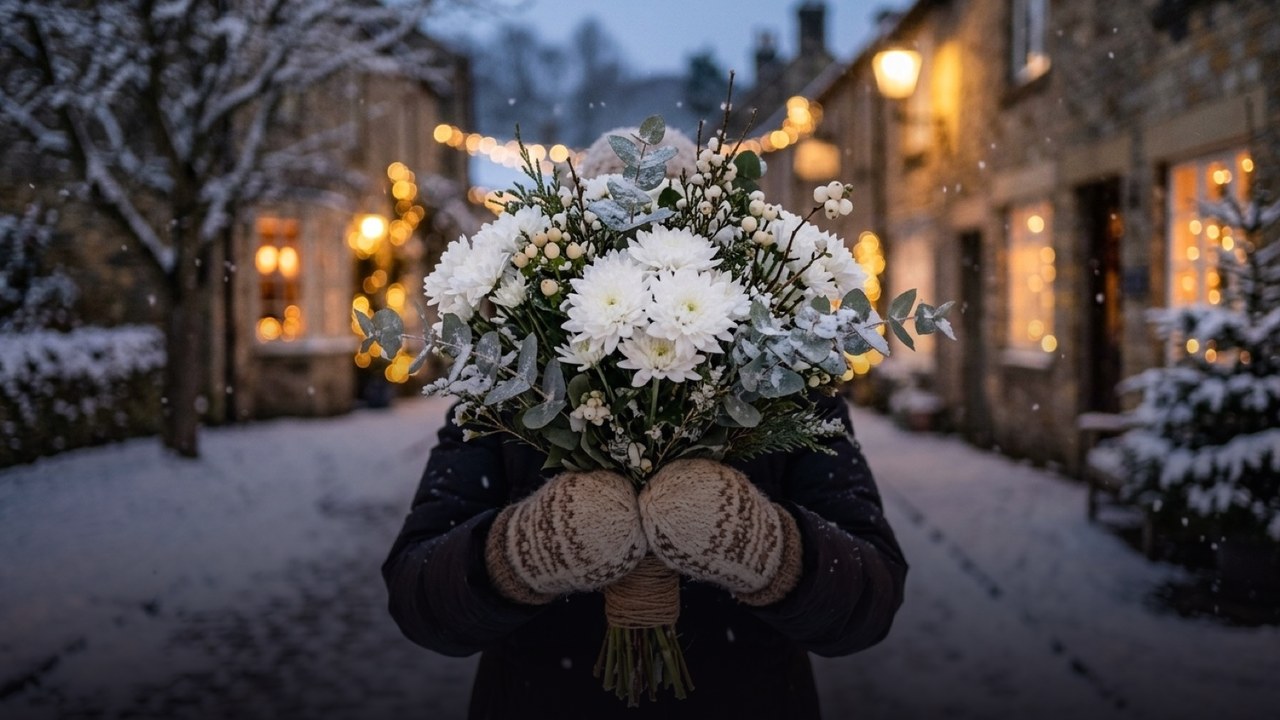
In winter, many outdoor flowering plants slow their growth or become dormant, while annuals often die after completing their life cycle; the outcome depends on the species and conditions. Cut flowers in a bouquet have no roots to support new growth, so their main winter risks are freezing during exposure outdoors and losing water in heated rooms. Winter therefore calls for different care for a garden plant, a potted gift and a cut bouquet.
At Pyat Tsvetov (5 Flowers), customers ask whether a bouquet has become too cold on the journey or why its petals droop beside a warm window. We have worked with flowers in Saint Petersburg since 2011, and the useful first step is to separate cold injury from ordinary water stress. A bouquet can need water without having frozen, while damaged petals may look firm at first and deteriorate after warming. The advice below explains what to watch for and what to do next.
What winter does to flowers growing outdoors
For many perennial plants, the end of flowering is part of a seasonal cycle rather than a sign that the whole plant has died. Leaves and stems may die back while living crowns, roots or bulbs remain below ground. Deciduous shrubs can lose their leaves and retain dormant buds, while some evergreen plants keep foliage through winter. Annual plants generally finish their life cycle in one growing season, although their seeds may survive to germinate later.
The right response depends on the plant, its growing position and the weather, so a single rule about covering every flower is unreliable. Identify the species before pruning, lifting bulbs or adding protection, and check whether it tolerates winter in your region. A plant in a container has different exposure from one rooted in the ground because its roots have less surrounding soil for insulation. Avoid assuming that brown top growth means the roots are dead, or that a green leaf proves the whole plant is unharmed.
Why a cut bouquet reacts differently to winter
Cut flowers continue to lose moisture through their leaves and petals, but they must take up replacement water through severed stems. A cool room can slow their development, yet freezing can injure tissues and cannot be treated as extra refrigeration. Cold tolerance varies between flowers, so there is no universal safe outdoor temperature for a mixed bouquet. Keep winter exposure brief and leave protective wrapping in place during the journey rather than opening the flowers outside for a photograph.
After bringing a bouquet indoors, set it away from a radiator, fireplace or direct stream of warm air while you prepare its vase. Remove the outer transport packaging gently once the flowers are in a sheltered indoor space, taking care not to pull at stiff or compressed petals. Avoid hot water, a hairdryer or other attempts to warm the flower heads quickly. There is no fixed waiting period that suits every bouquet; follow any care instructions supplied for the particular flowers.
Bouquets we can deliver




How to recognise cold injury and respond
Cold injury may become clearer as flowers warm up: petals can develop translucent or water-soaked patches, turn brown, or lose their structure. These signs are not a certain diagnosis on their own, because bruising, age and other damage can look similar. Check whether the problem affects exposed edges, a few flower heads or the whole bouquet, and note any known time spent outdoors. A photograph taken when the change first appears can help you explain the condition accurately when asking for advice.
Start with ordinary care rather than trying several remedies at once: use a clean vase, fresh water and a clean cut at the stem ends. Remove leaves that would sit below the waterline, and handle affected petals as little as possible. Flowers that are merely short of water may regain some firmness, but genuinely frozen tissue cannot be restored by adding sugar or warming it aggressively. Remove deteriorating material as necessary and judge the remaining stems individually instead of discarding the entire bouquet immediately.
What heated rooms do to winter bouquets
Once flowers are indoors, the warmest spot is usually a poor display position. Heat speeds development and water loss, while dry indoor air can make it harder for a bouquet to stay hydrated. Choose a stable place away from radiators, heating vents and direct sunlight, with enough room that petals are not pressed against a wall. A windowsill deserves particular care: it may be warm above a radiator yet cold where flowers touch the glass.
Check the water level daily, because a full-looking vase can conceal stems whose cut ends no longer reach the water. Refresh the water and clean the vase when it becomes cloudy, and use flower food according to its packet instructions if you have it. Avoid adding improvised mixtures of household products; they are difficult to dose and may damage flowers. Our guide to dry winter heating and cut flowers explains this indoor problem in more detail, including why moving the vase can matter as much as watering.
Choosing a winter gift with the recipient in mind
Start with where the flowers will go and how the recipient will handle them. Someone receiving a bouquet at work may still have a cold journey home, while a gift delivered to a home needs a suitable vase and a place away from heating. A potted flowering plant brings different responsibilities, including suitable light and species-specific watering, so choose one when that ongoing care fits the recipient. For cut flowers, browse the bouquets catalogue with their preferences and available display space in mind.
For a recipient in Russia, an odd number of stems is customary for a celebratory bouquet when the flowers are individually counted; even numbers are traditionally associated with mourning. Colour meanings are less dependable than the person's own taste, so avoid treating a particular shade as a universal message. A short card makes the occasion and your intention clearer, especially when sending from abroad. With us, a card with your text is free, and delivery is anonymous by default: the courier does not name the sender.
Planning flower delivery in Russia during winter
We deliver flowers across Russia, and city delivery costs 500 RUB; the operator confirms the price for remote districts and suburbs when confirming the order. In large cities, express delivery is available in 1–2 hours after order confirmation, alongside delivery at an exact time with a tolerance of ±30 minutes or in the windows 09–12, 12–15, 15–18 and 18–21. You can also pre-order 1–30 days ahead, which helps when organising an occasion from another time zone. Saint Petersburg delivery is around the clock; see delivery and payment when planning your order.
Choose a time when the recipient can take the flowers indoors, and convert the intended arrival time to the recipient's local time before ordering. The courier calls about 15 minutes before arrival; if the recipient is absent, we agree a second delivery that day or, with the sender's consent, hand the flowers to a neighbour or concierge. Online checkout uses CloudPayments, and customers abroad should check the payment options displayed there because acceptance of every foreign card is not guaranteed. For questions about an order, call 8 (812) 507-67-05.
Frequently asked questions
Do all flowers die in winter?
No. Many perennial plants survive through dormant roots, bulbs, crowns or buds, while annuals generally finish their life cycle; survival depends on the species and growing conditions.
Can a bouquet recover after freezing?
Genuinely frozen flower tissue cannot be repaired, although unaffected parts of the bouquet may remain usable. Drooping alone does not prove freezing, so begin with clean water, a clean vase and freshly cut stem ends.
Should I put winter flowers beside a radiator?
Keep a cut bouquet away from radiators and direct warm airflow, which increase water loss and speed development. Choose a cooler indoor position where the petals do not touch cold window glass.
Can I order flowers to Russia while living abroad?
You can place an online order for delivery across Russia and include a free card with your text. Checkout uses CloudPayments; check the options shown there, as acceptance of every foreign card is not guaranteed.
What happens if the recipient is out when flowers arrive?
The courier calls about 15 minutes before arrival. If the recipient is absent, we agree a second delivery the same day or hand the flowers to a neighbour or concierge with the sender's consent.
Ready to send a bouquet?
Pick a city, choose the flowers, and we will hand them over with a photo confirmation.
Choose a city →