
How to Water a Hand-Tied Bouquet While Keeping Its Shape
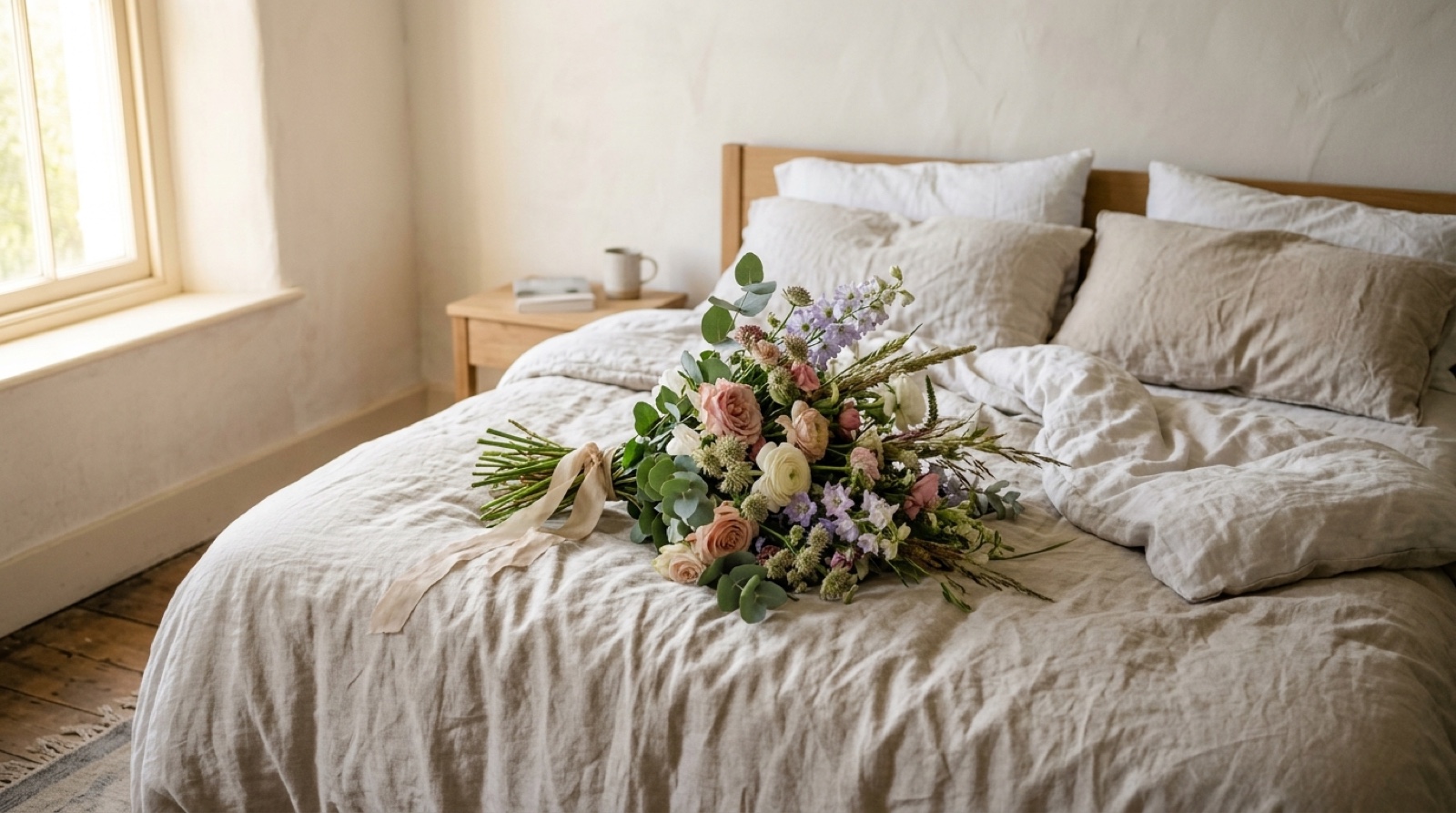
The best way to hydrate a hand-tied bouquet that cannot be fully unwrapped is to expose the cut stem ends and stand them in a clean vase of fresh water, keeping the binding and decorative wrapping above the waterline. Leave the structural tie in place, and open only enough of the lower packaging to let every stem reach the water. If accessible, trim the stem ends first with a clean, sharp tool.
Keeping the bouquet's shape and keeping every layer of packaging intact are different practical goals. At Pyat Tsvetov (5 Flowers), with three own flower shops in Saint Petersburg and a history dating to 2011, our advice starts with identifying what holds the arrangement together. A tie around the stems can usually stay; paper covering the cut ends may need to be opened so that it does not obstruct watering.
Identify the tie, wrapping and any water reservoir
Look underneath the bouquet before placing it in a vase. Find the actual cut ends and distinguish the string or band holding the stems from ribbons securing the outer wrapping. Keep the structural tie intact if it is holding the arrangement securely. Open a lower paper fold or release a separate packaging ribbon only as far as needed to expose the stems.
A transport pouch around the stem ends needs a different approach from ordinary wrapping. Hold the bouquet over a sink or bowl before opening it, because it may contain water. Remove the pouch before transferring exposed stems into a vase, while leaving the bouquet's binding in place. Do not assume that damp tissue or a small amount of transport water will sustain the flowers for their whole display.
If the stems disappear into floral foam or a fixed container, treat the arrangement according to that construction. Add water slowly to the foam or reservoir, checking for overflow, rather than pulling out stems to reach their ends. If the base is completely concealed and you cannot identify it, ask for care guidance before cutting or puncturing anything. For questions about our flowers, call 8 (812) 507-67-05.
Choose a vase that supports the bouquet and leaves room for water
Use a thoroughly washed vase that can support the bouquet without squeezing the stems together. Its opening should accommodate the tied bundle, and its base should remain stable under the weight of the flower heads. A narrow neck that catches the wrapping can leave the shortest stems suspended above the water. Check where the stems actually sit before settling the bouquet into place.
Fill the vase with enough fresh water to cover every exposed cut end, while keeping leaves, paper and the binding above the waterline where possible. There is no single useful fill line for every bouquet: stem lengths, vase shape and the position of the tie vary. Look through a clear vase or check from the side to confirm that the shortest stem reaches the water. Submerged decorative paper is a sign that the lower wrapping needs adjusting.
Remove accessible leaves that would sit underwater without pulling stems out of the arrangement. If foliage is trapped inside the tied bundle, avoid tugging at it and disturbing the whole bouquet. A vase with more room may make access easier while supporting the flowers properly. Our guide to the best vase shape for flowers explains how the opening and base affect support.
Bouquets we can deliver




Refresh the cut ends without undoing the binding
If the stem ends are accessible, remove a short section from each with a clean, sharp tool before putting the bouquet into water. Support the tied bundle with one hand and work below the binding, away from your fingers and the decorative wrap. Make clean cuts rather than crushing or splitting the stems. Move the bouquet into its prepared vase promptly after trimming.
Do not force a thick bundle through scissors that cannot cut it cleanly. Work on individual accessible stems while keeping the tie intact, or use suitable clean secateurs for tougher stems. Keep enough length for the shortest cut end to remain submerged once the bouquet is supported by the vase. Cutting every stem to an identical length is less important than giving each one reliable access to water.
If the wrapping blocks safe access, open its lower edge further instead of cutting blindly through it. When trimming is genuinely impossible, place exposed stem ends in clean water promptly and seek help with the packaging before attempting a risky cut. For more detail on tools and technique, see our guide to the best way to cut flower stems. Avoid hammering the ends or scraping away the outer stem surface.
Use fresh water and flower food correctly
Use fresh drinking-quality water for the vase, avoiding very hot water or improvised ice baths. A mixed bouquet may contain flowers with different conditioning needs, so a dramatic temperature treatment is a poor general remedy. Start with clean water and uninterrupted contact between the water and the cut ends. Keep the flowers in a cool room while they take up water.
If you have commercial cut-flower food, mix it with the amount of water stated on its packaging. Measure the water rather than guessing from the height of the vase, since narrow and wide vessels hold very different volumes. Do not concentrate a sachet into a small transport pouch. If no flower food is available, use clean water and pay close attention to vase hygiene.
Avoid adding sugar alone, household cleaners, alcohol or other improvised mixtures. These do not provide a reliably balanced care solution, and inaccurate doses can damage flowers. Do not pour water over the flower heads as a substitute for supplying the stems. Routine hydration should happen through the cut ends, with decorative wrapping kept clear of the water.
Check the water daily and respond carefully to drooping
Check the water level every day, including soon after first placing a thirsty bouquet in its vase. The wrapping can hide both the waterline and shorter stems, so do not judge hydration by the appearance of the paper. Top up before any cut ends become exposed. Keep the vase away from direct sun, radiators, strong draughts and ripening fruit.
Replace the water regularly, and promptly if it becomes cloudy or develops an unpleasant smell. Prepare a clean second vessel so the tied bouquet has somewhere to stand while you wash the display vase. Lift the bundle by supporting the stems around the binding, rather than pulling on the paper or flower heads. Refill with fresh water and correctly mixed flower food if you are using it.
If flowers droop, first check for low water, stems caught above the waterline or packaging obstructing the ends. Refresh accessible cuts, restore water contact and move the bouquet to a cooler position away from heat. Give the flowers time to respond before attempting another treatment. Hydration cannot reverse every problem, including damaged stems or flowers already nearing the end of their vase life.
Plan a flower delivery to Russia around access to a vase
When sending flowers to someone in Russia from abroad, choose a delivery time when the recipient can put the bouquet into water. A short care message can be more useful than asking them to preserve every fold of wrapping. Explain that the stem tie may stay in place while the lower packaging is opened for a vase. A card with your text is free, so you can include those instructions with your personal message.
We deliver flowers across Russia; city delivery costs 500 RUB, and the operator confirms the price for remote districts and suburbs when confirming the order. Express delivery in large cities is available in 1–2 hours after confirmation, and orders can be placed 1–30 days ahead. In Saint Petersburg, delivery operates around the clock. Check delivery and payment details when choosing the timing for your recipient.
The courier calls the recipient about 15 minutes before arrival, and delivery is anonymous by default: the courier does not name the sender. If the recipient is absent, we agree a second delivery that day or a handover to a neighbour or concierge with the sender's consent. Online checkout uses CloudPayments; check the payment options displayed there when ordering from abroad. Acceptance of a particular foreign card should not be assumed.
Frequently asked questions
Can I leave the string around a hand-tied bouquet?
Yes, the structural tie can usually remain while the bouquet stands in a vase. Check that every cut end reaches the water and that the tie is not visibly crushing the stems.
Can I put the whole wrapped bouquet into water?
Open enough lower wrapping to expose the stems and keep decorative paper above the waterline. A waterproof outer layer does not prove that water can reach the cut ends inside.
Should I spray the flowers if I cannot unwrap them?
Spraying the flower heads does not replace water uptake through the cut stems. Expose the stem ends or identify the arrangement's reservoir so that you can supply water to the correct place.
How much water does a tied bouquet need?
Use enough to keep every cut end submerged without soaking leaves or decorative wrapping. Check the level daily and top up before the shortest stems lose contact with the water.
What if the bouquet still droops after watering?
Check that all stems reach clean water, refresh accessible cuts and move the bouquet away from heat. Some damage and natural ageing cannot be reversed by hydration, so recovery is not guaranteed.
Ready to send a bouquet?
Pick a city, choose the flowers, and we will hand them over with a photo confirmation.
Choose a city →