
How to spot damage in alstroemeria and check your bouquet
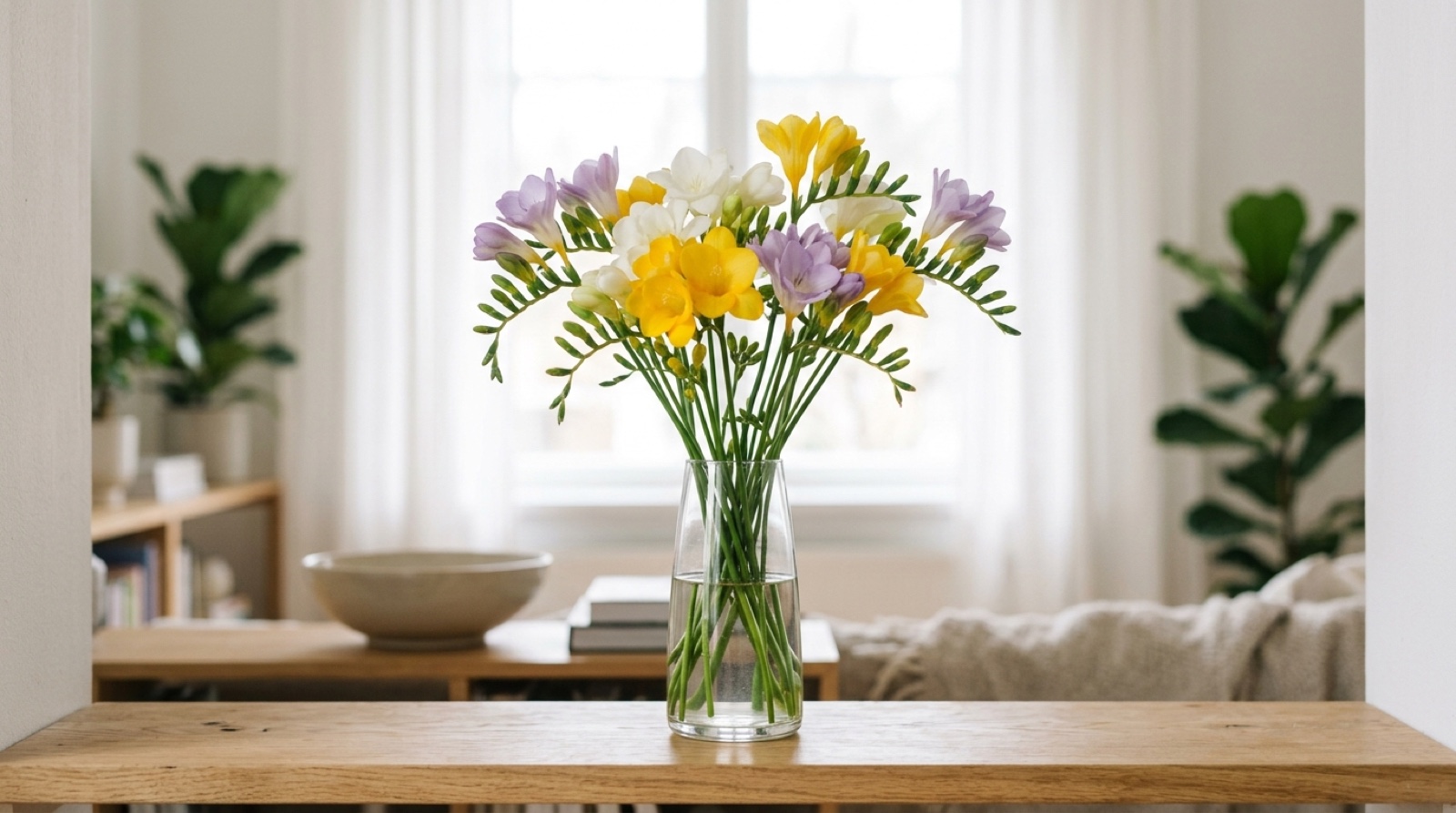
When checking alstroemeria in a bouquet, look for crushed or translucent petals, soft dark patches, mould and stems that are split or collapsing. Natural petal streaks and firm, unopened buds are not damage; check the condition of the whole stem before judging an individual flower.
A useful distinction is whether a mark affects only appearance or whether the tissue is breaking down. A small dry tear may be a handling mark, while wet, soft tissue or a mushy stem needs prompt attention.
Petal markings: natural pattern or bruising
Alstroemeria commonly has contrasting streaks or speckles, especially on its inner petals. Natural markings sit within intact tissue. Compare several flowers: similar markings in corresponding places are usually part of the flower’s pattern.
Handling damage looks more irregular: a creased edge, torn petal or flattened patch where flowers have pressed together. Translucent, water-soaked areas and spreading brown patches are more concerning, particularly when the tissue feels soft. Inspect gently without rubbing or pulling the petals.
Buds, leaves and stems: check them together
A bouquet can contain both open flowers and closed buds. Firm buds with intact surfaces are not evidence of poor condition simply because they have not opened. Shriveled, browned or soft buds deserve closer inspection; whether a closed bud will open cannot be judged from size alone.
Look along each stem for sharp kinks, splits and crushed sections. A stem bent enough to interrupt water uptake may leave the flowers above it drooping. Alstroemeria can carry several flowers on branching stems, so check the smaller branches as well as the main stem.
One yellow lower leaf does not establish that the whole bouquet is damaged. Widespread yellowing alongside limp flowers or deteriorating stems is a stronger warning. Remove leaves that would sit below the vase waterline, and check for slimy tissue or an unpleasant smell.
Bouquets we can deliver




What to do when the bouquet arrives
Check the flowers promptly in good light. If you notice significant damage, take clear photographs of the bouquet and affected stems before trimming them. For questions about an order from Pyat Tsvetov (5 Flowers), call 8 (812) 507-67-05 and describe what you can see.
Release tight transport wrapping carefully, support the flower heads and place the bouquet in a clean vase. Recut the stem ends with a clean, sharp tool, remove submerged foliage and add fresh water. Use cut-flower food according to its packet instructions if you have it.
Keep the vase away from direct sun, heaters and ripening fruit. Drooping can result from water stress, so observe how the flowers respond after fresh cuts and water; this will not repair a crushed stem or decaying tissue. For journeys after collection or delivery, see our guide to transporting a bouquet without damaging it.
When to remove an affected flower
Remove a faded or damaged individual flower carefully if the rest of its branch remains sound. If you find fuzzy mould, soft rot or a mushy stem, remove the affected material rather than leaving it in contact with healthy flowers. Clean the vase and replace dirty water.
Judge the remaining bouquet by its condition, rather than discarding it because one bloom has faded. Our guide to when to throw out flowers explains the signs that a bouquet has reached its end.
Sending alstroemeria to someone in Russia
Pyat Tsvetov (5 Flowers) has operated in Saint Petersburg since 2011 and delivers flowers across Russia. If you are ordering from abroad, choose from the bouquets catalogue and check the options displayed at checkout; online payment uses CloudPayments.
A card with your text is free, and delivery is anonymous by default: the courier does not name the sender. Include your name in the card message if you want the recipient to know who sent the flowers. The courier calls the recipient about 15 minutes before arrival. Check our delivery information; confirm the timing for your order.
Frequently asked questions
Do brown spots always mean alstroemeria is damaged?
No. Dark speckles and streaks can be natural petal markings; check whether the surrounding tissue is intact. Irregular brown areas with softness, translucency or mould are more concerning.
Can a broken alstroemeria stem recover in water?
A crushed or broken section will not heal in the vase. If there is enough healthy stem above the damage, cut above it and place the shortened stem in a smaller clean vase.
Ready to send a bouquet?
Pick a city, choose the flowers, and we will hand them over with a photo confirmation.
Choose a city →