
Anthurium in Russia: Tropical, Long-Lasting, and Bold
Customers ask us almost daily whether anthuriums are a safe choice for a gift — whether they will arrive looking tired, whether the recipient will find them strange, and whether they are worth the extra cost over roses. The short answer is yes, yes, and yes, in that order. Anthuriums are one of the few cut flowers that genuinely hold for three to four weeks in a home with ordinary tap water, they photograph dramatically well, and they are widely available in Saint Petersburg and other large Russian cities every month of the year. What follows is what we tell customers at the counter when they have five minutes and want straight answers.
What Anthurium Actually Is and Why It Looks the Way It Does
Most people who pick up an anthurium for the first time assume the waxy, heart-shaped colored part is a petal. It is not. That structure is called a spathe, and it is a modified leaf — a bract — whose job in the wild is to attract pollinators toward the true flowers, which are the tiny bumps arranged along the finger-like spadix in the center. This distinction matters practically: the spathe is tough, waxy, and resistant to bruising in a way that rose petals simply are not. It does not wilt from a brief temperature drop the way a tulip does, and it does not shed the moment it is jostled in transit. The spadix itself ranges in color from cream to yellow to dark purple depending on the variety, and its condition — firm, upright, with no browning at the tip — is one of the first things a florist checks when assessing stem quality. The plant originates from tropical regions of Central and South America, which is why it prefers warmth and humidity, but cut stems adapt surprisingly well to Russian apartments, which tend to be heated to 20–24 degrees Celsius in winter. The main enemy at the point of sale is not cold but ethylene gas, which accumulates around ripening fruit and causes the spathe to lose color faster. Keep anthuriums away from fruit bowls and you remove the single biggest threat to their vase life.
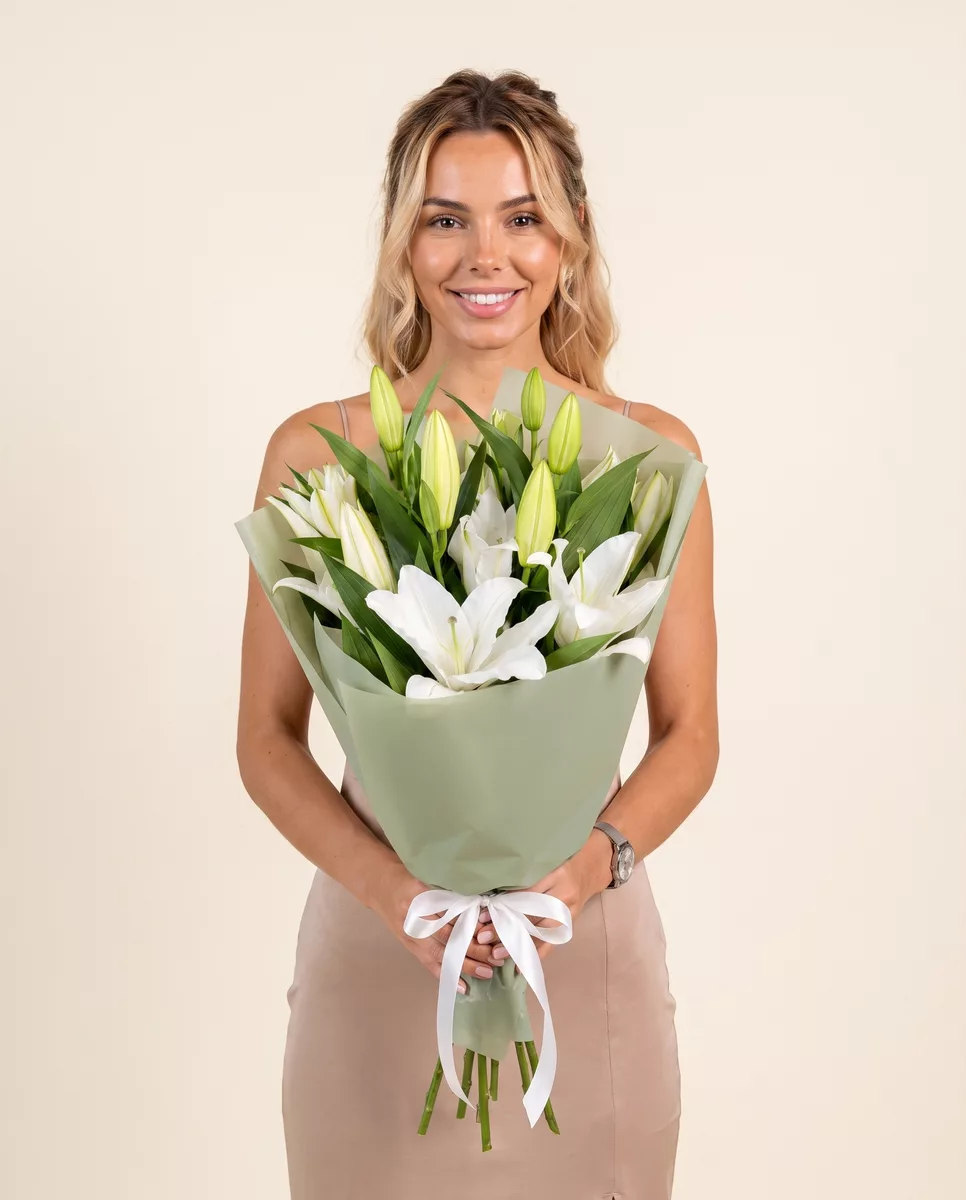
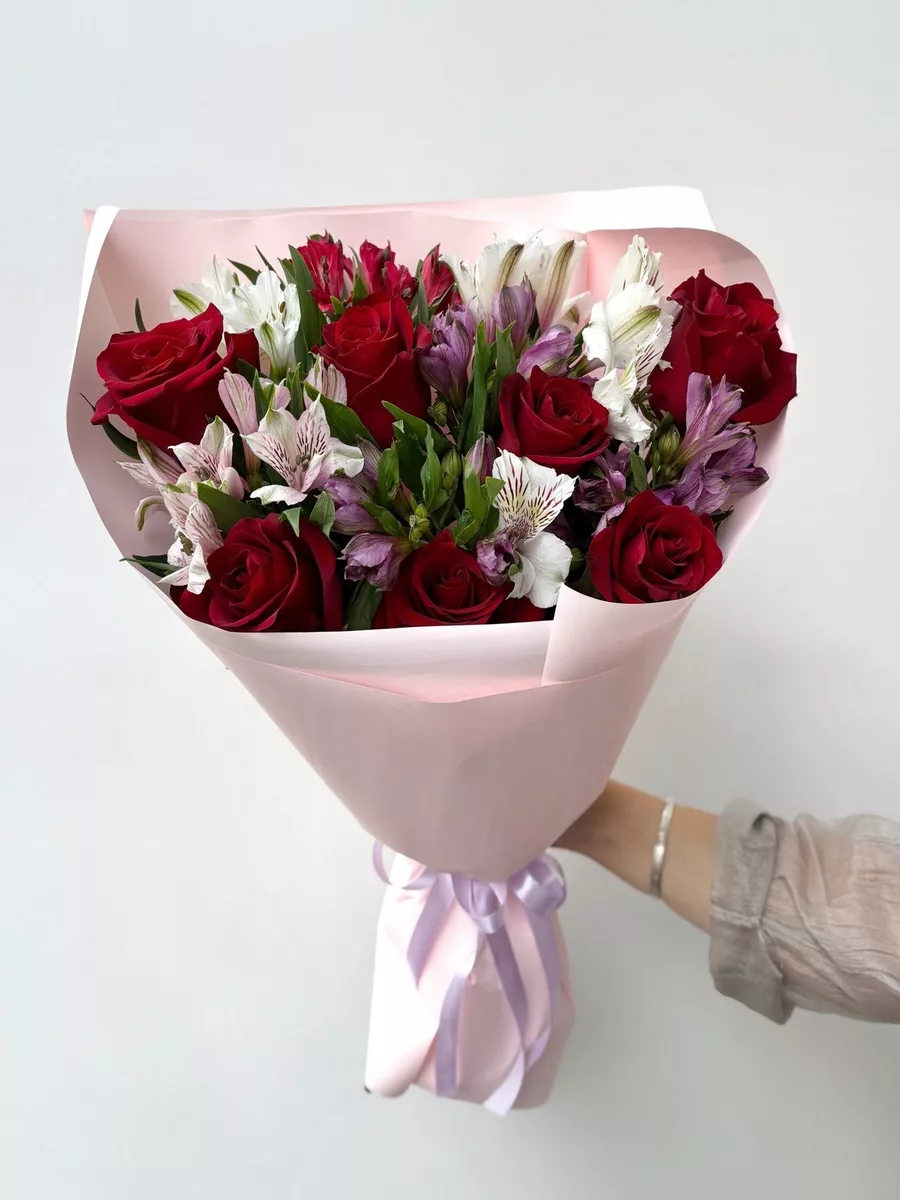
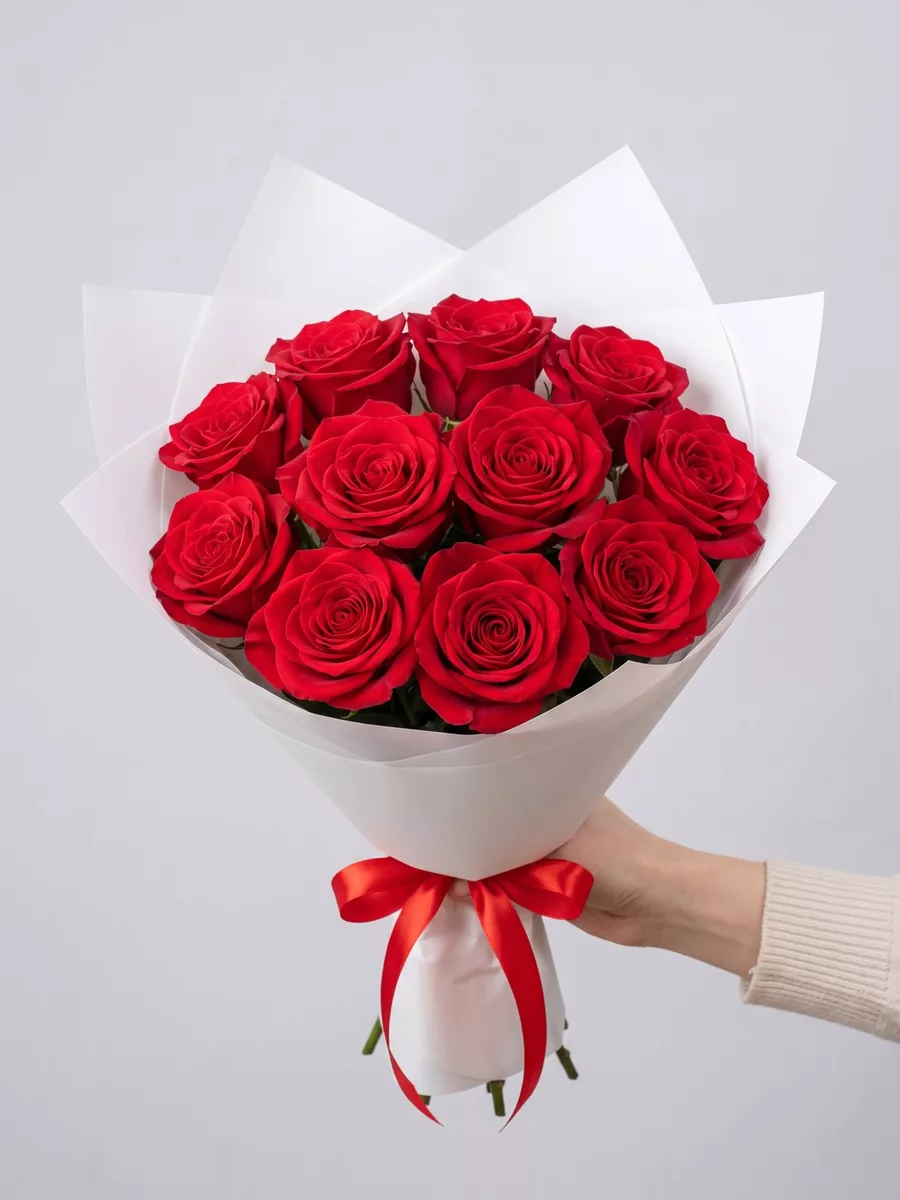
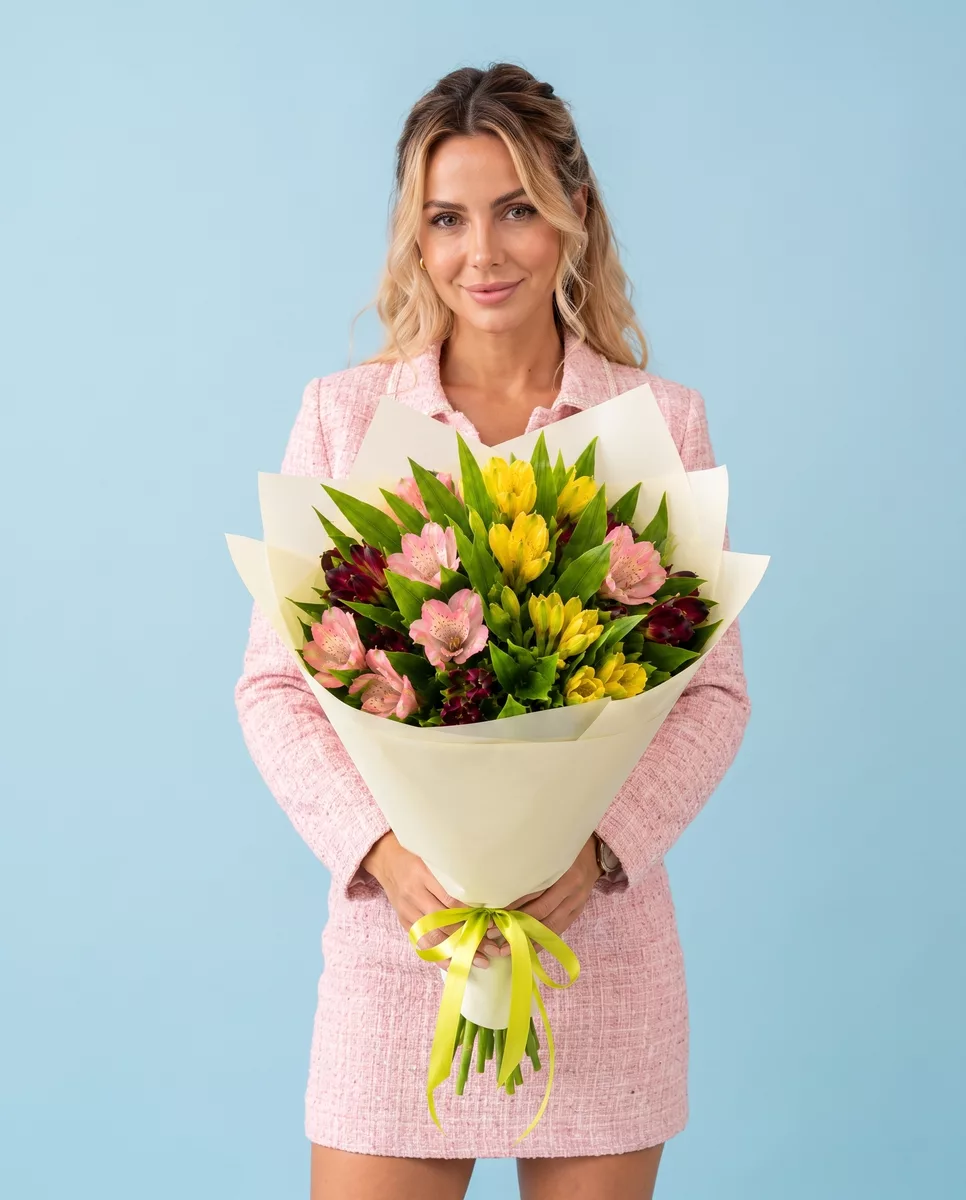
Bouquets we can deliver
Varieties You Will Actually Find in Saint Petersburg Flower Shops
The variety landscape for cut anthurium in Russia is narrower than in Western European markets, but it is more than sufficient for most purposes. The dominant variety in wholesale supply is Anthurium andreanum, which covers the familiar large-spathed stems in red, deep burgundy, coral, white, and pink. Within andreanum, growers in the Netherlands — the primary source for Russian florists — have developed named cultivars such as Baron, which is a deep velvety red with a nearly black spadix, and Acropolis, which is pure white with a cream spadix and is the standard choice when a customer specifically requests something pale and architectural. Pink Champion is a reliable mid-pink that photographs well without the slightly synthetic look of some hot-pink cultivars. Beyond andreanum, you will occasionally find Anthurium scherzerianum in smaller bunches — this species has a curled, spiral spadix rather than a straight one, giving it a more whimsical silhouette. It is less common in Russian wholesale but appears seasonally. Miniature anthurium stems, sometimes called mini or baby anthurium, have become more available over the last two to three years and are useful for compact bouquets or mixed arrangements where a full-size spathe would overwhelm other elements. When ordering for delivery, ask specifically which variety is in stock that day, because wholesale arrivals vary and a shop that lists anthurium on its website may be working from a different cultivar than the photograph shown.
Vase Life: Why Four Weeks Is Realistic and What Can Cut It Short
Four weeks is not a marketing figure — it is the documented vase life for fresh anthurium stems under reasonable home conditions, and we see it confirmed regularly when customers send photographs or return to reorder. The conditions that produce that result are straightforward: water changed every two to three days, stem ends re-cut at an angle with clean scissors each time, water temperature around 18–20 degrees Celsius, and placement away from direct sunlight and heat sources such as radiators. Russian apartments in winter are actually well-suited to anthuriums because central heating keeps rooms consistently warm and dry rather than fluctuating between cool nights and warm days. The spathe needs ambient humidity to stay glossy; in very dry apartments, a light misting of the spathe surface every few days prevents the edges from going papery. What shortens vase life most reliably is dirty water — bacterial buildup at the stem end blocks water uptake within days and causes the spathe to lose its color and go limp from the base. A small amount of flower food in the water, the kind supplied in the paper sachet that comes with most bouquets, delays this significantly. Cold shock is the second major risk: if a stem is left in an unheated hallway or near a drafty window at temperatures below 10 degrees Celsius, dark patches appear on the spathe within 24 hours and do not reverse. This is a transit risk in Russian winters and something we manage carefully in our delivery process.
How Anthuriums Fit Russian Gifting Customs
Russia has a strong convention around odd numbers of flowers in a bouquet — even numbers are associated specifically with mourning occasions, so a gift of two or four anthuriums would read as inappropriate in most social contexts. This matters with anthurium because the stems are large and a bouquet of three or five is already visually substantial without needing to be padded with filler. Customers who are not familiar with this convention sometimes request even numbers simply because they are thinking in pairs, and we always flag it at the point of order. Beyond the number convention, anthuriums are genuinely neutral in terms of occasion in Russia: they are given for birthdays, professional milestones, housewarming events, and romantic occasions without any fixed symbolic meaning attached to them the way red roses carry a romantic reading by default. This makes them useful when you are unsure of the relationship register. White Acropolis anthuriums are the most requested for professional gifts — they read as considered and modern without being personal. Red Baron or deep burgundy stems are more common in romantic contexts. For housewarming gifts specifically, anthuriums are a smart choice because the recipient gets a flower that will last long enough to actually enjoy rather than wilting within a week. One practical note: anthurium sap is a mild irritant, and some recipients prefer not to handle the stems directly — this is worth mentioning in a gift note if the recipient is known to have sensitive skin.
Mixing Anthurium with Other Flowers: What Works and What Does Not
Anthurium is a dominant flower in any arrangement — the spathe is large, the color is saturated, and the silhouette is architectural. This means the flowers paired with it need to either complement its scale or deliberately contrast in texture. Tropical combinations work naturally: anthurium alongside bird of paradise, heliconia, or large-leaved monstera foliage creates a cohesive visual logic and all three have similar care requirements in terms of water temperature and light. For customers who want something warmer and less tropical-looking, anthurium pairs well with large garden roses in complementary colors — a deep red Baron anthurium with garden roses in dusty pink or peach softens the tropical edge considerably. What tends to look awkward is mixing anthurium with delicate flowers that have a short vase life, such as sweet peas or anemones, because the anthurium will outlast them by two to three weeks and the arrangement will need to be partially rebuilt. Eucalyptus and ruscus are reliable foliage choices because they are hardy and do not compete visually with the spathe. Avoid combining anthurium with ethylene-sensitive flowers in the same vase if the arrangement includes any fruit elements in the decorative wrapping — the ethylene produced by even a small amount of fruit will age the anthurium faster. Gypsophila and waxflower work as fillers without overwhelming the anthurium, though they will need replacing after ten to fourteen days while the anthurium continues. When building a mixed bouquet for delivery, we always position anthurium stems so the spathe is protected from contact with packaging material.
Ordering Anthurium for Delivery in Russia: What to Check
The first question to ask when ordering anthurium for delivery is whether the stems in stock arrived within the last two to three days. Anthurium is imported — primarily from the Netherlands via air freight — and the time from the Dutch auction to a Saint Petersburg vase is typically four to six days. Stems that have been sitting in a wholesaler's cold storage for longer than that will still look presentable on arrival but will give noticeably less than the full four-week vase life. A shop that can tell you the arrival date of its current stock is giving you genuinely useful information. The second thing to check is whether the delivery route includes an unheated vehicle or a long time in an outdoor corridor in winter. Below 10 degrees Celsius, anthurium spathes develop cold damage that shows as dark, water-soaked patches within a day of warming up. We use insulated packaging and temperature-managed transport for this reason. Third, confirm the stem count and color before the order is finalized, because anthurium inventory turns over quickly and the specific cultivar shown in a website photograph may not be the one available on a given day. If you are ordering for a specific occasion and the color matters — white for a professional gift, red for a romantic one — make that explicit rather than assuming the photograph reflects current stock. Finally, check whether the bouquet comes with care instructions, because anthurium recipients who have not kept them before often do not know to re-cut the stems, and that single step makes a measurable difference to how long the flowers last.
Anthurium Availability Across Russia: What Changes by City and Season
Anthurium is available year-round in Saint Petersburg and Moscow because both cities have reliable access to Dutch flower imports through air freight. The situation is more variable in other Russian cities. In Yekaterinburg, Novosibirsk, Kazan, and Krasnodar, anthurium is generally available but the selection of cultivars is narrower — you are more likely to find standard red andreanum than white Acropolis or mini varieties. In smaller cities, availability depends heavily on whether local wholesalers have relationships with importers who carry tropical stems, and in some cases anthurium simply is not stocked. This is worth knowing if you are ordering a delivery to a recipient in a regional city and the gift is specifically intended to be anthurium rather than a general fresh arrangement. Seasonally, there is a mild increase in anthurium availability and variety selection in the period around March 8, which is International Women's Day and the single largest flower-giving occasion in Russia — significantly larger than Valentine's Day in terms of volume. Florists import more tropical stems for this period, so late February to early March is actually a good time to find less common anthurium varieties. Summer does not significantly affect anthurium supply since the flower is greenhouse-grown year-round in the Netherlands, but summer transit in Russia carries a different risk: heat rather than cold. Anthurium in a delivery vehicle sitting in direct sun at 30 degrees Celsius for more than thirty minutes will show heat stress on the spathe edges. Morning delivery slots reduce this risk in summer months.
Anthurium earns its place in the range not because it is fashionable but because it is genuinely reliable — for the florist assembling the bouquet, for the courier delivering it, and for the recipient who wants something that will still look good three weeks after the occasion. The variety choice, stem freshness, and transit temperature are the three variables that determine whether that four-week vase life actually materializes, and all three are things a good shop controls before the order leaves the floor. If you know the color register you want, the occasion, and whether the recipient keeps flowers regularly, we can put together something that works precisely — not just something that looks right in a photograph. We deliver bouquets across Russia in 1–2 hours.
Frequently asked questions
How long do anthurium flowers last in a vase at home?
Fresh anthurium stems last three to four weeks in a vase when water is changed every two to three days and stems are re-cut at an angle each time. Keep them away from direct sunlight, radiators, and fruit bowls. Cold drafts below 10 degrees Celsius cause permanent dark patches on the spathe, so placement in a warm room matters.
Are anthuriums available for delivery in Russia outside of Moscow and Saint Petersburg?
In large regional cities such as Yekaterinburg, Kazan, and Novosibirsk, anthurium is generally available but the cultivar range is narrower than in Moscow or Saint Petersburg. In smaller cities, availability is inconsistent. If anthurium specifically is important for your order, confirm stock with the shop before placing the order rather than assuming it is available.
Is anthurium appropriate as a gift in Russia, or does it carry any specific meaning?
Anthurium carries no fixed symbolic meaning in Russian gifting culture, which makes it versatile. It suits birthdays, professional occasions, housewarmings, and romantic gifts equally. The standard Russian convention of giving an odd number of flowers applies — order three, five, or seven stems rather than an even number, which is associated with mourning occasions.
What is the difference between anthurium varieties like Acropolis and Baron?
Both are cultivars of Anthurium andreanum. Acropolis has a pure white spathe and cream spadix — it reads as clean and architectural, making it popular for professional gifts. Baron is a deep velvety red with a near-black spadix and is more common in romantic arrangements. Both are available through Dutch imports but stock varies by delivery date, so confirm availability when ordering.
Can anthurium be mixed with other flowers in the same bouquet?
Yes, though the pairing matters. Anthurium works well with large garden roses, tropical stems like bird of paradise, and hardy foliage such as eucalyptus or ruscus. Avoid mixing it with short-lived flowers like sweet peas or anemones — the anthurium will outlast them by weeks. Keep it away from fruit in decorative wrapping, as ethylene gas accelerates color loss in the spathe.
Ready to send a bouquet?
Pick a city, choose the flowers, and we will hand them over with a photo confirmation.
Choose a city →