
How to Check Carnations in a Bouquet for Damage
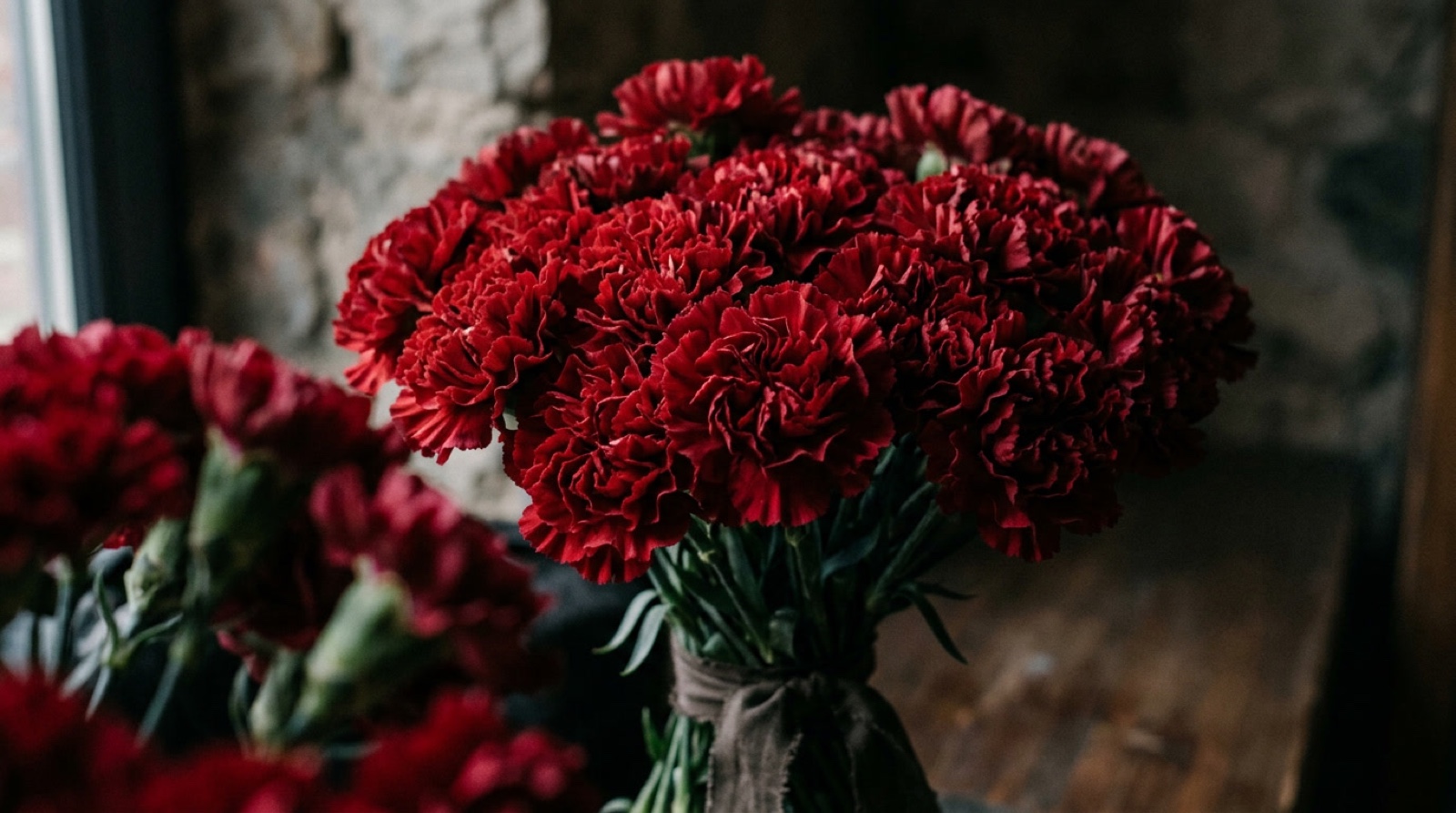
When checking carnations in a bouquet, look for crushed or brown petals, snapped stems, soft tissue beneath the flower head and any fuzzy mould. Healthy blooms should feel supported by firm stems, with no slimy patches or unpleasant smell. A few marked outer petals may be cosmetic; widespread wet browning or a broken stem needs closer attention.
Customers often want to know whether a carnation’s ruffled edges mean it is damaged. Frilled petals, uneven outlines and contrasting colour margins can be normal features, so judge their condition alongside the stem and the green cup beneath the bloom.
Check the petals: dry marks differ from wet damage
Inspect several flowers in good light without pulling the heads apart. Small creases or dry scuffs confined to exposed outer petals can result from handling. Larger flattened patches, torn petals or translucent, water-soaked areas suggest more substantial damage.
Brown, crisp edges can accompany drying or ageing. Soft brown patches, petals sticking together and fuzzy growth are more concerning, especially if they extend into the centre. Colour alone cannot identify the cause: a consistent coloured border may belong to the variety, while irregular discolouration with a change in texture deserves attention.
Check the stem and the green cup beneath the flower
Follow each suspect stem from the flower head down to the cut end. Look for sharp bends, cracks and crushed sections, particularly around the joints. A bloom leaning on a visibly fractured stem has structural damage; adding water will not repair the break.
The green cup holding the petals is called the calyx. A split calyx can allow petals to spread unevenly, but a split alone does not establish that the flower is old or rotting. Check whether the surrounding tissue is firm and dry or soft, dark and deteriorating.
Bouquets we can deliver




Distinguish dehydration from deterioration
Limp foliage, less resilient petals and a drooping head on an intact stem can indicate water stress. These signs do not prove that the flower will recover, but they justify prompt care. Slime, mould, a sour smell or collapsing tissue point to deterioration rather than simple thirst.
Check the vase too. Low water can leave cut ends exposed, while leaves sitting below the waterline encourage contamination. Cloudy water is a reason to clean the vase and refresh it, although water clarity alone cannot tell you whether every flower is healthy.
What to do when you find a problem
If the bouquet has just arrived, photograph the whole arrangement and close-ups of the affected flowers before trimming or removing anything. Record whether the issue is a torn petal, a broken stem, dry edges or soft tissue; a precise description is more useful than saying the bouquet looks tired.
For intact carnations showing possible dehydration, use a clean vase, recut the stems with a clean, sharp tool and remove leaves that would sit underwater. Add fresh water and use cut-flower food according to its packet instructions if available. Keep the bouquet away from direct sun, heaters and ripening fruit, then reassess its condition.
Remove mouldy or rotting stems from the arrangement and clean the vase before returning the remaining flowers. Avoid repeatedly squeezing blooms to test them. For more guidance on deterioration, see when to throw out flowers.
Checking a bouquet sent to someone in Russia
If you are ordering from abroad, ask the recipient to take a clear photograph soon after arrival if they notice damage. Pyat Tsvetov (5 Flowers) has operated in Saint Petersburg since 2011 and delivers flowers across Russia. For questions about an order or a bouquet’s condition, call 8 (812) 507-67-05.
You can choose flowers in our bouquets catalogue and review delivery and payment before ordering. Online checkout uses CloudPayments; check the payment options displayed there for your card. If you will carry the bouquet after delivery, our transport guide explains how to reduce handling damage.
Frequently asked questions
Does a fully open carnation mean it is old?
A fully open bloom is not enough to establish age or damage. Check petal texture, stem firmness and the tissue beneath the head for a more useful assessment.
Can I remove one damaged outer petal?
An isolated torn outer petal can be gently removed if it comes away without disturbing the bloom. Photograph it first if you intend to report the condition, and avoid pulling out several petals to hide a larger damaged area.
Ready to send a bouquet?
Pick a city, choose the flowers, and we will hand them over with a photo confirmation.
Choose a city →