
Flower Delivery in Arzamas: Zones, Timing and What to Expect
Arzamas is a mid-sized city in the Nizhny Novgorod region, and customers there ask the same questions as everyone else: will the roses arrive open or tight, what happens if nobody is home, and can you really get flowers here in two hours? The answers depend on where in the city the address is, what you order, and how you time the request. This article covers all three.
Which Parts of Arzamas We Cover and How Zones Affect Your Order
Arzamas is divided into a central area and several residential districts that spread outward toward the ring road. The central part of the city, including the streets near the main square and the cathedral district, sits within our standard delivery zone and receives the fastest turnaround. Residential areas such as Zarechny and the streets bordering the industrial zone to the south take slightly longer because of road routing, but they are fully within the delivery area. If you are sending to a private house rather than an apartment block, make sure the address includes the house number and any building entrance code, because drivers lose time at gates and intercoms and that delay affects the freshness window of the flowers. Villages and settlements outside the city boundary itself are handled case by case, so call before placing the order if the address is more than five kilometers from the city center. The delivery zone boundary is not always obvious from a map, and it is better to confirm than to assume. One thing that catches people off guard is that Arzamas has several streets with similar names in different districts, so always include the district name when writing the address. A bouquet of garden roses or spray chrysanthemums can handle a slightly longer drive, but delicate ranunculus or open peonies are more sensitive to time in transit, and that is worth factoring into your choice.
Bouquets we can deliver



Delivery Timing: What One to Two Hours Actually Means in Practice
The one-to-two-hour window starts from the moment the order is confirmed and paid, not from the moment you begin filling out the form. In Arzamas, the central districts typically land at the shorter end of that range, while outer addresses or deliveries during peak hours, particularly on February 14th, March 8th and the days around them, may run closer to the two-hour mark or slightly beyond. If you need the bouquet at a specific time, for example at the start of a birthday dinner or before a graduation ceremony, place the order at least three hours ahead and specify the preferred delivery window in the comment field. We work with that window rather than against it. Morning deliveries between 8 and 11 are generally the smoothest because traffic in Arzamas is lighter then and the flowers themselves are at peak freshness after overnight cold storage. Midday and early afternoon orders are reliable. Late evening deliveries, after 20:00, are available but should be confirmed by phone because recipient availability becomes unpredictable and leaving a bouquet at a door in cold weather for more than twenty minutes damages the stems. One common mistake is ordering for a surprise delivery without checking whether the recipient will actually be at the address. If the person is at work across the city, the driver will wait a short time and then contact you, and that adds time and stress to what should be a simple gesture.
Which Flowers Travel Best on the Route to Arzamas
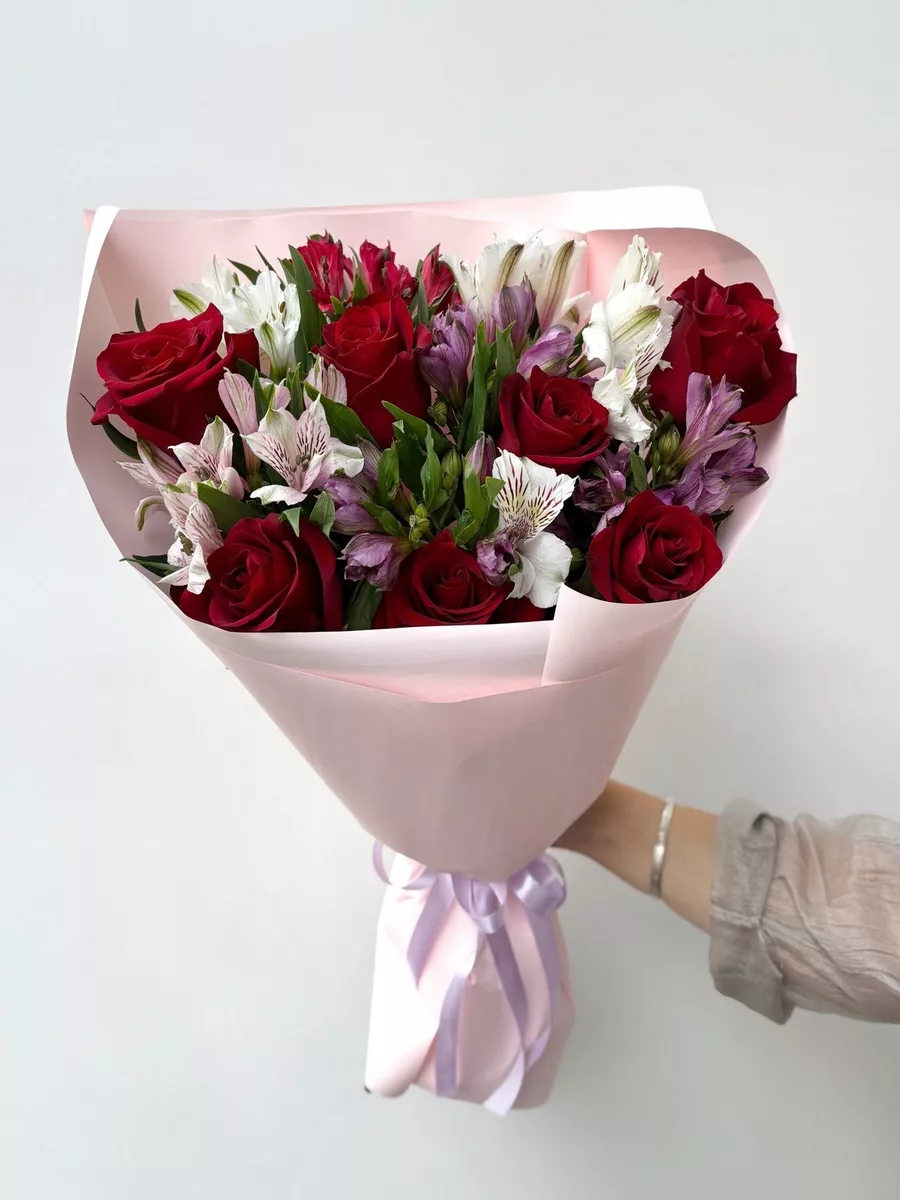
The delivery from our Saint Petersburg workshop to Arzamas involves refrigerated transport before the local courier takes over, and not every variety handles the full journey equally well. Roses are the most reliable: varieties such as Explorer, Avalanche and Red Naomi have firm petals and strong stems that tolerate temperature shifts between the cold box and a warm car cabin. Alstroemeria is another excellent traveler, arriving almost always fully intact, and its two-to-three-week vase life makes it a practical choice for recipients who are not home every day. Chrysanthemums, both spray and single-stem, are similarly tough. What requires more care are open peonies in summer, garden roses with very thin petals, and any arrangement with open gerbera daisies, which bruise if the wrapping presses against the petals during transit. In winter, from November through March, the temperature outside in Arzamas can drop to minus fifteen or colder, and flowers need proper thermal wrapping for the walk from the courier car to the front door. We include that wrapping automatically, but if you are meeting the courier outside rather than at the door, unwrap the bouquet indoors within a few minutes rather than standing in the cold. Tulips are especially sensitive to freezing: even five minutes at minus ten can blacken the stems near the base, which shortens vase life significantly. Choosing hardy varieties in winter is not a compromise, it is simply knowing the material.
Bouquet Sizes and Compositions That Make Sense for Arzamas Deliveries
A bouquet that photographs well in the shop does not always travel well, and the difference usually comes down to structure rather than flower choice. Tall, top-heavy arrangements with long-stemmed single roses and minimal greenery can shift during transit and arrive with bent necks, which is a mechanical problem, not a freshness problem. Compact, well-tied bouquets with mixed textures, for example roses combined with eucalyptus branches, waxflower and a few stems of lisianthus, hold their shape better and look intentional rather than accidental when unwrapped. For Arzamas deliveries, the most popular sizes are the fifteen-stem and twenty-five-stem formats. The fifteen-stem bouquet is practical for everyday occasions, fits easily in a standard refrigerator if the recipient is not home, and does not overwhelm a small apartment. The twenty-five-stem format is the choice for birthdays and anniversaries where visual impact matters. If you are ordering for a corporate event or a large celebration and need multiple bouquets, place that order the day before so we can prepare the stems properly rather than rushing the conditioning process. Mono-bouquets, meaning a single variety repeated across all stems, are popular in Russia for a reason: they look deliberate and clean, and varieties like white spray roses or purple lisianthus carry that look well without needing additional filler. Mixed bouquets with seasonal additions such as ranunculus in spring or dahlias in late summer are also worth considering when the timing aligns with availability.
Seasonal Factors and What Changes Through the Year in Arzamas
Arzamas has a continental climate with cold winters and warm summers, and that directly affects both what is available and how we handle delivery logistics. From December through February, the main challenge is cold protection. Bouquets leave the car wrapped in kraft paper and a thermal sleeve, and the courier is instructed to hand the bouquet directly to the recipient rather than leave it on a doorstep. In summer, from June through August, the opposite problem appears: heat above twenty-five degrees accelerates the opening of roses and peonies, so we cut stems shorter to reduce water demand and use water-retaining gel packs inside the packaging for longer routes. Spring is the busiest season in Russian flower culture because of International Women's Day on March 8th, which is the largest flower-giving occasion in the country, larger than Valentine's Day by volume. If you are not familiar with this, it is worth knowing: virtually every woman in Russia expects flowers on that day from family members, colleagues and partners, and demand across all cities including Arzamas spikes dramatically in the five days before March 8th. Ordering by March 5th at the latest gives you the best selection and a confirmed delivery window. Tulips are the traditional choice for that holiday, particularly single-color bunches of pink, yellow or white. Autumn deliveries in Arzamas are steady and uncomplicated: temperatures are moderate, chrysanthemums and dahlias are at peak availability, and there are no major holidays to compress supply until late October.
How to Write the Order Correctly So Nothing Goes Wrong
The most common source of delivery problems in any Russian city is an incomplete address, and Arzamas is no different. The correct format for an apartment building is: street name, building number, apartment number, floor, and entrance number if the building has more than one stairwell. For private houses, include the street, house number, and any gate or intercom code. If the building is new construction and does not yet appear on standard navigation apps, add a landmark in the comment field, something like the nearest intersection or a visible building nearby. The recipient's phone number must be current and reachable: our courier calls ahead five to ten minutes before arrival, and if the call goes unanswered the driver waits a short time and then contacts you as the sender. If you want the delivery to be a surprise, note in the comment field that the driver should not mention who sent the flowers, only that a delivery has arrived. Russian florists are used to this request and handle it routinely. The message card is written by hand at the workshop and placed inside the wrapping. Keep the text under fifty words for legibility. If you are writing in a language other than Russian, that is fine, but be aware that the recipient may not read the card immediately if they are not expecting a foreign-language message. One final check: confirm the delivery date carefully in the order form, particularly around New Year when dates shift easily in a busy checkout process.
What Happens After the Bouquet Arrives: Care Instructions for Arzamas Recipients
A fresh bouquet that arrives in good condition can last anywhere from five days to two weeks depending on variety and care, and the first thirty minutes after unwrapping matter most. The stems should be cut at an angle under running water or submerged in a bowl, removing about two centimeters from the base. This reopens the vascular tissue that closes during transit and allows the flower to draw water again. Remove any leaves that would sit below the waterline in the vase, because submerged foliage rots quickly and contaminates the water, shortening the life of the whole bouquet. Change the water every two days rather than waiting for it to cloud. Roses and lisianthus prefer cool water, around fifteen degrees, which is roughly room temperature in a well-ventilated Russian apartment in winter. Do not place the bouquet near a radiator, which is a real risk in Arzamas apartments during the heating season from October through April, when central heating runs continuously and the air near the windows is cold while the air near the walls is very warm. A spot on a table away from both the radiator and direct sunlight is ideal. Tulips are the exception to the cool-water rule: they continue to grow after cutting and will lean toward any light source, so rotate the vase daily if you want them to stay upright. If the bouquet includes a sachet of flower food, dissolve it in the first fill of water and do not add more on subsequent changes, as the concentration is calibrated for one use.
Flower delivery in Arzamas works reliably when the address is complete, the variety matches the season, and the order is placed with enough lead time for the delivery window you need. The city is fully within our delivery area, the routes are known, and the logistics around temperature and packaging are handled at the workshop before the bouquet ever leaves Saint Petersburg. What we need from you is the correct address, a reachable phone number for the recipient, and a clear note if timing is critical. Everything else is our side of the work. We deliver bouquets across Russia in 1–2 hours.
Frequently asked questions
Can I order flowers for delivery in Arzamas the same day?
Yes, same-day delivery in Arzamas is available for orders placed before 18:00 local time. The standard window after confirmation is one to two hours for central addresses. For outer districts or peak dates like March 8th, allow extra time and place the order as early in the day as possible to guarantee the delivery slot you need.
What happens if the recipient is not at home when the courier arrives?
The courier calls the recipient five to ten minutes before arrival. If there is no answer, the driver waits briefly and then contacts you as the sender. You can then arrange a second attempt or an alternative address. Leaving a bouquet at an unattended door is not recommended in cold weather, as temperatures in Arzamas can damage flowers within twenty minutes.
Which flowers are best to avoid ordering in Arzamas during winter?
Open peonies and thin-petaled garden roses are the most vulnerable in temperatures below minus ten. Tulips can blacken at the stem base if exposed to freezing air even briefly. In winter, roses with firm petals such as Avalanche or Explorer, alstroemeria, and spray chrysanthemums are safer choices and arrive in better condition after the walk from the courier car to the door.
Is March 8th delivery in Arzamas guaranteed if I order on that day?
Ordering on March 8th itself carries risk because demand across Russia peaks sharply and delivery windows fill early. We recommend placing the order by March 5th to secure your preferred time slot and have access to the full range of varieties. Tulips, the traditional choice for this holiday, sell out fastest, so early ordering matters more for them than for roses.
Can I include a message card in a language other than Russian?
Yes, message cards in any language are written by hand at the workshop and placed inside the bouquet wrapping. Keep the text under fifty words so it remains legible. The courier will not read the card aloud, so the recipient will see it when they unwrap the flowers. If the message is in English or another language, note this in the order comment so our florist writes it accurately.
Ready to send a bouquet?
Pick a city, choose the flowers, and we will hand them over with a photo confirmation.
Choose a city →