
Flower Delivery in Kondopoga: Zones, Timing and Prices
Kondopoga sits about 50 kilometres north of Petrozavodsk, and customers ordering flowers there often assume delivery works the same way it does inside a big city. It does not, and that gap between expectation and reality is exactly what causes missed birthdays and wilted roses. This article covers how we actually get flowers to Kondopoga, which parts of the city we reach, what timing looks like across seasons, and which bouquets travel the best over that distance.
Where in Kondopoga We Deliver and Where We Do Not
Kondopoga is a compact industrial city on the western shore of Lake Onega, and its residential layout is more concentrated than it first appears on a map. We deliver to the central districts around Prospekt Lenina, the Beregovoy neighbourhood near the paper mill, and the residential blocks along Ulitsa Komsomolskaya. These areas account for most private addresses and office locations that customers send flowers to. The outer settlements attached to the city administratively — small villages a further ten to fifteen kilometres out on forest roads — fall outside our standard delivery zone. If your recipient lives in one of those attached settlements, contact us before placing the order so we can check the specific address rather than discovering the problem after the courier is already on the road. The city itself is small enough that once a courier arrives in Kondopoga, the drive between any two central addresses is under ten minutes, which is genuinely helpful when coordinating a surprise delivery and the recipient moves between home and workplace during the day. We ask for a full street address including building number and apartment or office number, because many blocks in the central districts share similar-sounding street names and a missing apartment number can cost an hour. Kondopoga has no gated compounds that restrict courier access, so residential deliveries are generally straightforward once the address is confirmed.
Bouquets we can deliver



How Long Delivery Actually Takes from Saint Petersburg
The drive from Saint Petersburg to Kondopoga is roughly 460 kilometres along the M-18 Kola highway, and under normal conditions a courier covers that in five to six hours. We do not quote one to two hours for this route — that window applies to deliveries within Saint Petersburg itself. For Kondopoga, the realistic same-day delivery window requires an order placed before noon, and even then the arrival falls in the late afternoon or early evening. Orders placed after noon are scheduled for the following morning, with arrival typically between ten and one o'clock. The M-18 highway is generally well maintained between Saint Petersburg and Petrozavodsk, but the section approaching Kondopoga from the south can slow significantly in winter when snowfall reduces visibility and the road authority applies speed restrictions. We factor seasonal road conditions into our scheduling from November through March, which sometimes means we ask customers to choose a morning delivery slot rather than an afternoon one during heavy weather periods. The courier carries the flowers in a temperature-controlled compartment, so the transit time itself does not harm the bouquet as long as the flowers were properly conditioned before departure. What we ask customers to avoid is requesting a delivery time with less than three hours of buffer from when the order is placed, because that buffer is what allows us to cut, condition and pack the flowers correctly rather than rushing stems into a box.
Which Bouquets Hold Up Best on a Long-Distance Route
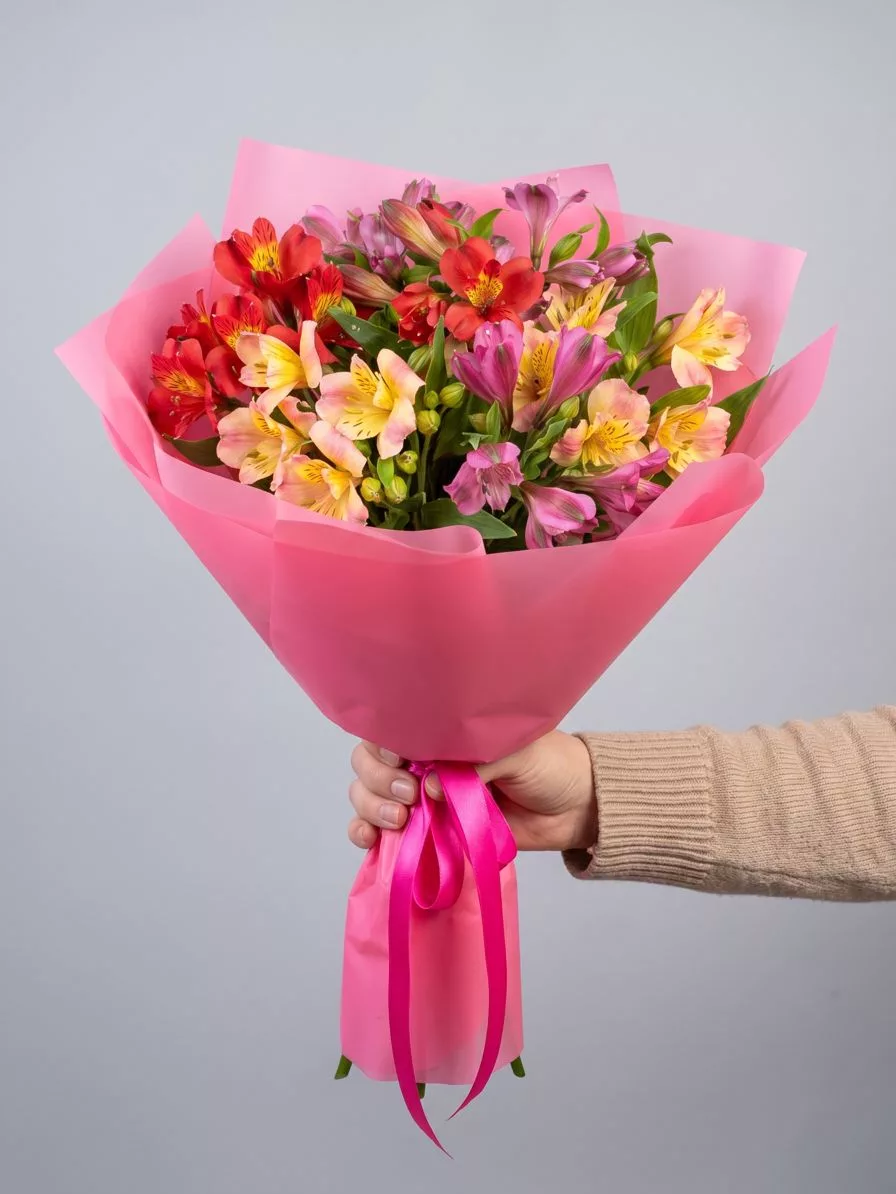
Not every flower that looks beautiful in a Saint Petersburg shop window is a sensible choice for a 460-kilometre journey. Roses travel well when the stems are cut correctly and the heads are kept cool, and Dutch spray roses in particular arrive in excellent condition because their smaller heads lose moisture more slowly than large-headed hybrid teas. Chrysanthemums are among the most reliable long-distance flowers we send — the stems are robust, the blooms do not bruise easily, and they hold their shape even after several hours in transit packaging. Alstroemeria is another strong choice, partly because the buds continue opening after delivery, so the recipient gets a bouquet that looks fresh for a full week. Flowers we are more cautious with on this route include open garden peonies in summer, which are fragile once fully open, and large open sunflowers, which can press against packaging and arrive with bent petals. Tulips in winter and early spring are fine as long as the order is placed for a morning departure, because tulips grow toward light and a long afternoon journey in a box can cause them to curve. Orchid stems, specifically cut cymbidium, travel exceptionally well and add a formal quality to arrangements sent to corporate addresses. When customers ask us to choose the bouquet, we default to combinations built around roses, chrysanthemums or alstroemeria for Kondopoga deliveries, because reliability over distance matters more than novelty.
Temperature and Seasonal Conditions That Affect Your Order
Kondopoga is further north than Saint Petersburg and sits close to a large lake, which keeps winters colder and summers shorter. In January and February, outdoor temperatures in Kondopoga regularly fall to minus fifteen or minus twenty degrees Celsius, and flowers exposed to that air for even a few minutes during handover can sustain frost damage. We pack winter bouquets in insulated sleeves and instruct couriers to keep the vehicle heated, but we also ask recipients to meet the courier at the building entrance rather than having the courier wait in the cold with an open car door. In summer, the opposite problem appears: temperatures in July can reach twenty-five degrees, and a bouquet sitting in a warm vehicle for six hours without climate control would arrive wilted. Our vehicles use active cooling during summer transits, and we ask customers not to order heat-sensitive flowers like open peonies or large open hydrangeas for afternoon delivery in July and August. Spring and autumn are the most straightforward seasons for Kondopoga deliveries — temperatures are moderate, road conditions are generally stable after the April thaw settles, and the widest range of flowers is available at the wholesale level. If you are ordering in late October or early November, be aware that the first hard frosts can arrive suddenly in Karelia, and we may contact you to adjust the packaging or delivery slot if overnight temperatures drop sharply between when you order and when the courier departs.
Ordering for Specific Occasions: Birthdays, Anniversaries and Celebrations
Russian birthday customs are worth understanding if you are ordering from outside the country. In Russia it is considered bad luck to congratulate someone before their birthday, which means same-day or on-the-day delivery is strongly preferred over early delivery. Customers ordering from abroad sometimes try to send flowers a day early to be safe with timing, but Russian recipients often find this uncomfortable. We recommend ordering for delivery on the exact birthday date and using our morning slot to ensure arrival before any planned celebration. For anniversaries, the flower count carries meaning in Russian tradition: even numbers of flowers are associated with mourning, so bouquets for celebrations are built with odd numbers of stems — five, seven, eleven, fifteen, twenty-five. We apply this automatically when building arrangements, but if you are ordering a specific quantity, choose an odd number. For corporate celebrations, white or cream roses combined with greenery like eucalyptus or ruscus are the standard choice in Kondopoga offices, and a box arrangement rather than a hand-tied bouquet is practical because the recipient does not need a vase immediately. For children's celebrations, bright gerberas in orange, yellow and pink are popular and the stems are short enough that children can hold the bouquet without difficulty. We can add a printed card with a message in Russian or English — specify the language when ordering.
What Information You Need to Have Ready Before You Order
A Kondopoga delivery that runs into problems almost always traces back to incomplete information at the point of ordering, not to a problem with the flowers or the route. The single most common issue is a phone number for the recipient that turns out to be switched off or on silent, which means the courier cannot reach the person and the delivery stalls in a parking lot. We require a working mobile number for the recipient and recommend giving a secondary contact — a family member or colleague at the same address — in case the primary number is unavailable. The full address must include the street name, building number, entrance number if the block has multiple entrances, floor and apartment number. In Kondopoga's older residential blocks, the entrance number is critical because buildings with four or five entrances have no visible addressing from the street. If the delivery is going to a workplace, we need the company name and a contact person who can meet the courier, because office receptionists in smaller cities do not always accept deliveries for unnamed recipients. The preferred delivery time should be given as a two-hour window rather than an exact minute, because road conditions on the M-18 can shift the arrival by thirty to forty-five minutes in either direction. If the occasion requires the flowers to arrive before a specific event — a dinner reservation, a ceremony — tell us the hard deadline when ordering so we can schedule the courier departure accordingly and flag the order for priority handling.
How Freshness Is Maintained from the Shop to the Recipient's Door
Flowers for Kondopoga deliveries are cut and conditioned on the morning of dispatch, not the previous evening. Conditioning means the stems are cut at an angle under water, placed in buckets with fresh water and flower food, and held in our cold room at between four and six degrees Celsius for at least two hours before packing. This process allows the stems to fully hydrate before the journey, which is what determines how long the flowers last after delivery — a well-conditioned rose that travels six hours in a cool vehicle will outlast a poorly conditioned rose that was only in water for twenty minutes. We pack the bouquets in aqua packs, which are small sealed water pouches attached to the stem ends, so the flowers continue receiving moisture throughout the transit. The outer packaging is a rigid box rather than a soft wrap for Kondopoga orders, because the longer journey increases the chance of the bouquet shifting and bruising against packaging. Roses are packed with their heads separated by tissue to prevent petal damage. When the recipient receives the flowers, we include a care card with instructions: re-cut the stems by one to two centimetres, place in clean water at room temperature, keep away from direct sunlight and heating radiators, and change the water every two days. Chrysanthemums and alstroemeria last seven to ten days with this care. Roses last five to seven days. These are honest figures based on the varieties we actually stock, not marketing estimates.
Ordering flowers to Kondopoga is straightforward once you understand the actual distances and timing involved. Place the order before noon for same-day delivery, have the full address and a working phone number ready, choose varieties that travel well over long distances, and give us a delivery window rather than an exact minute. The flowers leave our shop properly conditioned and travel in a temperature-controlled vehicle, so what arrives at the door is fresh, not tired from the road. If you are unsure about any part of the order — the right bouquet for the occasion, whether a specific address is in our zone, or how to write a card message in Russian — call or message us before placing the order rather than after. We deliver bouquets across Russia in 1–2 hours.
Frequently asked questions
Can I order flowers to Kondopoga for delivery the same day?
Yes, if you place the order before noon Saint Petersburg time. The courier departs in the early afternoon and arrives in Kondopoga in the late afternoon or early evening. Orders placed after noon are scheduled for the following morning. We recommend the morning slot for time-sensitive occasions like birthdays.
Do you deliver to addresses outside the city centre of Kondopoga?
We cover central Kondopoga including the main residential districts and office areas. Small settlements attached to the city administratively but located on rural roads further out are not always within our standard zone. Send us the full address before ordering and we will confirm whether it is reachable on your chosen date.
What happens to the flowers during the long drive from Saint Petersburg?
Flowers are conditioned in cold storage before packing, then placed in aqua packs that keep the stems hydrated during transit. The vehicle maintains a cool temperature throughout the journey. The bouquet is packed in a rigid box to prevent shifting. Properly conditioned flowers handled this way arrive in the same condition as a local delivery.
Why does the number of flowers in a bouquet matter in Russia?
Russian tradition associates even numbers of flowers with mourning rather than celebration, so bouquets for birthdays, anniversaries and other happy occasions are built with odd numbers of stems. We apply this automatically, but if you specify a quantity when ordering, choose an odd number — seven, eleven, fifteen — to match local custom.
What should the recipient do with the flowers immediately after delivery?
Re-cut the stems by one to two centimetres at an angle, place them in clean water at room temperature, and keep the bouquet away from direct sunlight and heating radiators. Change the water every two days. We include a printed care card with every Kondopoga delivery. Chrysanthemums and alstroemeria typically last seven to ten days with this care.
Ready to send a bouquet?
Pick a city, choose the flowers, and we will hand them over with a photo confirmation.
Choose a city →