
Flower Delivery in Leninsk-Kuznetsky: Zones, Timing and What to Expect
Customers ordering flowers to Leninsk-Kuznetsky for the first time usually ask the same two questions: will the bouquet actually arrive today, and will it look anything like the photo? Both are fair questions for a city of this size in Kemerovo Oblast, and both have straightforward answers if you know how courier logistics work here and which flower varieties survive a Siberian February without losing a single petal.
Which Parts of Leninsk-Kuznetsky We Deliver To
Leninsk-Kuznetsky is a compact industrial city, and most residential addresses fall within the standard delivery zone without any surcharge. The central districts around Lenin Street and the areas near the railway station are covered as a matter of course. Residential blocks in the northern and southern quarters — including the mikrorayons built during the Soviet mining expansion — are also within the regular zone, so the vast majority of customers ordering to a home address will not encounter any zone restriction. The areas that occasionally require extra coordination are those on the very edge of the city boundary, particularly some private house settlements that sit between Leninsk-Kuznetsky proper and the surrounding villages. If you are sending to a private home rather than a flat in a multi-storey building, it is worth specifying the full postal address including the street number and any building letter, because GPS navigation in these areas can be imprecise and couriers rely on written addresses. Industrial zone addresses — factories, administrative buildings attached to mining operations — are handled on a case-by-case basis depending on access restrictions at the site. When in doubt, paste the full address into the order form and the dispatch team will confirm coverage before charging you. The city is not large, so in most cases the answer is yes.
Bouquets we can deliver
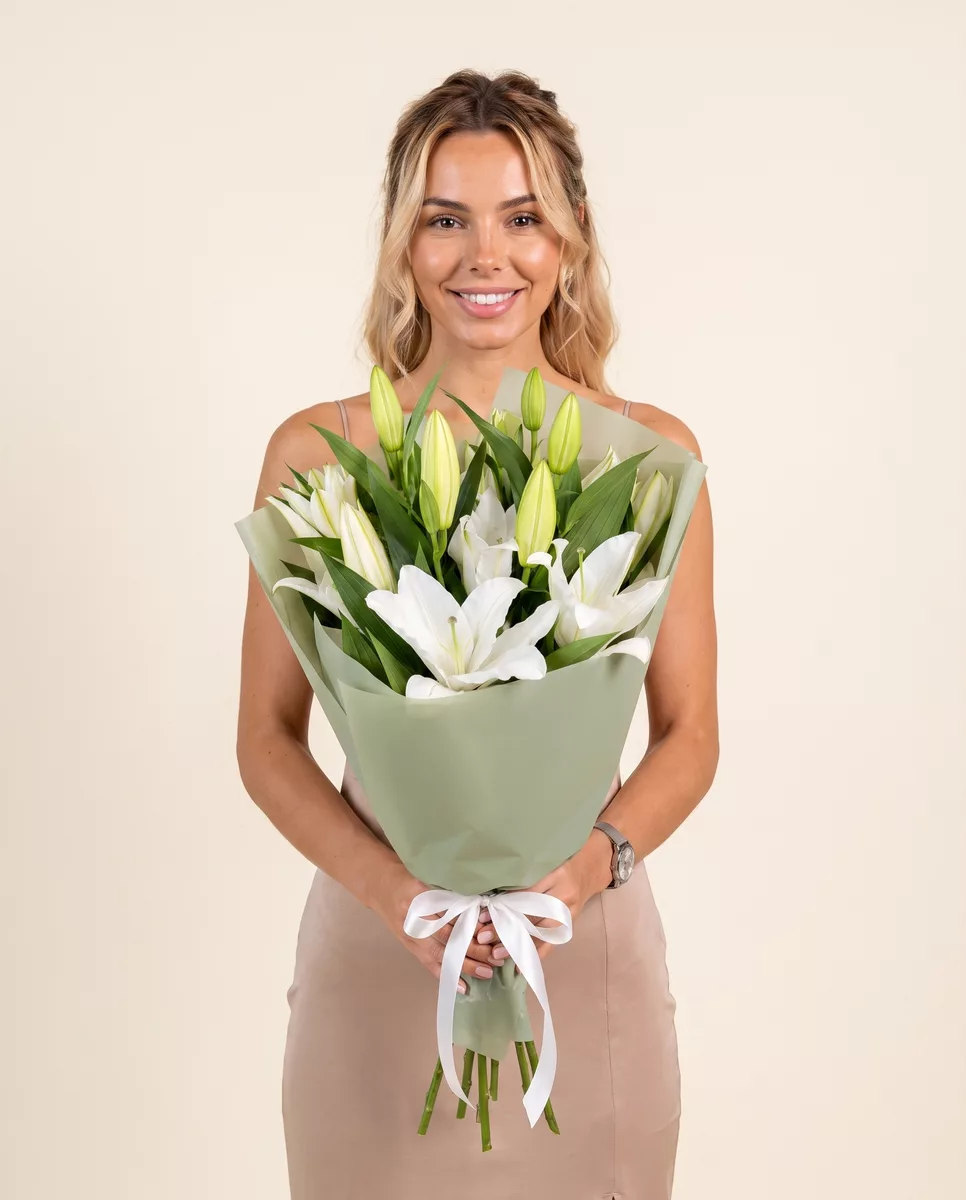
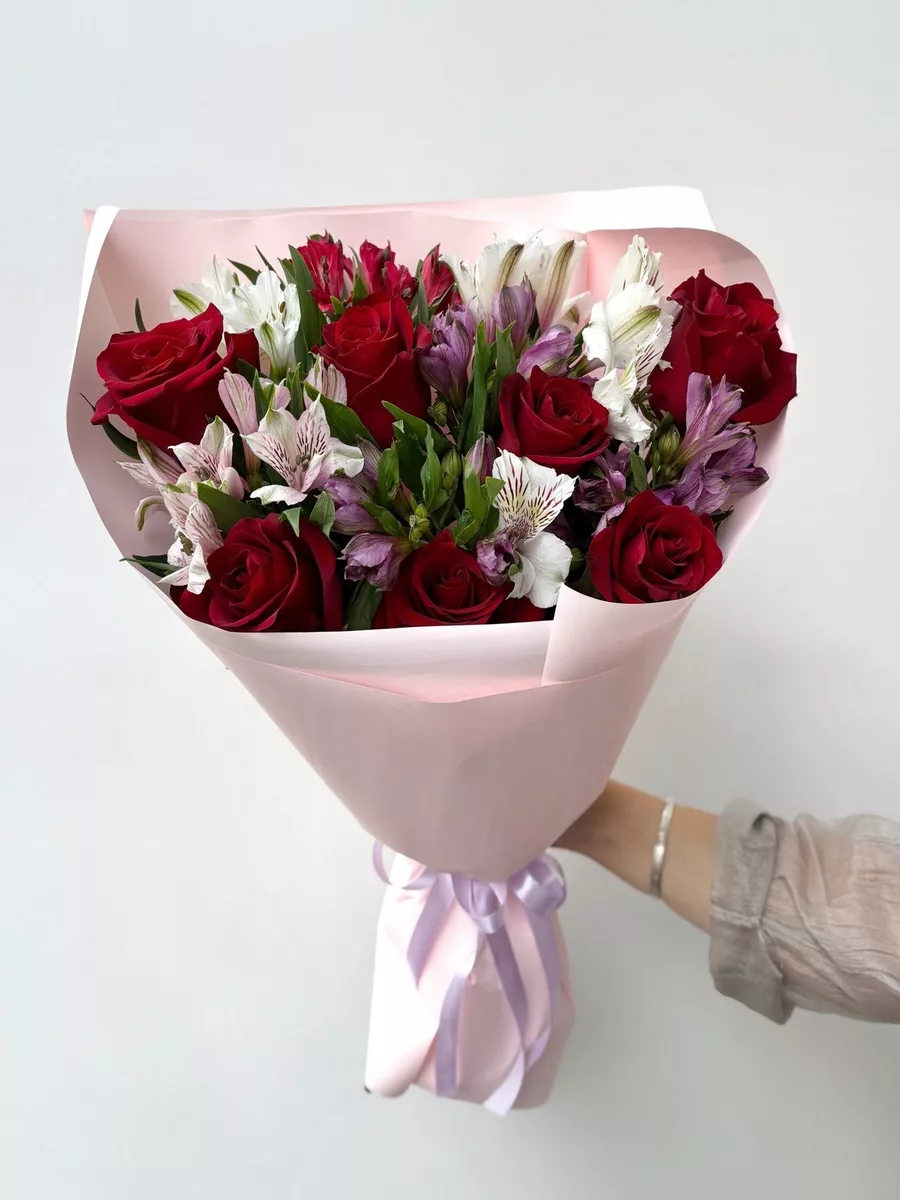
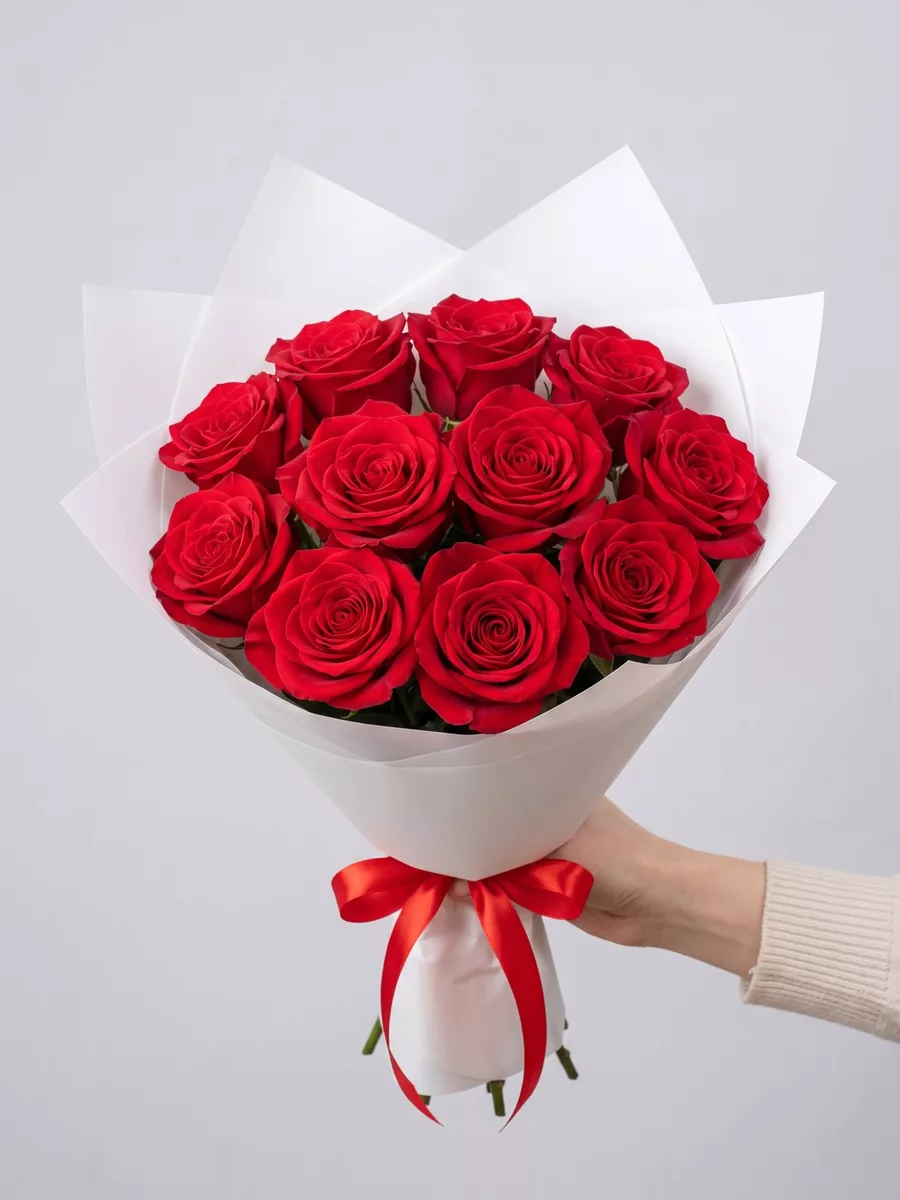

Delivery Timing: What One to Two Hours Means Here
The one-to-two-hour window that Five Flowers advertises is a realistic target for Leninsk-Kuznetsky, not a marketing claim padded with fine print. The city's road network is manageable and traffic congestion is nothing like a regional capital, so a courier starting from the assembly point can reach most addresses within the city in under an hour under normal conditions. The honest caveat is weather. Kemerovo Oblast winters are serious — temperatures regularly drop to minus twenty-five Celsius between December and February, and snowfall can slow road access in the private house zones mentioned above. During those conditions, the safe estimate shifts to ninety minutes to two hours, and we always tell customers this upfront rather than after the fact. The other variable is the time of day. Orders placed before noon on weekdays are assembled and dispatched fastest because florists are working at full capacity during morning hours when stems are freshest from the overnight conditioning. Orders placed after seven in the evening may be scheduled for early the following morning if the requested delivery slot falls outside operating hours. Same-day delivery is available until a cut-off time that you will see clearly on the order page — do not assume the cut-off is midnight, because for distant cities it is earlier. If you are ordering for a specific event time such as a birthday dinner, add a thirty-minute buffer to your chosen slot so the bouquet arrives before the moment rather than during it.
Which Flowers Travel Well to Leninsk-Kuznetsky in Winter
Siberian winters are the main reason experienced florists are selective about what they put in a long-distance bouquet. Roses travel well when they are properly conditioned and wrapped, but not all roses are equal. Spray roses — the multi-headed varieties — are sturdier than large single-headed garden roses and hold their shape better during temperature changes at the doorstep. Chrysanthemums are one of the most cold-tolerant cut flowers available and are a genuinely good choice for winter delivery in this region; they do not bruise in the cold the way tulips can. Tulips are popular in Russia and customers order them constantly, but they are delicate: a tulip left in minus-twenty air for even five minutes will show damage at the petal edges. When ordering tulips for winter delivery in Leninsk-Kuznetsky, ask specifically about the insulated packaging option. Alstroemeria is another reliable choice — the stems are strong, the flowers are compact, and the variety holds colour well even after a temperature shock. Gerbera daisies look spectacular in photos but their hollow stems make them more fragile than they appear, and they are better suited to spring and summer orders. Eustoma, sometimes called lisianthus, is a good middle-ground flower: it looks luxurious, it is more resilient than its appearance suggests, and it adds volume to a bouquet without adding fragility. For arrangements that need to survive a Siberian handover, a combination of spray roses, chrysanthemums and alstroemeria is a practical and attractive starting point.
Summer Orders and What Changes Between Seasons
Summer in Leninsk-Kuznetsky runs roughly from late May through August, and the logistics challenges flip completely from winter. Instead of cold damage, the concern becomes heat: cut flowers left in a warm car or at a doorstep in direct sunlight deteriorate within thirty minutes. The courier workflow adjusts accordingly — insulated cool boxes replace the thermal wrapping used in winter, and dispatch timing is tightened so that flowers spend the minimum time between the assembly point and the recipient's hands. Peonies are in season from late May through June and are extremely popular for this window; they are robust enough for summer delivery if they are kept cool in transit, and they open beautifully over two to three days after arrival. Sunflowers, which customers order heavily from July onward, are heat-tolerant and genuinely good summer choices — they do not wilt as quickly as softer flowers and they make a strong visual statement without requiring delicate handling. Hydrangeas are the one summer flower that requires extra care: they are thirsty, they droop quickly if the stems dry out, and they need to go straight into water after delivery. If you are ordering hydrangeas for a recipient who will not be home to receive them, reconsider the variety or arrange a specific handover time. Spring — April and May — is the tulip season, and this is when tulip orders are safest because the ambient temperature is cool enough to protect the petals without reaching the damaging cold of midwinter. Ordering tulips in April rather than January is a simple way to get a better result.
Packaging, Water and the First Hour After Delivery
A bouquet arrives looking its best when the recipient knows what to do in the first thirty minutes. This is not common knowledge outside of florist circles, and it is worth explaining plainly. Cut flowers are assembled with their stems trimmed at an angle and placed in a water-retaining foam or wrapped with a damp cloth inside the packaging. When the bouquet arrives, the recipient should unwrap it promptly — leaving flowers in packaging for more than an hour after delivery traps ethylene gas, which accelerates ageing. The stems should be re-cut at an angle under running water, removing about two centimetres, before placing the bouquet in a clean vase with fresh cool water. Tap water in Leninsk-Kuznetsky is hard — high in minerals — and while it will not kill the flowers, adding a small sachet of flower food (included with most orders) noticeably extends vase life by balancing the pH. Flowers should be kept away from radiators, which are working hard through the Siberian winter and can reduce vase life by half. A windowsill in January looks like a good spot but is actually one of the coldest surfaces in a room, which stresses flowers in a different direction. Room temperature, away from direct heat and direct cold, is the right placement. Roses and alstroemeria typically last seven to ten days under these conditions. Chrysanthemums can last two weeks. Tulips are shorter — five to seven days — but they continue to grow and open in the vase, which many recipients find pleasing.
Typical Ordering Mistakes and How to Avoid Them
The most common mistake customers make when ordering to Leninsk-Kuznetsky is entering an incomplete address. Russia uses a specific address format — city, street, building number, apartment number, entrance number and floor — and omitting the apartment number or entrance code means the courier has to call the recipient, which defeats the purpose of a surprise delivery. Fill in every field on the order form, and if the building has an intercom code for the entrance door, include it in the notes. The second frequent mistake is choosing a delivery slot without accounting for the recipient's schedule. Sending flowers to a workplace is efficient in terms of guaranteed reception, but many offices in Leninsk-Kuznetsky operate standard hours and close at six in the evening. A delivery scheduled for five-thirty to a business address is fine; one scheduled for seven in the evening is not. The third mistake is ordering a bouquet that is wrong for the season. Customers sometimes see a summer arrangement on the website and order it in January without realising that certain flowers in that photo are not available or would not survive winter transit. The order form will flag unavailable items, but if you are attached to a specific look, contact the team before placing the order to confirm what is in stock and what can be substituted without changing the overall feel. Finally, customers occasionally forget to specify whether the delivery is a surprise. If it is, do not include the recipient's phone number in the primary contact field — use your own number so the courier calls you, not the person you are surprising.
Russian Flower Customs Worth Knowing Before You Order
If you are not familiar with Russian flower-giving traditions, a few details are worth knowing so your order fits the occasion correctly. The most widely observed rule is that bouquets should contain an odd number of stems — one, three, five, seven, eleven, and so on. Even numbers are associated with mourning in Russian culture, so a bouquet of ten roses would strike most Russian recipients as odd or unsettling. This is not superstition that only older generations observe; it is genuinely widespread across all age groups in cities like Leninsk-Kuznetsky. When you see a bouquet described as containing fifteen or twenty-five stems, that is intentional. The second custom is that yellow flowers carry mixed associations. In some parts of Russian culture, yellow flowers — particularly yellow roses — are linked to separation or bad luck in relationships. This is not universal and plenty of people love yellow flowers without any concern, but if you are sending to someone you do not know well, a mixed palette or red, white and pink tones is a safer default. The third thing to know is that March 8th — International Women's Day — is the single busiest flower day of the year in Russia, far surpassing Valentine's Day. If you are ordering for March 8th, place your order at least two to three days in advance. Demand across the country spikes sharply, and delivery slots in cities like Leninsk-Kuznetsky fill up faster than customers expect. Planning ahead by even forty-eight hours makes a significant practical difference.
Ordering flowers to Leninsk-Kuznetsky is straightforward once you know the seasonal variables, the address format Russian couriers rely on, and which varieties hold up best in Kemerovo Oblast temperatures. The city is well within a manageable delivery radius, the road network is not complicated, and the one-to-two-hour window is achievable for most addresses under normal conditions. The decisions that make the biggest difference to the final result are the ones made before checkout: picking the right flower for the season, filling in a complete address, and choosing a delivery slot that matches the recipient's actual location and schedule. We deliver bouquets across Russia in 1–2 hours.
Frequently asked questions
Can you deliver flowers to a private house address in Leninsk-Kuznetsky, not just flats?
Yes, private house addresses are covered in most cases. Include the full street address with house number and any gate or yard details in the notes field. For settlements on the city boundary, the dispatch team will confirm coverage before processing payment. Providing a phone number for the recipient helps the courier navigate if GPS is imprecise in the area.
What happens to the flowers if the recipient is not home when the courier arrives?
The courier will call the contact number provided in the order. If there is no answer, the team will contact you as the sender to decide the next step — reschedule, leave with a neighbour if the recipient agrees, or hold for a new slot. Flowers are not left unattended outside in winter temperatures, as cold damage within thirty minutes is a real risk in Leninsk-Kuznetsky from November through March.
Is same-day delivery available for orders placed in the afternoon?
Same-day delivery is available up to a cut-off time shown on the order page — for Leninsk-Kuznetsky this is typically early to mid-evening rather than midnight. Orders placed after the cut-off are scheduled for the first available slot the following morning. If your order is time-sensitive, place it as early in the day as possible and select a specific delivery window rather than leaving the slot open.
Which bouquet works best as a gift for a colleague in a Leninsk-Kuznetsky office?
For a workplace setting, compact and self-contained arrangements work better than large loose bouquets that are difficult to carry home on public transport. A wrapped bouquet of spray roses, alstroemeria or chrysanthemums in an odd stem count is appropriate for most colleagues. Avoid strongly scented flowers like oriental lilies in office environments, as the fragrance can be overwhelming in a closed room.
How far in advance should I order for March 8th delivery to Leninsk-Kuznetsky?
Two to three days minimum, and earlier is better. March 8th is the peak flower day across Russia and demand is genuinely extreme — delivery slots fill across all cities well before the date. Ordering on March 6th or 7th is common but risky. If you want a specific time slot and a specific bouquet composition, placing the order on March 5th gives you the best chance of getting exactly what you want.
Ready to send a bouquet?
Pick a city, choose the flowers, and we will hand them over with a photo confirmation.
Choose a city →