
Flowers for a Russian Girlfriend: First Gift or Hundredth
Every week we get orders from men who are unsure whether a bouquet is too much, not enough, or simply the wrong flower for where things stand. In Russian dating culture, flowers are not decorative — they are a direct statement, and Russian women read them with precision. The variety, the size, the colour and even the number of stems all carry meaning that a florist on the shop floor notices the moment a customer describes his situation. This article covers both ends of the timeline: the first bouquet you hand over on a first date and the delivery you arrange for a woman who already knows every corner of your taste.
Why Flowers Matter More in Russian Dating Than You Might Expect
In many Western countries, flowers have become an occasional gesture reserved for birthdays or apologies. In Russia, bringing flowers on a date — especially a first date — is still a baseline expectation rather than a romantic extra. A man who arrives empty-handed is noticed, and not positively. This is not about expense; a single well-chosen stem of a garden rose or a small bunch of spray roses communicates attention and preparation far better than an oversized bouquet bought in panic from a petrol station. The custom has roots in Soviet-era courtship, when flowers were one of the few personal gifts freely available, and the habit has carried forward intact into contemporary Saint Petersburg and Moscow. What has changed is the sophistication: women who grew up surrounded by flowers can immediately tell a florist-assembled bouquet from a supermarket bundle, and they notice whether the stems are fresh, whether the foliage has been properly stripped and whether the wrapping suits the flowers inside. Practically speaking, this means the quality of the shop matters as much as the gesture itself. Flowers that arrive with bent necks, yellowing leaves or condensation damage from poor cold-chain handling undermine the message entirely. If you are ordering delivery, check that the shop operates refrigerated transport and states a delivery window in hours, not days. A bouquet assembled in the morning and delivered by early afternoon is still fresh; one that sat in a warm van for six hours is not, regardless of how it looks in the photograph on the website.
Bouquets we can deliver
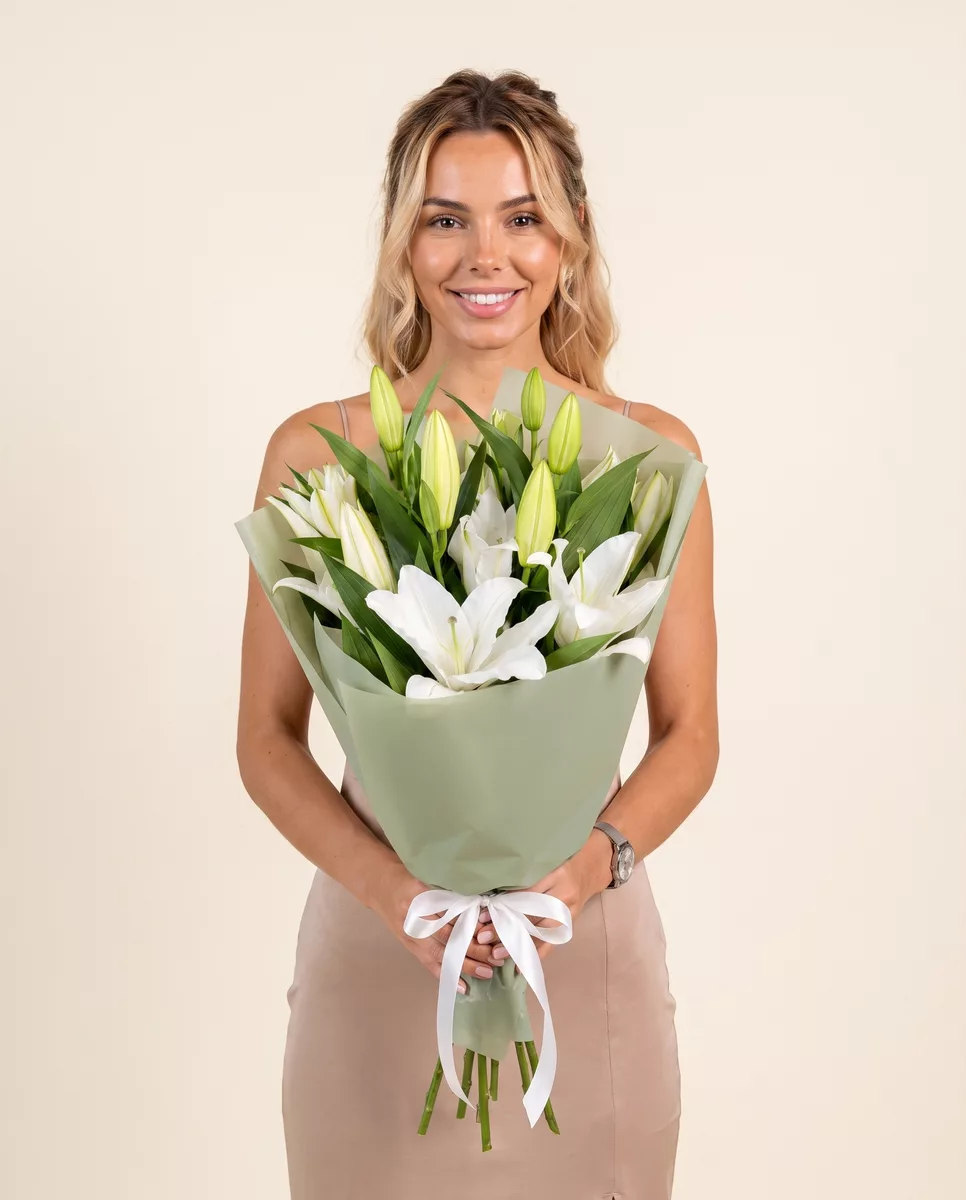
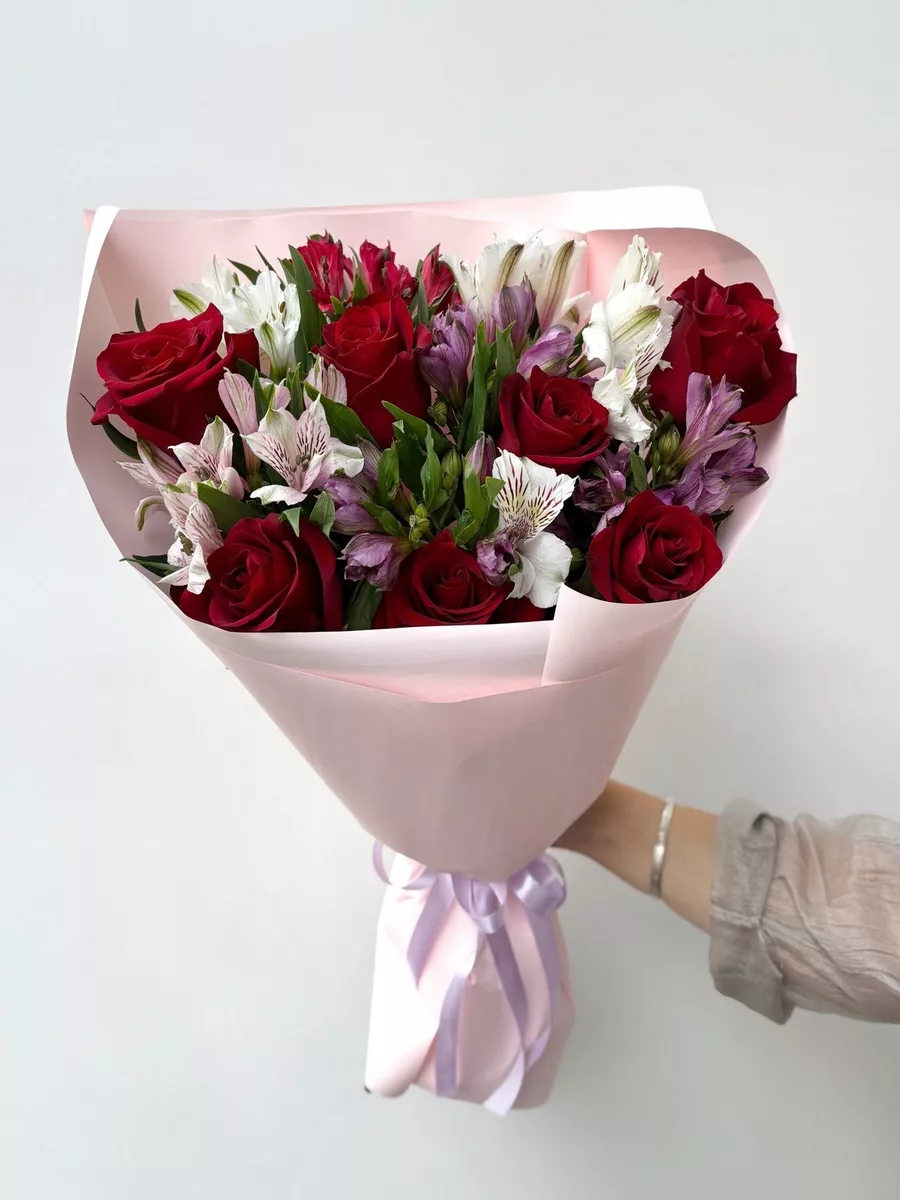
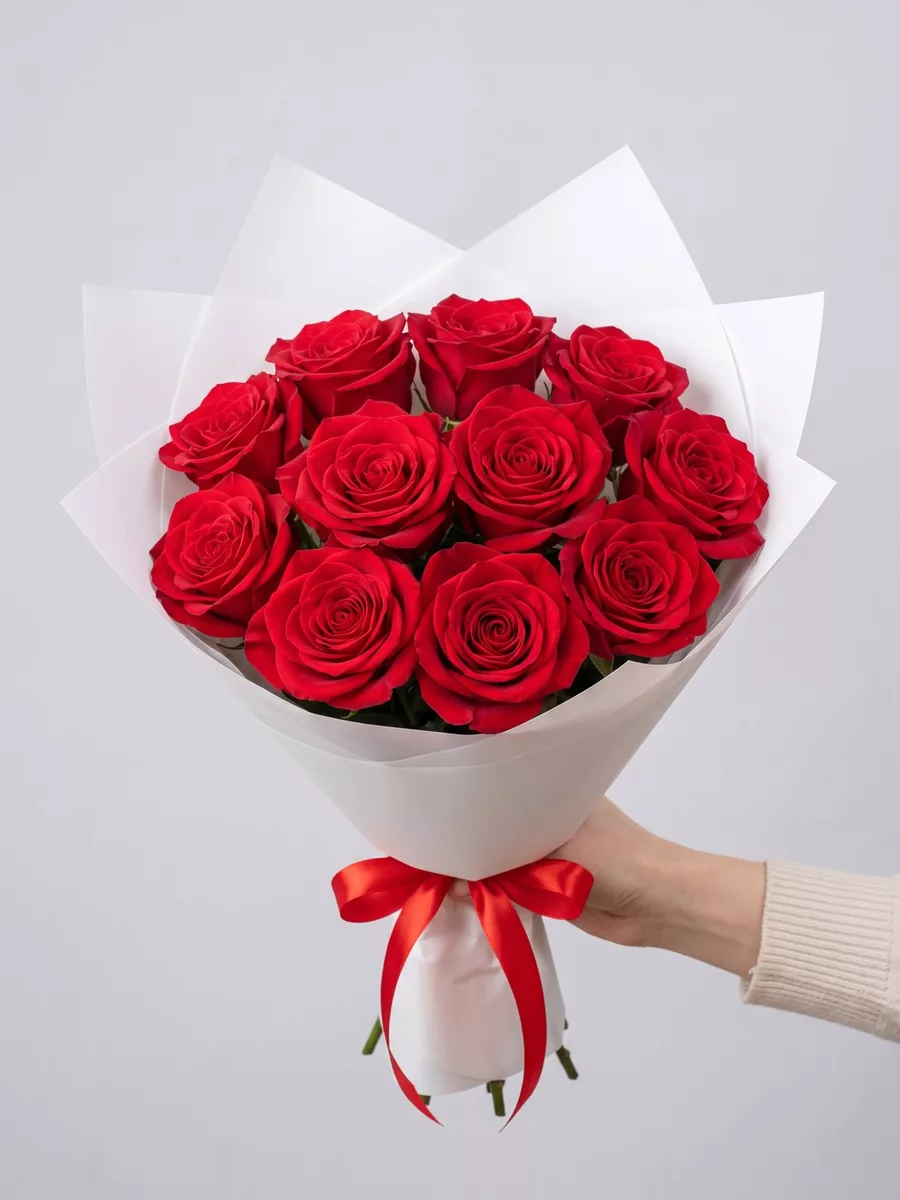

The First Bouquet: What to Choose When You Do Not Know Her Yet
For a first meeting, the safest and most widely appreciated choice in Russia is a small, clean bouquet of roses — specifically garden roses or single-variety spray roses rather than the stiff, long-stemmed greenhouse roses that read as formal rather than warm. Five to seven stems is the right quantity: enough to be a genuine gift, not so many that it feels like a declaration of love on a first coffee. Pale pink, cream and white tones work across almost all ages and personal styles; red roses on a first date read as very intense and are better saved for when you know the relationship is heading somewhere serious. Ranunculus are an excellent alternative in late winter and spring — they are full-petalled, available in soft colours and hold well at room temperature for the duration of a date. Tulips work well in their season, roughly February through April, but they continue to grow after cutting and can droop if the stems are not re-cut and placed in water promptly, so they are better as a delivered gift to her home than as something she carries around for three hours. Avoid lilies for a first bouquet: the scent is strong and polarising, the pollen stains fabric, and they require a vase immediately. Whatever you choose, have the florist wrap it simply — kraft paper or a single sheet of matte wrapping rather than cellophane — because over-packaged flowers feel impersonal. The stems should be wet-wrapped so they stay fresh in her hands.
The Odd-Number Rule and Other Details That Signal You Know the Culture
The single most important practical rule in Russian flower-giving is the odd-number convention. Bouquets of even numbers of flowers are associated with mourning and are brought to funerals or left at graves. Giving a girlfriend an even-numbered bouquet is a serious social mistake that she will notice immediately, even if she is too polite to say so. Always count: three, five, seven, nine, eleven, fifteen or twenty-five stems are all correct. One stem is also acceptable and can be quietly elegant. When ordering online, confirm the stem count explicitly in the comments field, because some shops default to round numbers like ten or twenty. Colour carries meaning too, though it is less rigid than the number rule. Red signals passion and is appropriate once the relationship is established. White suggests sincerity and is well-received at most stages. Yellow roses have a complicated reputation in Russia — older generations associate them with separation or jealousy, though younger women in their twenties and thirties are often simply delighted by them as a colour. If you are unsure of her generation or disposition, skip yellow for the first few gifts and introduce it later when you can gauge her reaction. Pink in all its shades is universally safe and reads as affectionate without being overwhelming. Mixed bouquets with many varieties can be beautiful, but they require a florist with genuine composition skill; a poorly mixed bouquet looks chaotic rather than abundant, so if you are ordering remotely, either trust the florist's house style or specify a single variety.
Long-Term Relationships: How the Bouquet Should Evolve
Once you are past the early months, a girlfriend who has been receiving flowers from you regularly will notice if the bouquets never change. This is one of the most common complaints we hear from women whose partners order the same red roses on the same schedule indefinitely. The gesture becomes administrative rather than attentive. The solution is not to spend more but to vary deliberately. Peonies in May and June are enormously popular in Saint Petersburg and signal that you are paying attention to the season. Garden roses in their peak summer form — full-headed, fragrant varieties like David Austin types — are a significant step up from standard greenhouse roses and feel genuinely special. Anemones, available in autumn and winter, have a graphic quality and deep jewel tones that photograph beautifully and feel current rather than conventional. In winter, amaryllis stems are dramatic and long-lasting, and a single stem in a simple wrapping is a confident, considered choice. For a long-term partner, bouquet size can grow modestly — fifteen to twenty-five stems is appropriate for anniversaries or significant occasions — but the composition matters more than volume. A tight, well-structured bouquet of fifteen garden roses in two toning shades is more impressive than a loose mass of twenty-five mixed stems. Also consider the delivery timing: a bouquet that arrives at her workplace during the day, in front of colleagues, carries social weight that an evening home delivery does not. Both are valid; they simply communicate different things.
Delivery Logistics When She Is Not Expecting It
Surprise delivery is one of the most effective romantic gestures precisely because it requires planning rather than impulse. To do it well, you need her address confirmed, a delivery window that fits her schedule, and a shop that actually meets its stated timing. A bouquet that arrives two hours late because of a vague delivery estimate defeats the surprise. When ordering a surprise delivery, specify the earliest acceptable arrival time and ask whether the shop will call ahead or simply ring the doorbell — in a Russian apartment building, a courier ringing an intercom without warning can cause confusion, particularly if she is not expecting anyone. Most good shops will send an SMS or a message to the recipient a short time before arrival, which is both practical and builds anticipation. Temperature matters significantly for surprise deliveries. In Saint Petersburg, winter temperatures drop well below freezing, and flowers in transit need to be protected from cold air for even a short walk from a vehicle to a door. Roses and ranunculus are more cold-sensitive than, say, chrysanthemums or carnations; a reputable shop uses insulated packaging in cold weather. In summer, the risk reverses: a bouquet left in a hot entrance hall while she is out for an hour can wilt badly. For summer surprises, coordinate timing so the flowers arrive when she is home or at a location with air conditioning. Always include a card — not a printed generic message but a specific note you write yourself. Florists see hundreds of orders a week, and the ones that clearly have a personal message written by the sender are the ones that get remembered by the recipient.
Mistakes That Undercut the Gesture, and How to Avoid Them
The most frequent mistake we see is ordering on the day with no lead time and accepting whatever is available. A shop that has had your order since morning can source the right varieties, assemble carefully and schedule a clean delivery window. An order placed an hour before you need it often results in substitutions, rushed wrapping and a courier who is already running behind. Give at least three to four hours for a same-day order, and twenty-four hours if you want a specific variety or a more elaborate composition. The second common mistake is ignoring stem condition when accepting a bouquet in person. Before you walk out of any shop, look at the stems where they were cut: they should be pale and clean, not brown or slimy. Check the outermost petals on roses — some browning of the guard petals is normal and those are typically removed, but if the inner petals are already soft, the flower is past its best. Leaves should be green and firm, not yellowing. A good florist will not be offended if you check; a florist who is offended by the question is telling you something. The third mistake is assuming that a large spend compensates for a generic choice. A hundred-stem red rose arrangement delivered to a woman who has mentioned she finds red roses clichéd is a hundred-stem miss. Listen across your conversations for what she notices — in a market, in a garden, in a restaurant — and let that inform your order. Florists can work with a description: tell us what she likes and we will find the flower that fits.
Flowers for a Russian girlfriend work best when they are specific rather than grand. The variety, the stem count, the timing of delivery and the freshness of the flowers all communicate something she will register, often without consciously analysing it. A seven-stem bouquet of cream garden roses delivered to her office at noon on a Tuesday says more than a rushed armful of whatever was left at the end of a long day. Start with varieties that hold well and read clearly — roses, ranunculus, tulips in season — and build toward more personal choices as you understand her taste. Count the stems, keep them odd, and let the florist know the occasion so the composition fits the moment. We deliver bouquets across Russia in 1–2 hours. We deliver bouquets across Russia in 1–2 hours.
Frequently asked questions
Is it really necessary to bring flowers on a first date in Russia?
It is not a legal requirement, but it is a strong cultural expectation. Arriving without flowers on a first date is noticed and often interpreted as indifference or poor preparation. A small, fresh bouquet of five to seven stems costs less than most dinner starters and carries significant social weight in Russian dating culture. It signals that you planned ahead.
Why do Russians avoid even numbers of flowers?
Even-numbered bouquets are associated with mourning in Russian tradition and are brought to funerals or placed at graves. Giving a girlfriend an even number of stems is considered a serious faux pas. Always count before ordering or accepting a bouquet. Odd numbers — five, seven, nine, eleven, fifteen — are correct for any celebratory or romantic occasion.
Are yellow roses really a bad idea for a Russian girlfriend?
Among older generations, yellow roses carry associations with jealousy or the end of a relationship. Women in their twenties and thirties are often less superstitious about this and may simply enjoy the colour. If you are uncertain of her views, avoid yellow for the first few gifts and introduce it later once you have a sense of whether she holds the traditional association.
How do I make sure a surprise delivery actually arrives fresh?
Order at least three to four hours in advance, confirm the delivery window in hours not days, and check that the shop uses refrigerated or insulated transport in extreme temperatures. In winter, ask about cold-weather packaging. In summer, coordinate timing so the bouquet does not sit in a warm entrance hall. Specify a personal card message rather than a generic printed note.
Which flowers last longest if she does not have a vase ready immediately?
Chrysanthemums, spray roses and carnations are the most durable and tolerate a delay before reaching water. Standard roses and ranunculus need water within a few hours of delivery to stay upright. Tulips continue growing after cutting and should go into water as soon as possible. For surprise deliveries to a workplace, wet-wrapped stems buy extra time before she gets home.
Ready to send a bouquet?
Pick a city, choose the flowers, and we will hand them over with a photo confirmation.
Choose a city →