
Flowers for a Russian Neighbor: Small Bouquets, Real Occasions
Neighbors in Russia occupy a specific social category that most outsiders underestimate. They are not close friends, but they are not strangers either — they share a stairwell, a courtyard, sometimes a wall. Gifting flowers to a neighbor is a recognized gesture in Russian daily life, and it follows its own unwritten rules about size, occasion and timing. Get those rules wrong and a kind impulse can feel either too grand or too stingy. This article explains the occasions that actually call for a bouquet, the varieties that fit an informal relationship, and the practical details worth confirming before you place an order.
Why Neighbors Exchange Flowers in Russia at All
The tradition has roots in Soviet-era apartment culture, where neighbors in multi-storey buildings shared common spaces, helped each other with childcare and watched over each other's flats during holidays. That proximity created a layer of social obligation that persists today, even in newer residential complexes. Flowers became the standard token for marking moments without crossing into the intimacy of a gift card or a bottle of wine. The gesture says: I noticed, I am glad, we are on good terms — nothing more and nothing less. Russians read that message clearly, and most appreciate it precisely because it does not demand a response beyond a smile and a thank you at the door. If you are not Russian yourself and you have moved into a Saint Petersburg building, giving a small bouquet to a long-standing neighbor is one of the fastest ways to establish goodwill. The reverse is equally true: if a Russian neighbor brings you flowers, they are signaling that they want a cordial, low-maintenance relationship. The exchange is not about affection in the way birthday flowers between close friends might be. It is about acknowledging shared space and mutual respect. Understanding this distinction matters when you choose the bouquet, because overshooting the occasion — arriving with two dozen long-stemmed roses — creates awkwardness rather than warmth. The goal is always a bouquet that feels considered but not excessive.
Bouquets we can deliver



The Occasions That Actually Prompt a Neighbor Bouquet
The most common trigger is a neighbor's birthday, especially for an elderly woman who has lived on your floor for years. Russians almost universally know when their immediate neighbors celebrate, because stairwell conversations and thin walls make it obvious. A bouquet delivered or handed over on that morning is expected and warmly received. New Year is the second major occasion: many Russians give small gifts and flowers to neighbors in the final days of December as a general goodwill gesture before the holiday. International Women's Day on the eighth of March is equally significant — in Russia it functions as a broad celebration of all women, not just romantic partners or mothers, and a male neighbor giving flowers to a female neighbor on that date is entirely normal and carries no romantic implication. Moving into a new flat is a less obvious but genuinely common occasion: a new resident bringing a small bouquet to an immediate neighbor when introducing themselves is seen as considerate and sets a positive tone from the start. Housewarming visits work in the other direction too — a neighbor invited to see a newly renovated flat often arrives with flowers rather than a houseplant, because flowers require no ongoing care from the recipient. Finally, a neighbor returning from a long hospital stay or a difficult period sometimes receives flowers simply as a welcome-back gesture. None of these occasions calls for anything elaborate, which is exactly why florists who understand the context will steer you toward compact, unfussy arrangements.
Bouquet Size and Composition That Fits the Relationship
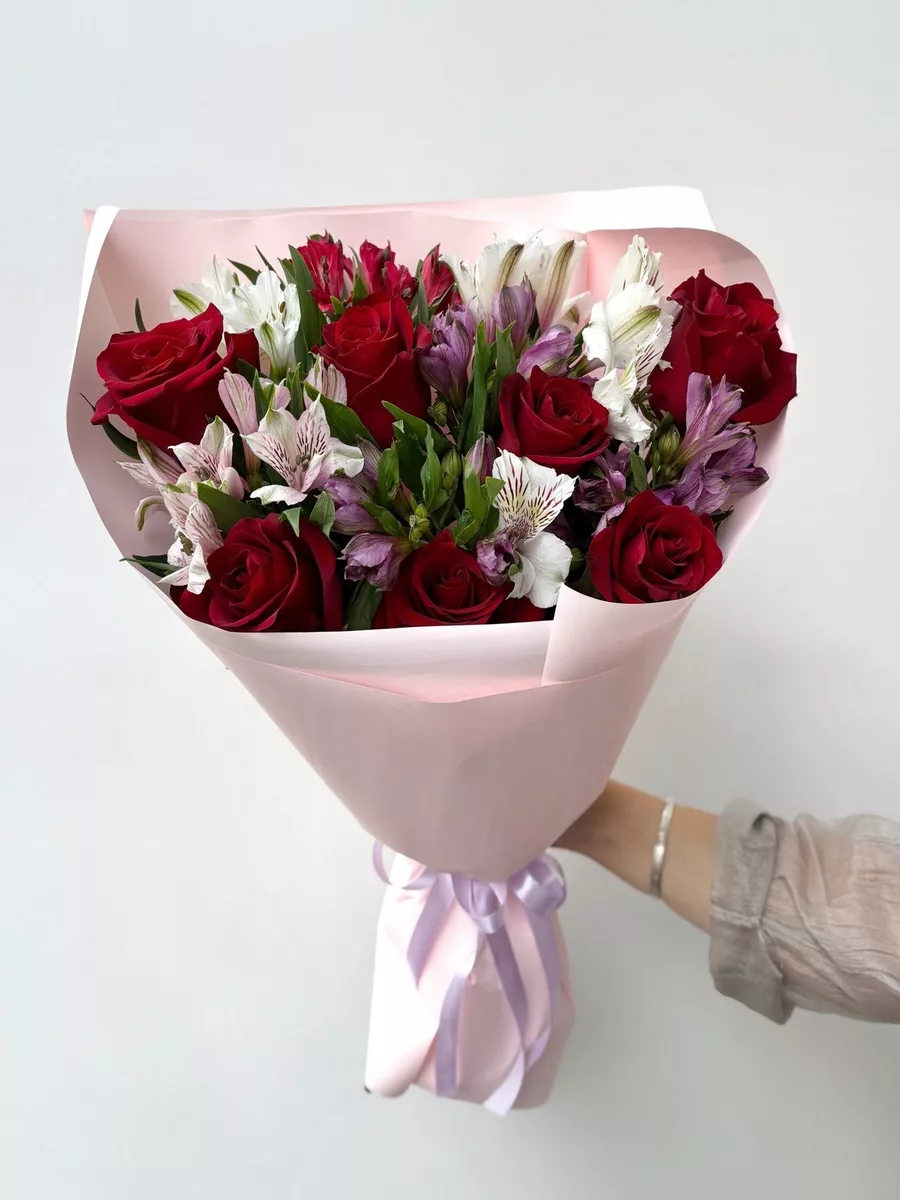
The working rule is five to seven stems for a neighbor, rarely more than nine. Single-variety bouquets in this range look intentional rather than thrown together, and they are easy to arrange in a standard kitchen vase without any effort from the recipient. Spray chrysanthemums are one of the most reliable choices: a single branch carries multiple blooms, the bouquet looks full at five stems, and the variety holds well at room temperature for seven to ten days without special care — important when you do not know whether the neighbor has a cool spot to keep flowers. Alstroemeria works on the same logic: compact clusters, long vase life, available year-round in yellow, pink, coral and white. For a more seasonal feel in spring, ranunculus in peach or cream reads as fresh and thoughtful without being showy. Avoid flowers that carry strong cultural weight in the wrong direction: yellow flowers are sometimes associated with separation in older Russian tradition, so if your neighbor is of an older generation, white, pink or mixed pastel arrangements are safer. An odd number of stems is the correct choice in Russia — even numbers are reserved for mourning occasions. Wrapping matters too: kraft paper or plain cotton ribbon rather than elaborate cellophane towers signals that you understand the informal register of the gesture. Ask the florist to keep greenery minimal — a few eucalyptus sprigs or a handful of pistache leaves are enough — because heavy foliage can make a small bouquet look like a garden cutting rather than a considered gift.
Seasonal Varieties Worth Requesting by Name
Knowing specific variety names helps you order with confidence rather than leaving everything to chance. In winter, from November through February, freesia is an excellent neighbor bouquet flower: the stems are slender, the scent is present but not overpowering in a small apartment hallway, and five stems in white or lilac look polished without being formal. Waxflower is another winter option — tiny clustered blooms on branching stems, long-lasting and unfussy, available in white and pink. In March and April, tulips are the obvious choice and they are correct: a bunch of seven single-colour tulips, particularly in white, salmon or pale violet, is exactly what the occasion calls for and what most Russian recipients expect around Women's Day. From May onward, lisianthus becomes available in reliable supply; its layered petals give it visual complexity, and it lasts well in warm spring apartments. Summer brings gerbera daisies, which are cheerful, sturdy and inexpensive in season — five or seven gerberas in a single color look clean and upbeat, appropriate for a birthday or a welcome-back gesture. In September and October, solidago combined with spray roses makes a compact autumn arrangement that suits the mood of the season without veering into anything heavy or funereal. The key across all seasons is to request flowers that tolerate the transit from the delivery vehicle to a warm stairwell: varieties with woody or semi-woody stems, or those bred for commercial vase life, are always safer than delicate garden flowers in transit.
Delivery to an Apartment Building: What to Confirm Before Ordering
Delivering to a residential building in Saint Petersburg involves details that customers frequently overlook. The first is intercom access: most apartment buildings have a door code or a video intercom, and if the recipient is not expecting the delivery, the courier cannot enter. Either inform your neighbor that a bouquet is coming, or provide the building door code when placing the order. The second detail is floor and flat number written precisely — buildings in Saint Petersburg often share a street address across multiple entrances, and the entrance number is a separate field that matters. A courier arriving at entrance one when the recipient lives in entrance four loses significant time, and flowers left in a warm stairwell for twenty minutes in summer will arrive wilted. Temperature is a real concern from June through August: the interior of a delivery vehicle is climate-controlled, but the walk from the vehicle to the flat is not, and a bouquet of ranunculus or tulips can show heat stress within minutes of exposure to direct sun. Ordering delivery for morning hours, before eleven, reduces this risk considerably. In winter the opposite problem applies: frost damage can occur on a stem within a few minutes below minus ten Celsius, so the florist should wrap the bouquet in insulating paper rather than open cellophane. When ordering for a neighbor rather than yourself, specify that the recipient may not be expecting the delivery — a good florist will note this and instruct the courier to call ahead rather than simply ring the intercom and leave.
Common Mistakes and How to Avoid Them
The most frequent mistake is ordering a bouquet sized for a romantic occasion when the relationship is neighborly. A large arrangement of long-stemmed roses or an elaborate mixed bouquet with imported tropical flowers lands awkwardly at a neighbor's door — it creates a social imbalance that the recipient then has to manage. The second mistake is sending flowers without any note at all. Even a brief handwritten card reading 'Happy birthday from flat fourteen' clarifies the gesture and prevents confusion, especially if the recipient is elderly and may not immediately recognize who sent the delivery. Ordering the wrong color for the occasion is a subtler error: bright red flowers in any variety read as romantic in Russian culture, regardless of the relationship, so red should be avoided entirely for neighbor gifts unless you know the person very well. Forgetting the odd-number rule is a mistake that Russians notice immediately — if you order six stems, ask the florist to add one more or remove one; most will do this without hesitation. Timing errors are also common: ordering same-day delivery for a Women's Day bouquet on the morning of the eighth of March, when demand across the city peaks sharply, risks late arrival or substituted varieties. Ordering the evening before and scheduling morning delivery is the more reliable approach for major calendar dates. Finally, customers sometimes choose flowers based on their own preferences rather than the recipient's — a neighbor who keeps a very tidy, minimal flat will appreciate a single-variety bouquet in a neutral color far more than an exuberant mixed arrangement that clashes with her interior.
A neighbor bouquet in Russia is a small act with a clear social function: it marks an occasion, acknowledges a shared space and keeps the relationship on warm, uncomplicated terms. Getting it right means choosing a compact, odd-numbered arrangement in a variety that travels well and carries no unintended symbolism, confirming the building access details before ordering, and timing delivery to avoid peak heat or peak demand. Five to seven stems of spray chrysanthemums, alstroemeria, freesia or seasonal tulips will serve the occasion correctly in almost every case. The gesture does not need to be elaborate — it needs to arrive fresh, on time and in the right register for the relationship. We deliver bouquets across Russia in 1–2 hours. More on this in Yellow Flowers in Russia: The Superstition Explained. We deliver bouquets across Russia in 1–2 hours.
Frequently asked questions
Is it appropriate to give flowers to a male neighbor in Russia?
It is less common but not unusual, particularly for a birthday or a welcome-back gesture after illness. Choose a neutral arrangement — white or green tones, unfussy varieties like spray chrysanthemums or lisianthus — and keep the bouquet small. Avoid anything that reads as romantic in color or composition, and the gesture will be received as friendly and considerate.
How far in advance should I order for Women's Day delivery to a neighbor?
Order at least the evening before, ideally two days ahead. The eighth of March is the single busiest delivery day of the year in Russia, and same-day orders placed after nine in the morning frequently encounter variety substitutions or delayed windows. Scheduling a morning delivery slot the day before removes most of the risk and ensures the bouquet arrives fresh.
Can I send flowers to a neighbor anonymously, without a card?
You can, but it is not advisable in a neighborly context. An anonymous bouquet creates uncertainty — the recipient may wonder who sent it and why, which is the opposite of the easy goodwill you are trying to establish. A brief card with your flat number and a one-line message resolves the ambiguity immediately and makes the gesture land as intended.
What if I do not know my neighbor's birthday or any specific occasion?
No specific occasion is required. In Russia, flowers given simply as a neighborly hello when moving in, or as a seasonal gesture around New Year, are entirely normal. Frame it plainly — 'Happy New Year from next door' — and the absence of a named occasion will not feel strange. The gesture itself communicates goodwill without needing a formal pretext.
Are there flowers I should definitely avoid for a neighbor gift in Russia?
Avoid yellow flowers if your neighbor is over sixty, as older generations sometimes associate yellow with parting. Avoid red flowers in any variety, as they read as romantic. Even numbers of stems are associated with mourning and should be avoided entirely. Beyond these points, most common florist varieties are appropriate — the size and presentation matter more than the specific flower.
Ready to send a bouquet?
Pick a city, choose the flowers, and we will hand them over with a photo confirmation.
Choose a city →