
Flowers for a Russian Anniversary: Which Years Have Special Meaning
Customers ordering anniversary flowers in Russia often ask the same question: does the year actually matter, or is any bouquet fine? The year matters a great deal. Russian anniversary culture assigns specific names and symbolic materials to key milestones, and those names quietly dictate which flowers land well and which feel like a missed opportunity. A florist who has packed hundreds of anniversary orders knows the difference between a couple who lights up when the bouquet arrives and one who politely thanks you while clearly expecting something else. This article maps the milestones Russians actually celebrate — from the first year through to fifty — to the flower varieties, stem counts and timing details that make each delivery feel considered rather than generic.
Why Anniversary Names Shape Flower Choices in Russia
Russia follows a system of named anniversaries that most customers absorb from family tradition rather than any written rulebook. The names come from the symbolic material associated with each milestone — paper, wood, crystal, silver, gold — and those materials carry colour and texture associations that experienced florists translate directly into flower selection. A paper anniversary suggests delicacy and lightness; a silver anniversary calls for cooler tones and structured stems. Customers who ignore the system and order a generic red rose bouquet every year are not wrong, but they are leaving meaning on the table. The milestones that Russians treat as genuinely significant are the first year, five years, ten years, fifteen years, twenty-five years and fifty years. Smaller years — two, three, seven — exist in the naming system but rarely generate the same ceremonial weight or the same budget. Understanding which milestones matter most helps you plan delivery timing correctly, because a ceremonial anniversary order needs to arrive before the celebration begins, not during dinner. At Five Flowers we see anniversary orders spike around Saturday mornings for exactly this reason: couples celebrate in the evening and want flowers visible in the home from mid-morning onward. Booking a two-hour delivery window that lands between ten and noon on the day gives the recipient time to arrange the bouquet, photograph it and have it as a backdrop for the event. That timing detail is as important as the variety choice itself.
Bouquets we can deliver



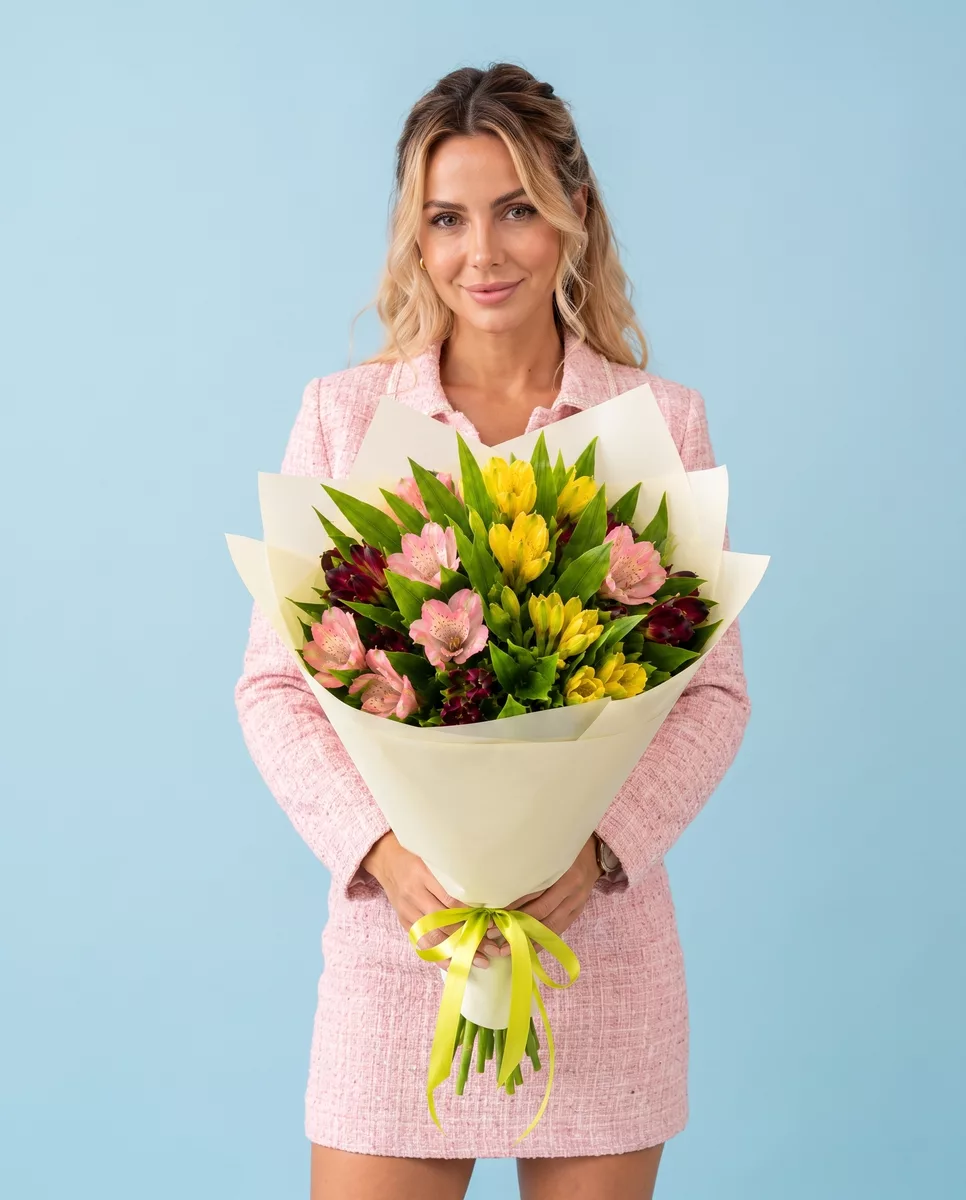
The First Year: Paper Anniversary and What That Actually Means
The first wedding anniversary in Russia is called the calico or paper anniversary, depending on regional tradition, and it marks a year that many couples consider more emotionally charged than the wedding day itself — the proof that the marriage works in ordinary life, not just in celebration. Florists who understand this order ranunculus, sweet peas and anemones rather than reaching immediately for roses. These varieties have a papery, tissue-thin petal quality that references the anniversary name without any explanation needed. Ranunculus in particular — varieties such as Cloni and Elegance — have layered petals that unfurl like folded paper and hold well for four to five days in a cool room. Sweet peas are more fragile, lasting two to three days, so they work best when delivery is timed for the morning of the anniversary itself rather than the day before. Colour palette matters here: whites, creams and the palest blush pinks read as celebratory without the heaviness of deep reds. A bouquet of twenty-five stems mixing ranunculus and sweet peas with a few stems of white lisianthus as filler gives volume without looking inflated. The most common mistake on first-anniversary orders is choosing flowers that photograph beautifully in a shop but arrive wilted because the customer ordered same-day delivery too late in the afternoon. Sweet peas cut in the morning and delivered by noon will look entirely different from the same variety cut at noon and delivered at six in the evening, especially in summer when Saint Petersburg temperatures climb above twenty degrees.
Five Years: The Wooden Anniversary and Flowers With Structure
Five years is called the wooden anniversary in Russia, and wood implies durability, grain, weight — something built to last. The flower choices that resonate here are stems with visible structure: sunflowers, protea, anthuriums and large-headed garden roses rather than spray varieties. Sunflowers are the most direct translation — their sturdy stems and bold disc centres read as solid and warm, and a mono-bouquet of fifteen to twenty-one sunflowers is both affordable and visually strong. Odd numbers matter in Russian gifting culture: even numbers of flowers are associated with mourning, so florists always count carefully before wrapping. A customer who orders twenty sunflowers is making an error that a good florist catches before the bouquet leaves the shop. Protea — particularly Protea cynaroides and the smaller Leucospermum varieties — adds an architectural quality that suits the wooden anniversary well. These are not impulse-buy flowers; they need to be ordered two to three days ahead because they travel from South Africa or the Netherlands and require a day in water after arrival before they look their best. Garden roses in terracotta, amber and burnt orange tones reinforce the wood palette without being literal about it. Varieties like Keira, Caramel Antike and Juliet from David Austin all work well if the supplier has them in stock, though availability varies by season. Five-year anniversary bouquets tend to be larger than first-anniversary orders — couples at this milestone often have a wider social circle watching, and the bouquet will be photographed. Budget accordingly and add at least thirty percent more stems than you think you need.
Ten Years: The Tin or Rose Anniversary and What to Actually Send
Ten years carries two names in Russian tradition: some call it the tin anniversary, others call it the rose anniversary. The rose name has largely won in popular usage, which makes the florist's job straightforward but also creates a risk of predictability. A bouquet of red roses for a tenth anniversary is not wrong, but it is the default, and defaults feel impersonal. The customers who think ahead ask for garden roses rather than hybrid tea roses, and they ask for a mix of varieties in a single colour family rather than one uniform stem. A bouquet built around varieties like Mondial, Avalanche and O'Hara — all whites and creams — photographs better than a block of red and signals that someone made a deliberate choice. If the couple has a preference for bold colour, deep burgundy roses such as Black Baccara or Tess work beautifully and still honour the rose anniversary name. Stem count for a tenth anniversary should be meaningful: twenty-five, thirty-one or fifty-one stems are the numbers Russian customers reach for at significant milestones. Fifty-one roses is a classic choice because it is one more than fifty, which has its own symbolism — it suggests the relationship has already exceeded a round number. Delivery timing for rose bouquets is less forgiving in summer than in winter. Roses above twenty-two degrees in an unventilated car will show heat stress within an hour. Five Flowers uses refrigerated transport, but customers collecting in person should have a cool bag or plan to move directly from shop to destination. This is worth stating at the point of order so expectations are set correctly.
Fifteen Years: Crystal and the Case for White Flowers
The fifteenth anniversary is the crystal anniversary, and crystal is the easiest symbolic material to translate into flowers because the reference is purely visual — clarity, light refraction, cool white tones. White flowers in general and white flowers with structural transparency in particular are the obvious choice. Calla lilies are the most direct translation: their smooth, waxy funnel catches light the way cut crystal does, and a mono-bouquet of fifteen to twenty-one white callas is one of the most elegant anniversary arrangements a florist can produce. Zantedeschia aethiopica is the standard variety for this, though smaller Zantedeschia elliottiana hybrids in cream are also available and slightly more affordable. Callas are not fussy if handled correctly — they need deep water, cool temperatures and stems re-cut at an angle every two days. They last seven to ten days in good conditions, which makes them a practical choice for an anniversary where the flowers need to look presentable through a weekend of celebration. White lisianthus is an excellent supporting flower for crystal anniversary bouquets: its ruffled petals have a translucent quality at the edges that complements the calla's smoothness. White snapdragons add vertical line and texture. The mistake customers make at this milestone is adding coloured accent flowers to brighten the arrangement — a few pink roses, some purple statice — which breaks the crystal reference entirely. A committed all-white bouquet with interesting variety contrast between smooth and ruffled textures is far more striking than a white-and-colour mix. Trust the monochrome and let the textures do the work.
Twenty-Five Years: Silver Anniversary Flowers and Colour Logic
Twenty-five years is the silver anniversary, one of the most celebrated milestones in Russian family culture, and it typically involves a larger gathering than any previous anniversary. This changes the flower brief considerably: the bouquet is not just a gift between two people but a decorative element in a room full of guests, so scale and longevity both matter. Silver-toned flowers are rarer than customers expect — there is no truly silver flower — but several varieties approximate the effect. Dusty miller (Senecio cineraria) has genuinely silver-grey foliage and works as a structural filler. White and palest lilac lisianthus reads as silver in photographs. Lavender roses, particularly varieties like Sterling Silver and Blue Moon, have a cool grey-violet tone that photographs with a metallic quality under warm indoor light. For a twenty-fifth anniversary bouquet, stem count should be generous: thirty-one, forty-one or fifty-one stems. Mixing white spray roses with lavender lisianthus, silver brunia berries and dusty miller foliage creates a bouquet that holds its shape and colour for five to six days, which is important when the celebration runs across multiple evenings. Brunia is a South African filler with small, round silver-grey seed heads that add texture and last almost indefinitely in an arrangement. It is available year-round from Dutch auction and rarely seen in generic bouquets, which makes it a useful marker of a considered order. Customers planning a silver anniversary delivery should book at least two days ahead and specify that the flowers need to last through a weekend event — this tells the florist to select stems at a slightly earlier stage of opening.
Fifty Years: The Golden Anniversary and Why Mimosa Is Not Enough
The golden anniversary — fifty years of marriage — is the milestone that generates the most ambitious flower orders and also the most common mistakes. Gold as a colour in flowers means warm yellows, deep ambers and rich oranges, and customers often reach immediately for mimosa or yellow tulips because they are the most visible yellow flowers in any shop window. Mimosa is beautiful but lasts only two to three days and sheds pollen heavily indoors, which makes it a poor choice for a celebration that runs across several days. Yellow tulips are better — they last five to seven days if kept cool — but they close at night and open dramatically in warmth, which some customers find alarming if they have not seen it before. For a fiftieth anniversary, the flowers that best honour the milestone are large, structured and long-lasting: yellow garden roses in varieties like Beatrice or Sunlit Apricot, golden-toned chrysanthemums in the Anastasia or Feeling varieties, and amber gerbera. A bouquet of fifty-one stems is the natural choice at this milestone — one stem for each year and one more for the next. Mixing yellow roses with deep orange alstroemeria and a few stems of golden solidago as filler creates a bouquet that reads as genuinely golden without veering into the sharp acidic yellow that looks harsh in indoor light. Golden anniversary orders should be placed three days ahead when possible, because sourcing warm-toned roses at the right stage of opening — not tight buds, not fully blown — requires the florist to select and condition them over two days before the delivery date.
Anniversary flowers in Russia work best when the milestone drives the choice rather than habit. A florist who knows that the first year calls for ranunculus, the tenth for garden roses and the fiftieth for structured warm-toned stems will always produce a bouquet that feels deliberate. The details that matter most are variety, stem count in an odd number, delivery timing relative to the event and temperature handling between shop and recipient. Get those four things right and the flowers do exactly what they are supposed to do — mark the year, not just the occasion. We deliver bouquets across Russia in 1–2 hours.
Frequently asked questions
Do Russians always give an odd number of flowers for an anniversary?
Yes, odd numbers are standard for celebratory occasions in Russia. Even numbers — two, four, six — are associated with mourning and should be avoided in anniversary bouquets. The most common counts for significant milestones are fifteen, twenty-five, thirty-one, fifty-one and one hundred and one stems, depending on budget and occasion scale.
Which anniversary milestone gets the largest bouquet in Russian tradition?
The golden anniversary at fifty years typically generates the largest and most elaborate orders. The silver anniversary at twenty-five years is a close second, particularly because it often involves a formal gathering rather than a private celebration. Both milestones call for bouquets of at least thirty-one stems, with fifty-one being a widely recognised symbolic count.
Can I order anniversary flowers the day before to save time?
For most varieties, yes — roses, chrysanthemums, gerbera and alstroemeria all hold well overnight in water in a cool room. Avoid ordering sweet peas or mimosa the day before, as both are too fragile. Ask the florist to wrap the bouquet loosely and keep it in water rather than in dry wrapping if it needs to sit overnight before the celebration.
Are there anniversary years between the major milestones that still deserve flowers?
Russian tradition names anniversaries at almost every year — the third is leather, the seventh is copper, the twelfth is linen — but most families treat only the five-year milestones as ceremonial. Smaller years are celebrated privately with flowers chosen by personal preference rather than symbolic colour, so variety selection is more flexible and budget expectations are lower.
What is the biggest mistake people make when ordering anniversary flowers in Russia?
Ordering too late in the day for same-day delivery, particularly in summer. Roses and sweet peas are especially vulnerable to heat between the shop and the recipient. The second most common mistake is choosing even stem counts. A florist who catches both of these before the order is packed will save the customer from an awkward moment at the celebration.
Ready to send a bouquet?
Pick a city, choose the flowers, and we will hand them over with a photo confirmation.
Choose a city →