
Flowers to Bring When Visiting a Russian Family
Every week someone calls the shop and asks the same question in slightly different words: I am going to a Russian family's home tonight, what do I bring? It is a good question and the answer is more specific than most guides admit. Russians pay attention to flower count, wrapping, freshness and variety in ways that can genuinely affect the impression you make. Get it right and the bouquet sits in the best vase in the living room. Get it wrong and it quietly disappears into the kitchen. This article gives you the florist's side of the conversation — the real varieties, the real numbers and the checks worth making before you place your order.
Why Flowers Are the Default Gift for a Russian Home Visit
In Russia, arriving at someone's home empty-handed is considered poor manners, and flowers have been the standard solution for well over a century. Unlike wine or chocolates, flowers carry no assumption about the host's taste in food or drink, which makes them the safest choice when you do not know the family well. The tradition is strong enough that even a short weekday visit — dinner with a colleague's parents, for example — typically calls for a small bouquet. Flowers also signal that you planned ahead, which Russians read as a sign of respect. The host will almost always receive the bouquet at the door, unwrap it immediately and put it in water while you are still taking off your shoes. That moment at the threshold is when the quality of the flowers is assessed, so freshness matters more than elaborate packaging. A bouquet that was cut two days ago and kept in a warm car will show it. Order from a shop that cuts to order or holds stock in a cooled environment, and specify a delivery window that lands one to two hours before you need to leave. That buffer gives you time to check the flowers, trim the stems by a centimetre under running water and let them recover before the visit. Roses, spray chrysanthemums, alstroemeria and gerberas are all workhorses for this occasion — widely available, long-lasting and immediately recognisable as a proper gift rather than a last-minute purchase.
Bouquets we can deliver



The Odd-Number Rule and Why It Is Not Superstition
The single most important technical point for a guest bringing flowers in Russia is stem count. Even numbers of flowers are reserved for funerals and mourning. Bring an even number to a living home and you will almost certainly cause visible discomfort, even if no one says anything directly. The rule applies regardless of the flower type, the occasion or the size of the bouquet. Odd numbers — three, five, seven, nine, eleven — are what you want. For a first visit to a family you do not know well, five to seven stems of a premium variety, or nine to eleven stems of a medium-range flower, are both appropriate. A single stem, even a perfect long-stemmed rose, can read as too minimal for a family occasion; it works better as a romantic gesture in a different context. When you order online or by phone, confirm the stem count explicitly. Some shops round up or down when assembling, and a bouquet described as roughly seven roses can arrive with eight if the florist was trying to fill out the arrangement. Ask the shop to confirm the exact number before dispatch. If you are ordering a mixed bouquet — say, five spray roses combined with four alstroemeria stems — count each stem individually. Greenery and filler like eucalyptus, ruscus or waxflower does not count toward the flower total in Russian custom, so you can use as much as you like to give the bouquet body without affecting the number. A well-structured bouquet of seven roses with eucalyptus and waxflower looks substantial and follows the rule cleanly.
Varieties That Work and Varieties That Cause Problems
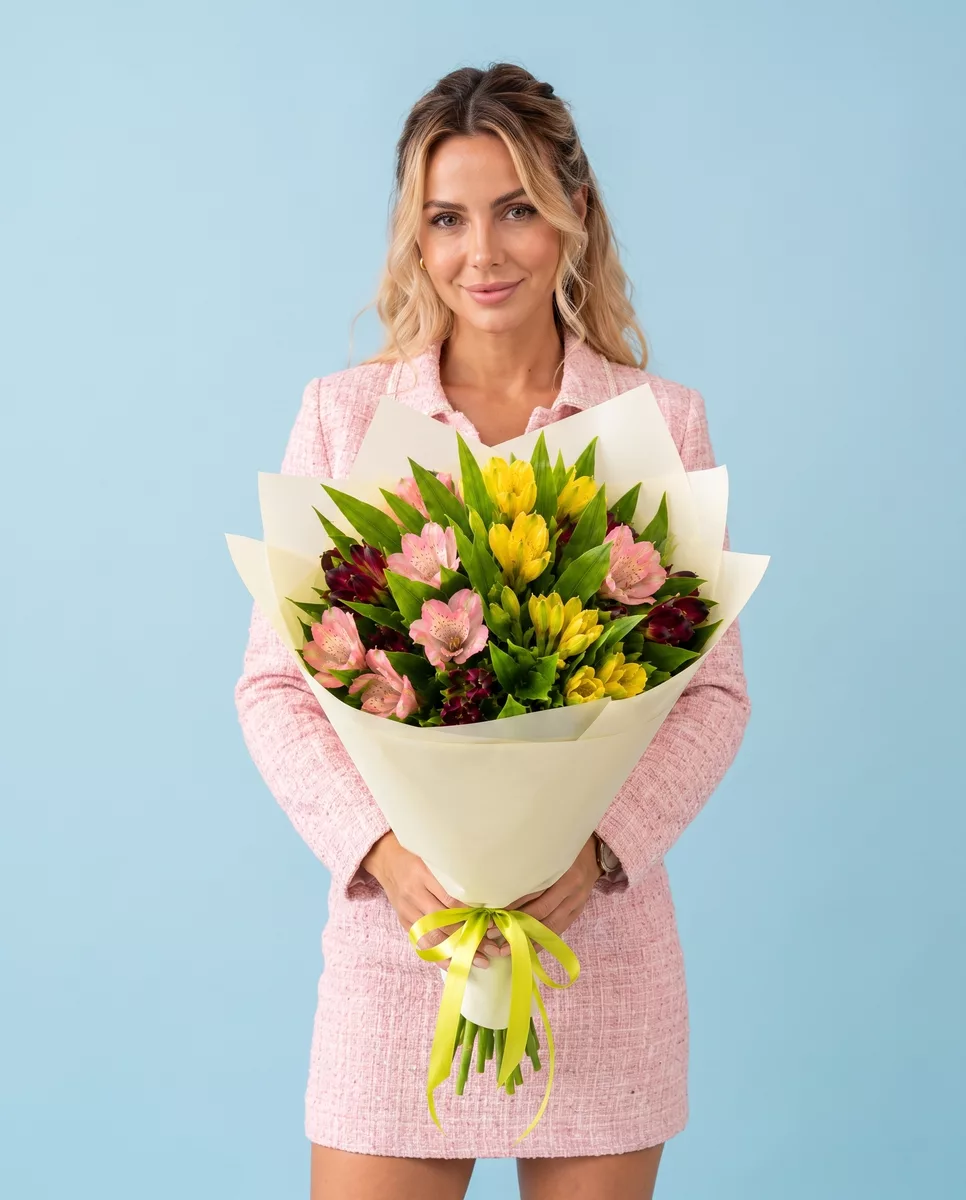
Garden roses in peach, cream, coral and soft pink are consistently well received across age groups and regions. Varieties like Avalanche, Mondial and Cappuccino have large heads, good vase life and a neutral elegance that suits a first meeting. Spray roses — small-headed roses with three to five blooms per stem — are slightly more casual and work well in a mixed bouquet aimed at a younger family. Peonies are genuinely beloved in Russia and make an excellent choice from late April through June when they are in season; outside that window, the imported product is expensive and often arrives already overblown, so avoid them in winter. Tulips are popular in spring, particularly in March around International Women's Day, but they droop quickly in warm apartments and need a tall, narrow vase that not every home has. Alstroemeria is underrated — it lasts ten to fourteen days in water, comes in a wide colour range and photographs well, which matters because Russians often post flowers on social media. Chrysanthemums, both single-stem and spray types, are solid mid-range choices that older hosts particularly appreciate. What to avoid: yellow flowers in a monochrome bouquet carry an association with separation or unfaithfulness in Russian popular belief, though a mixed arrangement with yellow accents alongside other colours is generally fine. White flowers alone can read as too formal or cold for a warm home visit. Red roses in large quantities signal romantic intent, which is not the message for a family introduction. A mixed bouquet with a dominant warm tone — peach, coral, pink — sidesteps all of these concerns.
Size, Wrapping and Presentation at the Door
Russian hosts expect to receive the bouquet at the door, so the presentation needs to hold up in that moment. A bouquet that is too large to hold comfortably in one hand while shaking hands with the other is genuinely awkward. For a family visit, a medium bouquet — roughly thirty to forty-five centimetres in assembled height, with a clean round or spiral shape — is the right scale. Boutonniere-sized arrangements or single stems feel too small for a group. Wrapping is worth thinking about. Kraft paper in natural brown or muted tones is the current standard in Russian flower shops and looks intentional rather than cheap. Cellophane alone reads as old-fashioned. Fabric wrapping or a simple linen sleeve tied with twine is a step up and photographs well. If the shop offers a water sachet attached to the stems, take it — the flowers will be in better condition when you arrive, especially if your journey is more than thirty minutes. Remove any price tags before you hand over the bouquet; this is standard etiquette in Russia and across most of Europe. When you ring the doorbell, hold the flowers with the heads pointing upward. Handing them over upside-down is an easy mistake when you are nervous, and it damages the heads. The host will almost always say the flowers are too much and you should not have bothered — this is a polite reflex, not a genuine complaint. Accept the thanks, move inside and let the evening begin. The bouquet has done its job.
Seasonal Timing and What Is Actually Fresh in Each Month
What is genuinely fresh varies by month, and ordering a flower that is out of season means accepting a product that has travelled a long distance, spent time in cold storage and is already partway through its vase life before it reaches you. In January and February, garden roses from Ecuador and Colombia are at their best — long stems, tight buds, good head size. Dutch tulips are available but require careful handling. In March, tulips and hyacinths are everywhere because of International Women's Day on the eighth, and the supply chain is tuned for volume, so quality is actually high if you order early in the week. April and May bring ranunculus, anemones and the first peonies, all of which are genuinely seasonal and worth choosing. Summer months — June through August — are the best window for peonies, lisianthus, matthiola and locally grown flowers that have not spent a week in a refrigerated truck. September and October bring dahlias, which are underused in gift bouquets but have excellent vase life and a rich, warm palette that suits autumn visits. November through December is the hardest month for fresh variety; stick to roses, alstroemeria, spray chrysanthemums and orchid stems, which all travel and store well. Ask the shop directly what arrived that morning rather than ordering from a photograph taken in a different season. A florist who can name the specific batch and tell you the cut date is the one to trust.
Ordering in Time: Delivery Windows and Temperature
The logistics of flower delivery for a home visit have one rule that overrides everything else: do not order for same-hour delivery if you can avoid it. A two-hour window gives the shop time to select the best available stems, assemble the bouquet properly and route the courier without rushing. Rushed orders are more likely to arrive with substitutions or with flowers that were pulled from the back of the cooler rather than the front. If you are visiting in the evening, order by early afternoon. If you are visiting at midday, order the night before and request morning delivery. Once the bouquet arrives, keep it in the coolest room available — not the refrigerator, which is too cold and too dry for most cut flowers, but away from direct sunlight, radiators and fruit bowls. Ethylene gas from ripening fruit accelerates petal drop in roses and tulips noticeably. In a Saint Petersburg apartment in winter, the heating is often set very high — sometimes above twenty-four degrees Celsius — which shortens vase life significantly. If you are carrying the flowers on public transport, keep them away from heating vents and hold them upright. In summer, avoid leaving them in a car with the windows closed even for fifteen minutes; temperatures inside a parked car can reach fifty degrees and will cook the flowers. A cool bag with an ice pack is not excessive if your journey is long. When you arrive, trim the stems at an angle under running water before placing them in a vase — this reopens the vascular tissue and extends the life of the arrangement by several days.
What to Check Before You Confirm the Order
Before you click confirm or put down the phone, run through a short checklist that experienced customers have learned from one mistake or another. First, confirm the stem count is an odd number — ask explicitly, do not assume. Second, check that no single colour dominates in a way that triggers the associations described earlier: no all-yellow, no all-white, no large all-red arrangements for a family visit. Third, ask when the flowers were received by the shop and, if possible, when they were cut. Any reputable florist can answer this. Fourth, confirm the delivery address and the time window in writing, either by message or email, so there is a record if something goes wrong. Fifth, check whether the shop will attach a card — a short handwritten note in Russian is a warm touch, and many shops will write one for you if you dictate the text. Something simple like a greeting and your name is enough; you do not need to be elaborate. Sixth, if you are ordering roses, ask whether they will be delivered in bud or open. Buds travel better but can take twelve to twenty-four hours to open fully; if your visit is tonight, ask for roses that are already showing colour but not fully open. Seventh, confirm the payment method and whether a receipt will be sent. This is practical but also tells you whether you are dealing with a professional operation. A shop that confirms all of these points without hesitation is one that has done this many times and knows what matters to the customer receiving the flowers at a stranger's door.
Bringing flowers to a Russian home is not complicated once you know the actual rules. Odd stem count, warm colour palette, a variety that is genuinely in season, and delivery timed so the flowers arrive fresh and rested before you do — these four things cover the majority of what can go wrong. The rest is logistics: confirm the count, ask about freshness, keep the bouquet cool on the way there. Russians appreciate the gesture sincerely, and a well-chosen bouquet opens a first visit better than almost anything else you could bring. We deliver bouquets across Russia in 1–2 hours.
Frequently asked questions
Is it really important to bring an odd number of flowers to a Russian home?
Yes, this is taken seriously across generations and regions. Even numbers are associated with mourning in Russian tradition, and an even-numbered bouquet at a social visit will cause discomfort even if nobody mentions it. Count every flower stem individually before ordering, and confirm the number with the shop before dispatch.
Can I bring potted plants instead of a cut bouquet?
Potted plants are acceptable but carry a slightly different message — they imply a longer relationship and ongoing care. For a first visit to a family you do not know well, a cut bouquet is the cleaner choice. If you do bring a plant, orchids in a simple pot are the most universally appreciated option and require minimal maintenance from the host.
Are yellow flowers really a problem in Russia?
A monochrome yellow bouquet does carry negative associations for many Russians — separation and unfaithfulness are the common references. However, yellow flowers mixed into a multi-colour arrangement are generally fine. If you want to be cautious, choose a bouquet where warm peach, coral or pink is the dominant tone and yellow appears only as an accent.
How far in advance should I order flowers for an evening visit?
Order by early afternoon for an evening visit — a two-hour delivery window gives the shop time to select and assemble properly without rushing. Once the bouquet arrives, keep it in a cool room away from radiators and fruit. Trim the stems under running water when the flowers arrive to extend freshness before you carry them to the visit.
What if I do not know whether the host has any flower allergies?
Spray chrysanthemums, alstroemeria and roses produce very little airborne pollen and are the lowest-risk choices for allergy-sensitive households. Avoid strongly scented varieties like matthiola, hyacinth and some Oriental lilies, which can trigger reactions in enclosed spaces. If you know the host has respiratory sensitivities, mention it when ordering and ask for an unscented arrangement.
Ready to send a bouquet?
Pick a city, choose the flowers, and we will hand them over with a photo confirmation.
Choose a city →