
Greenery and Wrapping in a Russian Bouquet: What Actually Belongs
Customers ordering from outside Russia often ask the same thing after seeing their bouquet photo: why is there so much greenery, or alternatively, why does the bouquet look bare compared to what they expected? Russian floral aesthetics have specific conventions around foliage, filler flowers and decorative wrapping that differ noticeably from Western European or American styles. Getting these details right is the difference between a bouquet that reads as generous and considered versus one that looks either overdressed or unfinished to the person receiving it.
What Russian Recipients Actually Expect From a Bouquet
In Russia, a bouquet is judged first by its focal flowers — the roses, peonies, chrysanthemums or tulips at the centre — and second by how cleanly and firmly those flowers are presented. Russian buyers tend to prefer a structured, upright silhouette rather than the loose, garden-picked look popular in Scandinavia or the UK. The stems should be visible and even, the flowers should face outward at a consistent angle, and the overall shape should hold without drooping. This is not about stiffness for its own sake; it reflects a cultural preference for something that looks deliberate and well-made rather than casual. When a customer in Moscow or Saint Petersburg receives a bouquet, they will often unwrap it and put it straight into a vase, so the arrangement needs to survive that transition intact. Florists working for the Russian market know to condition stems properly, cut them at an angle and strip lower leaves before assembly, because a bouquet that wilts within six hours is considered a failure regardless of how expensive the flowers were. The expectation of longevity is real and shapes every decision about what goes into the wrapping. Focal flowers like spray roses, standard roses, alstroemeria and lisianthus are all common choices precisely because they hold well at room temperature for several days, which matters in a country where apartments are often kept quite warm in winter.
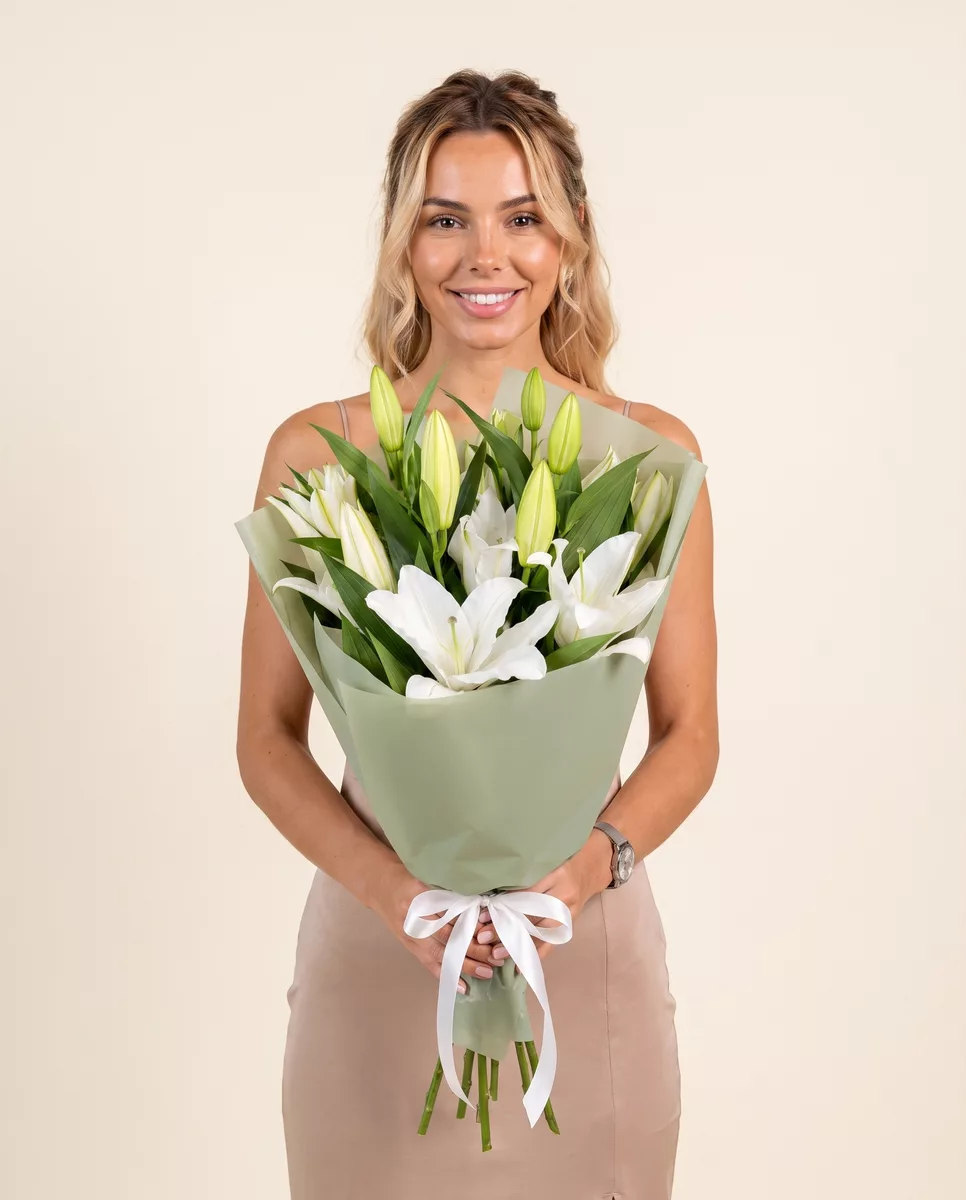
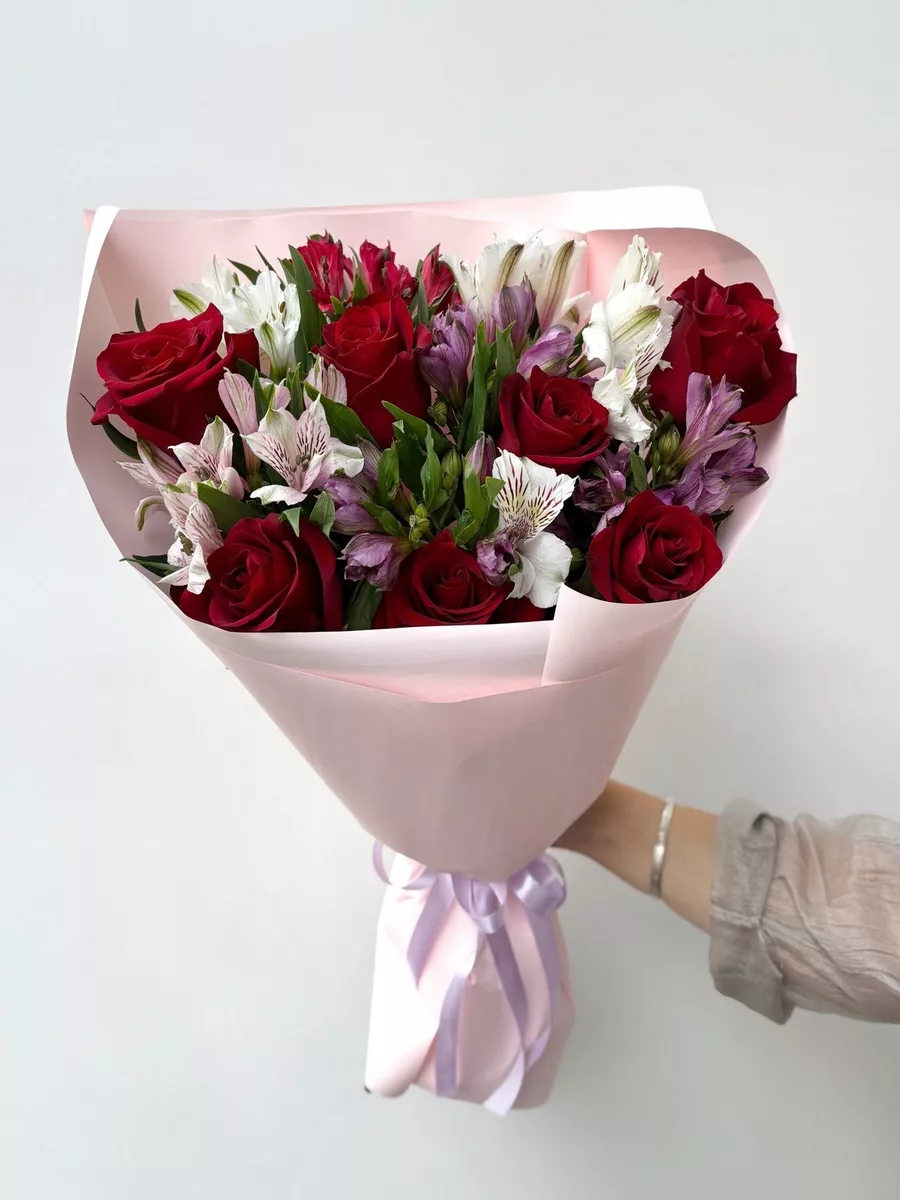
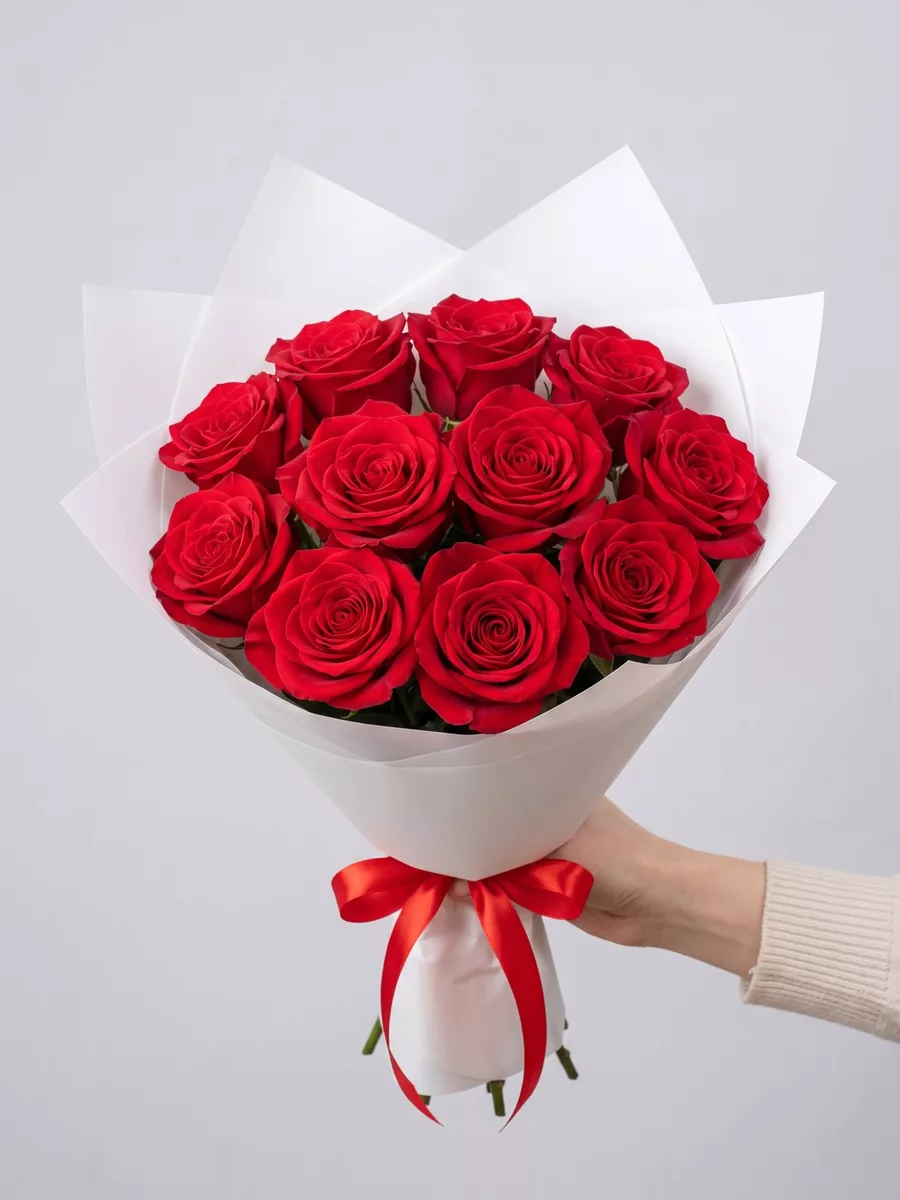
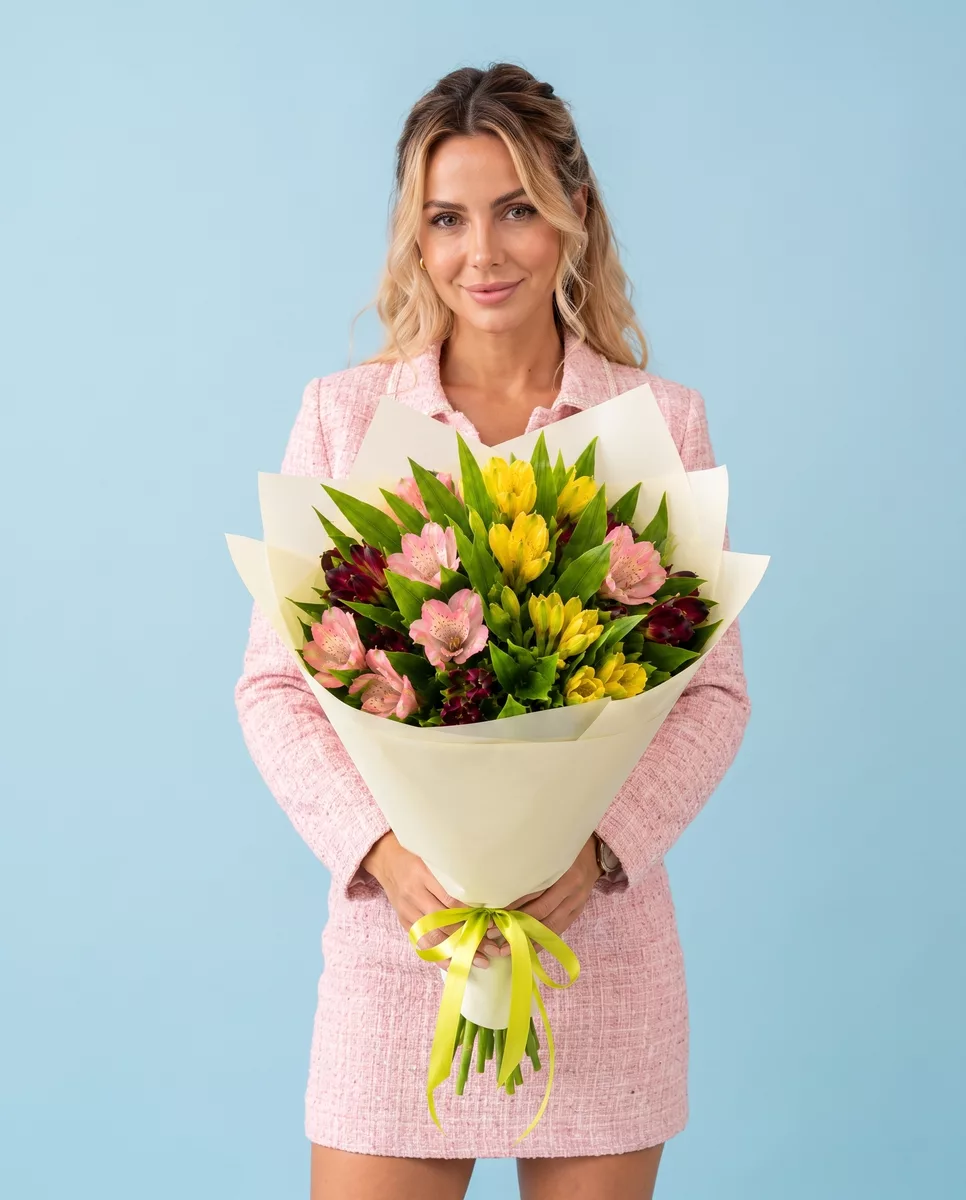
Bouquets we can deliver
Which Foliage Types Are Standard in Russian Floristry
Russian florists rely on a fairly consistent set of foliage varieties, and deviating sharply from these can make a bouquet look foreign in a way that some recipients find off-putting. Ruscus — both Italian ruscus with its pointed oval leaves and butcher's broom — is the most common background greenery and appears in bouquets across all price points. Eucalyptus, particularly the small-leafed baby blue variety, became widely used in the mid-2010s and is now standard in mid-range and premium arrangements. Pistacia, with its fine branching structure, is used in looser, more textured compositions. Asparagus fern, the fine feathery kind rather than the flat plumosa, is still used in more traditional or classic bouquets, particularly for older recipients. What Russian florists almost never use as primary foliage is tropical palm leaves, ti leaves or large monstera cuts — these read as decorative props rather than structural greenery and can make a bouquet feel theatrical rather than sincere. Ivy trails are occasionally used in bridal work but rarely in everyday gift bouquets. The foliage is expected to serve the flowers, not compete with them. A standard mono-bouquet of 25 roses, for example, would typically include three to five ruscus stems tucked around the outer edge to frame the arrangement, with no additional foliage unless the customer specifically requests a fuller look. More is not always better: overloading a bouquet with greenery is a common mistake that obscures the focal flowers and reduces perceived value.
Filler Flowers: Which Ones Work and Which to Avoid
Filler flowers occupy the space between focal blooms and give a bouquet visual density without adding bulk to the stems. In Russian floristry, gypsophila — the small white cloud-like clusters most people call baby's breath — remains extremely common and is not considered old-fashioned the way it might be in some Western markets. White or pale pink gypsophila works particularly well in rose bouquets and is almost always included unless the customer requests a strict mono arrangement. Waxflower, which has small waxy pink or white blooms on fine branches, is another filler that holds exceptionally well in transit and is widely used. Limonium, also called statice, adds texture and a slight purple or white tone and dries naturally in the vase, which many recipients appreciate. Chamelaucium, known as waxflower or Geraldton wax, appears in premium arrangements. What florists actively avoid as fillers in the Russian market are large-headed fillers like allium or scabiosa, which tend to dominate rather than support, and solidago, which some recipients associate with wild or unkempt arrangements. The timing of filler flowers matters too: gypsophila and limonium ship and store well at two to four degrees Celsius, so they arrive in good condition even after a two-hour delivery window. Waxflower is more sensitive to ethylene gas and should not be stored near ripening fruit or wilting flowers. Getting the filler selection right means the bouquet looks full and considered without any single element drawing attention away from the main flowers the customer paid for.
The Role of Wrapping Paper in Russian Bouquet Culture
Wrapping is not decorative afterthought in Russia — it is considered part of the gift itself. A bouquet handed over without any wrapping looks unfinished and can even read as disrespectful, particularly for occasions like birthdays, anniversaries or professional congratulations. The standard approach uses kraft paper as a base layer, which protects the stems and provides a neutral backdrop, combined with one or two outer layers of coloured or textured paper that complement the flower palette. Matte paper in dusty rose, sage green, burgundy or white is the current preference in Saint Petersburg and Moscow; the shiny cellophane wrapping that was dominant in the 1990s and early 2000s has largely fallen out of favour in urban markets, though it persists in smaller cities. The wrapping style most commonly used is the cone or cornet shape, where the paper is gathered around the stems and folded into a point at the bottom, allowing the flowers to sit above the paper line and be visible from the front. This is different from the fully enclosed wrapping sometimes used in Japanese or Korean floristry, where the flowers are partly concealed. Russian recipients expect to see the flowers clearly through or above the wrapping. A ribbon or twine tie at the stem point finishes the bouquet and is considered essential for anything above a casual everyday arrangement. The colour of the ribbon should coordinate with both the flowers and the paper — a mismatch here is noticed and remembered by recipients who care about presentation.
Mono Bouquets Versus Mixed Arrangements: Different Rules Apply
Russian floristry draws a clear distinction between mono bouquets — a single flower variety in one colour — and mixed arrangements, and the rules around greenery and wrapping differ between them. A mono bouquet of 51 red roses, for instance, is typically presented with minimal foliage, sometimes none at all, because the visual impact comes entirely from the repetition of one flower. Adding heavy greenery to a mono bouquet dilutes that impact and signals to the recipient that the florist was trying to fill space rather than let the flowers speak. The wrapping for mono bouquets tends to be simpler and more structured: a single layer of kraft or matte paper in a neutral or complementary colour, tied cleanly at the stem. Mixed bouquets, by contrast, benefit from foliage that bridges the different flower varieties and creates visual cohesion. A bouquet combining spray roses, lisianthus and alstroemeria will look disjointed without some greenery to connect the elements. Ruscus or eucalyptus works well here because both have neutral enough tones to sit beside almost any flower colour. The wrapping for mixed bouquets can be more layered — two or three papers of different textures — because the bouquet itself is more complex and the wrapping should match that complexity without overwhelming it. One common mistake customers make when ordering mixed arrangements is asking to remove all greenery to save money; this usually results in a bouquet that looks sparse rather than refined. The foliage in a mixed bouquet is structural, not decorative padding, and removing it changes the composition in ways that are difficult to correct.
Seasonal Considerations That Change What Goes Into the Bouquet
The availability of foliage and filler flowers shifts across the year, and a good florist adjusts the composition accordingly rather than forcing the same recipe into every season. In winter, ruscus and eucalyptus are reliable because both are imported year-round and hold well in the cold transit conditions that Russian deliveries sometimes involve. Gypsophila is also stable in winter. Spring brings the possibility of using tulip foliage as part of the bouquet itself — the broad flat leaves of tulips are attractive and intentional when left on, though they need to be stripped of any yellowing outer layers before use. Summer opens up more options: pittosporum, with its dark glossy leaves, becomes more available and works well with garden roses and peonies. Autumn arrangements can incorporate cotoneaster branches with small berries or hypericum berries in red, orange or green, which add seasonal texture without looking contrived. Temperature management is critical in summer deliveries: foliage wilts faster than flower petals at temperatures above twenty-two degrees Celsius, and a bouquet that arrives with crisp flowers but limp greenery looks poorly assembled. Florists working summer orders in Saint Petersburg keep arrangements in cooled storage until the last possible moment before dispatch. For customers ordering in July or August, it is worth specifying that the bouquet should be kept refrigerated until pickup or delivery, and confirming the delivery window is as short as possible. A two-hour window in summer heat is the practical maximum for maintaining foliage quality without specialist packaging.
What to Check Before Confirming Your Order
When placing an order for delivery in Russia, there are several specific points worth confirming rather than assuming. First, ask whether the foliage included is ruscus, eucalyptus or something else, and whether it can be substituted if your recipient has a preference — most florists can accommodate this with advance notice. Second, confirm the wrapping style: cone wrapping is standard, but if you want the bouquet photographed flat or arranged differently for a surprise delivery, that needs to be specified. Third, check whether the ribbon colour has been chosen to match the flowers or is a default option — a small detail that recipients notice. Fourth, if the bouquet is going to someone who keeps their home very warm, ask the florist to avoid foliage varieties that are sensitive to heat and to condition the stems with a longer cut at dispatch. Fifth, for very large bouquets — anything above 35 stems — ask how the bouquet is secured internally, because large arrangements need internal wire or binding to hold their shape during courier transit. Sixth, if you are ordering a mono bouquet and want the clean, minimal look, explicitly state that you do not want filler flowers added, because some florists default to adding gypsophila to fill perceived gaps. Finally, confirm the outer wrapping colour against the flower colour if you are ordering online without seeing a preview photo. Burgundy wrapping on red roses reads as elegant; the same burgundy on pink roses can look muddy. These are small decisions that take thirty seconds to clarify and prevent the most common disappointments.
Russian bouquet conventions around foliage, filler flowers and wrapping are not arbitrary — they reflect what recipients in this market have come to expect from a well-made gift. Ruscus and eucalyptus as foliage, gypsophila or waxflower as fillers, kraft or matte paper in a cone wrap with a coordinated ribbon: these are the elements that make a bouquet read as complete and considered rather than improvised. The rules shift slightly between mono and mixed arrangements, and they shift again with the season and the temperature of the delivery day. Knowing these conventions before you order means the bouquet arrives looking the way it was intended, holds well in the vase and meets the expectations of someone who has received Russian flowers all their life. We deliver bouquets across Russia in 1–2 hours.
Frequently asked questions
Is it acceptable to order a bouquet with no greenery at all in Russia?
For mono bouquets — 25 or 51 roses in a single colour, for example — minimal or no foliage is completely standard and actually preferred by many recipients. For mixed arrangements combining two or more flower varieties, removing all greenery usually makes the bouquet look sparse rather than refined, because the foliage serves a structural role in connecting different elements visually.
Does the colour of the wrapping paper matter to Russian recipients?
Yes, more than many international customers expect. Recipients notice when wrapping colours clash with the flowers, and florists in Saint Petersburg and Moscow now default to matte papers in neutral or complementary tones rather than bright primaries. Shiny cellophane, once ubiquitous, is now associated with an older style and is rarely used in urban flower shops for premium orders.
Can I request Korean or Japanese-style wrapping for a bouquet delivered in Russia?
You can request it, and some florists can execute it, but be aware that the recipient may find it unfamiliar. Korean-style wrapping, where flowers are partly enclosed, can make Russian recipients feel they are not seeing the full bouquet. It is worth noting this in the order if the recipient has specifically expressed interest in that aesthetic rather than assuming it will be a pleasant surprise.
Does gypsophila still look current in Russian bouquets or is it outdated?
Gypsophila remains widely used and accepted in Russia across all price points. Unlike in some Western European markets where it fell out of fashion, Russian floristry never moved away from it entirely. Fine white gypsophila in a rose bouquet reads as classic rather than dated to most Russian recipients, particularly when the stems are fresh and the clusters are full rather than sparse.
How does summer heat affect the greenery in a delivered bouquet?
Foliage wilts faster than flower petals once temperatures exceed around twenty-two degrees Celsius. Ruscus is relatively heat-tolerant, but eucalyptus and asparagus fern lose firmness quickly in summer transit. For warm-weather deliveries, keeping the bouquet refrigerated until the last moment before dispatch and choosing a short delivery window — ideally under two hours — makes the most practical difference to how the greenery arrives.
Ready to send a bouquet?
Pick a city, choose the flowers, and we will hand them over with a photo confirmation.
Choose a city →