
Gvozdika Flower: A Practical Guide to Carnations
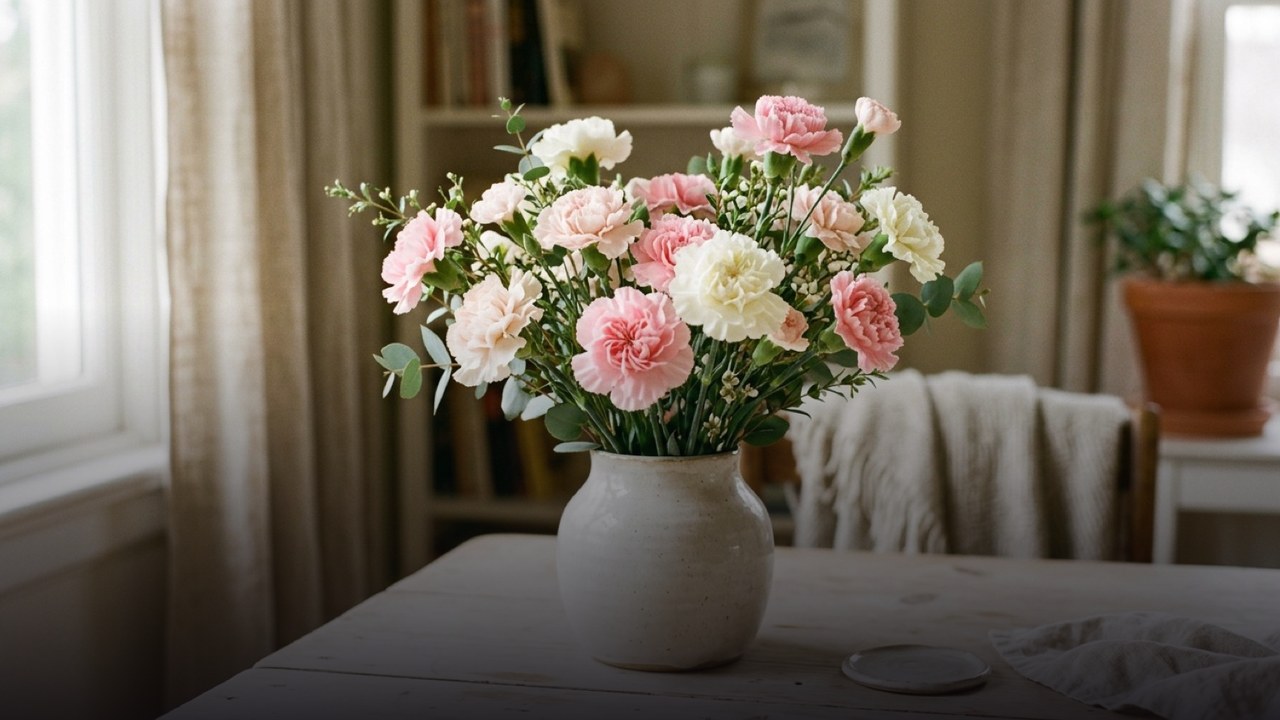
Gvozdika is the Russian word for a carnation, the familiar cut flower with ruffled petals and slender, jointed stems. In a flower shop, it usually means carnations associated with Dianthus caryophyllus; in a recipe, the same word means cloves, a spice from a different plant. If you are looking for a bouquet, carnation is the English name to use.
Customers choosing carnations often want help with the occasion as much as the flower itself: whether red feels too formal, whether white suits a birthday, and how many stems to send to someone in Russia. At Pyat Tsvetov (5 Flowers), established in Saint Petersburg in 2011, those practical details guide the choice. Start with the recipient's taste, then consider colour, stem count and the message accompanying the flowers.
How to recognise a carnation
A standard carnation usually carries one prominent bloom on each stem, while a spray carnation has several smaller flowers on branching stems. Both have layered petals with finely toothed or fringed edges. The narrow leaves and visible joints along the stem help distinguish carnations from other ruffled flowers, especially when you are comparing close-up bouquet photographs.
Standard carnations create clear blocks of colour and make individual flowers easy to count. Spray carnations give an arrangement a more scattered, branching outline, so the number of visible flower heads differs from the number of stems. If stem count matters for Russian gift etiquette, make that preference explicit instead of counting every small bloom in a photograph.
When assessing a cut carnation, look for petals that hold their shape, a firm stem and foliage without obvious yellowing or decay. Browning edges, a soft flower base or an unpleasant smell are reasons to examine it more closely. Some carnations have a noticeable spicy scent, but fragrance varies; do not choose one on the assumption that every variety will smell strongly.
What carnation colours mean in a gift
Carnation colour meanings are cultural associations rather than a fixed language everyone understands. Red can suggest affection, respect or remembrance, depending on the occasion and recipient. In Russia, red carnations also have strong associations with public commemorations and military remembrance, so a simple red bunch may feel more ceremonial than a sender abroad expects.
Pink carnations often make a gentle choice for affection, gratitude or a family celebration. White can look restrained and elegant, although the occasion and presentation still shape its meaning. A birthday recipient who enjoys pale flowers may appreciate white carnations; there is no need to treat the colour as reserved for a single type of event.
Yellow flowers are sometimes linked with separation in Russian popular culture, but that association is not universal. If the recipient loves yellow, their preference is more useful than a symbolic rule found online. When their taste is unknown, choose a colour you can explain sincerely and use the card to make your intention clear.
Bouquets we can deliver




Russian flower etiquette: numbers and occasions
For a celebratory gift in Russia, the customary choice is an odd number of flowers; even numbers are traditionally associated with funerals and mourning. This is especially noticeable in a small bunch where the stems can be counted easily. For a birthday, anniversary or thank-you gift, specify an odd stem count if you are selecting a simple carnation bouquet.
Carnations can suit both celebrations and remembrance, so the flower name alone does not determine whether a gift is appropriate. Colour, presentation and your relationship with the recipient all matter. A soft pink arrangement with a personal birthday note communicates a different intention from a restrained red bunch sent for a commemorative occasion.
For condolences, keep the message direct and considerate, and follow the family's stated wishes when you know them. For a celebration, avoid making the card sound like a formal tribute unless that tone suits the recipient. If you are ordering across languages, a short message in words you understand is safer than copying an elaborate greeting whose nuances you cannot judge.
How to care for carnations after delivery
Begin with a clean vase and fresh water, then remove any leaves that would sit below the waterline. Recut the stem ends with a clean, sharp tool before placing the flowers in water. Leave enough space for the stems to sit comfortably: forcing them into a narrow neck can damage them and makes later cleaning awkward.
Use cut-flower food according to its packet instructions if you have it. Refresh the water regularly, and clean the vase whenever you notice cloudiness or a deposit inside it. Remove fallen leaves and deteriorating stems promptly, because decaying plant material makes it harder to maintain clean water around the remaining flowers.
Display carnations away from radiators, direct sunlight and ripening fruit. Check the water level each day, particularly in a warm room, and handle the jointed stems gently when moving the bouquet. Vase life depends on the flowers' condition and the room environment, so a care routine is more useful than a promise of a fixed number of days.
How to order carnations for someone in Russia
Start with the bouquets catalogue to review the available choices, and check the description rather than relying on a thumbnail alone. If you want carnations specifically, make sure the selected bouquet identifies them; a similarly ruffled flower may be something else. Prepare the recipient's address, contact number, occasion and preferred delivery date before completing the order.
Pyat Tsvetov delivers flowers across Russia and has three own flower shops in Saint Petersburg, on Ilyushina St., Obvodny Canal Embankment and Srednerogatskaya St. City delivery costs 500 RUB. For remote districts and suburbs, the operator confirms the delivery price when confirming the order, so use the actual destination when checking the arrangements.
Online checkout uses CloudPayments; check the payment options displayed there when placing an order from abroad. Acceptance of every foreign card cannot be assumed. Read the delivery and payment information for the ordering details, or call 8 (812) 507-67-05 if you need to clarify a question before ordering.
Choose delivery timing and make the message clear
In large cities, express delivery is available within 1–2 hours after the order is confirmed. Other options include delivery at an exact time with a tolerance of 30 minutes either side, or the windows 09–12, 12–15, 15–18 and 18–21. You can also pre-order 1–30 days ahead; choose a time that fits when the recipient can receive the flowers.
Delivery in Saint Petersburg operates around the clock. The courier calls the recipient about 15 minutes before arrival, so allow for that call when planning a surprise. If the recipient is absent, we agree a second delivery the same day or, with the sender's consent, arrange to hand the flowers to a neighbour or concierge.
Delivery is anonymous by default: the courier does not name the sender. A card with your text is free, so sign the message if you want the recipient to know who sent the carnations. For a gift from abroad, a clear personal note often answers the most immediate question on arrival and gives the flowers their intended meaning.
Frequently asked questions
What does gvozdika flower mean in English?
Gvozdika means carnation when referring to flowers. The same Russian word means cloves in cooking, but the spice comes from a different plant.
Are carnations suitable for a birthday in Russia?
Yes, carnations can be a birthday gift, especially when the colour suits the recipient's taste. An odd number of flowers follows Russian celebratory custom, and a personal card makes the occasion clear.
Should I count stems or flower heads in spray carnations?
A spray carnation has several flower heads on one branching stem, so the two counts differ. If you want a celebratory bouquet with an odd number of stems, state that preference explicitly.
Can I pay for flower delivery to Russia from abroad?
Online checkout uses CloudPayments. Check the options displayed at checkout, because acceptance of every foreign card is not guaranteed.
Will the recipient know who sent the flowers?
The courier does not name the sender because delivery is anonymous by default. Include your name in the free card message if you want the recipient to recognise the gift.
Ready to send a bouquet?
Pick a city, choose the flowers, and we will hand them over with a photo confirmation.
Choose a city →