
Vase Life of Common Bouquet Flowers: Roses to Chrysanthemums
The question we hear most often at the counter is not about colour or size — it is about time. Customers want to know how many days they are actually buying. The honest answer is that vase life depends on the variety, the cut, the water temperature and the room, not on how expensive the bouquet was. A fifty-stem rose arrangement can collapse in four days if the room is warm and the stems were not recut; a modest bunch of spray chrysanthemums can sit fresh for three weeks with almost no attention. This article goes flower by flower through the varieties we sell most, gives you real numbers, and tells you exactly what shortens or extends each one.
Roses: the variety gap is wider than most people expect
Garden roses and standard hybrid tea roses are not the same flower in a vase. A classic high-centred hybrid tea — think Red Naomi or Explorer — lasts nine to fourteen days when the stems are recut at a 45-degree angle, the lower leaves stripped below the waterline and the vase kept away from fruit bowls. Ethylene gas from ripening fruit is the single fastest killer of roses, and most people have no idea it exists. Garden roses with many-petalled open heads, such as Keira or Juliet, are more delicate: expect seven to ten days at best, because the dense petal mass traps moisture and invites botrytis in a warm flat. Spray roses — small-headed varieties with multiple blooms per stem — often outlast both, reaching twelve to fifteen days, because each individual flower is smaller and loses water more slowly. The water temperature matters more than most customers realise: roses prefer cool water, around ten to fifteen degrees Celsius, which means a vase sitting on a sunny windowsill in a heated Saint Petersburg apartment in January is already working against you. Change the water every two days, recut the stems each time, and keep the room below twenty degrees if you can. If you receive roses that are slightly soft in the neck — a common transit issue — place the whole stem in deep cool water for two hours and most will recover fully.
Bouquets we can deliver



Tulips: short but predictable if you understand how they move
Tulips are the flower customers most often complain about, and almost always the problem is the room temperature rather than the flower itself. A fresh tulip cut at the right stage — bud just showing colour but not yet open — will last five to seven days in a cool room, meaning below eighteen degrees Celsius. In a warm apartment at twenty-two or twenty-three degrees, that drops to three or four days, and the stems will bend toward the light, which is not damage but phototropism: the plant is still growing after it is cut. Rotating the vase a quarter turn each day keeps the stems straighter. Tulips drink a remarkable amount of water for their size, so check the vase level daily and top it up with fresh cool water rather than waiting for a full change. One mistake we see constantly is mixing tulips with daffodils: daffodils release a sap that blocks tulip stems and shortens their life significantly. Keep them in separate vases for the first twenty-four hours, then combine if you want. Dutch varieties such as Strong Gold, Prinses Irene and Ile de France are the workhorses of the Russian market because they travel well from the Netherlands, hold their colour and behave predictably. Parrot tulips and double tulips are showier but more fragile — expect a day or two less than the standard single-flower types. Cutting the stems while they are submerged in water, not in the air, makes a measurable difference to uptake.
Lilies: long vase life, but the buds are the whole story
Oriental lilies — Stargazer, Siberia, Casablanca — are among the longest-lasting cut flowers we sell, routinely reaching twelve to eighteen days when handled correctly, and the key word is buds. A stem arrives with several buds at different stages; the first opens within a day or two of delivery, the last may not open for another week. This staged opening is a feature, not a fault, and it is why lilies represent good value for a long event or a gift that needs to last. The stamens carry pollen that stains fabric and skin a deep orange-brown that does not wash out easily — remove them with a tissue or small scissors as each flower opens, before the pollen is fully exposed. This also slightly extends the flower's life because the plant stops directing energy toward reproduction. Asiatic lilies, which have smaller flowers and no scent, are slightly shorter-lived at ten to fourteen days but are a better choice for people sensitive to fragrance; Oriental lilies have a strong scent that fills a room and some people find it overwhelming in a small space. Change the water every two to three days and recut the stems. Lilies are mildly toxic to cats — this is worth knowing if you are ordering for a household with pets. Keep the vase out of direct sun, which fades the petals quickly on lighter-coloured varieties such as Siberia or Casablanca.
Chrysanthemums: the most underrated flower for longevity
Chrysanthemums are consistently the longest-lasting flowers in everyday bouquets, and they are consistently underestimated because they are inexpensive and familiar. A standard spray chrysanthemum — the kind with many small flowers on branching stems — will last fourteen to twenty-one days in a clean vase with regular water changes. Single large-headed chrysanthemums, sometimes called disbud or football mums, last a similar period. The variety names most commonly seen in Russia are Anastasia, Zembla and Bacardi for spray types, and they are grown both in the Netherlands and domestically in the Krasnodar region, which means they sometimes arrive fresher than imported flowers. The main enemy of chrysanthemums is bacterial rot in the water, which turns the stems black and produces a strong smell. This happens when leaves are left below the waterline — strip every leaf that would sit in the water before you arrange the stems. Change the water every two to three days and recut the stems each time. Chrysanthemums are not heavy drinkers compared to roses, but they do prefer cool conditions: above twenty-two degrees the flowers open very fast and the petals become papery within a week. A common Russian custom is to give chrysanthemums in large round bouquets for teacher appreciation events and professional holidays — if you are ordering for such an occasion, the longevity of the flower is genuinely useful because the recipient may keep it on a desk for weeks.
Alstroemeria and carnations: workhorses that outlast their reputation
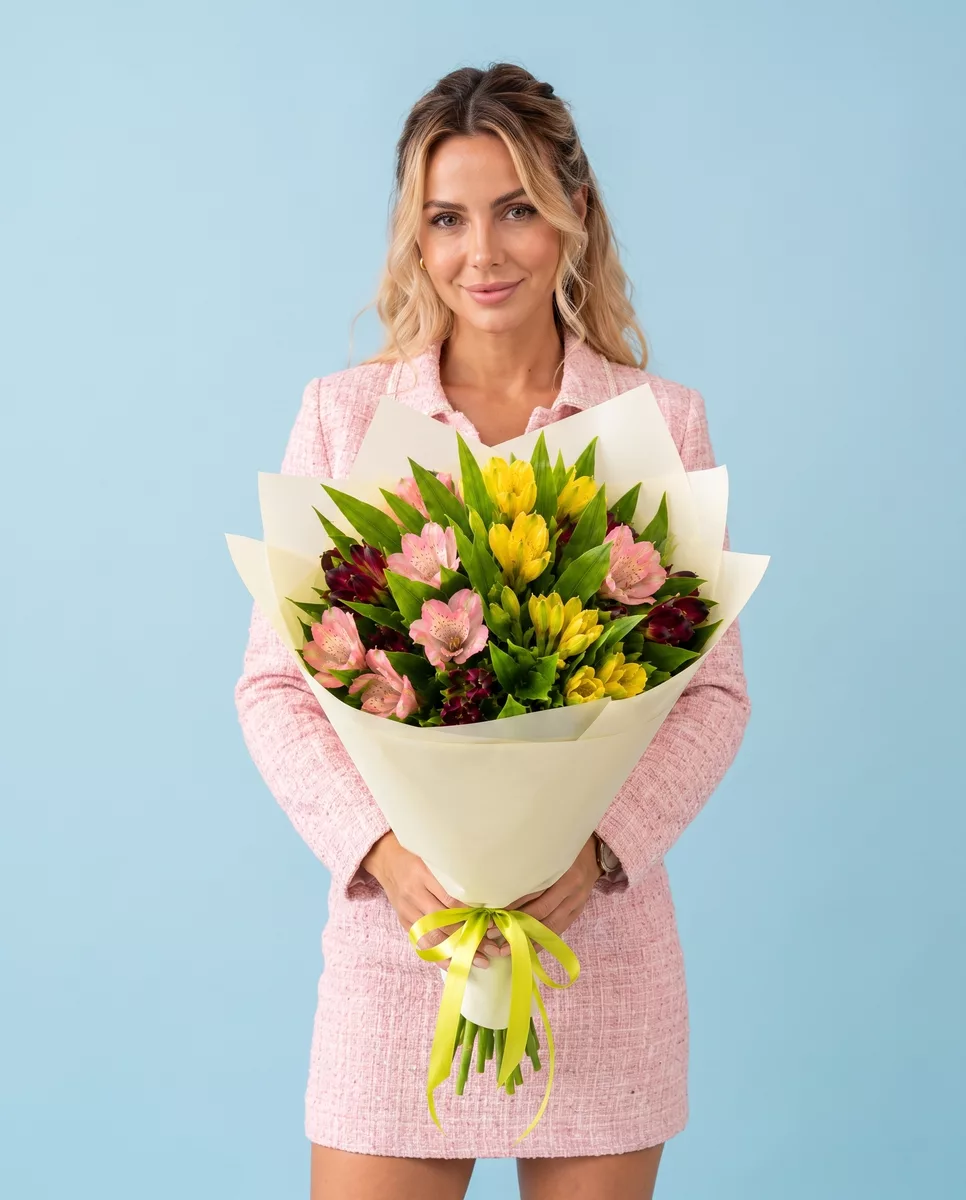
Both alstroemeria and carnations carry an unfair reputation as cheap fillers, but their vase life is genuinely impressive and worth understanding. Alstroemeria — sometimes called Peruvian lily, though it is not a true lily — lasts ten to fourteen days as a cut flower and, like oriental lilies, opens its buds in sequence over several days. The stems are fragile at the nodes and snap easily if handled roughly, so recut them with scissors rather than a knife and support the stem near the cut. Carnations in standard and spray forms are among the most ethylene-sensitive flowers available, which means they must be kept away from fruit and from other flowers that produce ethylene as they age, including roses past their peak. A fresh carnation in clean water at a cool temperature will last fourteen to twenty-one days — longer than almost anything else in a mixed bouquet. The varieties you will most often encounter in Russia include Tempo, Nelson and Master for standard carnations, and a wide range of spray types in pink, white and burgundy. One practical point: carnations close slightly at night and reopen in the morning, which customers sometimes mistake for wilting. If the flower is closing and the stem is firm and the water is clean, the flower is healthy. Alstroemeria leaves yellow before the flowers fade, which is normal — remove the yellowed leaves and the flowers will continue.
Gerberas and sunflowers: bright but demanding
Gerberas are the flower we give the most specific care instructions for, because they fail faster than almost anything else when handled carelessly. A fresh gerbera in ideal conditions — clean shallow water, no more than five centimetres deep, stems recut daily, room below twenty degrees — lasts seven to ten days. In a deep vase with warm water and no stem recutting, it collapses in two to three days. The hollow or semi-hollow stem of a gerbera is prone to bacterial blockage, and the flower head is heavy relative to the stem, which means the neck bends if the stem softens even slightly. Keep gerberas in shallow water and support the stems against the vase wall if needed. Sunflowers are more robust than they look: a fresh sunflower lasts six to ten days, with the main variable being the stage at which it was cut. A sunflower cut when the petals are just beginning to open will last longer than one cut fully open. The large central disc continues to develop after cutting and can attract insects indoors if left near an open window. Both gerberas and sunflowers are heavy drinkers — check the water level daily. Sunflower stems produce a milky sap when cut; rinse the cut end under running water briefly before placing it in the vase to prevent the sap from clouding the water and blocking uptake. Neither flower benefits from flower food sachets in the way that roses do.
Mixed bouquets: the weakest flower sets the pace
When several varieties are combined in one arrangement, the vase life of the whole bouquet is determined by whichever flower fades first, and this is something to think about when ordering. A bouquet that pairs roses with gerberas will look good for about six to seven days before the gerberas begin to collapse, even if the roses would have lasted another week on their own. The practical solution is to separate the bouquet as flowers begin to fade — remove the spent stems and let the remaining flowers continue in a smaller vase. This is not a failure of the bouquet; it is just how mixed arrangements work, and it is worth telling the recipient so they know what to do. Water temperature is the hardest variable to manage in a mixed bouquet because different flowers prefer slightly different conditions: roses and carnations like cool water around ten degrees, while tropical flowers such as anthuriums and birds of paradise prefer room temperature water. A compromise of around fifteen degrees works for most mixed combinations sold in Russia. Flower food sachets, which are usually included with delivery, contain sugar, an acidifier and a biocide — they genuinely extend vase life by two to four days in roses and carnations, less so in tulips and gerberas. Use the full sachet in the volume of water indicated on the packet; halving the dose halves the effect. The single most impactful thing a customer can do when a bouquet arrives is recut every stem immediately, even if the florist already cut them — transit time means the cut surface has already sealed.
Vase life is not a mystery — it is a function of variety, water quality, room temperature and stem care repeated every two to three days. Roses and carnations reward consistent attention and last well over a week. Tulips and gerberas are shorter-lived but predictable once you understand what they need. Chrysanthemums and alstroemeria will outlast almost everything else in a mixed arrangement if you strip the leaves and change the water. The biggest gains come from the first five minutes after a bouquet arrives: recut the stems, remove submerged leaves, fill the vase with cool clean water and move it away from heat sources and fruit. Everything after that is maintenance. We deliver bouquets across Russia in 1–2 hours.
Frequently asked questions
Why do my roses droop at the neck even when the stems look fine?
A bent neck in roses almost always means an air bubble has blocked the stem, usually because the stem was recut in open air rather than under water, or not recut at all after delivery. Place the whole stem in deep cool water for two hours after cutting five centimetres off the base at a sharp angle while the stem is submerged. Most roses recover within a few hours using this method.
Can I keep tulips in a vase with other flowers?
Yes, but avoid mixing them with daffodils during the first twenty-four hours. Daffodils release a latex sap that blocks the vascular tissue of tulips and shortens their life noticeably. Condition daffodils separately in their own water overnight, then combine them with tulips the following day once the sap flow has slowed. All other common bouquet flowers are safe to mix with tulips from the start.
Does adding anything to the water actually help?
Flower food sachets — the small packets included with most deliveries — contain three active ingredients: sugar as a nutrient, citric acid to lower the pH and improve uptake, and a biocide to slow bacterial growth. Used at the correct dilution they extend vase life by two to four days in roses and carnations. Homemade substitutes such as lemonade or aspirin are inconsistent and not recommended for flowers you want to last.
Which flowers last the longest if I need a bouquet to stay fresh for a week or more?
Chrysanthemums, carnations and alstroemeria are the three most reliable choices for longevity, all capable of lasting fourteen to twenty-one days with basic care. Oriental lilies also last well and have the advantage of opening progressively over ten days. If you are ordering for an occasion where the flowers need to look good for a week, ask for a bouquet built around these varieties rather than gerberas or open garden roses.
My room is warm — is there anything I can do to extend the life of my flowers?
Move the vase to the coolest spot in the room, away from radiators, sunny windows and appliances that generate heat. At night, placing the vase in an unheated hallway or near a cool exterior wall makes a measurable difference. Change the water more frequently — every day rather than every two days — because warm water accelerates bacterial growth. Avoid rooms above twenty-two degrees Celsius if you want standard vase life figures to apply.
Ready to send a bouquet?
Pick a city, choose the flowers, and we will hand them over with a photo confirmation.
Choose a city →