
How long do cut chrysanthemums last in a vase?
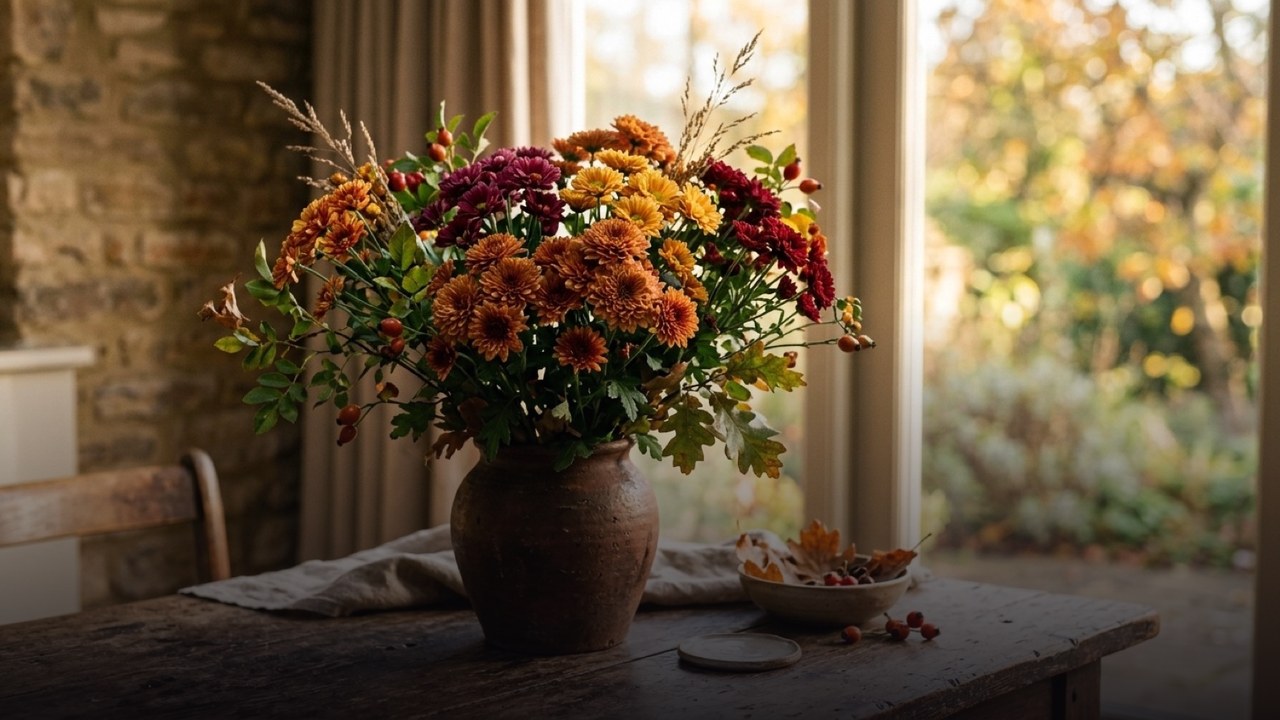
Cut chrysanthemums usually last two to three weeks in a vase with good care, although their condition when bought and the room environment affect the result. Some stems last longer, while flowers that have already spent time on display may fade sooner. Clean water, freshly trimmed stems and a position away from heat give them the best chance of a long display.
Customers at Pyat Tsvetov (5 Flowers) often ask whether chrysanthemums will still look presentable after a birthday or family celebration. We have been working with flowers in Saint Petersburg since 2011, and our practical advice is to judge freshness by the whole stem, then keep the care routine simple. A vase-life estimate is a useful planning guide, but it cannot predict the remaining life of an individual bouquet.
What two to three weeks of vase life actually means
Count vase life from the time the flowers are arranged at home, while remembering that their earlier handling still matters. A flower can look open and attractive on arrival without being newly cut, and you cannot reliably calculate its age from its shape alone. The useful measure is how long the petals, leaves and stems remain firm and presentable under the recipient's conditions.
A chrysanthemum bouquet rarely fades all at once. On a spray stem, which carries several flower heads, one bloom may brown while its neighbours remain attractive; removing that head can keep the arrangement tidy. If a stem becomes soft or slimy, remove the affected material rather than leaving it in the water with healthy flowers.
In a mixed bouquet, the chrysanthemums may outlast the other varieties. Remove fading flowers individually and move the remaining healthy stems into a smaller, freshly washed vase when the arrangement becomes sparse. Our guide to how long bouquet flowers last in a vase explains why different flowers do not always finish together.
Choose flowers with firm stems and healthy leaves
Look for firm stems, reasonably crisp leaves and petals without extensive browning or a mushy texture. Check the underside of the flower heads as well as the most visible petals, because damage can be hidden by a dense arrangement. A few imperfect outer petals do not tell the whole story, but widespread softening is a reason to choose another bunch.
For an immediate gift, choose chrysanthemums with enough open flowers to create the intended display. Very tight buds are not a reliable shortcut to a longer-lasting bouquet, because some may fail to open well after cutting. On spray chrysanthemums, a mixture of open heads and developing blooms can give the arrangement a pleasing balance without depending entirely on unopened buds.
Choose the bouquet with the recipient's vase and space in mind. A tightly packed bunch in a narrow neck is harder to inspect and clean, while a top-heavy arrangement can be awkward to handle during water changes. Colour is also personal: chrysanthemum traditions vary between countries and families, so the recipient's preferences are a more useful guide than a universal claim about symbolism.
Bouquets we can deliver




Prepare chrysanthemums before putting them in water
Start with a vase washed thoroughly with detergent and rinsed well, including the base and any narrow shoulder where residue collects. Use clean, sharp secateurs or a suitable knife to remove a small section from each stem end with a fresh angled cut. Avoid crushing or hammering the stems, which damages tissue and makes the cut ends harder to keep clean.
Strip off every leaf that would sit below the waterline, while keeping healthy leaves higher up the stems. Submerged foliage breaks down and makes it harder to maintain clean water around the stem ends. Remove any damaged leaves at the same time, then arrange the flowers so that the cut ends reach the water without the flower heads being forced against one another.
Fill the vase with fresh water and add commercial cut-flower food if you have it, following the packet's dilution instructions. More concentrated food is not better, and a sachet intended for a larger volume should not be tipped into a tiny vase without checking the directions. Put the prepared stems into water promptly rather than leaving them on the table while you finish arranging the room.
Keep the water clean throughout the bouquet's life
Check the water level every day, especially with a large bunch or a vase whose sides hide the stem ends. Top up when needed so that all cut ends remain submerged, but do not let the rising level reach leaves left on the stems. A full-looking vase can still leave a shorter stem dry, so inspect the arrangement from the side rather than judging only from above.
Replace the water every two or three days, and sooner if it becomes cloudy, develops an unpleasant smell or contains fallen plant material. Lift out the flowers, wash and rinse the vase, and refill it with fresh water and correctly diluted flower food if used. Trim the stem ends again when needed, removing damaged tissue with a clean tool before returning the bouquet to the vase.
Avoid adding sugar, aspirin or other household mixtures to an otherwise manageable care routine. They are not substitutes for removing decaying material and washing the vase, and improvised doses can create new problems. If you are considering a tablet in the water, our article on aspirin for flowers covers the question separately; for everyday care, clean water and proper flower-food instructions are easier to apply consistently.
Choose a position that slows drying and damage
Keep the vase in a comfortably cool part of the room, away from radiators, heaters and direct sunlight. Cut chrysanthemums do not need a sunny windowsill to maintain their display, and strong sun can heat the flowers and vase water. A bright room is fine if the bouquet itself stays out of the hot beam and clear of appliances that give off heat.
Avoid placing the flowers directly in an air-conditioning stream or beside a frequently opened exterior door. Moving air can dry petals and foliage, while an unstable position increases the chance of the vase being knocked over. A dining table or sideboard can work well if it offers enough room for the flower heads and lets the recipient lift the vase safely for cleaning.
Keep the arrangement away from ripening fruit and remove fading plant material promptly. If one flower droops, first check whether its stem reaches the water and whether the end is damaged or blocked; a clean recut and fresh water may help, but recovery is not certain. Brown, papery petals will not become fresh again, so trim away spent heads and retain the healthy parts of a spray.
Time a chrysanthemum gift or delivery to Russia
For a birthday, anniversary or visit, arrange delivery for a time when the recipient can receive the flowers and put them in water. Chrysanthemums are a practical choice for someone who wants to enjoy a bouquet beyond the occasion, but their typical longevity should not become a promise of a particular expiry date. If the recipient has a strong cultural association with these flowers, choose their preferred colour or another variety from our bouquets catalogue.
Pyat Tsvetov delivers flowers across Russia, with city delivery costing 500 RUB; the operator confirms the price for remote districts and suburbs when confirming the order. In large cities, express delivery is available in one to two hours after order confirmation, alongside an exact time with a tolerance of 30 minutes either way or the windows 09–12, 12–15, 15–18 and 18–21. Orders can be placed one to 30 days ahead, and delivery in Saint Petersburg is available around the clock.
For a gift sent from abroad, include a clear card message: a card with your text is free, and delivery is anonymous by default, so the courier does not name the sender. The courier calls the recipient about 15 minutes before arrival; if they are absent, we agree a second delivery that day or a handover to a neighbour or concierge with the sender's consent. Online checkout uses CloudPayments, so check the payment options displayed there rather than assuming a particular foreign card will work; see delivery and payment or call 8 (812) 507-67-05 with questions.
Frequently asked questions
Can cut chrysanthemums last a month?
Some can remain presentable for around a month, but two to three weeks is a more useful everyday expectation. Initial freshness, water hygiene and the room environment all affect the outcome.
How often should I change chrysanthemum vase water?
Change it every two or three days, or sooner if it turns cloudy or smells unpleasant. Check the level daily and wash the vase during each full water change.
Should I split or crush chrysanthemum stems?
Use a clean, sharp tool to make a fresh cut instead. Splitting or crushing damages the stem and creates ragged tissue that is harder to keep clean.
Do cut chrysanthemums need sunlight?
They do not need direct sunlight to stay attractive in a vase. Keep them away from hot windowsills, radiators and other heat sources to help limit drying.
Can I order chrysanthemums for someone in Russia while I am abroad?
You can place an online order for flower delivery across Russia and include a free card with your message. Checkout uses CloudPayments; check the options shown there, as acceptance of every foreign card is not guaranteed.
Ready to send a bouquet?
Pick a city, choose the flowers, and we will hand them over with a photo confirmation.
Choose a city →