
Orchids as Gifts in Russia: Types, Prices, and Care Tips
Orchids are the second most popular flower in Russian gift culture after roses, yet they generate more confused questions at the counter than almost anything else. Customers arrive unsure whether to buy a cut stem for a bouquet or a potted plant, whether white means something specific, and whether orchids will survive a two-hour delivery in January. This article answers those questions directly, with real variety names, shelf-life numbers, and the details that actually determine whether your gift arrives in good condition.
Cut Orchids Versus Potted Phalaenopsis: The Core Difference
The first thing to settle is format. Cut orchid stems — most commonly Cymbidium, Dendrobium, and single Vanda blooms — are sold individually or arranged into bouquets alongside other flowers. A fresh Dendrobium stem holds its flowers for ten to fourteen days in a vase with clean water changed every two days. Cymbidium sprays last even longer, sometimes three weeks, because the blooms are waxy and slow to dehydrate. Vanda stems are shorter-lived at seven to ten days but visually striking because of their flat, wide petals and vivid color range from deep violet to orange. Potted Phalaenopsis, on the other hand, is a living plant. A healthy double-spike Phalaenopsis in bloom can flower continuously for two to three months if kept at 18 to 24 degrees Celsius, away from direct sun and drafts. In Russian apartments, the most common mistake is placing it on a windowsill in winter where the glass drops the local temperature below 15 degrees at night, which causes bud drop within a week. The practical rule: if the recipient travels frequently or has a busy schedule, a cut bouquet is safer because it demands only a vase and water. If they have a settled home and enjoy plants, a potted Phalaenopsis is a longer-lasting and more personal gift. Both formats are widely available for same-day delivery across Russia, though the potted plant requires more careful packaging to prevent pot tipping and soil spillage during transit.
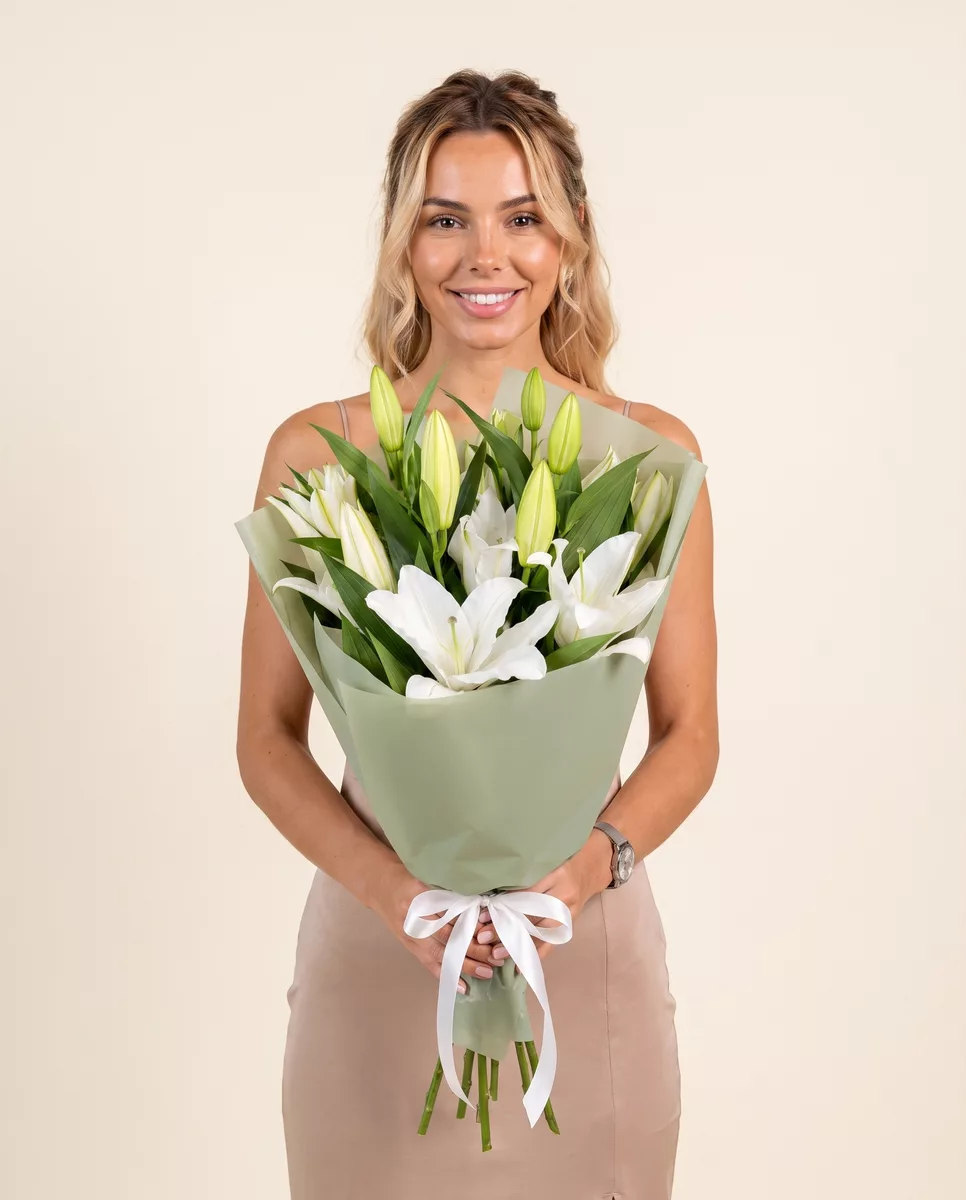
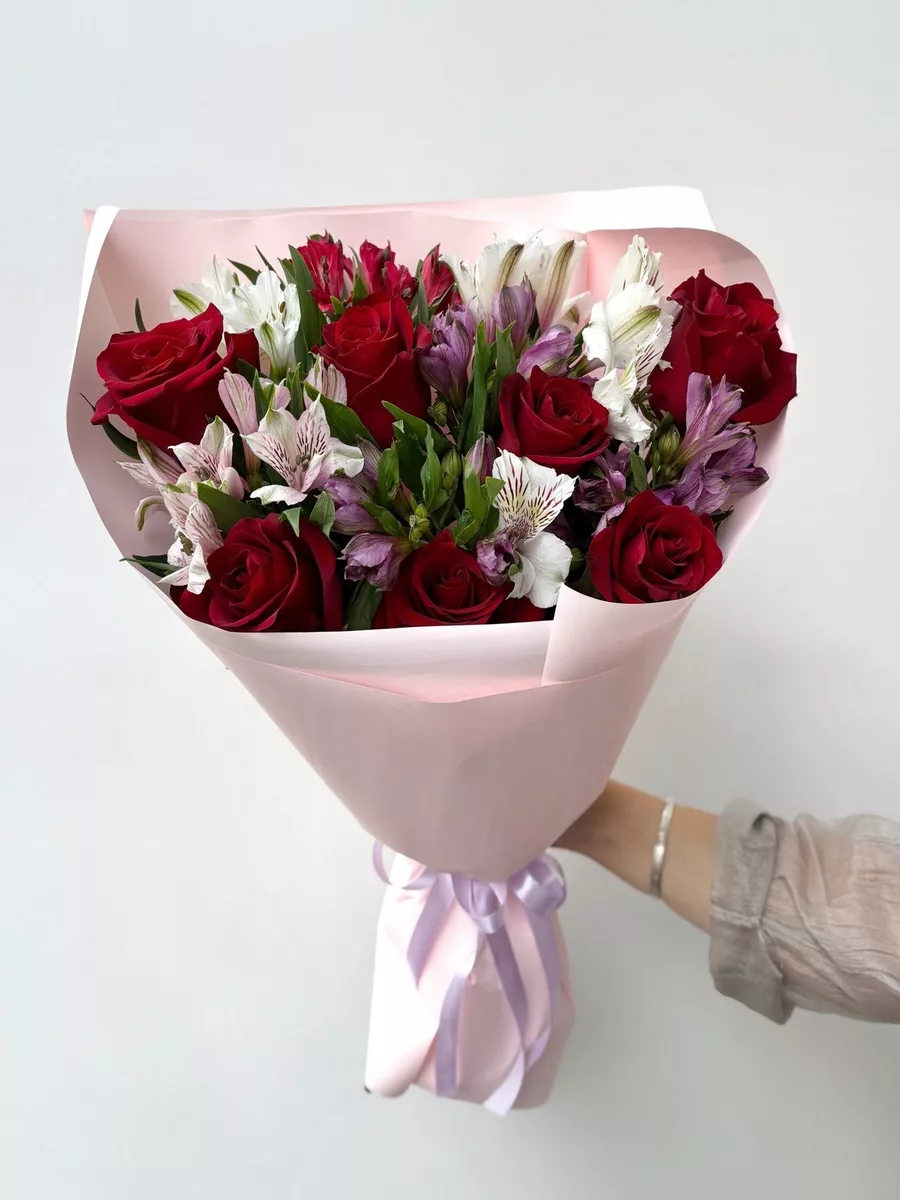
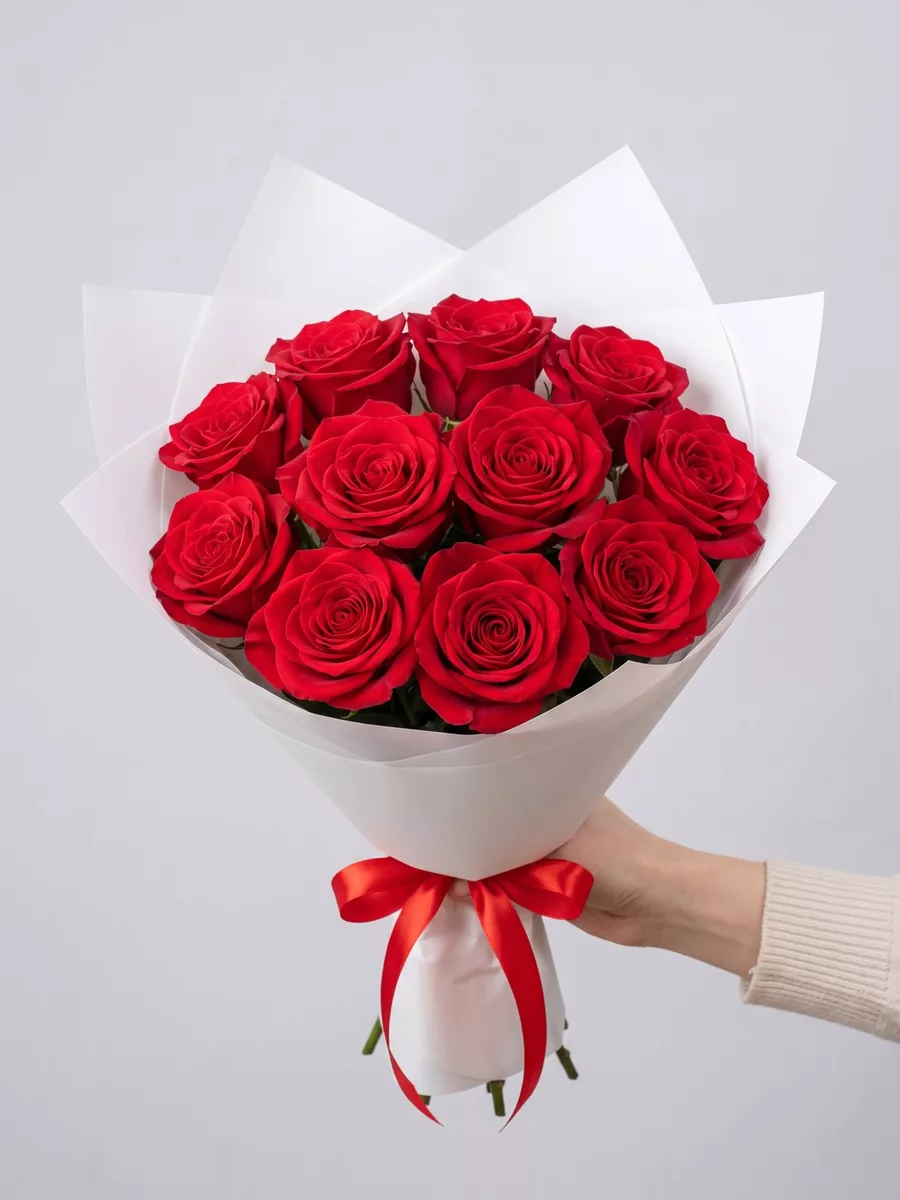
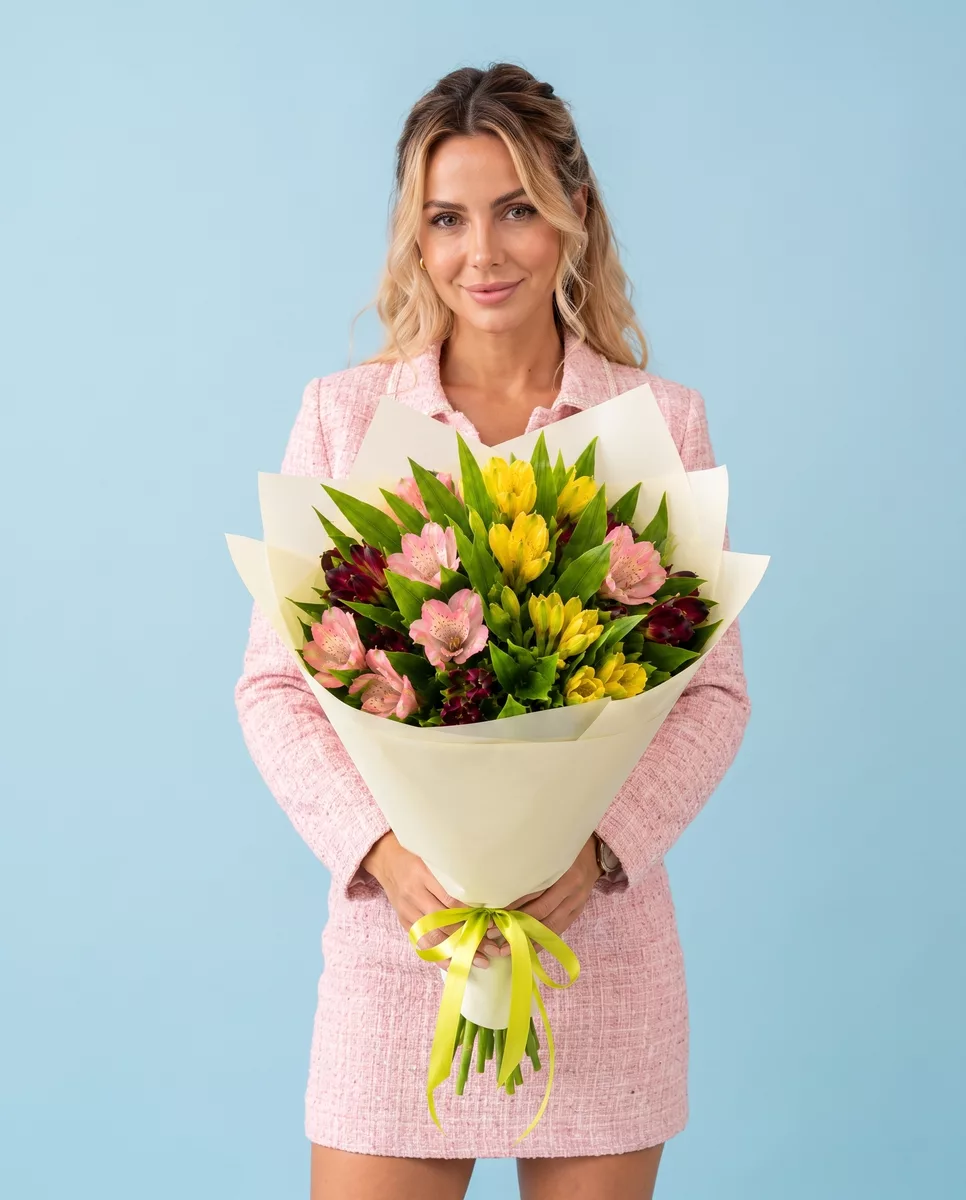
Bouquets we can deliver
Which Orchid Varieties Are Actually Available in Russian Shops
Not every orchid you see in a reference book appears in a Russian flower shop. The supply chain that reaches Saint Petersburg and other major cities is dominated by a small set of commercially grown varieties, and knowing them saves you from ordering something that does not exist locally. Phalaenopsis is by far the most stocked potted orchid, available year-round in white, pink, fuchsia, yellow, and patterned forms. The two-spike plants with twelve to twenty open blooms are the standard gift size. Single-spike starter plants are cheaper but look sparse as a gift. Among cut stems, Dendrobium Nobile hybrids in white and purple are the most common because they ship well from Dutch and Thai growers. Cymbidium comes in green, pink, burgundy, and cream, and it is particularly popular in autumn and winter when its cool-weather tolerance makes it a reliable choice for outdoor events and long-distance delivery. Vanda orchids are available but treated as a premium item because they require special water-culture packaging for transport. Oncidium, sometimes called dancing-lady orchid, appears occasionally in mixed bouquets but is rarely sold as a standalone stem. Miltonia and Cattleya are specialty items that most shops carry only on pre-order. If you want something specific beyond Phalaenopsis, Dendrobium, or Cymbidium, ask when placing your order rather than assuming it is in stock. Seasonal availability shifts: Cymbidium peaks from October through March, while Vanda supply is strongest in spring and summer when air freight from Southeast Asia is more consistent.
Occasions When Orchids Are the Right Choice in Russia
Russian gift culture has specific associations with flowers, and orchids sit in a particular social register. They are considered a sophisticated, adult gift — appropriate for a woman's birthday, a business anniversary, a housewarming, or a thank-you to a teacher or doctor. They are not typically given at children's celebrations or casual social gatherings where mixed seasonal bouquets are the norm. On March 8, International Women's Day, which is the single largest flower-giving occasion in Russia, orchids sell heavily because they stand apart from the tulip-and-mimosa combinations that dominate that week. Presenting a white or soft-pink Phalaenopsis on March 8 signals that you thought beyond the standard order. For corporate gifts, a potted Phalaenopsis in a ceramic pot is a practical choice because it decorates an office for months and does not require the recipient to find a vase immediately. White Phalaenopsis is the most neutral corporate color and works across professional contexts. For romantic occasions, Vanda stems in deep violet or burgundy arranged with minimal greenery make a strong impression, though the price per stem is noticeably higher than Dendrobium. One point that surprises non-Russian customers: yellow flowers carry no negative meaning in Russian culture, contrary to the myth sometimes repeated online. Yellow Cymbidium or yellow Phalaenopsis is perfectly appropriate as a gift. The genuine caution is around even numbers of flowers in a bouquet — an even count is traditionally associated with mourning, so bouquets are assembled in odd numbers. This applies to cut stems; potted plants are not subject to this convention.
Pricing Structure: What You Pay For and Why
Orchid pricing confuses customers who compare a single Dendrobium stem to a rose and find the orchid more expensive. The cost difference comes from growing time and freight. A Dendrobium Nobile stem takes two to three years to reach flowering size, and most commercial supply to Russia comes by air from the Netherlands or directly from Thailand, which adds to the base cost. Cymbidium is grown largely in cooler climates including the Netherlands and Colombia, and its heavy stems require more freight volume per unit. Vanda is the most expensive cut orchid because it is grown hydroponically, shipped in water tubes, and has a lower stem-per-box ratio than Dendrobium. Potted Phalaenopsis pricing varies by pot size, number of spikes, and number of open blooms. A single-spike plant in a standard nursery pot is the entry level. A two-spike plant in a decorative ceramic pot with fifteen or more open blooms is at the upper end of the standard range. Designer arrangements that place a Phalaenopsis plant inside a glass vessel with moss or stones cost more again because of the assembly labor. Delivery adds a fixed cost that does not change with the number of items in your order, so ordering one expensive orchid and one supplementary item is more cost-efficient per item than two separate orders. Seasonal surges — March 8, Valentine's Day, and the New Year period — push prices up across all categories, and orchids are not exempt. Ordering two to three days ahead during those windows locks in the base price and guarantees availability of specific varieties.
Delivery Conditions That Determine Whether Orchids Arrive Well
Orchids are more sensitive to transit conditions than most customers realize, and the problems that appear after delivery are almost always traceable to temperature or mechanical stress during the journey. Cut Dendrobium and Cymbidium stems tolerate a wide temperature range and travel well in standard flower packaging as long as the stems are in water tubes or damp wrapping. Vanda is the most demanding: it must be kept in its water tube throughout transport, and the tube must not dry out. For potted Phalaenopsis, the critical issue in Russian winters is cold exposure. When outdoor temperatures fall below zero — which in Saint Petersburg means roughly October through April — the plant must be wrapped in insulating packaging for the walk between the delivery vehicle and the building entrance. Even five minutes at minus ten degrees can shock the root system and cause delayed bud drop that appears two weeks after delivery, by which point the customer has no idea the cold was the cause. Reputable delivery services use insulated bags and minimize outdoor exposure time. When ordering, check that the shop specifies winter packaging for potted plants rather than treating it as optional. Summer delivery has a different risk: direct sun through a vehicle window can overheat a boxed plant within thirty minutes. Shaded, climate-controlled transport matters in July and August as much as insulation matters in February. For long-distance delivery within Russia — Moscow to Novosibirsk, for example — cut stems are more reliable than potted plants because they tolerate the journey better and the recipient does not need to manage a live plant immediately on arrival.
Care Instructions to Pass Along With the Gift
The gift does not end at delivery, and the most common reason orchids disappoint is that the recipient does not know what the plant needs. Including a brief care note with the order is worth doing. For potted Phalaenopsis, the key points are these: water once every seven to ten days by placing the inner pot in a container of room-temperature water for fifteen minutes, then letting it drain completely before returning it to the decorative pot. Never let the roots sit in standing water, which causes root rot within weeks. Light should be bright but indirect — an east-facing window is ideal in Russian apartments, which tend to have smaller windows than homes in Western Europe. Fertilize monthly during the growing period with a balanced orchid fertilizer at half the recommended concentration. After the blooms drop, cut the spike just above the second node from the base; a secondary spike sometimes emerges from that node and produces a second flowering. For cut orchid stems, the care is simpler: recut the stem at an angle under running water, place in a clean vase with fresh water, and keep away from fruit bowls, which emit ethylene gas that accelerates petal aging. Change the water every two days and remove any leaves that fall below the waterline. Room temperature between 18 and 22 degrees is ideal; avoid placing cut orchids near radiators, which are common in Russian apartments and dry the air significantly. A small dish of water near the vase raises local humidity and extends vase life noticeably.
What to Check Before Confirming Your Orchid Order
A few practical checks before you confirm an order prevent the most common disappointments. First, confirm the variety and color explicitly in the order notes rather than relying on a category name like 'orchid bouquet.' Shops carry multiple Dendrobium colors and Phalaenopsis patterns simultaneously, and without a specification the picker chooses based on availability. Second, for potted plants, specify whether you want a single-spike or double-spike plant and whether you need a decorative pot included. A plant in a plain nursery pot looks unfinished as a gift unless the recipient is a serious gardener who prefers to choose their own container. Third, check the delivery window against the recipient's schedule. Orchids left outside an apartment door in winter packaging for more than an hour risk cold damage even inside the packaging. Coordinate timing so someone is present to receive the delivery, or arrange for a neighbor to take it in. Fourth, if you are ordering for a date more than a week away, ask whether the shop will hold the order and source fresh stock closer to the delivery date rather than purchasing immediately. Phalaenopsis in bloom holds well in a shop environment, but a plant purchased a week early and stored incorrectly may already have stressed buds by the time it reaches the recipient. Fifth, for business gifts going to an office address, confirm that the office accepts deliveries during the requested window and that there is a named contact person. Orchids delivered to a reception desk without a recipient name sometimes wait in a warm lobby for hours, which is hard on both cut stems and potted plants.
Orchids reward a little preparation. Knowing whether you need a cut stem or a living plant, which variety suits the season and the delivery distance, and what care the recipient will realistically provide — these details determine whether the gift looks as good in a week as it does at the moment of delivery. The varieties available in Russian shops are consistent enough that you can plan confidently: Phalaenopsis for a lasting home gift, Dendrobium or Cymbidium for a bouquet that travels well, Vanda when you want something that stands out visually and the recipient is nearby. Get the temperature question right for winter delivery, pass along the watering and light instructions, and an orchid gift is one of the most durable and considered things you can send. We deliver bouquets across Russia in 1–2 hours.
Frequently asked questions
How long does a potted Phalaenopsis stay in bloom after delivery?
A healthy double-spike Phalaenopsis kept at 18 to 24 degrees Celsius with indirect light and correct watering typically stays in bloom for two to three months. The main reasons for early bud drop are cold drafts from windows in winter, overwatering, and ethylene gas from nearby fruit. Avoid all three and the plant performs as expected.
Is it true that yellow orchids are inappropriate as gifts in Russia?
No. The idea that yellow flowers carry a negative meaning in Russia is a persistent myth with no basis in current practice. Yellow Phalaenopsis and yellow Cymbidium are sold and given as gifts without issue. The actual convention to observe is using an odd number of cut stems in a bouquet, not avoiding any particular color.
Can cut orchid stems be included in a mixed bouquet with roses or peonies?
Yes, and Dendrobium and Cymbidium stems work particularly well in mixed arrangements because their long stems and multiple florets fill volume without competing with focal flowers. Keep the finished bouquet away from direct heat and ethylene sources. Vanda stems are less practical in mixed bouquets because they need to stay in water tubes rather than standard floral foam.
What happens if the Phalaenopsis loses all its blooms after delivery?
Sudden bud drop almost always traces back to cold exposure during transit or a cold windowsill in the first days after arrival. If the plant is otherwise healthy — firm green leaves, white or green roots — it will rebloom in four to six months given the right conditions. Cut the spent spike above the second node and maintain consistent care through the resting period.
Which orchid is best for delivery to a city far from Saint Petersburg in winter?
Cut Cymbidium stems are the most reliable choice for long-distance winter delivery because they tolerate lower temperatures better than Dendrobium or Vanda and have a long vase life once they arrive. Potted Phalaenopsis can also travel well if properly insulated, but the risk of cold stress increases with journey time, so cut stems are the safer option for destinations beyond a few hours.
Ready to send a bouquet?
Pick a city, choose the flowers, and we will hand them over with a photo confirmation.
Choose a city →