
How to Write a Russian Address Correctly When You Send Flowers
A Russian address is written from the largest unit to the smallest: city, street, building number, then the building section (korpus) if there is one, and finally the flat number - for example, Saint Petersburg, Sadovaya Street 12, korpus 2, flat 45. For a courier you should also add the entrance (podyezd), the floor and the intercom code, because Russian apartment blocks are large and the house number alone rarely gets you to the right door.
Customers abroad ask us about this more often than about flowers. Relatives send an address in Cyrillic, or in a transliteration that looks nothing like the street sign, and the person ordering is not sure which part is the street and which is the building. Here is how we read addresses in our Saint Petersburg shops every day, with the details that make the difference between a bouquet delivered on time and a courier standing in a courtyard with twelve identical entrances.
The order of an address in Russia
For a postal letter, a Russian address traditionally goes: recipient's name, street with building and flat, city, region, postcode, country. For a flower delivery inside a city, the postcode and region matter much less than the details of the building itself. What the courier needs is the city, the street, the building number with any korpus or stroenie, and the flat, plus the practical details of getting inside.
The building number can look confusing. 'Dom 15, korpus 2' means building 15, section 2: a separate block that shares the number with others. 'Stroenie' is another kind of building designation, common in Moscow. A number like 15/2 can mean a corner building with two street numbers, while 15A or 15 lit. A is a separate building with a letter. Copy whatever the recipient sends exactly, without simplifying it.
The flat number (kvartira, often abbreviated kv.) comes last. In offices, hospitals or universities, there is no flat, but there may be an office number, a department or a ward, which you should add in the comment.
Russian words you will see in an address
Street types are part of the name, and a street called Ulitsa Marata is a different place from a Pereulok or Prospekt with a similar name. The usual words are ulitsa (ul., street), prospekt (pr., avenue), pereulok (per., lane), naberezhnaya (nab., embankment), shosse (highway), bulvar (boulevard) and ploshchad (pl., square). In Saint Petersburg you will also meet 'liniya', the numbered lines of Vasilievsky Island.
Some cities have streets with the same name in different districts or nearby towns, and suburbs often have their own streets with familiar names. If the address is outside the city centre, ask the recipient for the district or settlement and include it. For remote districts and suburbs, our operator confirms the delivery price when confirming the order, so the precise location also matters for the cost.
If you only have the address in Cyrillic, paste it into the order as it is. A courier reads Cyrillic without difficulty, and an exact original is safer than a transliteration you made yourself.
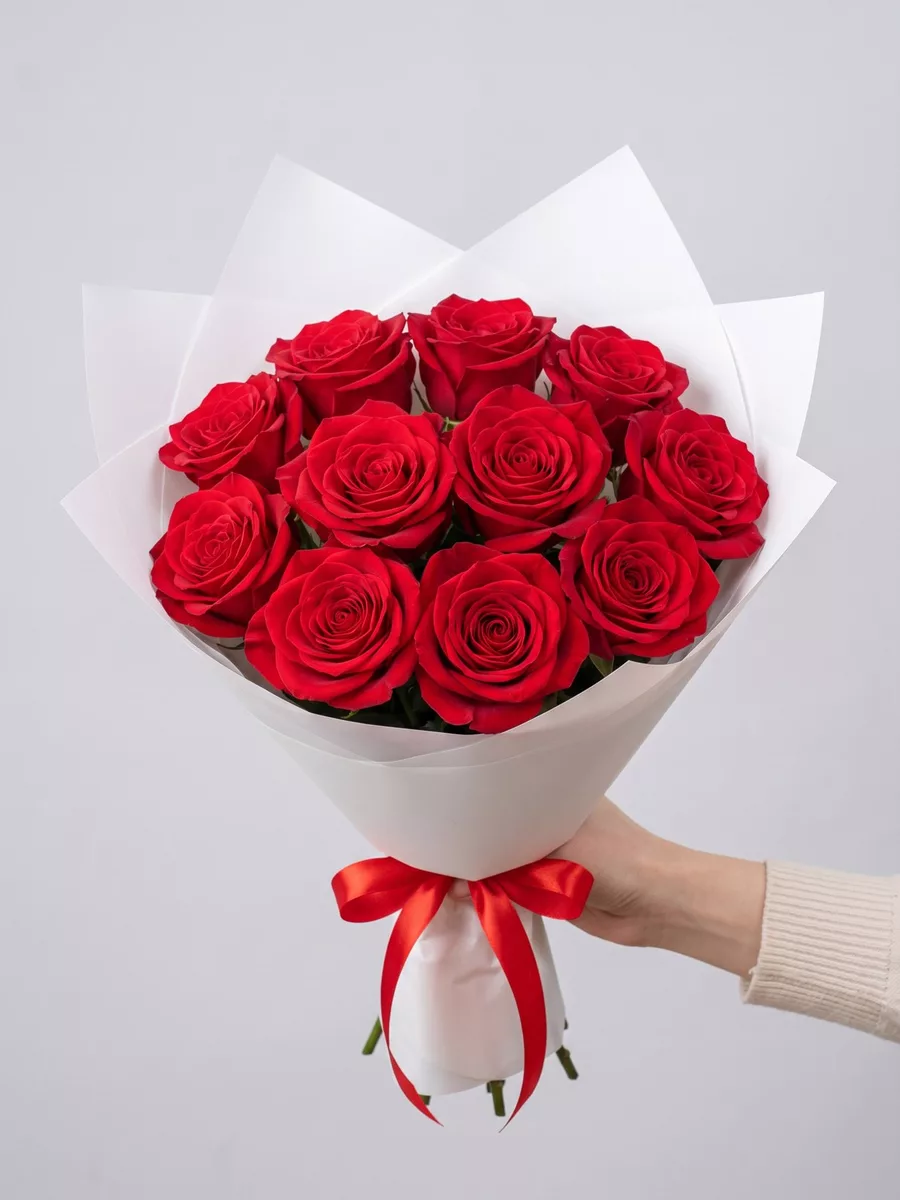
Bouquets we can deliver



Entrance, floor and intercom: the part that really matters
A typical Russian residential block has several entrances (podyezd), each with its own staircase and lifts, and the flats are numbered through the whole building. Flat 145 might be in entrance 4 on the ninth floor, and from the street there is no way to tell. When the entrance number is missing, the courier has to walk along the building and read the plates by each door, which takes time and wears on the flowers in winter.
Ask the recipient for the entrance, the floor and the intercom code (domofon). Many intercoms work by dialling the flat number, but some buildings have a separate code, a concierge or a gate to the courtyard with its own call button. New residential complexes often have a closed territory, and the courier needs to know which gate to use.
The courier calls the recipient about 15 minutes before arrival. That call solves most problems with entrances and codes, but only if the phone number in the order is correct and the person answers. Write the number with +7 and tell the recipient that a delivery is coming if it is not a surprise.
Offices, hospitals and other special addresses
For an office, add the company name, the floor and the office number, and check whether there is a reception or a security desk. Business centres often have a pass system, so it helps to agree in advance who will come down to collect the bouquet. For a work anniversary or a colleague's birthday, our article on sending flowers to a Russian colleague covers the etiquette.
Hospitals in Russia often do not allow flowers in the wards, and a courier usually cannot go beyond the reception. If you want to thank a doctor or a nurse, read flowers for a Russian doctor or nurse first; it explains when it is appropriate and what to choose.
For a hotel, give the hotel name, its address and the guest's name as it is written in the passport used at check-in. Reception staff usually accept flowers for a guest, but they need a name they can find in their system.
If the recipient is not home
Even with a perfect address, plans change. If the recipient is not there, we agree a second delivery the same day or, with your consent as the sender, hand the flowers to a neighbour or the concierge. Decide in advance which option you prefer and mention it in the order comment.
To avoid the situation altogether, choose a delivery time that suits the recipient's day. You can order express delivery, which in large cities takes 1-2 hours after the order is confirmed, an exact time within plus or minus 30 minutes, a window of 09-12, 12-15, 15-18 or 18-21, or pre-order 1-30 days ahead. In Saint Petersburg delivery is around the clock, which helps when someone works late or comes home at night.
Delivery is anonymous by default: the courier does not name the sender. If you want the recipient to know who it is from, write it on the card, which is free.
A checklist before you order
Before paying, check that you have: the city and, outside the centre, the district or settlement; the street with its type (ulitsa, prospekt and so on); the building number with korpus, stroenie or letter; the flat or office number; the entrance, floor and intercom code; the recipient's full name; and a phone number with +7. With these seven items, the address is complete.
Choose the bouquet in our catalogue and fill in the address fields in the same order as above, putting the entrance, floor and code into the comment if there is no separate field. City delivery costs 500 RUB. Payment is online by bank card, SBP or Yandex Pay, and foreign bank cards are accepted via Robokassa; details are on the delivery and payment page.
Pyat Tsvetov has been working in Saint Petersburg since 2011 with three own shops, on Ilyushina Street, Obvodny Canal Embankment and Srednerogatskaya Street, and we deliver across Russia. If you are not sure how to read the address your relatives sent, call us at 8 (812) 507-67-05 and we will go through it with you.
Frequently asked questions
How do you write a Russian address in English?
Go from large to small: city, street with its type, building number with korpus if any, then flat number. For a delivery, add the entrance, floor, intercom code and a phone number with +7.
What is a korpus in a Russian address?
A korpus is a separate section or block of a building that shares the same house number. It must be included, otherwise the courier may go to the wrong block.
Can I enter a Russian address in Cyrillic?
Yes, and it is often the safest option. Couriers read Cyrillic, and an exact copy of the address avoids errors from transliteration.
What is a podyezd?
A podyezd is an entrance with its own staircase and lifts in an apartment block. Large buildings have many of them, so the entrance number saves the courier a lot of time.
What happens if the address is wrong or nobody is home?
The courier calls the recipient about 15 minutes before arrival, which helps clear up address questions. If nobody is home, we agree a second delivery the same day or, with your consent, leave the flowers with a neighbour or concierge.
Ready to send a bouquet?
Pick a city, choose the flowers, and we will hand them over with a photo confirmation.
Choose a city →