
Russian Chamomile: A Guide to the Flower and the Gift
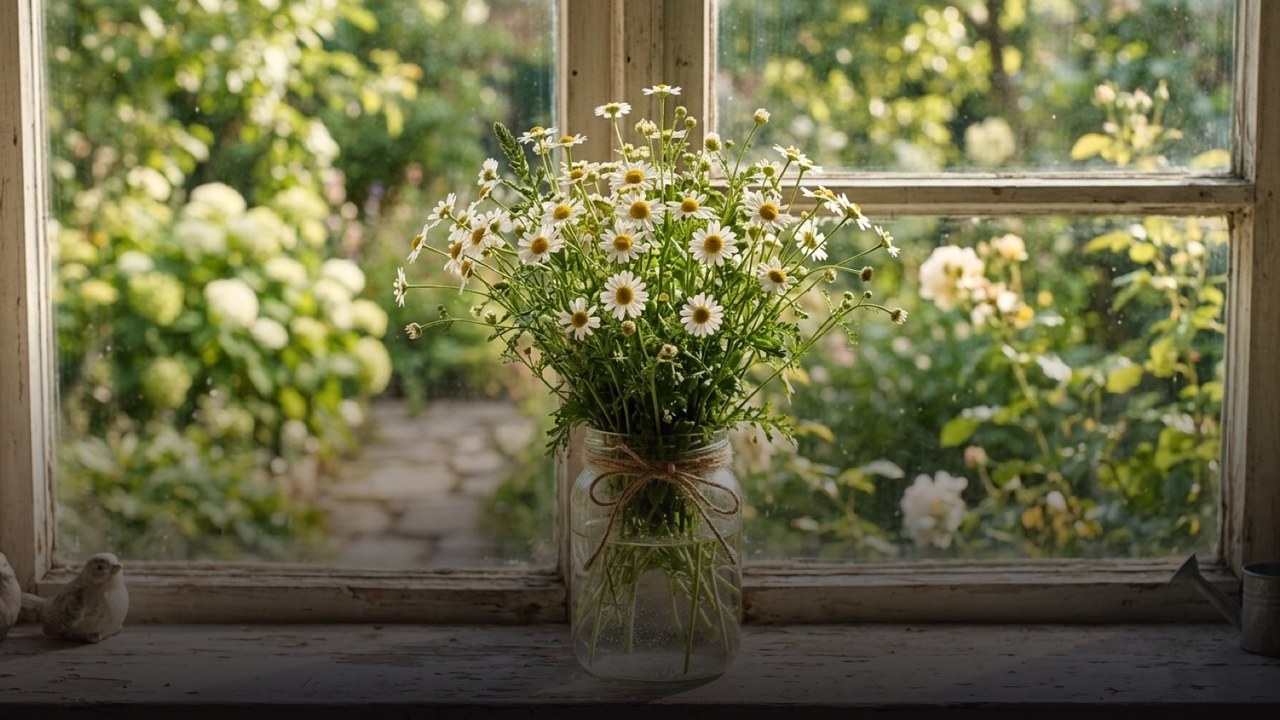
Russian chamomile usually refers to the familiar white flower with a yellow centre called romashka in Russian, although the English phrase does not identify one precise botanical species. In a bouquet, that name may describe daisy-like flowers rather than the chamomile used for herbal tea. If you are choosing a gift, a clear photograph and the recipient’s preferences are more useful than the common name alone.
Customers asking for romashki often have a particular look in mind: white petals, visible yellow centres and an informal arrangement with plenty of space between the flowers. At Pyat Tsvetov (5 Flowers), our experience comes from running flower shops in Saint Petersburg since 2011. The practical starting point is to establish whether you want cut flowers, a plant to grow or information about herbal chamomile, because those are different purchases.
What the name tells you—and what it leaves uncertain
Romashka is a Russian common name, so it does not work like a scientific plant label. German chamomile, Matricaria chamomilla, has finely divided foliage and relatively small flower heads; larger white daisies used in arrangements may belong to other genera, including Leucanthemum. A yellow centre surrounded by white petals is therefore a starting clue rather than a complete identification. Do not assume that a large bouquet daisy has the fragrance or herbal uses of tea chamomile.
For cut flowers, compare the flower-head size, branching and foliage in the product photograph with the effect you want. For seeds or a living plant, look for a botanical name on the label instead of relying on a photograph of white flowers. Treat florist stems as decorative flowers: do not brew them, add them to food or use them as a home remedy. Their appearance does not establish either an edible identity or a growing history suitable for consumption.
Meaning in Russia: affection without a fixed message
The familiar Russian petal-counting game, lyubit—ne lyubit, corresponds to “loves me, loves me not” and helps explain the flower’s romantic associations. Chamomile-like daisies can also suggest simplicity, tenderness and a countryside summer, but these are cultural associations rather than a message every recipient will interpret identically. They suit someone who enjoys an unforced, informal style. A short card saying why the flowers reminded you of that person makes the intention clearer than symbolism alone.
For a birthday or a friendly visit, follow the recipient’s taste before choosing a flower for its supposed meaning. Russian gifting etiquette generally favours an odd number when individual stems are deliberately counted, while even counts are associated with mourning; a branching stem can carry several flower heads, so distinguish stems from blooms. Avoid making a romantic declaration through flowers alone when the relationship is professional or new. Our guide to chamomile’s meaning and gift ideas explores that cultural context further.
Bouquets we can deliver




Choosing a bouquet that matches the recipient
Decide first whether the recipient would enjoy a loose, meadow-like shape or a more compact bouquet. White petals and yellow centres are visually distinctive, so abundant wrapping or many competing colours can obscure the feature you chose the flowers for. When comparing arrangements, look at the visible flower heads, the balance of foliage and the overall outline. A close-up of one bloom gives little information about how the complete bouquet will look on a table.
Use the bouquets catalogue to check what is actually listed, and ask about the pictured flowers if the name leaves their identity unclear. A search for Russian chamomile does not establish that a particular species or arrangement is available for your date. If the exact flower matters, clarify that before treating a different white-and-yellow flower as equivalent. For an office gift, also consider whether the recipient has space for a vase and can conveniently take the flowers home.
Caring for cut chamomile-like flowers at home
Start with a clean vase and fresh water, then remove foliage that would sit below the waterline. Recut the stem ends with a clean, sharp tool before arranging them, and leave enough room for the stems without forcing them tightly together. If flower food comes with the bouquet, follow its dilution instructions rather than adding an improvised amount. Submerged leaves and dirty containers encourage water deterioration, so these basic preparations matter more than household additives.
Check the water daily, replenish it as needed and replace it when it becomes cloudy; wash the vase when changing the water. Keep the arrangement away from radiators, direct sun and ripening fruit, and remove deteriorating stems promptly. Inspect branching stems carefully because one fading flower head does not necessarily mean every head on that stem has finished. Vase life varies with the actual species, freshness and room conditions, so a common name cannot support a reliable promise of a fixed number of days.
Timing a flower gift for someone in Russia
Choose the delivery date and window around when the recipient can realistically receive and care for the flowers. For an office address, check their working day and provide clear workplace details; for a home address, check the building and flat information. Use the destination’s local time when planning from abroad, especially if your own calendar date differs. A well-chosen window helps avoid leaving the recipient with an unexpected delivery while travelling or attending an appointment.
In large cities, express delivery is available in 1–2 hours after the order is confirmed. Other options are delivery at an exact time with a tolerance of plus or minus 30 minutes, windows of 09–12, 12–15, 15–18 or 18–21, and pre-ordering 1–30 days ahead. Saint Petersburg delivery operates around the clock; that statement does not extend to every Russian city. Read the delivery and payment information and plan around confirmation rather than assuming the clock starts when you first open checkout.
Ordering from abroad and making the message personal
We deliver flowers across Russia, with city delivery costing 500 RUB. For remote districts and suburbs, the operator confirms the delivery price when confirming the order. Prepare the recipient’s name, phone number, full address and intended local delivery window before placing the order. Online checkout uses CloudPayments; check the payment options displayed there, as acceptance of every foreign card cannot be promised.
A card with your text is free, so use it to explain the occasion or include a familiar phrase in the recipient’s preferred language. Delivery is anonymous by default: the courier does not name the sender, so sign the card if you want the recipient to know who sent it. The courier calls about 15 minutes before arrival; if the recipient is absent, we agree a second delivery that day or a handover to a neighbour or concierge with the sender’s consent. For questions about the order or the flowers, call 8 (812) 507-67-05.
Frequently asked questions
Is Russian chamomile a separate botanical species?
The phrase alone does not identify a single species. The Russian name romashka can describe familiar white-and-yellow daisy-like flowers, so use a botanical label when precise identification matters.
Can I make tea from a chamomile bouquet?
Do not use florist flowers for tea or food. Buy chamomile specifically intended for consumption, because bouquet flowers may be a different plant and are not supplied as a food product.
Are chamomile-like flowers appropriate for a romantic gift?
They can be, especially for someone who likes informal flowers and the associations of romashka. Add a personal card so the recipient understands your intention without having to interpret flower symbolism.
Can I pay for flowers to Russia with a foreign card?
Online checkout uses CloudPayments, and you should check the options displayed at checkout. Acceptance of every foreign card is not guaranteed.
Will the courier reveal my name?
Delivery is anonymous by default, and the courier does not name the sender. If you want to identify yourself, include your name in the free card text.
Ready to send a bouquet?
Pick a city, choose the flowers, and we will hand them over with a photo confirmation.
Choose a city →