
Russian Wedding Flowers: What the Couple Actually Wants
Every week someone calls us from abroad — a cousin in Berlin, an aunt in Toronto — asking what to send a couple getting married in Russia. They have seen the photos online: enormous white arrangements, roses piled so high the bride can barely hold them, greenery spilling over the edge of the frame. What they do not know is which of those choices is traditional, which is fashionable right now, and which will quietly embarrass the person who ordered it. This article gives you the working florist's version: real varieties, real expectations, and the practical steps to get a bouquet delivered to the venue on time.
What Russian Brides Have Traditionally Carried
The classic Russian bridal bouquet has always been round and dense — what florists call a biedermeier or compact dome shape. For most of the twentieth century, red roses were the default, and older relatives still associate that colour with celebration and sincerity rather than romance in the Western sense. Carnations in white or red were common through the Soviet period and remain acceptable in some regions, though younger urban brides in Moscow and Saint Petersburg now treat them as dated. White roses, particularly large-headed garden varieties such as David Austin's Juliet or the spray rose Lovely Lydia, have replaced red as the dominant choice over the past decade. Lily of the valley was and remains genuinely prestigious — it signals care and expense because the season is short, running roughly from late April through May, and forcing it outside that window is costly. Peonies occupy a similar position: available fresh from late May through July, intensely fragrant, and associated with abundance rather than any specific symbolic meaning in Russian culture. The key thing to understand is that Russian wedding aesthetics lean toward volume and fullness rather than the loose, just-picked look popular in Scandinavia or the UK. A bouquet that looks sparse will read as unfinished, even if every stem in it is expensive. If you are ordering from abroad, specify a round, full shape explicitly — do not assume the florist will default to it.
Bouquets we can deliver



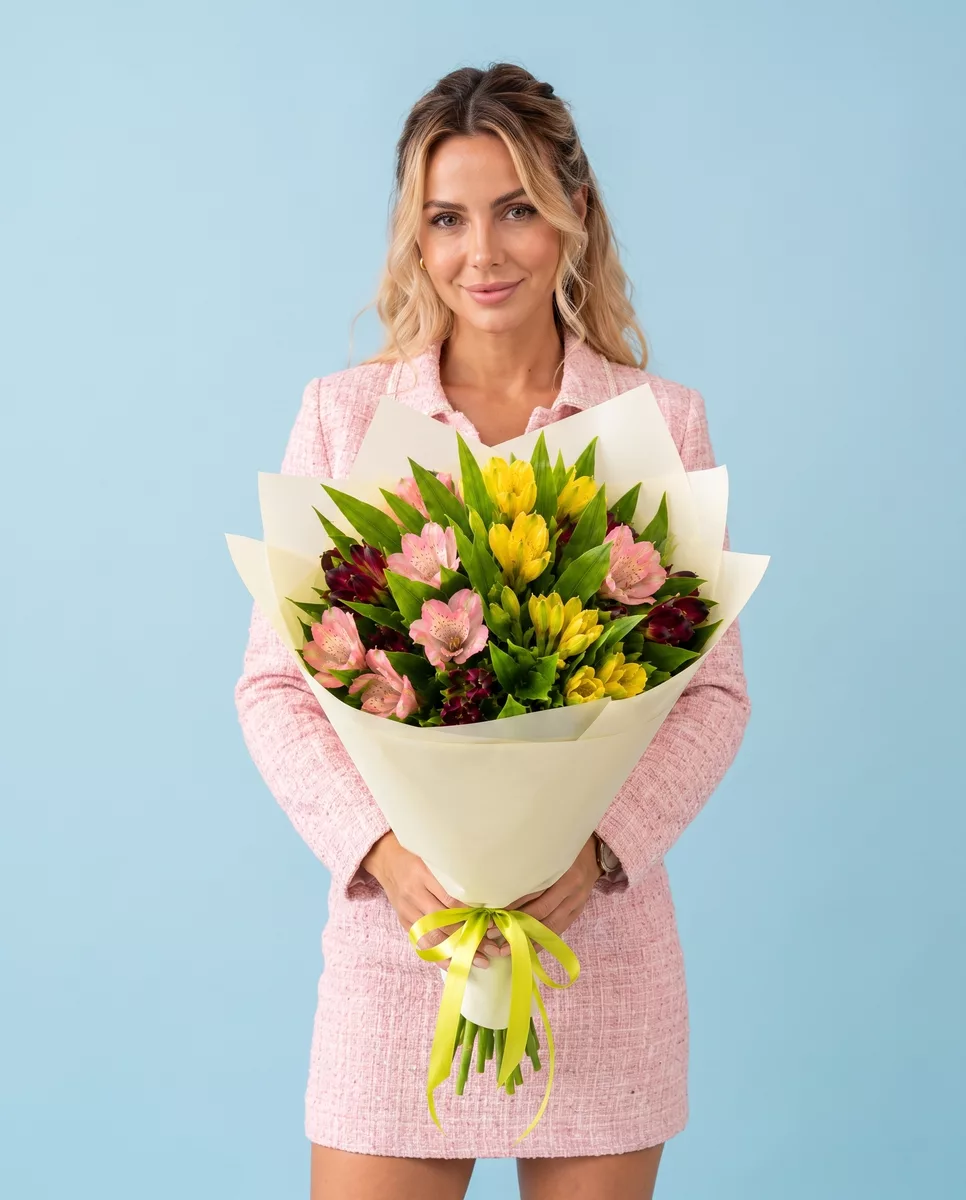
Modern Styles Couples in Russia Are Actually Choosing Now
Contemporary Russian brides, particularly those marrying in Saint Petersburg and Moscow, follow European trends closely but filter them through a preference for abundance. The cascading or waterfall bouquet — long, trailing stems of orchids, amaranthus or clematis vine falling below the bride's hands — has grown steadily popular since about 2018 and shows no sign of fading. Garden-style bouquets mixing David Austin roses with ranunculus, lisianthus and eucalyptus have become the most requested style in our shop for weddings between May and September. Lisianthus, sometimes sold under the name eustoma, is worth knowing: it looks like a delicate rose, comes in white, cream, lilac and deep purple, and holds its shape well in the warm rooms of a reception hall. Ranunculus in blush, peach or coral tones photograph beautifully and are available from late winter through early summer. Dried flower arrangements — pampas grass, dried lunaria, preserved eucalyptus — appeared strongly around 2021 but are already dividing opinion; younger couples embrace them, while parents and grandparents at the table often find them odd. Monochromatic white bouquets remain the safest universally approved choice: white garden roses, white lisianthus, white freesia and white sweet peas read as elegant to every generation in the room. If you are sending a gift bouquet rather than the bridal bouquet itself, a generous all-white arrangement in a round shape will never be wrong at a Russian wedding regardless of the couple's personal aesthetic.
Colours That Work and Colours That Cause Problems
Colour symbolism at Russian weddings differs enough from Western conventions to catch overseas guests off guard. Yellow flowers are the most common mistake: in Russian popular belief, yellow blooms given as a gift signal separation or infidelity, and while younger educated Russians often dismiss this as superstition, enough guests at any wedding will raise an eyebrow to make yellow a poor choice for a gift you want to be warmly received. This applies to yellow roses, yellow tulips, yellow gerberas and yellow chrysanthemums equally. Orange and peach tones are entirely safe and are currently fashionable. Red remains celebratory and is never wrong, though it reads as bold and passionate rather than neutral. Pink in all its shades — blush, dusty rose, hot pink — is universally accepted and currently very popular. White is the colour of celebration in Russian culture, not mourning, so an all-white bouquet is genuinely festive. Purple and lavender work well, particularly in lisianthus and sweet peas. Deep burgundy roses such as the variety Black Baccara or Dark Spirit photograph dramatically and are frequently requested for autumn weddings in September and October. Blue flowers are rare in nature and therefore expensive; blue delphinium and blue hydrangea are acceptable but not traditional. The one colour combination to avoid absolutely is yellow and white together — that pairing carries the strongest negative association in Russian floral folk belief, and even guests who consider themselves unsuperstitious will notice it.
Bouquets for the Wedding Party: Bridesmaids and Mothers
Russian weddings follow a structure that overseas guests sometimes find unfamiliar. There is typically no large bridesmaid party in the Anglo-American sense, but the bride will have one or two close friends — called witnesses, or svideteli — who may carry smaller matching bouquets. More importantly, the mothers of the bride and groom are central figures at a Russian wedding and are almost always presented with flowers during the ceremony or reception. Sending a bouquet specifically for the mothers is considered a thoughtful and culturally aware gesture that will be remembered. For the mother of the bride, a medium round bouquet of roses or peonies in white, cream or soft pink is appropriate. For the mother of the groom, something similar in a slightly different colour — say, peach rather than blush — allows both women to be honoured without their arrangements being identical. The flowers for the wedding party should be visibly related to the bridal bouquet in variety or colour but clearly smaller in scale, so the hierarchy of the occasion is maintained. Chrysanthemums in large-headed varieties are perfectly acceptable for the mothers' bouquets and are not considered downmarket in Russia the way they sometimes are in Western European floral culture — a large white chrysanthemum spray is genuinely elegant. Avoid mixing too many varieties in a small bouquet; three varieties maximum keeps the arrangement looking intentional rather than leftover.
Timing the Delivery to the Ceremony and Reception
The single most common problem with wedding flower deliveries is timing, and it becomes more acute when the person ordering is in a different time zone. Russian wedding ceremonies at a registry office, called the ZAGS, are typically scheduled in the morning between ten and one o'clock. The reception follows in the afternoon and evening, often starting at three or four and running until midnight or later. A bouquet ordered for the ceremony needs to arrive before the couple leaves for the ZAGS, which means delivery before ten in the morning at the latest. If you are ordering from abroad and the time difference is significant, place the order the evening before and specify a morning delivery window explicitly — do not leave it to a default same-day slot. Fresh roses and peonies begin to open within two to three hours in a warm room, so a bouquet delivered at eight in the morning for a midday reception will look perfect at the table; the same bouquet sitting in a car for six hours in summer heat will not. Lisianthus and alstroemeria are more heat-tolerant and hold their form for longer, which is why they are often recommended for outdoor summer weddings. For winter weddings — and Russia has many, particularly around the New Year period — cold is less of a concern than the dry heat of indoor venues, which dehydrates flowers quickly. Ask the florist to include a water source in the packaging if the bouquet will be held for more than two hours before it is needed.
What to Send If You Cannot Attend the Wedding
Sending flowers as a gift when you are not at the wedding yourself is entirely normal in Russia and is not interpreted as a lesser gesture than attending. The bouquet should arrive on the wedding day itself — not the day before, which reads as an afterthought, and not the day after, which misses the moment entirely. A generous round bouquet of fifty or more stems is the appropriate scale for a wedding gift; a small ten-stem arrangement will look like a birthday bouquet and will not match the scale of the occasion. If the couple has a specific colour palette for the wedding — many Russian couples now publish this on social media or in a wedding invitation — match it. If you do not know the palette, white with greenery is the universally safe choice. Roses in white or cream, garden varieties if available, with eucalyptus or ruscus as filler, will suit any wedding aesthetic. Including a handwritten card is important: Russian wedding culture places weight on written congratulations, and a card in the envelope that simply says who the flowers are from and wishes the couple long happiness is far more meaningful than no card at all. If you are ordering from abroad, confirm with the florist that they will include a card slot and that your message will be printed or written in full. Do not rely on a generic store message — write something specific to the couple.
Practical Checks Before You Confirm the Order
Before you finalize any wedding flower order for delivery in Russia, work through a short checklist that will prevent the most common failures. First, confirm the exact delivery address — not the couple's home address, but the venue address, which may be a restaurant, a banquet hall or a country estate outside the city. Many venues in Saint Petersburg and the surrounding Leningrad Oblast are thirty to sixty minutes from the city centre, and delivery time calculations must account for that distance. Second, confirm a contact phone number for someone at the venue who will be present to receive the flowers — not the bride, who will be occupied, but a wedding coordinator, a parent or a witness. Third, specify the delivery window in local Russian time and double-check the time zone conversion yourself rather than trusting an automatic calculator. Fourth, confirm the variety and colour of the main flowers rather than ordering by a category name like bridal bouquet — what one florist calls a bridal bouquet may be quite different from what another produces. Fifth, ask about the water source in the packaging if the bouquet will be held for more than ninety minutes before it is presented. Sixth, if peonies or lily of the valley are central to your request, confirm seasonal availability before placing the order — both have narrow natural seasons and the price and quality of forced or imported versions varies significantly. A florist who answers these questions directly and specifically is one you can trust with a wedding order.
Russian wedding flowers are not complicated once you understand a few fixed points: full and round rather than loose, white and pink and red rather than yellow, generous in scale rather than minimal, and delivered on the day at the right hour rather than whenever is convenient. The couple will notice the care that went into the choice — the right variety for the season, the colour that matches their palette, the bouquet that arrived before the ceremony rather than during the speeches. Ordering from abroad adds a layer of logistical pressure, but it is entirely manageable when the details are confirmed in writing before the order is placed. Five Flowers delivers fresh bouquets across Russia within one to two hours of order, and our team is used to working with overseas customers who need clear communication across time zones. We deliver bouquets across Russia in 1–2 hours.
Frequently asked questions
Are yellow flowers really a problem at a Russian wedding?
Yes, in practice. The belief that yellow flowers signal separation or bad luck in a relationship is widespread enough in Russia that many guests, including younger ones, will notice and mention it. Even couples who call themselves unsuperstitious often prefer to avoid the comment entirely. Choose white, pink, red, peach or burgundy and the colour will never be a topic of conversation.
Can I send flowers to a Russian wedding if I am not attending?
Absolutely, and it is considered a warm and respectful gesture. The bouquet should arrive on the wedding day itself, not before or after. Order a generous arrangement — fifty or more stems — so it reads as a wedding gift rather than a casual greeting. Include a written card with a personal message; a generic printed note is much less meaningful than something specific to the couple.
What is the best flower for a Russian winter wedding?
Roses are available year-round from import and are the most reliable choice for winter weddings. White or cream garden-style roses, spray roses and lisianthus all hold well in heated indoor venues. Avoid flowers with very thin petals, such as sweet peas, which dry out quickly in centrally heated Russian buildings. Hypericum berries and eucalyptus make excellent winter fillers and photograph well against snowy backdrops.
How far in advance should I order wedding flowers for delivery in Russia?
For a same-day delivery within Saint Petersburg, two to three hours is sufficient for most arrangements. For a wedding, place the order at least the evening before to guarantee a specific morning delivery window. If you need rare seasonal varieties — peonies, lily of the valley, garden roses — contact the florist three to five days ahead so the stems can be sourced and conditioned properly before the wedding date.
Is it appropriate to send a bouquet to the mother of the groom as well as the bride?
Yes, and it will be noticed as a culturally informed gesture. Mothers play a central ceremonial role at Russian weddings and are traditionally presented with flowers. A medium round bouquet in a colour that complements but does not duplicate the bridal arrangement is the right approach. Ordering two coordinated bouquets — one for each mother — is a thoughtful choice that will be remembered long after the day.
Ready to send a bouquet?
Pick a city, choose the flowers, and we will hand them over with a photo confirmation.
Choose a city →