
Flower Delivery to Kotelnich from Abroad: What Senders Need to Know
People call us from Germany, the United States, Israel, and a dozen other countries every week asking the same thing: can you actually get fresh flowers to a small Russian city the same day I order? Kotelnich, a city in the Kirov region with around 24,000 residents, is not a metropolitan hub, but it is reachable, and the answer is yes — if you understand the logistics before you pay. The mistakes that cost people money and disappointment are almost always made in the first five minutes of ordering: wrong address format, no phone number for the recipient, or a bouquet chosen for a climate that does not match the season on the ground. This article covers exactly what you need to get right.
Where Kotelnich Sits and Why It Matters for Delivery
Kotelnich is located in the Kirov region of central Russia, roughly 870 kilometres northeast of Moscow. The city sits along the Vyatka River and experiences a continental climate with cold winters that regularly drop below minus 20 degrees Celsius and warm summers that can push above 25 degrees. That temperature range is not a footnote — it directly affects which flowers survive transit and how they look on arrival. A sender in Madrid or Toronto ordering in January needs to know that roses and tulips can handle a brief cold transit if packaged correctly, but tropical stems like strelitzia or anthurium will blacken in extreme cold even inside an insulated box. The Kirov region is not a remote destination by Russian standards, but it is not a same-hour delivery zone the way central Saint Petersburg is. Orders placed before noon local Saint Petersburg time have the strongest chance of same-day arrival. Orders placed in the afternoon still reach Kotelnich the same day in most cases, but the window tightens. When you are ordering from abroad, you are working across time zones, so the practical rule is this: place your order at least six hours before the moment you want the flowers delivered, and confirm the recipient will be at the address during that window. A missed delivery in a city like Kotelnich is harder to reroute quickly than in a large urban centre, so timing communication with your recipient matters as much as the bouquet itself.
Bouquets we can deliver



What Flowers Actually Travel Well to Kotelnich
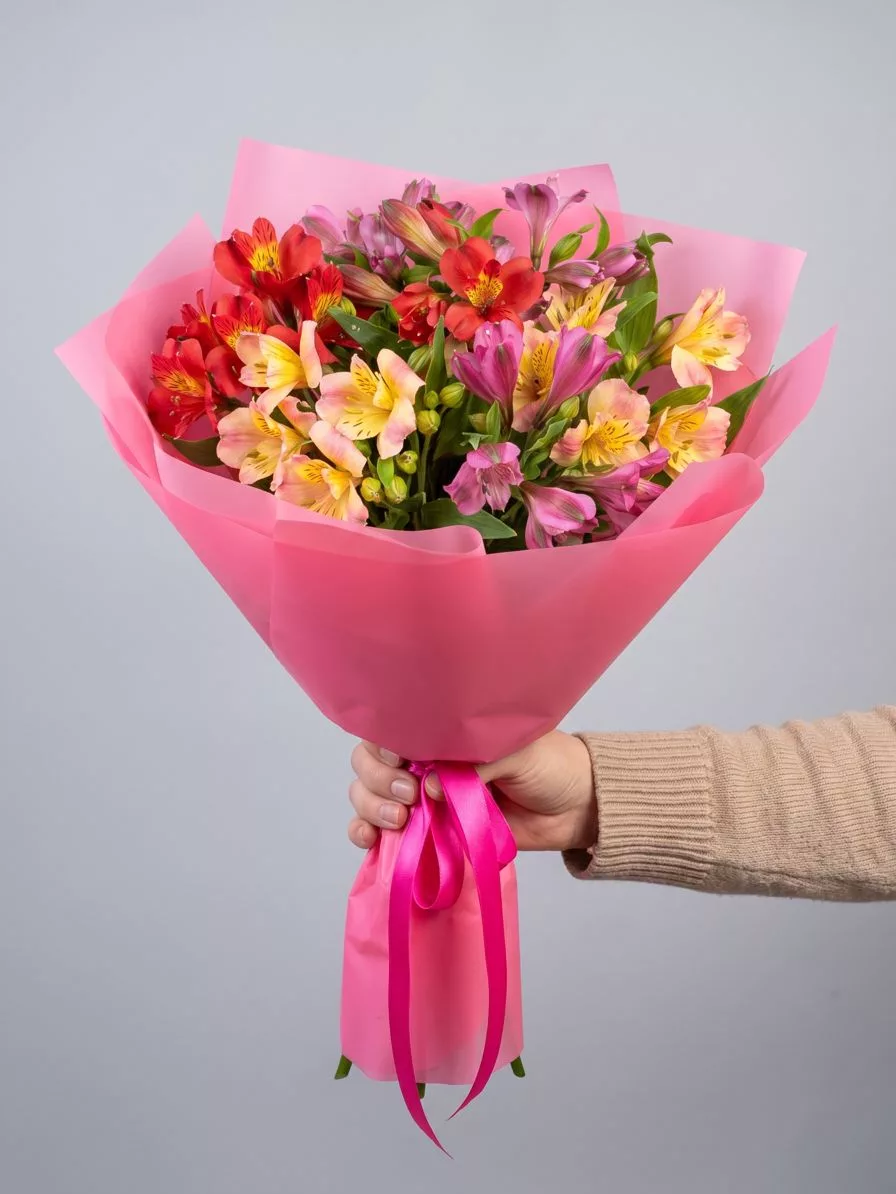
The question we hear most from international senders is: what should I order? The honest answer depends on the month. From November through March, the safest choices are spray roses, standard roses in closed bud stage, chrysanthemums, and alstroemeria. These varieties handle cold transit without wilting or browning, and they open gradually once the recipient puts them in water at room temperature. Carnations are underrated for winter orders — they are extremely cold-tolerant, long-lasting, and available in a wide colour range including white, red, coral, and burgundy. From April through September, the range opens up considerably. Peonies are available from late May through July and are enormously popular in Russia for birthdays and celebrations. Lisianthus, also called eustoma, holds up well in warmer weather and gives a bouquet a full, layered look without the price of garden roses. Sunflowers are practical in summer — they travel well, they are cheerful, and they mean something specific in Russian culture: they are associated with warmth, generosity, and the countryside, so they land well across age groups. What to avoid regardless of season: open lilies in transit, because the pollen stains and the petals bruise; delicate orchid sprays unless they are cymbidium, which is sturdier than phalaenopsis; and any bouquet that relies on very open, fully bloomed heads, because those are past their peak before they arrive. Ask specifically for buds at forty to sixty percent open when placing your order — that is the right stage for a bouquet that will look its best for five to seven days after delivery.
How to Give Us the Address Correctly from Outside Russia
This is where most international orders go wrong. Russian addresses follow a specific structure that differs from Western formats, and if you write it the way you would write a British or American address, the delivery will be delayed or fail entirely. The correct order in Russian addressing is: postal code first, then region, then city, then street, then building number, then apartment number if applicable. For Kotelnich, the postal code is 612600. A correctly formatted address looks like this: 612600, Kirovskaya oblast, Kotelnich, ulitsa Lenina, dom 5, kvartira 12. The word ulitsa means street, dom means building, and kvartira means apartment. You do not need to write in Cyrillic — our team translates and verifies every address before dispatch — but you do need all the components. The single most common mistake from abroad is omitting the apartment number for a multi-storey building. In Russian cities, a building number alone covers dozens of flats. Without the apartment number, the courier cannot complete delivery and must call the recipient, which adds time and sometimes causes the recipient to figure out the surprise before the flowers arrive. The second most common mistake is providing a workplace address without specifying the organisation name or floor. If your recipient works in an office building, include the company name. Always include a working Russian mobile number for the recipient — starting with 7 or 8, followed by ten digits. Without a contact number, delivery to Kotelnich is not possible. If your recipient does not have a Russian number, include a note with your own international number and instruct the courier to call you if there is a problem.
Payment from Abroad: What to Expect
Paying for a flower delivery from a foreign bank card to a Russian shop is a step that confuses international senders, and it is worth addressing plainly. Due to the current state of international banking restrictions, not all foreign cards process smoothly on Russian e-commerce platforms. Visa and Mastercard issued outside Russia have been restricted from direct processing since 2022. This does not mean you cannot pay — it means the method matters. We accept payment through several channels that work for international clients, and our managers will walk you through the current options when you contact us directly. The most reliable approach for someone ordering from abroad is to reach us via the website contact form or by messaging through the platform, explain that you are paying from outside Russia, and ask for the current payment instruction. Do not assume the standard card checkout will work and do not abandon the order if it declines on the first attempt — that is a processing routing issue, not a problem with your order itself. Cryptocurrency payments, transfers through intermediary services, and payments made by a Russian contact on your behalf are all options that have worked for our international clients. The price you see on the site is the price you pay — there is no international surcharge added to orders from abroad. What does vary is the exchange rate at the moment of conversion, which is handled by your bank or payment service, not by us. Budget a small buffer for that. One practical note: if you are sending flowers as a gift and want to keep the price private, you can ask us not to include any receipt or price information with the delivery, which is standard practice for gift orders.
Russian Flower Customs That International Senders Get Wrong
If you are not familiar with Russian gifting culture, a few customs around flowers are worth knowing before you choose your bouquet, because they affect how the gift is received. The most important one: always send an odd number of stems. Even numbers of flowers — two, four, six, eight — are associated with funerals and mourning in Russian tradition. A bouquet of twelve roses is beautiful in many countries; in Russia it reads as a grave offering. Order eleven, thirteen, fifteen, or any other odd count. This applies across all flower types, not just roses. Our florists automatically build bouquets in odd numbers, but if you are specifying a custom count, keep this in mind. Yellow flowers carry a separate cultural weight in Russia. Yellow roses and yellow tulips are strongly associated with separation and bad luck in relationships, particularly among older generations. Younger Russians are less strict about this, but if you are sending to someone over forty and you are not certain of their preferences, avoid a purely yellow bouquet. Mixed arrangements that include yellow alongside other colours are generally fine. White flowers are appropriate for celebrations, not just for solemn occasions — white roses, white lisianthus, and white chrysanthemums are all popular for birthdays and anniversaries. Red roses remain the most universally understood romantic gesture. For a birthday to a woman in Kotelnich, a mixed bouquet of peonies and spray roses in pink and white is a very safe and appreciated choice from May through July. For a man's birthday, chrysanthemums, sunflowers, or a structured monobouquet of burgundy roses tend to land better than soft pastel arrangements.
Writing a Card Message for a Russian Recipient
Most international senders want to include a personal message with the flowers, and this is straightforward — but there are a few details worth knowing. We can include a handwritten card in Russian, in English, or in both languages. If you want the message in Russian and you do not speak the language, write your message in English and ask us to translate it. Our florists handle this regularly and will produce a natural-sounding Russian text rather than a machine translation. Keep the message short — three to five sentences is ideal for a card. Long messages are better sent separately as a text or voice message after the flowers arrive. For a birthday, the standard Russian greeting is S Dnem Rozhdeniya, which translates directly as Happy Birthday. For a name day — den angela in Russian — the greeting is S Dnem Angela. Name days are observed in Russia and are separate from birthdays; if you know your recipient celebrates their name day, mentioning it specifically is a warm touch that shows cultural awareness. For anniversaries, S Godovshchinoy is the correct phrase. If you are sending flowers to congratulate someone on a new job, new home, or graduation, the word Pozdravlyayu — meaning congratulations — is the right opener. Avoid overly formal or flowery language in the card; Russian greetings tend to be warm and direct rather than elaborate. If you want to write the message entirely in English because your recipient speaks the language, that is completely fine and often appreciated as a personal touch from someone abroad. Just let us know the language preference when placing the order so the card is prepared correctly before dispatch.
What to Check Before You Confirm the Order
Once you have chosen the bouquet, written the message, and entered the address, take two minutes to run through this checklist before you confirm payment. First, verify the delivery date and time against Kotelnich local time, which is Moscow time plus three hours — Kirov region operates on Moscow Standard Time plus three. If you are in New York, you are ten hours behind Kotelnich in winter and nine hours behind in summer. A delivery you want at 6 pm in Kotelnich needs to be ordered by roughly 9 am New York time at the latest. Second, confirm the recipient's phone number is a working Russian mobile number with the correct country code. Third, check that the apartment or office number is included in the address — not just the street and building. Fourth, count the stems in your bouquet. If the site shows an even number, call or message us to adjust to the nearest odd number before dispatch. Fifth, confirm the flower varieties are appropriate for the current season in Kotelnich. If you are ordering peonies in November, we will let you know they are not available and suggest alternatives — but it is faster if you ask upfront. Sixth, if the order is a surprise, make sure the recipient will actually be at the delivery address during the chosen time window. A missed delivery is not always reschedulable the same day. Seventh, save your order confirmation number. If you need to make a change or check on delivery status, that number is the fastest way for our team to locate your order. International callers sometimes forget this step and spend extra time on hold while we search by name or address.
Sending flowers to Kotelnich from abroad is genuinely doable, and we handle international orders to the Kirov region regularly. The details that make the difference are not complicated: correct address with apartment number, odd stem count, season-appropriate varieties, and enough lead time to account for the time zone gap between where you are and where the flowers are going. Get those four things right and the rest of the process is straightforward. The recipient in Kotelnich gets fresh flowers at their door, and you get a confirmation photo showing the delivery was completed — which, when you are thousands of kilometres away, is exactly the reassurance you need. We deliver bouquets across Russia in 1–2 hours.
Frequently asked questions
Which flowers survive the cold transit into Kotelnich in winter?
Spray roses, standard roses in tight closed bud, chrysanthemums, and alstroemeria are the reliable choices from November through March. Tulips and open-headed roses bruise and brown in sub-zero temperatures during the last-mile leg from the Kirov region depot into Kotelnich itself. Order varieties that are still closed when they leave the florist.
Does the continental climate in Kotelnich affect summer orders differently than winter ones?
Yes, and the risk flips. Summer temperatures above 25 degrees mean cut flowers wilt fast if the courier route runs long. In July and August, request early-morning delivery slots and avoid large open blooms like sunflowers or garden roses in full bloom. Closed buds and tropical varieties such as alstroemeria handle summer heat better than delicate European cuts.
What postal code and address format do I need to provide for Kotelnich delivery?
Kotelnich uses postal code 612600. The correct order is: postal code, then Kirov region, then Kotelnich, then street name, building number, and apartment number last. Writing it in Western order — street first, city after — routinely causes sorting delays at the regional hub. Confirm the apartment number separately; many Kotelnich buildings have multiple entrances that matter for delivery.
My bank card is foreign — how do I actually pay a Russian florist for this order?
Most Russian florists cannot process Visa or Mastercard from foreign-issued cards due to current banking restrictions. Payment typically works through international transfer services, cryptocurrency accepted by the shop, or a Russian intermediary who pays locally on your behalf. Ask the florist explicitly before placing the order which method they accept, so you are not left with a confirmed bouquet and no way to pay.
How do I know the bouquet shown on the website is what gets assembled in Kotelnich?
It often is not an exact match. Florists in smaller cities like Kotelnich stock what arrives from the Kirov regional wholesale market that week, not a fixed inventory. Ask for a photo of the assembled bouquet before dispatch — reputable shops send one. If a specific variety matters, name it and ask whether it is currently in stock rather than assuming the website photo reflects what is on the shelf.
Ready to send a bouquet?
Pick a city, choose the flowers, and we will hand them over with a photo confirmation.
Choose a city →