
Misting Cut Flowers: Which Varieties Benefit and Which Get Damaged
The question comes up at least a dozen times a week at the shop: someone picked up a bouquet, got home, and reached for a spray bottle because they remembered reading that flowers need humidity. Sometimes that is exactly right. Sometimes it ruins a fifty-euro arrangement by the next morning. The answer depends almost entirely on which varieties are in the vase, what the temperature is in the room, and whether the water actually evaporates before it sits on a petal for six hours. This article goes through the common flowers we deliver and tells you plainly what to do with each one.
Why Humidity Matters for Cut Flowers at All
Cut flowers lose water through their petals and leaves constantly, not just through the stem. In a centrally heated apartment in Saint Petersburg in January, indoor humidity often drops to 25–35 percent, which is genuinely dry — comparable to a mild desert afternoon. At those levels, petals at the edges begin to desiccate faster than the stem can draw water up, and you see browning tips and curling on varieties like lisianthus and ranunculus within 24 hours of delivery. Misting addresses that surface moisture loss directly by raising the humidity immediately around the bloom. The problem is that water sitting on certain petals, especially thick, velvety ones, does not evaporate quickly in a cool room. Instead it creates a microclimate where botrytis — grey mould — takes hold within 48 hours. So the question is never simply whether to mist, but whether the water will evaporate from that specific petal surface before it causes damage. A thin, papery petal on a delphinium dries in minutes. A dense, layered rose in a cool corner of the room can hold moisture for hours. Room temperature, airflow, and petal texture together determine whether your spray bottle is helping or hurting. Understanding those three variables is more useful than any single rule about misting.
Bouquets we can deliver



Flowers That Genuinely Benefit from Light Misting
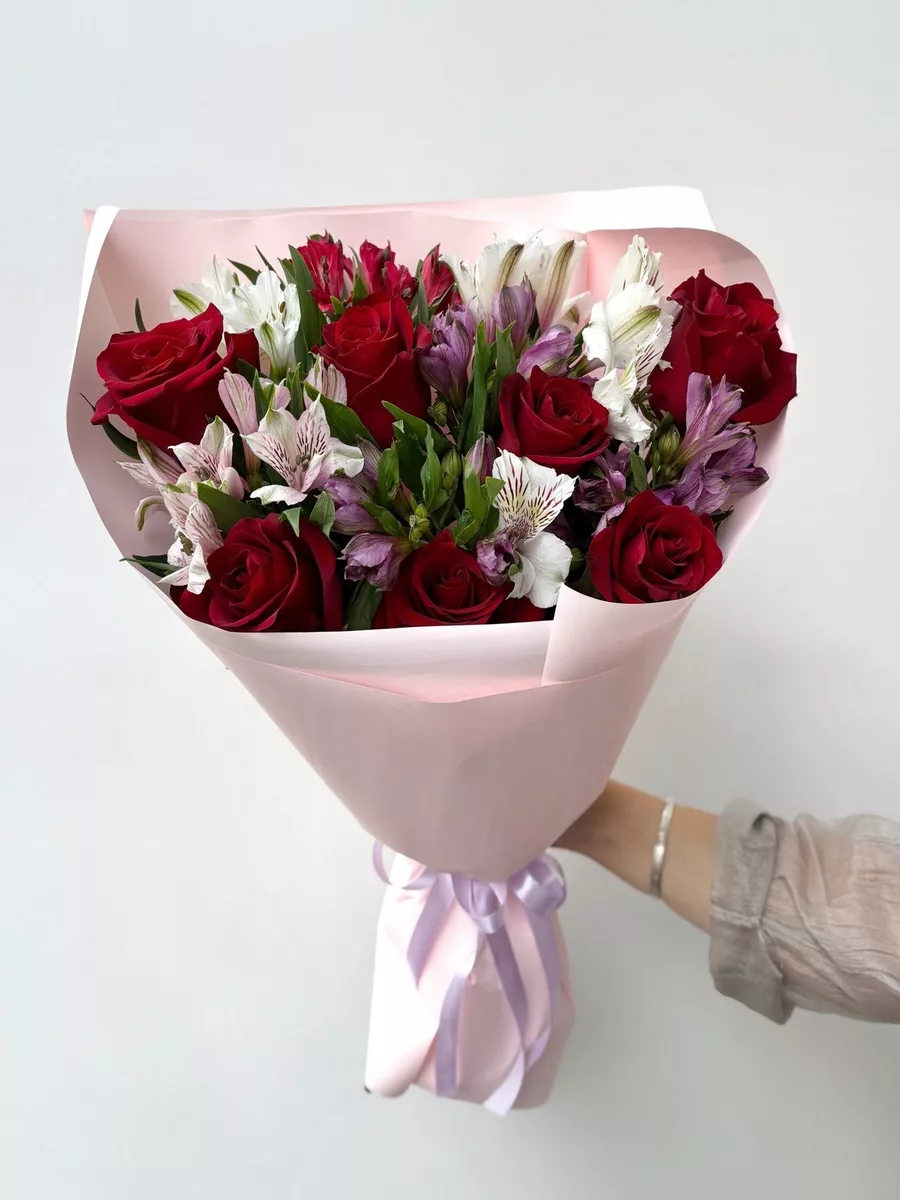
Ferns, eucalyptus, and most foliage components in a mixed bouquet respond very well to misting because their waxy or fibrous surfaces dry quickly and they genuinely suffer in low humidity. Among blooms, gypsophila — the small white filler flower almost every mixed bouquet contains — benefits from a fine mist once a day because its tiny florets dry out and shatter earlier than necessary in heated rooms. Lisianthus, which looks like a softer version of a rose and comes in white, purple, and deep plum, also tolerates misting well; its petals are thin enough that surface water evaporates in 20–30 minutes at normal room temperature. Alstroemeria, a workhorse flower that travels well and lasts 10–14 days in a vase, can be misted lightly on the leaves without any risk. Snapdragons and delphiniums — both tall, spike-shaped flowers used in large arrangements — benefit from misting on the stem and lower florets in warm rooms above 22 degrees Celsius. The key with all of these is technique: use a fine-mist setting, hold the bottle 30–40 centimetres from the bouquet, and do it in the morning so the moisture has the entire day to evaporate. Never mist in the evening before a cool night, because lower temperatures slow evaporation and you end up with wet petals sitting in the dark for eight hours.
Roses: The Most Common Misting Mistake
Roses are the flower we deliver most often, and they are also the flower most frequently damaged by well-intentioned misting. The issue is petal density. A garden rose variety like David Austin or a large-headed Ecuadorian rose — the kind with heads 6–8 centimetres across — has so many layered petals that water sprayed on the outside simply cannot reach the inner layers, but it does sit in the outer petals and in the space between them. In a room cooler than 20 degrees Celsius, that moisture stays there for hours. Botrytis moves quickly in those conditions, and you will see small brown or grey spots appearing on the outer petals within two days. Standard spray roses, which have smaller clustered heads, are somewhat more forgiving because there is more airflow between the blooms, but the same principle applies. If you want to extend a rose bouquet, focus on the water in the vase — change it every two days, cut a centimetre off the stems each time, and keep the roses away from direct sunlight and fruit bowls (ethylene from ripening fruit shortens vase life measurably). If the room is genuinely dry and you feel you must mist, do it only on the leaves and the outer surface of the stem, never directly into the bloom. That compromise gives the foliage some relief without wetting the petals.
Orchids, Gerberas and Other High-Risk Varieties
Phalaenopsis orchids are delivered as potted plants far more often than as cut stems, but cut cymbidium and dendrobium orchids appear in premium mixed arrangements regularly. All orchid blooms are extremely sensitive to water spots. The surface of an orchid petal is smooth and slightly waxy, which means water droplets bead up rather than spreading and evaporating — they sit in one place and leave a permanent pale ring or brown spot once they finally dry. This is not rot; it is a mineral deposit from tap water combined with surface cell damage, and it does not wash off. Gerbera daisies have a different problem: their flat, open faces collect water in the centre disc, and standing water there accelerates the decay of the disc florets, which are the first part of a gerbera to go. A gerbera with a rotting centre collapses within a day or two regardless of how healthy the ray petals look. Tulips are another variety where misting does nothing useful — they draw water aggressively through the stem and do not benefit from surface humidity. Peonies, which are available from late April through June and are one of the most requested flowers in spring deliveries, have dense heads similar to large roses and carry the same botrytis risk. Anthuriums, with their lacquered spathe surface, spot immediately with tap water and should never be misted under any circumstances.
How Room Temperature Changes Everything
The same misting routine that works perfectly in a 24-degree kitchen in summer can destroy a bouquet in a 17-degree bedroom in autumn. Evaporation rate is directly tied to temperature, and many people do not account for the fact that different rooms in the same apartment can vary by 5–7 degrees. Hallways, north-facing rooms, and spaces near balcony doors are consistently cooler than living rooms with active heating. If you keep your vase in a cool spot to extend vase life — which is good practice — you also need to know that any moisture you put on petals will linger far longer than it would in a warm room. The practical rule is this: only mist flowers if the room is above 20 degrees Celsius and there is at least some air movement, either from a window slightly open or a fan running elsewhere in the apartment. Below 20 degrees, skip misting entirely and focus on vase water management instead. In Russian apartments during the heating season, which runs roughly from mid-October to late April, radiators push indoor temperatures up but humidity down — sometimes dramatically. A simple hygrometer from any hardware store tells you the actual humidity. If it reads above 50 percent, your flowers are fine without misting. If it reads below 35 percent and you have foliage-heavy arrangements or delicate filler flowers, a single light mist in the morning on leaves only is reasonable.
Water Quality and Spray Bottle Hygiene
Even when you are misting a variety that tolerates it, the water you use matters. Tap water in Saint Petersburg is treated and contains chlorine and minerals that leave visible deposits on petals — the white or pale grey film you sometimes see on dark-coloured flowers after misting. Filtered water or water that has been left to stand in an open container overnight (which allows chlorine to off-gas) causes significantly less spotting. If you are misting dark red or burgundy roses, dark purple lisianthus, or any flower with a saturated colour, mineral deposits will show clearly and cannot be removed without damaging the petal. The spray bottle itself is a common source of problems that people rarely consider. A bottle that has been sitting under the sink for months with old water in it will have bacterial and mould growth inside, and every spray delivers that contamination directly onto the petals. Rinse your spray bottle thoroughly and refill it with fresh water before each use. If you are using a bottle that previously held any cleaning product, discard it — residue is nearly impossible to fully remove and even trace amounts damage flowers. The nozzle setting matters too: a coarse jet of water is never appropriate for flowers. You want the finest mist the bottle produces, which creates a cloud of tiny droplets rather than visible streams of water that pool on petal surfaces. Held at the right distance, a fine mist raises local humidity without wetting the flower directly.
What to Do Instead of Misting in Most Cases
For the majority of bouquets — especially those containing roses, gerberas, peonies, or orchid stems — misting is not the right tool for extending vase life. The actions that actually make a measurable difference are water changes, stem trimming, and placement. Change the vase water every two days, not every five. Each time you change it, cut 1–2 centimetres from the bottom of each stem at a 45-degree angle using a sharp knife rather than scissors, which crush the vascular tissue. Keep the bouquet away from direct sunlight, heating vents, and the fruit bowl — ethylene gas from apples, pears, and bananas is one of the fastest ways to age cut flowers. If the room is genuinely very dry, placing a shallow dish of water near (not under) the vase increases ambient humidity gently without putting moisture on the petals. For foliage that is wilting despite good vase water, you can wrap just the leaves and stems loosely in a damp paper towel for an hour — this rehydrates foliage without touching the blooms at all. Flowers delivered in warm weather, which in Saint Petersburg means June through August, should be unwrapped immediately on arrival and placed in cool water, because heat accelerates dehydration faster than any misting routine can compensate for. The vase water temperature matters: cool water, around 10–15 degrees Celsius, slows bacterial growth and keeps flowers firmer longer than room-temperature water does.
The spray bottle is not a universal flower care tool — it is a specific intervention that helps certain varieties in certain conditions and damages others predictably. Gypsophila, lisianthus, alstroemeria, and foliage components can handle a careful morning mist in a warm room. Roses, gerberas, peonies, orchid blooms, and anthuriums should never be misted directly. When in doubt, focus on clean vase water, fresh stem cuts every two days, and smart placement away from heat and fruit. Those three habits will do more for your bouquet than any amount of spraying. We deliver bouquets across Russia in 1–2 hours.
Frequently asked questions
Can I mist a mixed bouquet that contains both roses and gypsophila?
Yes, but selectively. Hold the spray bottle close to the gypsophila and foliage only, keeping it away from the rose heads. A piece of paper held as a shield between the roses and the filler while you spray works well. The gypsophila dries quickly; the rose petals will not.
My roses arrived with slightly dry outer petals after delivery. Will misting help?
No — misting dry petals does not rehydrate them effectively and risks spotting. Instead, re-cut the stems by 2 centimetres at a 45-degree angle, place them in cool fresh water, and move the vase to a cooler spot away from direct light. Outer petals often recover within a few hours through proper stem uptake.
Does the type of water I use in the spray bottle actually make a visible difference?
Yes, especially on dark-coloured flowers. Tap water leaves mineral deposits that appear as pale spots or a white film on deep red, burgundy, or purple petals. Filtered water or tap water left to stand overnight in an open container reduces this noticeably. For light-coloured flowers the difference is less visible but still present.
Is it safe to mist flowers in winter when the heating is running and the air is very dry?
Only for foliage-tolerant varieties and only in the morning in a room above 20 degrees Celsius. Central heating drops indoor humidity significantly, which stresses thin-petalled flowers, but the cool temperatures in many rooms slow evaporation. Misting in the evening during winter is risky because petals stay wet overnight.
How do I know if botrytis from misting is starting on my roses?
Look for small grey or brown spots on the outer petals, often appearing first near the petal edges or between tightly packed layers. The spots may have a slightly fuzzy texture in humid conditions. If you see them, remove the affected outer petals immediately, move the bouquet to a drier and warmer spot, and stop misting entirely.
Ready to send a bouquet?
Pick a city, choose the flowers, and we will hand them over with a photo confirmation.
Choose a city →