
Soviet Flowers: The Blooms That Defined Holidays in the USSR
Soviet flowers are the handful of blooms that marked public and family life in the USSR: red carnations for official holidays and Victory Day, yellow mimosa and tulips for 8 March, gladioli and asters for the first day of school, and geraniums and ficus on every windowsill. With a limited choice in shops, each flower became tied to a specific occasion, and those associations are still strong for anyone who grew up in the Soviet Union.
In our Saint Petersburg shops, which have been open since 2011, customers ask about these flowers more often than you might think. Some want a nostalgic bouquet for parents who remember the 1970s, others want to understand why their grandmother frowns at red carnations on a birthday. Here is what each Soviet flower meant, which customs survived, and how to choose flowers today that speak to that generation without feeling like a museum piece.
Red carnations: the official flower of the USSR
Customers who grew up abroad often ask why red carnations feel so serious in Russia. In the Soviet Union, the red carnation was the flower of the state: it was carried at the 1 May and 7 November parades, presented to officials and veterans, and printed on posters and greeting cards. Its colour matched the red banner, and its long stem and sturdy head made it practical for crowds and ceremonies.
That history means red carnations still read as formal and commemorative. Today they are the flower people bring to war memorials on 9 May, Victory Day, often with the orange-and-black ribbon, and they are traditional for honouring veterans. Many older Russians also associate them with funerals and official ceremonies, which is why we gently suggest other flowers for a romantic gift or a birthday.
Carnations themselves are excellent cut flowers, among the longest-lasting you can buy. In pastel shades, in white or in spray varieties they lose the Soviet formality entirely and look fresh and modern. So the flower is not the issue; the combination of deep red, an even-looking formal arrangement and a solemn occasion is what carries the old meaning.
Mimosa and tulips: the scent of 8 March
For anyone raised in the USSR, the smell of mimosa means early March. International Women's Day on 8 March was one of the biggest holidays of the Soviet year, and fluffy yellow mimosa sprigs, wrapped in paper, were the flower men brought to mothers, wives, colleagues and teachers. Mimosa was affordable, appeared at exactly the right moment in late winter and cheered up grey city streets.
Tulips were the other 8 March classic, especially red and yellow ones. A small bunch of three or five tulips was a standard gift at work and at school. That tradition is very much alive: 8 March is still one of the busiest days of the year for flower shops in Russia, and tulips remain one of the most popular flowers for the holiday.
If you want to send a bouquet that will remind a mother or grandmother of those spring holidays, tulips are the natural choice, and a few sprigs of mimosa, when in season, add the scent memory. Mimosa is delicate and dries out quickly, so it should go into water as soon as it arrives, ideally in a cool room. Tulips keep growing in the vase and bend towards the light, so turning the vase daily keeps them upright.
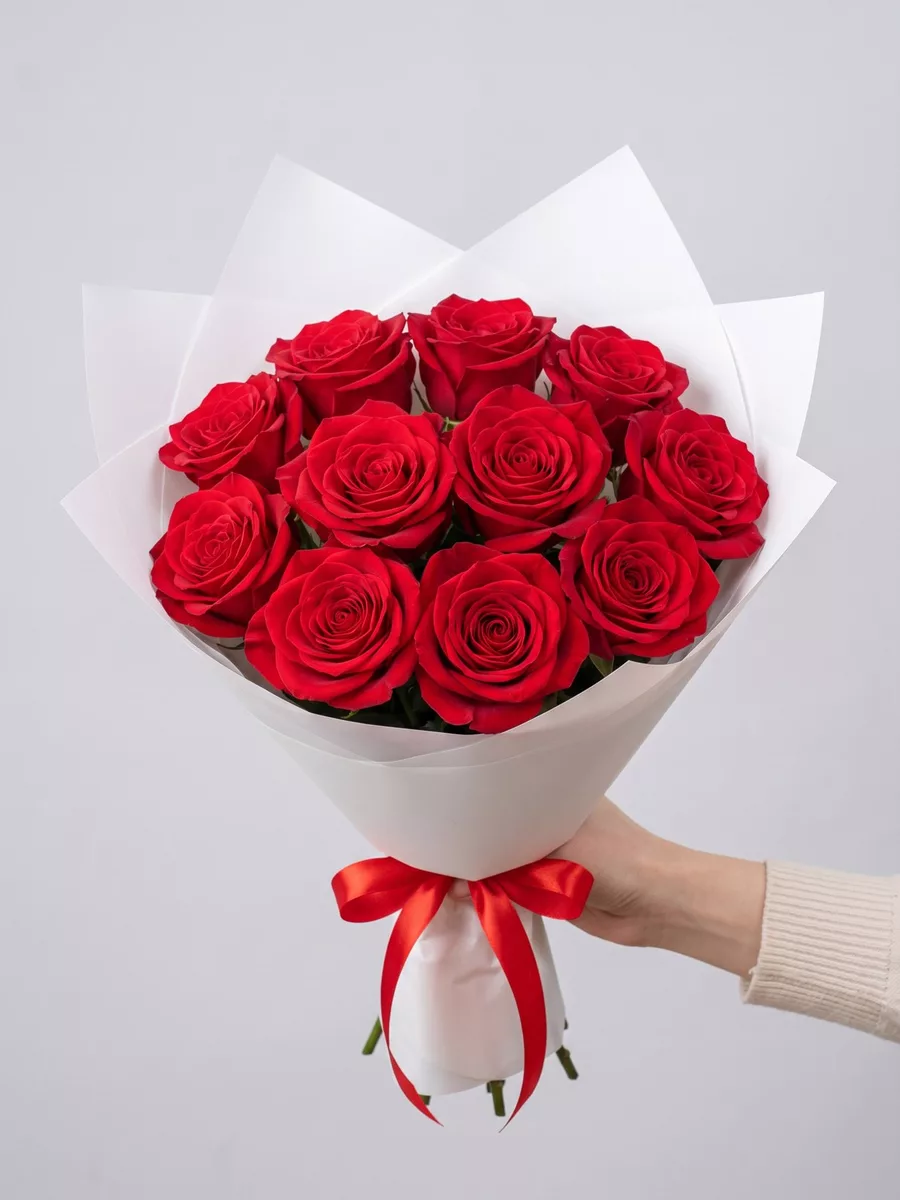
Bouquets we can deliver



Gladioli and asters: flowers for the first day of school
On 1 September, the Day of Knowledge, Soviet schoolchildren walked to school carrying a bouquet for their teacher, and the most typical choices were tall gladioli and bright asters from the family dacha. Photographs from that era show whole rows of first-graders almost hidden behind gladiolus spikes taller than themselves. Dahlias and phlox were also common, because these were the flowers that bloomed in gardens at the end of summer.
The tradition of bringing flowers to the teacher on 1 September continues in Russia, although bouquets today tend to be more compact and varied. Parents now often choose roses, chrysanthemums or mixed bouquets that are easy for a child to carry. Gladioli have become something of a nostalgic flower, much loved by older people, and a bouquet of them for a retired teacher or a grandparent can mean a great deal.
Gladioli open from the bottom of the spike upwards over about a week. As the lower flowers fade, remove them and trim the stem slightly, and the upper buds will continue to open. Keep them in a tall, heavy vase, as the long stems are top-heavy and easily tip over.
Windowsill plants and dacha gardens
Not all Soviet flowers were cut flowers. The typical Soviet flat had a row of pots on the windowsill: red geraniums (pelargonium), ficus, aloe used as a home remedy, Kalanchoe, and the sansevieria known jokingly as 'mother-in-law's tongue'. These were plants passed between neighbours as cuttings and kept for decades, and many families still grow descendants of their grandmother's geranium.
The dacha, the small country plot most city families had, was the other source of flowers. Peonies, phlox, lilac, marigolds, nasturtiums and asters grew beside the potatoes and berry bushes. A bouquet of peonies or lilac from the dacha was a summer gift full of meaning, and these flowers are still the ones Russians describe as smelling of childhood.
When customers want to recreate that feeling, we suggest garden-style bouquets: peonies in late spring and early summer, or soft mixed bouquets with phlox-like and daisy-like flowers later in the season. They look relaxed and unforced, which is exactly the mood of a dacha bouquet.
Soviet flower etiquette that still applies
Several rules from that era have survived unchanged. The most important is the number of stems: for living people, give an odd number of flowers; even numbers are for funerals and graves. In the Soviet period, bouquets were small, often three or five stems, so the rule was very visible, and older recipients still notice it immediately.
Flowers were also given by men to women far more often than the other way round, and a bouquet for a man was traditionally reserved for a jubilee, a retirement or a public honour. Today giving flowers to men is more common, but darker colours, upright shapes and roses or chrysanthemums are still the typical choice. Yellow flowers once carried a reputation for separation, and some older women remember that, so for a partner of that generation we usually avoid an all-yellow bouquet.
Finally, flowers were always unwrapped before being handed over, with the paper removed in the hallway, and that custom has relaxed with modern decorative wrapping. Flowers were also standard when visiting someone's home, which is still true. Bringing a bouquet to a family dinner or a first visit is polite in Russia regardless of the occasion.
Sending a nostalgic bouquet to Russia
For parents or grandparents who grew up in the USSR, a bouquet that hints at those years can be more moving than an expensive designer arrangement. Tulips for 8 March, carnations in soft colours for a jubilee, peonies in summer or a bright garden-style mix for a birthday all carry a familiar note. You can browse current options in our bouquets catalogue, and if you want something specific, call us on 8 (812) 507-67-05.
We deliver flowers across Russia. City delivery costs 500 RUB; for remote districts and suburbs, the operator confirms the price when confirming the order. In large cities express delivery takes 1 to 2 hours after confirmation, or you can choose an exact time (plus or minus 30 minutes), a window of 09-12, 12-15, 15-18 or 18-21, or a date 1 to 30 days ahead, which is useful for 8 March, 9 May or 1 September. In Saint Petersburg delivery runs around the clock.
Delivery is anonymous by default, and a card with your text is free. The courier calls about 15 minutes before arriving; if nobody is home, we agree a second delivery the same day or, with your consent, leave the bouquet with a neighbour or concierge. You can pay online by bank card, SBP or Yandex Pay, and foreign bank cards are accepted through Robokassa. All terms are on the delivery and payment page.
Frequently asked questions
What was the most common flower in the Soviet Union?
The red carnation was the most visible, used at official parades, ceremonies and memorials. For family occasions, mimosa and tulips in spring and gladioli and asters in autumn were equally typical.
Why are red carnations associated with death in Russia?
Red carnations were the official flower of Soviet ceremonies and are still laid at war memorials on Victory Day. Because of that, many Russians see them as solemn and commemorative rather than festive.
Why did Soviet men give mimosa on 8 March?
Mimosa appeared in early March, was affordable and brightened late winter. It became the symbol of International Women's Day, one of the biggest holidays of the Soviet year.
Is the odd-number rule for flowers a Soviet tradition?
It is older than the Soviet Union but was firmly followed throughout it. Odd numbers are for living people, while even numbers are brought to funerals and graves.
Can I send a nostalgic bouquet to Russia from abroad?
Yes. Choose a bouquet in the catalogue, pay online with a Russian or foreign card, and pick a delivery date or time. For special requests, call 8 (812) 507-67-05.
Ready to send a bouquet?
Pick a city, choose the flowers, and we will hand them over with a photo confirmation.
Choose a city →