
How Many Stems to Order: Stem Counts for Russian Gift Occasions
The single question our couriers hear most often at the door is not about the flower variety or the ribbon — it is about the number of stems. Russian etiquette around stem counts is specific enough that getting it wrong turns a generous gesture into an awkward one, and the rules are not obvious to anyone who did not grow up with them. This guide gives you the actual numbers florists use every day, the occasions they belong to, and the checks to run before you confirm your order.
The Core Rule: Odd Numbers for the Living, Even for Mourning
The foundation of Russian flower etiquette is straightforward once you hear it stated plainly: odd numbers of stems are for celebrations and living recipients, while even numbers are traditionally associated with mourning and funeral contexts. This is not a vague cultural preference — it is a firm social norm that most Russians over the age of thirty hold strongly. Handing someone a bouquet of ten roses at their birthday will register as a mistake to many recipients, even if they are too polite to say so immediately. The rule applies regardless of flower variety. Whether you are ordering spray roses, single-stem tulips, or a mixed arrangement of alstroemeria and lisianthus, the count itself carries the social message. A bouquet of fifteen mixed stems reads as festive; a bouquet of fourteen reads as careless or, to older recipients, genuinely unsettling. There is one practical nuance worth knowing: when a bouquet grows large — above roughly twenty-five stems — most people stop counting precisely, so the odd-even distinction becomes less critical in grand arrangements of fifty or more stems. But in the ranges most people actually order, between five and twenty-five stems, the rule is active and noticed. Always confirm the exact stem count with your florist before the order is dispatched, because assembly sometimes shifts by one stem when a flower is culled for quality at the last moment.
Bouquets we can deliver



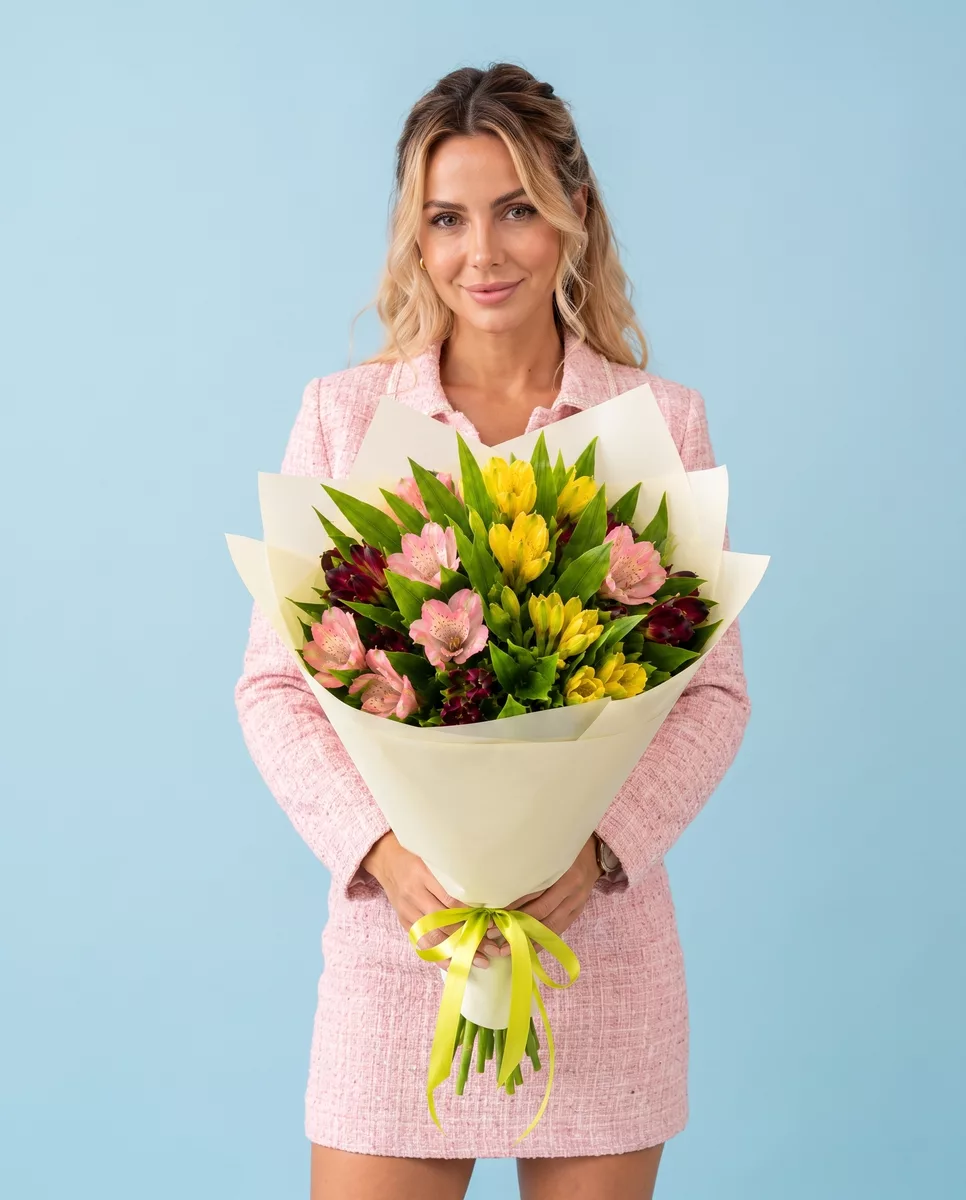
Birthday Bouquets: Safe Counts and the Ones to Avoid
For a birthday, the most commonly ordered counts in our shop are seven, nine, eleven, fifteen, and twenty-one. Each of these reads as generous and appropriate without any secondary meaning attached. Seven stems — say, seven garden roses or seven peonies in season — is the entry-level celebratory bouquet that works for a colleague, a teacher, or a neighbour. Nine and eleven are popular for closer relationships because they look substantial in the hand without requiring a very large budget. Fifteen stems is where a bouquet starts to look genuinely impressive, particularly with longer-stemmed varieties like eustoma or single chrysanthemum blooms, which have the height to fill out the arrangement. Twenty-one is a classic for milestone birthdays and anniversaries because the number itself signals that someone made a deliberate, considered choice. The counts to avoid are all even numbers in the five-to-twenty-five range: six, eight, ten, twelve, fourteen, sixteen, eighteen, twenty. Of these, eight is the one we are asked about most often by customers ordering for Russian recipients for the first time — it feels like a round, generous number in many Western contexts, but in Russia it lands poorly at a birthday. One exception worth noting: on March 8th, International Women's Day, eight is the number of the holiday itself, and single stems or small groupings of eight are sold in enormous quantities specifically for that date. Outside of March 8th, stick to odd counts for birthdays without exception.
Anniversaries and Romantic Occasions: When One Stem Is Enough
Romantic bouquets in Russia follow the same odd-number logic, but they carry an additional layer of symbolism around specific counts. A single stem — one long-stemmed red rose, one tulip, one ranunculus — is considered a pure romantic statement and is entirely acceptable. It reads as intentional rather than stingy, particularly when the stem is of high quality and the presentation is clean. Three stems is the smallest multi-stem romantic count that works well, and it is popular for early-stage relationships precisely because it is warm without being overwhelming. Eleven roses is probably the most iconic Russian romantic bouquet count. It appears in films, it is referenced in popular culture, and florists assemble it constantly for Valentine's Day and dating anniversaries. The reason eleven works so well is partly numerical — it is unmistakably odd — and partly practical: eleven long-stemmed roses fill a hand nicely and photograph well. Twenty-five and thirty-one are used for more serious anniversaries, particularly wedding anniversaries where the giver wants to signal that the occasion is significant. For wedding anniversaries specifically, many couples order a bouquet matching the number of years they have been together, provided that number is odd; if the anniversary year is even, most experienced florists will recommend going one up or one down. Varieties that hold well for romantic occasions include garden roses, spray roses with tight buds, and ranunculus, all of which have good vase life when delivered at the right temperature.
Graduation and Academic Achievements: Counts That Match the Moment
Graduation season in Russia runs from late May through late June for school leavers and from late June into July for university graduates, with a secondary wave in January for mid-year university completions. The bouquets given at these ceremonies are often large because they are visible — the graduate carries them across a stage or through a crowded hall — and the stem count tends to be higher than for an ordinary birthday. Fifteen, nineteen, and twenty-one are the most practical counts for graduation bouquets because they create visible volume without becoming physically unmanageable for someone who also needs to shake hands and receive a diploma. Spray chrysanthemums and alstroemeria are strong choices here because they are multi-headed, meaning a fifteen-stem bouquet of spray chrysanthemums actually shows far more flower faces than fifteen single-headed roses would. This matters for photography and for the general impression in a crowded room. Teachers at Russian schools also receive bouquets on graduation day, and the tradition is for students to bring individual bouquets to their form teacher and subject teachers. For these teacher bouquets, seven or nine stems is the standard range — enough to be respectful, practical enough that a teacher receiving six or seven bouquets in one morning can actually carry them. One thing to check when ordering for a graduation: confirm that the flowers are conditioned to handle being held for two to three hours at room temperature, which is typical for a ceremony. Varieties with good stem strength and low water demand during transit — eustoma, alstroemeria, spray roses — perform better than open peonies or fully open garden roses in this context.
Professional and Formal Occasions: Neutral Counts for the Office
When a bouquet is going to a professional setting — a business meeting, a corporate anniversary, a formal thank-you to a client — the etiquette is slightly more conservative than for personal celebrations. The odd-number rule still applies, but the count itself should sit in a range that reads as respectful rather than extravagant or intimate. Seven, nine, and eleven are the safest choices for professional bouquets in Russia. They are substantial enough to register as a genuine gift without crossing into the territory of personal romantic gesture, which higher counts like twenty-five or thirty-one can imply. Variety selection matters more in professional contexts than the count does in many cases. Monochrome bouquets — all white eustoma, all cream roses, all yellow alstroemeria — read as polished and considered in an office setting. Mixed-colour arrangements with bold contrasts can feel more personal and may not suit every professional relationship. For a formal gift to a senior colleague or a business partner, eleven stems of a single variety in white or cream is a reliable choice that florists assemble frequently for exactly this purpose. One practical check for corporate orders: if the bouquet is being delivered to an office rather than handed over in person, confirm that someone will be present to receive it and that there is a vase or container available. Flowers left in a reception area without water for more than an hour lose significant vase life, particularly in heated office environments where the air is dry. This is a logistics detail that affects the impression your gift makes as much as the stem count does.
Children's Occasions and School Events: Smaller Counts, Specific Timing
School events in Russia — September 1st, the first day of the academic year, is the biggest single flower-buying day in the Russian calendar — generate a particular pattern of bouquet orders. Children bring bouquets to their teachers, and parents order these in large numbers in the days before September 1st. The standard count for a teacher bouquet on this occasion is seven or nine stems, and the variety is almost always something seasonally available and visually straightforward: single-stem chrysanthemums, gladioli, or dahlias depending on what is at peak quality in late August. Gladioli are worth a specific note here: they are a traditional September 1st flower in Russia, strongly associated with the occasion in the way that tulips are associated with March 8th. A single gladiolus spike counts as one stem, but each spike carries multiple florets, so a bouquet of seven gladioli looks generous and full. For children receiving flowers — at a performance, a sports event, or a birthday party — smaller counts work well. Three or five stems of a bright, simple variety like single tulips or gerbera daisies are appropriate and easier for a child to hold. The timing of these orders matters practically: September 1st orders placed on August 30th or 31st face high demand, and the specific varieties requested may not be available if the order is left too late. Ordering two to three days ahead for school-event bouquets and specifying that the florist should substitute within the same colour family if the exact variety is unavailable is a sensible approach that avoids last-minute problems.
What to Check Before You Confirm Any Order
Before you finalise any flower order for a Russian recipient, run through four specific checks. First, count the stems explicitly — do not assume the bouquet description implies an odd number. Ask the florist to confirm the exact count that will be assembled, because a listed quantity can shift by one during quality selection at the point of assembly. Second, check the delivery window against the event time. A bouquet that arrives two hours after a birthday dinner has already been served is not a failed flower — it is a failed gesture. For celebrations with a fixed start time, order for delivery at least ninety minutes before the event begins to allow for transit variation. Third, confirm the temperature conditions of the delivery environment. Flowers travelling in winter across Saint Petersburg in January face very different stress than flowers delivered in July, and the variety selection should reflect this. Delicate open blooms like fully open garden roses or anemones are more vulnerable to cold shock in winter and to heat wilt in summer than tighter-budded varieties like spray roses or eustoma. Fourth, if you are not certain whether the recipient follows the odd-number rule strictly, default to odd. The cost of being wrong with an even count is higher than the cost of playing it safe. Most recipients will not volunteer that a stem count bothered them, which means you will not know you made the error — but they will remember it. These four checks take less than two minutes and prevent the most common mistakes our delivery team encounters at the door.
Russian stem-count etiquette is one of those customs that feels arbitrary until you understand the underlying logic, at which point it becomes easy to follow consistently. Odd numbers for celebrations, a few specific counts — eleven, fifteen, twenty-one — that carry particular weight for romantic and milestone occasions, and a practical awareness of seasonal variety availability: these three things cover the vast majority of situations. The florist's job is to build the bouquet correctly; your job is to give them the right count and enough lead time to source the right stems. When those two things align, the bouquet arrives in good condition and lands exactly as intended. We deliver bouquets across Russia in 1–2 hours.
Frequently asked questions
Is it really a big deal if I order an even number of stems for a birthday in Russia?
For recipients over thirty, yes, it registers as a noticeable mistake. Younger urban Russians are more relaxed about it, but you cannot easily predict where any individual falls on that spectrum. Sticking to odd counts costs nothing and removes the risk entirely. Eleven or fifteen stems are safe defaults for almost any birthday situation.
Does the odd-number rule apply to all flower types, or just roses?
It applies to all stem counts regardless of variety. Seven tulips, nine alstroemeria stems, eleven eustoma — all follow the same logic. The variety does not change the social meaning of the number. The only partial exception is very large arrangements above fifty stems where precise counting becomes impractical and recipients generally do not count.
What is the most commonly ordered stem count at Five Flowers for romantic occasions?
Eleven is consistently the most requested count for romantic bouquets, followed by fifteen and twenty-one. Eleven long-stemmed roses is the classic Russian romantic bouquet and has been for decades. It is specific enough to feel deliberate, odd by the etiquette rule, and visually full without being physically difficult to carry or arrange in a standard vase.
Can I order a bouquet with a stem count that matches the recipient's age?
Yes, and this is a popular choice for milestone birthdays. The only adjustment needed is when the age is an even number — in that case, most florists recommend going one above or below, so a fortieth birthday might receive thirty-nine or forty-one stems. Confirm this with your florist at the time of ordering so the adjustment is built into the assembly from the start.
How far in advance should I order for a high-demand date like September 1st or March 8th?
For September 1st, order at least two to three days ahead. For March 8th, International Women's Day, order four to five days in advance if you want a specific variety. Both dates see very high order volumes, and popular varieties like tulips for March 8th and gladioli for September 1st can be fully allocated well before the date itself.
Ready to send a bouquet?
Pick a city, choose the flowers, and we will hand them over with a photo confirmation.
Choose a city →