
How to check sweet peas in a bouquet for damage
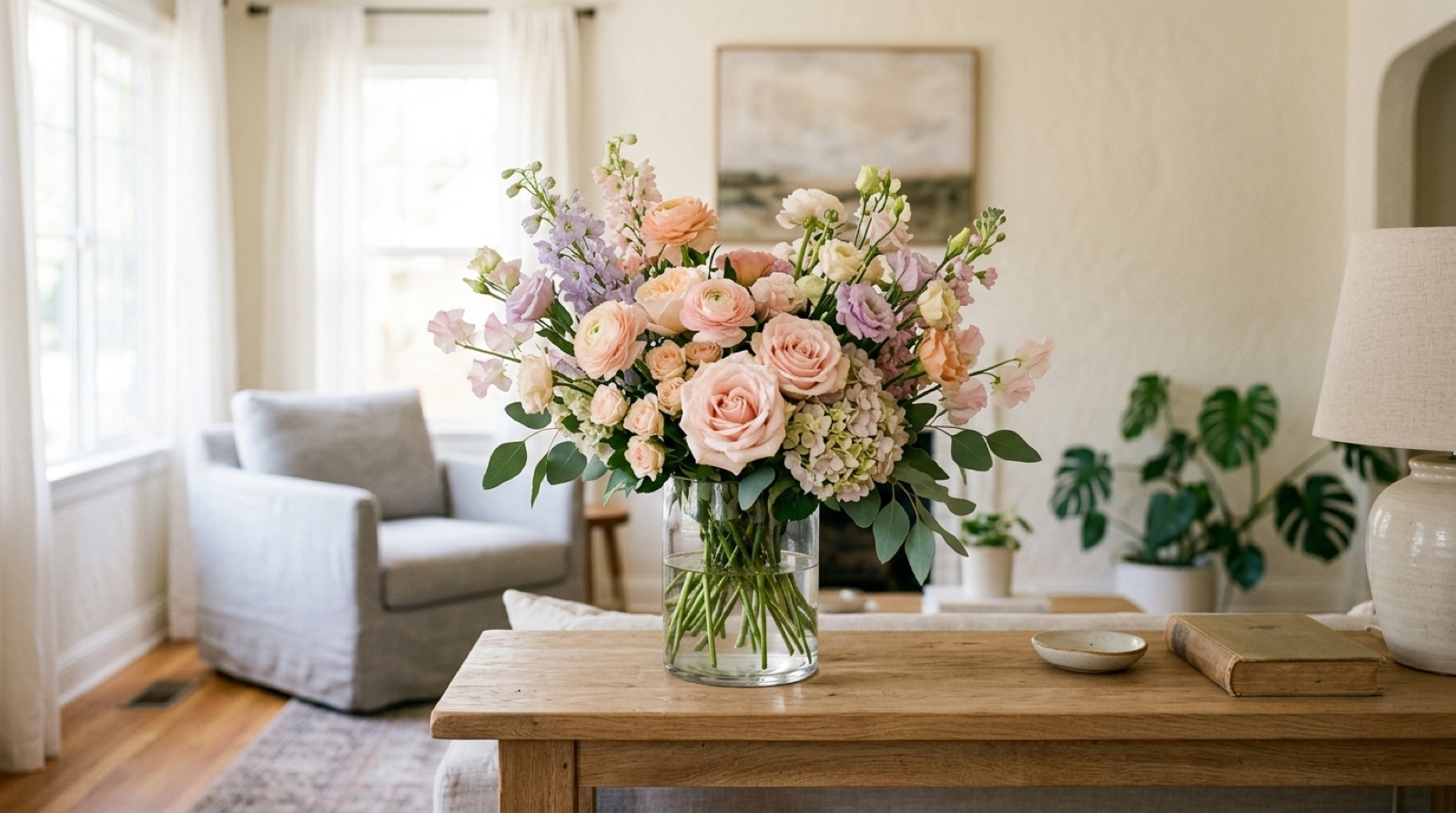
When customers ask us whether their sweet peas are damaged, we check the petals, flower stalks and stems first. Look for translucent or brown patches, crushed flowers, sharp stem creases, soft tissue or fuzzy mould; naturally ruffled petals alone are not a sign of damage. Limp flowers need fresh water and another check before you decide they are finished.
Inspect the bouquet gently after removing its outer transport packaging. Sweet pea flowers are delicate, so avoid rubbing petals or pulling stems apart to examine them.
Separate natural folds from bruising
Sweet pea petals naturally have folds and wavy edges. Compare several flowers: an intact, folded petal can be healthy, while an irregular patch that looks flattened, translucent or brown may indicate bruising. Colour alone is less useful than a change in texture or a clearly damaged edge.
Dry, papery edges can occur as flowers age or lose moisture. A small mark on one petal is mainly an appearance issue; widespread drying, collapsed flowers or petals falling with light handling suggest the bouquet is further along.
Check the stalks and the stems below the wrapping
Follow a drooping flower down to the slender stalk that supports it. A sharp bend, split or flattened section points to physical damage. Water will not repair a broken stalk, even if the rest of the stem is sound.
Check stems near the tie and at the waterline for crushing, softness or slime. Look for fuzzy growth between crowded flowers, and smell the vase water rather than relying on the flowers’ fragrance. Slime, an unpleasant smell and softening tissue call for cleaning the vase and removing affected material.
Bouquets we can deliver




Give limp flowers a careful water check
If the flowers are limp but their stems are intact, wash the vase, add fresh water and recut the stem ends with clean, sharp scissors or secateurs. Remove any foliage that would sit below the waterline, then place the bouquet away from direct sunlight, radiators and draughts.
Recheck after a few hours. Improved firmness suggests water loss contributed to the drooping, although recovery is not guaranteed. Bruised petals will retain their marks, and flowers with soft, decaying tissue should be removed. Our guide to checking whether flowers are still viable explains the broader signs.
What to record when the bouquet arrives
Before rearranging a bouquet with visible damage, photograph the whole arrangement and take close-ups of the affected petals or stems. Note whether the wrapping was pressing on the flowers and whether damage is limited to one side. These details help describe the condition clearly when you contact the shop.
For questions about a Pyat Tsvetov (5 Flowers) order, call 8 (812) 507-67-05. If you will carry the bouquet onward, our bouquet transport guide covers handling during the journey.
Ordering flowers for someone in Russia
Pyat Tsvetov (5 Flowers) has operated in Saint Petersburg since 2011 and delivers flowers across Russia. City delivery costs 500 RUB; the operator confirms the price for remote districts and suburbs when confirming the order. See delivery and payment details before checkout.
When ordering from abroad, use the CloudPayments options displayed at checkout to check the available payment methods. A card with your text is free, and delivery is anonymous by default: the courier does not name the sender.
Frequently asked questions
Do unopened sweet pea buds mean the bouquet is damaged?
Unopened buds alone do not establish damage. Check for drying, browning or soft tissue, and do not assume every bud will open in the vase.
Should I remove every sweet pea with a marked petal?
A small, dry bruise does not automatically mean the whole stem needs removing. Remove flowers with mould or soft decay, and trim away broken flower stalks with clean scissors.
Ready to send a bouquet?
Pick a city, choose the flowers, and we will hand them over with a photo confirmation.
Choose a city →