
Types of Roses: A Practical Guide for Bouquet Buyers
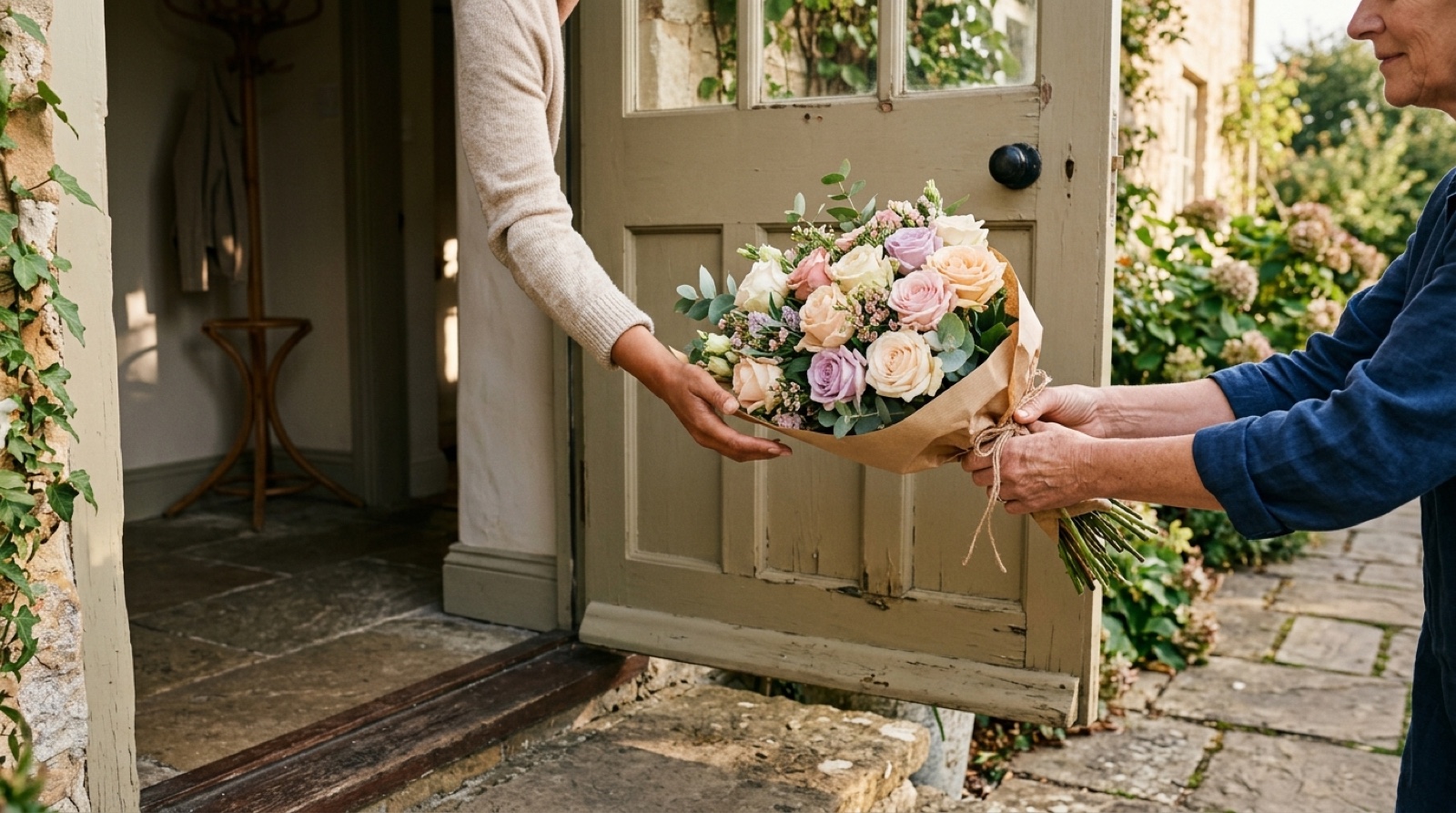
The main types of roses include hybrid tea, floribunda, grandiflora, shrub, climbing, rambling and miniature roses, alongside historic garden groups. For bouquet buyers, the most useful distinctions are standard roses with one main flower per stem, spray roses with several smaller blooms, and garden-style roses with fuller, often cupped or quartered flowers.
At Pyat Tsvetov (5 Flowers), customers often start by asking for large roses or small roses. In our Saint Petersburg flower shops, operating since 2011, we find that bloom shape and the arrangement’s overall size are more useful starting points than a variety name alone.
The three rose descriptions most useful for bouquets
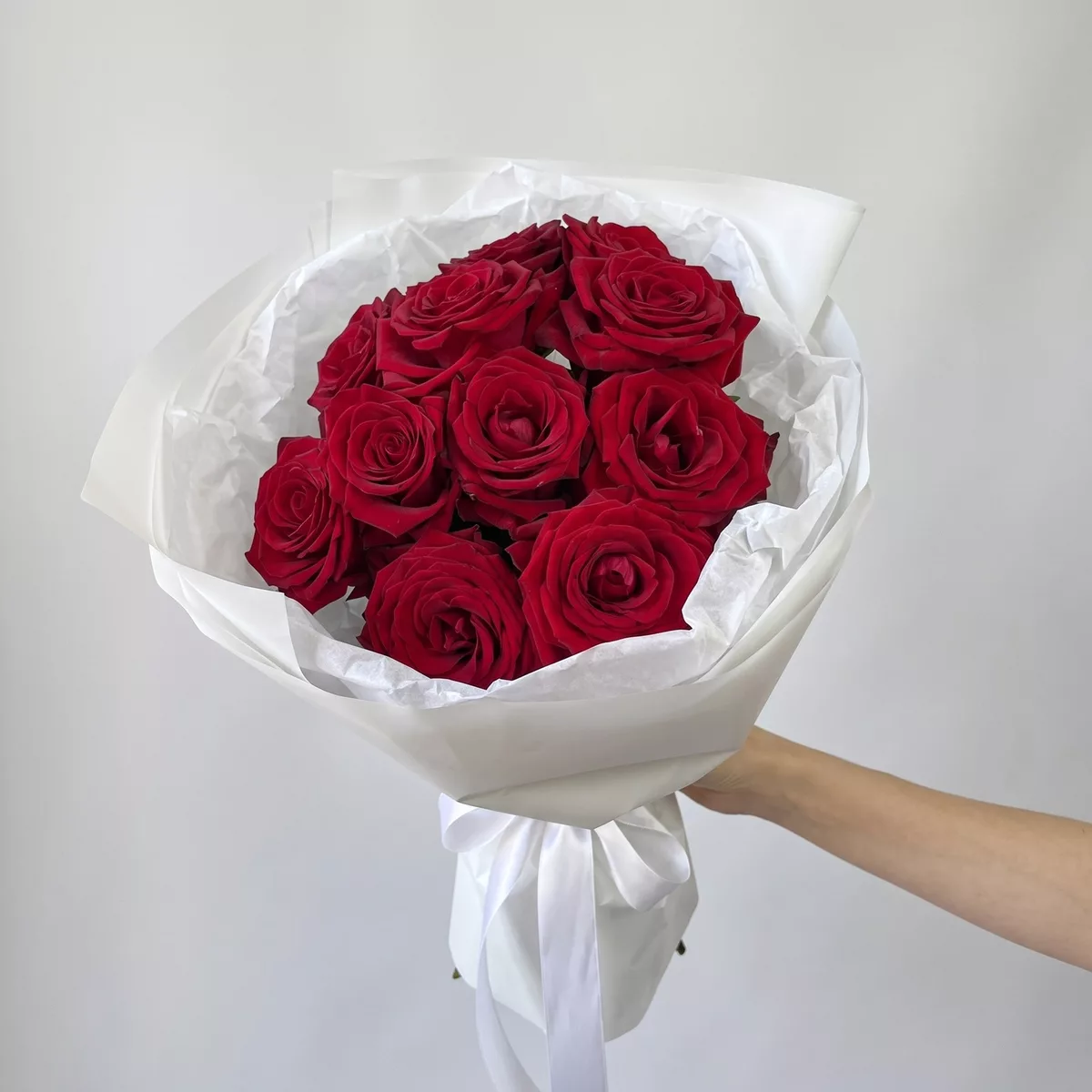
Standard roses usually present one main flower on each prepared stem. They suit bouquets with a clear outline and individually visible blooms. A pointed bud opening into a high-centred flower gives a different effect from a rounded bloom, even when both are sold as standard roses.
Spray roses carry several smaller flowers or buds on a branching stem. They create a clustered, textured effect and work well when you prefer many small floral details. Compare the whole arrangement rather than stem count alone: one spray stem can carry several flower heads.
Garden-style roses are chosen for their lush flower form: layered petals, a cup shape, a rosette or a quartered centre. This is a useful descriptive term, but it does not identify one botanical group or guarantee fragrance. Standard and spray roses can both have garden-style blooms.
How the main garden rose groups differ
Hybrid tea roses typically produce large, well-defined flowers, often singly on long stems. Floribundas generally flower in clusters, while grandifloras combine traits associated with hybrid teas and floribundas. These garden classifications help explain growth and flowering habits; they are not interchangeable with bouquet labels.
Shrub roses form bushy plants and cover a broad range of flower shapes. English roses are a modern breeding group often associated with full, old-fashioned blooms. Old garden roses belong to historic classes, such as Gallica, Damask and Alba; an antique-looking flower is not automatically an old garden rose.
Climbing roses develop long canes that need support and training. Ramblers generally have more flexible stems and clusters of smaller flowers, with many flowering mainly once per season. Miniature roses have small flowers and foliage, although the mature size varies. These labels matter most when choosing a living plant rather than a cut bouquet.
Bouquets we can deliver



Choose roses by the effect you want
For a formal bouquet, look for a consistent bloom shape and an even outline. Standard roses make each flower easy to see. For a softer arrangement, spray roses add branching detail, while full, rosette-shaped blooms give a more abundant appearance.
Use photographs in the bouquets catalogue to compare proportions, flower shapes and wrapping. A close-up can make a small flower look large, so consider the complete arrangement. Treat catalogue names as product titles; they do not necessarily identify a recognised rose class.
If scent matters, ask about the particular roses being considered. Fragrance varies by cultivar, and neither a deep colour nor a densely petalled bloom reliably tells you how strongly a rose will smell.
Colour meanings and gift etiquette
Red roses commonly suggest romantic affection; pink often conveys appreciation or tenderness, while white can suggest simplicity or formality. These are conventions rather than fixed meanings. The recipient’s preferences and your card message give the gift its clearest context.
For a gift in Russia, an odd number is customary when giving a small, countable bunch; even numbers are traditionally associated with mourning. With larger mixed arrangements, individual stems may be less prominent. If the relationship is not romantic, choose a colour the recipient enjoys and write a specific message.
Care matters more than the rose label
Start with a clean vase, remove leaves that would sit below the waterline and recut the stem ends with a clean, sharp tool. Add fresh water and use cut-flower food according to its instructions. Keep the bouquet away from direct sun, heaters and ripening fruit.
Check the water daily and refresh it when it becomes cloudy, cleaning the vase as needed. Remove deteriorating flowers promptly. Rose type alone cannot predict vase life: condition, handling and the room environment also matter. Our guide to the lifespan of roses in a vase explains what to watch for.
Sending a rose bouquet to Russia
We deliver flowers across Russia. City delivery costs 500 RUB; for remote districts and suburbs, the operator confirms the price when confirming the order. In large cities, express delivery is available within 1–2 hours after order confirmation; you can also choose an exact time with a tolerance of ±30 minutes, a listed time window, or preorder 1–30 days ahead. Delivery in Saint Petersburg operates around the clock.
Delivery is anonymous by default: the courier does not name the sender. A card with your text is free, so include your name in the message if you want the recipient to know who sent the flowers. The courier calls the recipient about 15 minutes before arrival.
See delivery and payment details before ordering. Online checkout uses CloudPayments; check the payment options displayed there. For questions about choosing a bouquet or arranging delivery, call 8 (812) 507-67-05.
Frequently asked questions
Are peony roses a separate type of rose?
“Peony rose” is commonly used to describe a rose with a rounded, densely petalled flower resembling a peony. It describes appearance rather than a single formal rose class, and the flower is still a rose.
Are spray roses the same as miniature roses?
No: spray describes several flowers on a branching stem, while miniature refers to a garden rose group with small flowers and foliage. Small blooms alone do not make a cut rose a miniature rose.
Does a rose’s country of origin tell me its type?
Country of origin and rose type describe different things. For choosing a bouquet, compare the actual bloom form, branching and arrangement size rather than treating an origin label as a variety name.
Ready to send a bouquet?
Pick a city, choose the flowers, and we will hand them over with a photo confirmation.
Choose a city →