
What Is Flower Food Made Of, and How Should You Use It?
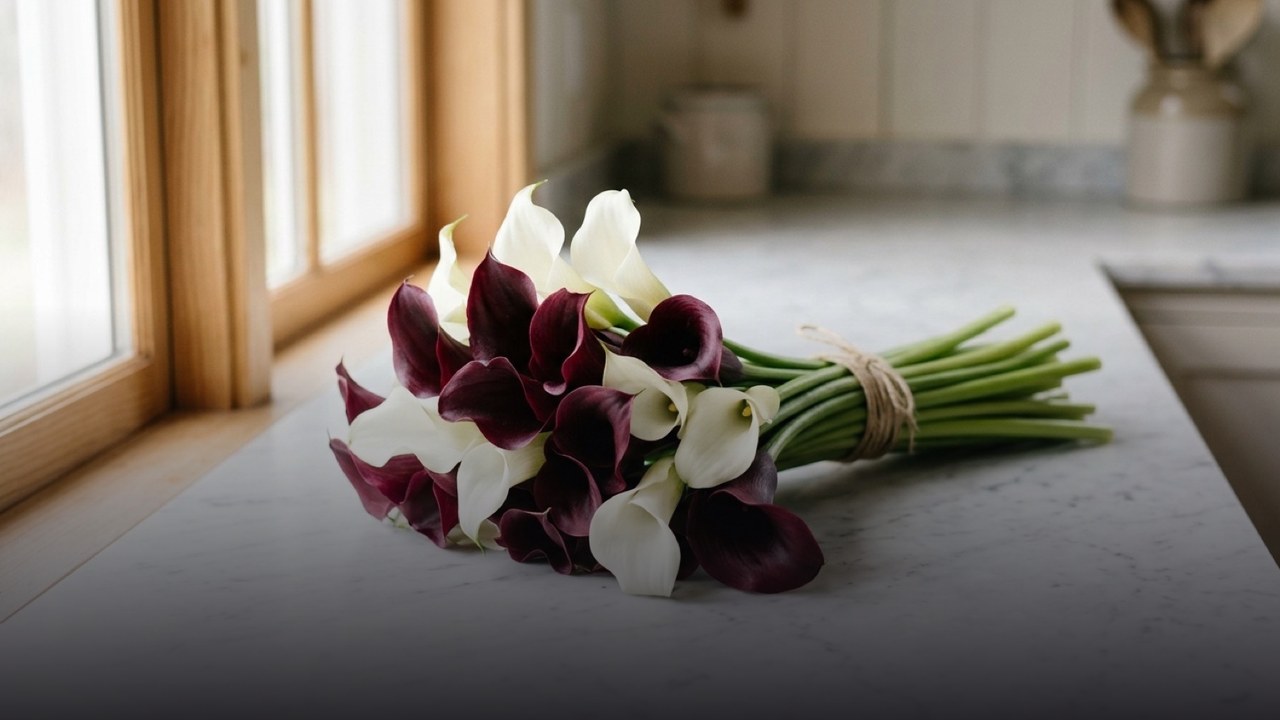
Flower food for cut flowers usually contains three main components: sugar, an acidifier and an antimicrobial ingredient. Sugar supplies energy, the acidifier adjusts the water’s pH, and the antimicrobial component helps limit microorganisms that can interfere with water uptake. The exact chemicals and proportions vary, so the packet label is the guide to its contents and dilution.
Customers often ask whether the little sachet is simply sugar and whether a spoonful from the kitchen will do the same job. At Pyat Tsvetov (5 Flowers), our Saint Petersburg flower shops have been serving customers since 2011, and this is a useful distinction to explain: feeding a cut stem also means managing its vase water. A sachet supports care, but clean equipment, fresh stem cuts and sensible placement still matter.
The three jobs behind the ingredients
The carbohydrate in flower food is commonly a sugar such as sucrose or glucose. Once a stem has been cut, it no longer receives water and nutrients from its roots, and its supply of stored energy is limited. Added sugar can support the opening and maintenance of flowers, although different species respond differently. More sugar does not automatically mean a longer-lasting bouquet.
An acidifier, often based on an organic acid such as citric acid, lowers the pH of the solution. The antimicrobial component helps control microbial growth in water that also contains sugar and material released by the stems. These ingredients work together: sugar alone can feed microorganisms as well as flowers. Commercial formulas differ, and some also contain ingredients that help the powder dissolve or keep the solution stable.
What the packet can and cannot tell you
A small sachet may list its purpose and mixing instructions without disclosing the full recipe. That does not justify assuming that every brand contains the same acid, disinfectant or concentration. Use the stated water volume and check any warnings or flower-specific directions. If you need precise ingredient information because of an exposure concern, consult the manufacturer’s information rather than relying on a generic recipe online.
Cut-flower food is different from fertiliser intended for rooted houseplants. Houseplant fertiliser supplies mineral nutrients for a growing plant; a vase solution is formulated for detached stems and their water. Do not substitute a houseplant feed simply because both products say “plant food”. Our guide to what is in plant food packets explains this naming confusion in more detail.
Bouquets we can deliver




How to mix flower food and prepare the vase
Start with a vase washed thoroughly with detergent, then rinse it well so no cleaning residue remains. Measure the amount of water specified on the sachet and dissolve the contents as directed before arranging the stems. A packet labelled for one litre needs that volume; a small vase is not a reason to make a stronger solution. Avoid dividing a sachet by eye, because an uneven portion can give an unreliable concentration.
Remove leaves that would sit below the waterline, then trim the stem ends with a clean, sharp tool and place them promptly into the prepared solution. Leave enough space to check the water level without pulling the whole arrangement apart. Follow any care instructions supplied for particular flowers, since a mixed bouquet may contain stems with different needs. Do not crush or hammer stem ends as a general preparation method.
Keeping the solution useful after the first day
Check the water level daily, especially during the first days when the stems may take up water quickly. Keep the cut ends submerged and follow the product’s instructions for topping up or replacing the solution. If more solution is needed, prepare it at the same labelled dilution instead of adding another sachet directly to the vase. Repeatedly adding powder to an unknown volume makes the concentration difficult to control.
Cloudiness, an unpleasant smell or slippery deposits are reasons to empty the vase, clean it and make a fresh solution. Recut the stem ends with a clean tool before returning them to the water. Clear water can still contain microorganisms, so appearance alone does not replace routine cleaning or the packet’s directions. Remove fallen leaves and deteriorating stems promptly to reduce material breaking down in the vase.
Place the bouquet away from direct sun, radiators and other sources of heat that increase water loss. Keep it away from ripening fruit, which releases ethylene; some cut flowers are particularly sensitive to this gas. Flower food cannot reverse crushed stems, advanced decay or prolonged dehydration. Our guide to whether flower food packets work puts their benefits in the context of everyday vase care.
Why kitchen substitutes are difficult to get right
Sugar, lemon juice and household bleach appear in many homemade flower-food recipes, but each introduces a different uncertainty. Sugar provides no microbial control on its own, lemon juice has variable acidity, and household bleach products vary in strength and additives. Soft drinks also have inconsistent sugar and acid levels, while sugar-free versions do not supply the same carbohydrate. None is a reliable spoon-for-spoon substitute for a labelled sachet.
Never mix bleach with vinegar, lemon juice or other acids, because this can release hazardous chlorine gas. Avoid adding household cleaners, aspirin or alcohol to a bouquet as an improvised treatment. If you have no flower food, use a clean vase and fresh water, remove submerged foliage and change the water regularly. That is a practical temporary approach while you obtain a product intended for cut flowers.
Flower food is not intended for people or pets, and treated vase water should not be used in food or drinks. Keep loose packets and filled vases out of children’s and animals’ reach, following the product’s warnings. If someone swallows the product, seek medical or poison-service advice and keep the packaging available. Separately, a flower’s decorative use does not establish that it is edible.
Sending flowers to Russia with useful care advice
When sending flowers from abroad, keep the care message short enough for the recipient to use immediately: wash the vase, follow the sachet dilution, remove submerged leaves and check the water daily. A free card with your text is available, so you can include a personal message or sign your name there. Delivery is anonymous by default, and the courier does not name the sender. You can choose a bouquet from our bouquets catalogue with those details in mind.
We deliver flowers across Russia, with city delivery costing 500 RUB; the operator confirms the price for remote districts and suburbs when confirming the order. In large cities, express delivery is available in 1–2 hours after confirmation, or you can choose an exact time with a tolerance of 30 minutes, the 09–12, 12–15, 15–18 or 18–21 window, or pre-order 1–30 days ahead. Delivery in Saint Petersburg is available around the clock. Choose timing around when the recipient can receive the flowers and put them in water.
The courier calls the recipient about 15 minutes before arrival. If the recipient is absent, we agree a second delivery that day or, with the sender’s consent, hand the flowers to a neighbour or concierge. Online checkout uses CloudPayments; check the payment options displayed there rather than assuming every foreign card will be accepted. See delivery and payment for practical information, or call 8 (812) 507-67-05 with questions.
Frequently asked questions
Is flower food just sugar?
No. Most cut-flower foods combine sugar with an acidifier and an antimicrobial component, so adding sugar alone does not reproduce the complete formula.
Does every flower food packet contain bleach?
No single antimicrobial ingredient is universal across flower-food products. Check the label or manufacturer’s information instead of assuming a sachet contains household bleach.
Can I use half a packet in a small vase?
Follow the packet’s dilution instructions and avoid estimating half by eye. If the directions allow it, prepare the specified volume in a clean measuring jug and use enough solution to fill your vase.
Can too much flower food harm flowers?
An overly concentrated solution can damage stems or interfere with water uptake. If you have used too much, discard the solution and prepare a fresh batch at the labelled dilution.
Should I add flower food every time I change the water?
When replacing the water, prepare fresh flower-food solution according to the product’s directions. Do not add a full sachet to leftover solution without knowing its volume and concentration.
Ready to send a bouquet?
Pick a city, choose the flowers, and we will hand them over with a photo confirmation.
Choose a city →