
What to Do If Cut Flower Stems Feel Slimy in the Vase
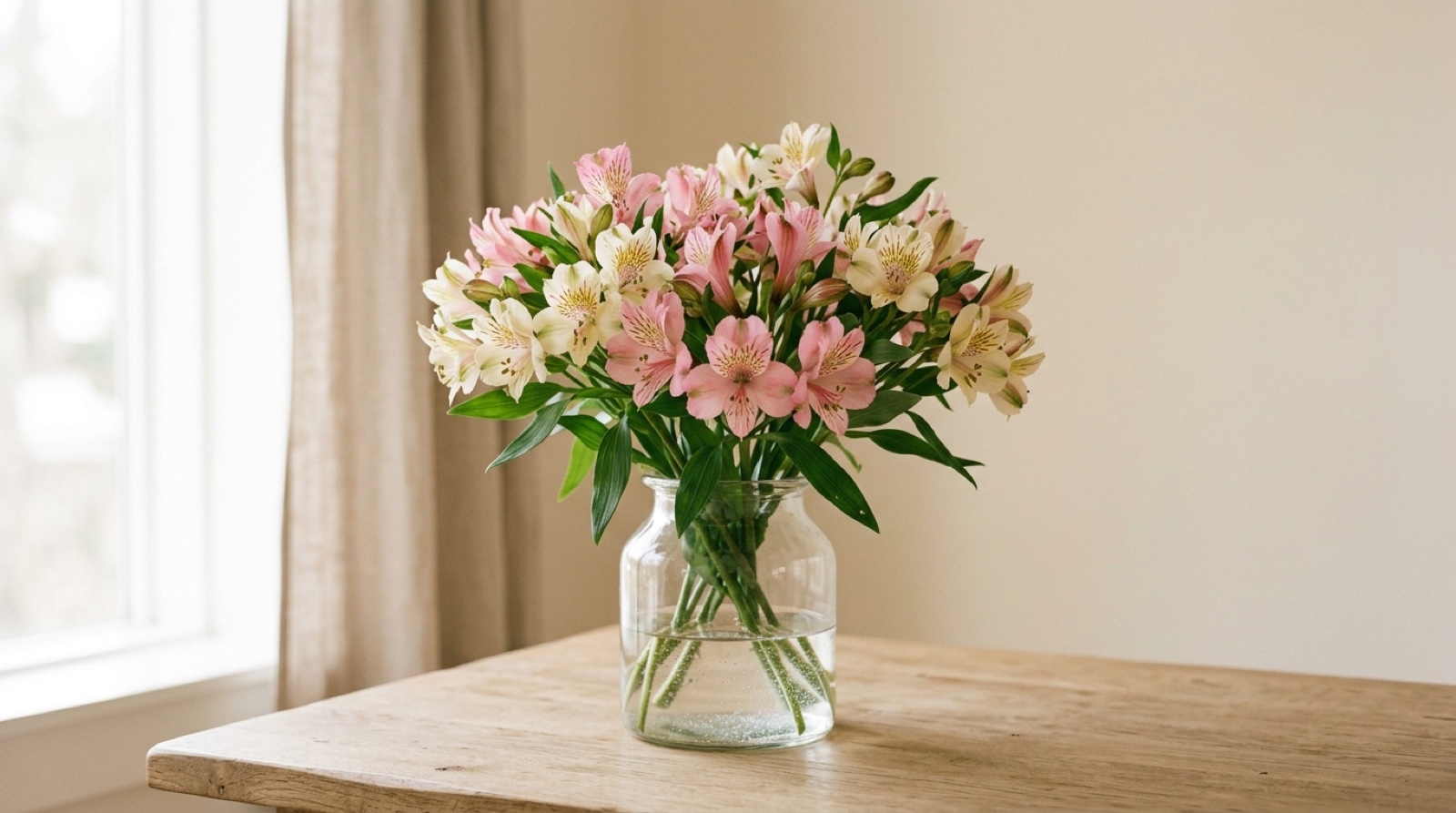
If your cut flower stems feel slimy in the vase, take the flowers out, empty and wash the vase, and gently rinse the submerged stems with clean running water. Cut back to firm, healthy tissue with a clean, sharp tool, remove leaves that would sit underwater, and return the salvageable flowers to fresh water with cut flower food mixed according to its label. Discard stems that remain soft, collapsing or foul-smelling after rinsing and trimming.
Customers asking about slippery stems usually want to know whether the whole bouquet has to go. A surface film on an otherwise firm stem is a different problem from a stem that has become mushy through its thickness, so examine the flowers individually before deciding. At Pyat Tsvetov (5 Flowers), our Saint Petersburg flower shops have been helping customers with flowers since 2011; the useful starting point for vase care is the condition of the stems and water, rather than how many days the bouquet has been on display.
Check whether the slime is a surface film or damaged tissue
Set the bouquet beside a sink on a clean surface and inspect the parts that were underwater. A slippery coating can accompany microbial growth in vase water, particularly where submerged leaves and plant debris have accumulated. Rinse one stem gently, then check whether it feels firm underneath and holds its shape. Do not scrub it with an abrasive pad or scrape away the outer surface, because that can damage tissue you are trying to preserve.
Separate stems with a soft base, splitting tissue or an unpleasant smell from those that remain sound. If the damage is limited to the bottom, you may be able to remove it while retaining enough stem for a shorter arrangement. If softness extends far up the stem, or the stem buckles under the flower head, discard it. Cloudy water is another reason to clean the arrangement promptly, but clear-looking water does not rule out a slippery film.
Wash the vase before putting any flowers back
Pour away all the old water instead of topping it up, then remove fallen leaves and other debris from the vase. Wash the inside, base and rim with washing-up liquid and a brush that can reach the corners. Pay particular attention to the previous waterline, where a film may cling to the glass even after a quick rinse. Rinse thoroughly so that the fresh water will not contain detergent residue, and let a vase washed in hot water cool before refilling it.
A narrow neck can make proper cleaning difficult, especially when several stems have been packed tightly together. Move the rescued flowers to a clean, accessible container if you cannot reach the dirty surfaces in the original vase. Keep them away from household cleaning sprays while you work, and wash your hands and cutting tool before handling the trimmed ends. Our vase cleaning and water-change guide covers the routine that supports this rescue step.
Bouquets we can deliver




Rinse and recut stems without crushing them
Hold the submerged section of each salvageable stem under a gentle stream of clean water and use your fingers to loosen the surface film. Keep the flower heads out of the stream so that the petals do not become soaked. Remove leaves that would sit below the new waterline, including small pieces caught between crossing stems. Handle the lower stems lightly; squeezing them hard can turn a cleaning step into further damage.
Use a clean, sharp knife or secateurs suitable for the thickness of the stem, and cut above any softened or discoloured base until the remaining tissue is firm. There is no single trimming length that suits every damaged bouquet: a small fresh cut may suit a sound stem, while a deteriorated base needs more removed. Make a clean cut without crushing or splitting the end, then place the flower promptly into the prepared water. For tool choice and technique, see how to properly cut flower stems.
Refill with clean water and correctly mixed flower food
Refill the clean vase with fresh tap water suitable for drinking, using a moderate temperature rather than very hot or icy water as a rescue treatment. If you have commercial cut flower food, measure the water and follow the packet's dilution instructions. A packet intended for a larger volume should not be tipped into a small vase on the assumption that a stronger mixture will help. Flower food supports vase care, but it cannot restore a stem whose tissue has already broken down.
Avoid improvising a mixture of sugar, vinegar, bleach or other household products to treat the slime. Sugar alone does not provide the balanced formulation of commercial flower food, and guessing additive quantities makes the result difficult to control. If flower food is unavailable, use clean water and pay close attention to cleanliness and subsequent water changes. Set the water level high enough to keep every cut end submerged while leaving foliage above it, and allow enough room to inspect the stems.
Watch the bouquet after cleaning and prevent a repeat
Check the vase later that day and again the following morning, looking for renewed slipperiness, cloudy water or individual stems becoming soft. Replace dirty water promptly and clean the vase again if a film returns; topping up alone leaves the existing debris behind. Remove flowers and leaves as they deteriorate so that they do not remain in the arrangement. A drooping bloom may improve after fresh water and recutting, but recovery is uncertain and an upright flower is not proof that its lower stem is healthy.
Keep the arrangement away from radiators, direct sunlight and hot appliances, and make the daily water check part of its care. As the water level falls, check that shorter stems still reach it instead of assuming that every flower is drinking. If removing damaged bases makes the bouquet too short for its original vase, use a smaller clean container that supports the stems without crowding them. Our guide to why flower stems turn slimy gives further context for recognising the problem early.
Make care straightforward when sending flowers to Russia
When sending flowers to someone in Russia, a brief care note can make the gift easier to look after: use a clean vase, remove submerged leaves and check the water each day. We deliver flowers across Russia, and a card with your text is free. Delivery is anonymous by default because the courier does not name the sender, so include your name in the card text if you want the recipient to know who sent the bouquet. City delivery costs 500 RUB; the operator confirms the price for remote districts and suburbs when confirming the order.
Choose a delivery arrangement that gives the recipient a practical opportunity to put the flowers in water: express delivery in large cities is available within 1–2 hours after order confirmation, and orders can be placed 1–30 days ahead. Delivery in Saint Petersburg is available around the clock, and the courier calls the recipient about 15 minutes before arrival. Check delivery and payment information when ordering; online checkout uses CloudPayments, and customers paying from abroad should check the options displayed at checkout. For questions about an order, call 8 (812) 507-67-05.
Frequently asked questions
Can I save flowers if their stems feel slimy?
You may be able to save stems that remain firm after gentle rinsing and trimming. Clean the vase and replace the water before returning them, and discard stems with extensive softness or collapse.
Should I wipe the stems or cut the slimy part off?
Gently rinse away a surface film first, then inspect the tissue underneath. Cut above any damaged base to firm tissue; wiping alone will not remove deterioration inside the stem.
Why are the stems slippery even though the water looks clear?
A surface film can develop before the water becomes visibly cloudy. Treat the slippery texture as a reason to inspect the stems, wash the vase and replace the water.
Can I add bleach to the vase to remove slime?
Do not guess a bleach dose or mix household cleaning products into the vase water. Remove the flowers, clean and rinse the vase separately, then refill with fresh water and correctly diluted cut flower food if available.
Does every flower need to be thrown away if one stem is rotten?
Assess each stem separately and discard the one with rotten tissue. Clean the shared vase, rinse and inspect the remaining stems, and watch for further deterioration after arranging them in fresh water.
Ready to send a bouquet?
Pick a city, choose the flowers, and we will hand them over with a photo confirmation.
Choose a city →